
New Photo Fuels Worry Over President Trump’s Health
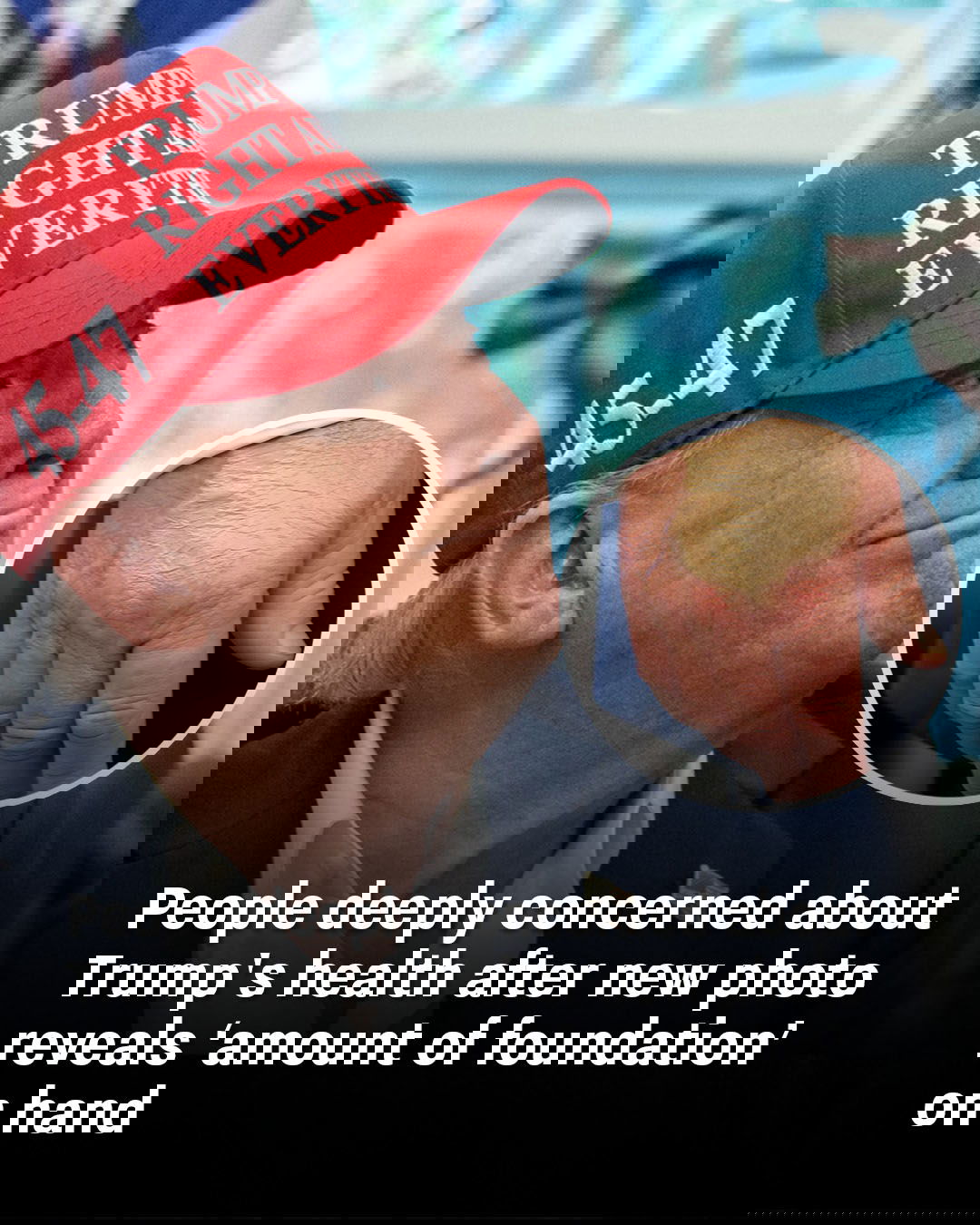
A recent photograph of former President Donald Trump has sparked fresh concerns regarding his health, as a significant amount of foundation appears visible on his hand.
Speculation on Trump’s health began shortly after he assumed office, particularly when bruises started appearing on his hands, causing public interest and concern.
The first notable bruise was seen on President Trump’s right hand during a meeting with French President Emmanuel Macron in February, while in March, more marks were observed, adding to the speculation.
In April, similar marks were reported again, with White House sources emphasizing these were signs of Trump’s active and hardworking nature.
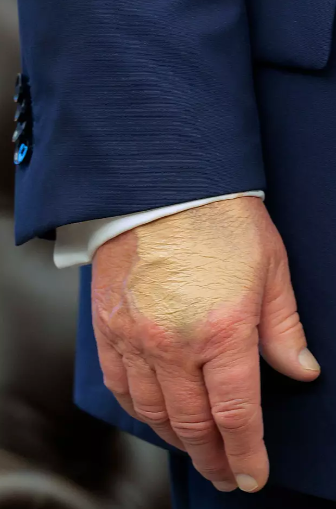
Nevertheless, the internet has become a platform for discussion about his health, especially with the latest image on social media showing his hand apparently covered in foundation.
The mismatch in skin tone on Trump’s hand has led some to question his health, while others have shared their worries openly online.
Comments include inquiries such as, “What health conditions could make Trump’s hands look like that?” and concerns over a range of potential health issues.
Many have indicated observable changes, noting previous bruises, pale skin tone, and even swollen ankles, wondering what could be affecting him.
Official statements from the White House have downplayed the severity of these marks, attributing them to the president’s constant engagement, particularly through handshakes.
Press Secretary Karoline Leavitt remarked, “President Trump is deeply engaged with the American people and is frequently meeting and greeting them. This can lead to bruises due to the sheer volume of handshakes he undertakes.”
Following observations about swollen ankles, President Trump was diagnosed with chronic venous insufficiency, a condition which was publicly acknowledged on July 17.

This diagnosis came after Trump was seen with noticeable swelling in his lower legs during a high-profile event, the FIFA Club World Cup final.
In response, Leavitt explained that diagnosis tests revealed no deep vein thrombosis or arterial disease, providing assurance that the 79-year-old former president was examined thoroughly.
Chronic venous insufficiency, according to the Cleveland Clinic, occurs when leg veins are unable to transport blood effectively back to the heart, leading to circulation issues.
In the United States, one in three adults faces venous disease challenges, with a portion diagnosed explicitly with chronic venous insufficiency.
Insufficient vein function causes blood to pool in the legs, leading to increased pressure, possible swelling, and even ulcers due to rupturing of smaller vessels.
Addressing chronic venous insufficiency often involves lifestyle modifications, utilization of compression therapies, and, when necessary, surgical interventions.
The Cleveland Clinic suggests routine leg elevation, increased physical activity, such as walking, and maintaining a healthy weight to manage the condition effectively.