
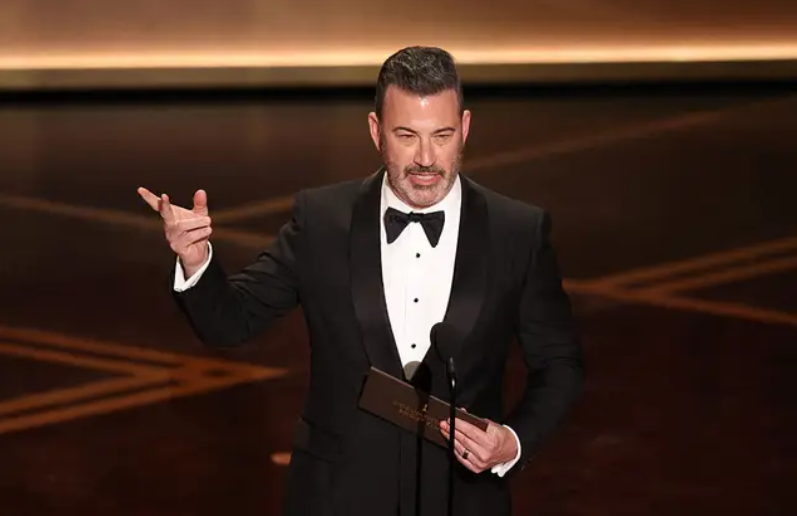
At the 98th Academy Awards, Jimmy Kimmel stepped on stage not as the evening’s main host, but as the presenter for the Best Documentary Feature category. That didn’t stop him from delivering one of the night’s most talked-about moments, a pointed bit of humor that referenced Melania Trump’s recent documentary and drew a noticeable reaction from the audience. Even without the hosting spotlight, Kimmel reminded everyone why he is such a familiar voice at the Oscars, blending show-business polish with a bold comedic edge.
This year’s hosting duties went to Conan O’Brien, while Kimmel took on a focused role to introduce the documentary nominees. The field was a strong one, including Ryan White’s Come See Me in The Night and Geeta Gandbhir’s The Perfect Neighbor. The award ultimately went to Mr. Nobody Against Putin, a film by David Borenstein and Pavel Talankin that explores how teacher Pavel Talankin’s students were influenced and guided to support Russia’s invasion of Ukraine. It is the kind of story that resonates deeply in today’s world, where documentaries often serve as our most immediate connection to complex, sometimes dangerous, realities.
Before handing over the statuette, Kimmel set the tone by speaking about the courage it can take to tell the truth on camera. He remarked that some documentaries put their makers at genuine risk and hinted that not every country’s leaders are supporters of free expression. Without naming names, his suggestion was clear: real-world consequences can follow those who shine a light into dark corners. He then shifted gears with a mischievous grin, adding a quip that compared risky truth-telling to lighter fare that simply follows someone wandering around the White House trying on shoes. The contrast landed hard, and the audience responded with a mix of laughter and surprise.
Staying in that vein, the 58-year-old comedian nudged further with a gentle but unmistakable dig aimed at former President Donald Trump, noting that a certain someone might be unhappy that his wife wasn’t among the night’s nominees. Kimmel never said Trump’s name, but there was no mystery about whom he meant. The line was quick, but it crystallized the moment: this was a celebration of documentaries that take risks and push for truth, with a playful side-swipe at a very different kind of film.
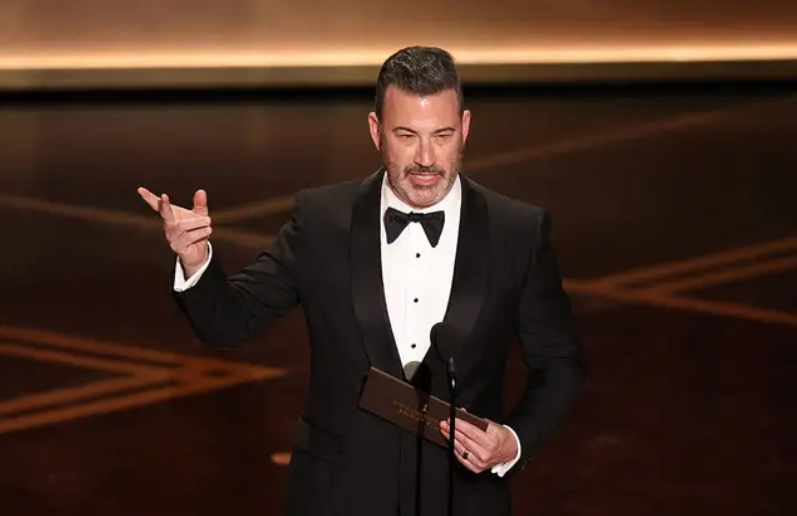
The reference, of course, was to Melania, the Amazon documentary that premiered in January and followed Melania Trump in 2025 as she prepared to re-enter the White House following Donald Trump’s 2024 election victory. The production promised exclusive access—intimate conversations, behind-the-scenes meetings, and a look into spaces that few people ever see. In essence, it offered a carefully curated window into the life of a former First Lady stepping once again into a global spotlight.
The film drew considerable attention even before it debuted. Reports circulated that Melania Trump secured substantial compensation for opening up her world, with figures reaching as high as $40 million for the rights to that exclusive access. After the film’s release, the reactions were sharply divided. Some viewers were drawn in by the intimacy and by the logistics of a return to public life, while others argued the film lacked the critical perspective that many now expect from documentaries, particularly those centered on political figures. As of now, it holds a very low rating on Rotten Tomatoes, a sign that critics were not won over by its approach or its storytelling choices.
Melania Trump herself has answered criticism with composure, explaining that the project aimed to achieve specific goals and that, from her perspective, it had already succeeded in doing so. She emphasized that reactions are a matter of personal taste—some viewers would embrace it, others would not—and expressed pride in the finished work regardless of the polarized responses it generated.
Financially, the rollout of Melania became a story of its own. Early reports suggested it brought in around $7 million during its opening weekend. That figure raised eyebrows across the industry because in the run-up to release, many theaters didn’t appear especially crowded for showings. The mismatch between the anecdotal experience of emptier cinemas and the headline number led to a flurry of late-night commentary and water-cooler debates about how modern releases are marketed, measured, and reported in an era dominated by streaming and data dashboards.
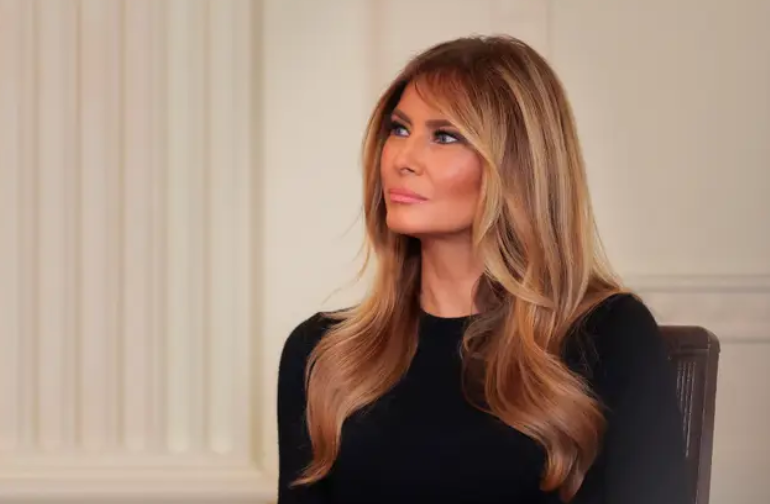
On his own show, Jimmy Kimmel Live!, Kimmel leaned into that curiosity, wondering aloud how the film posted such a notable figure when the pre-release buzz didn’t seem to match. In typical late-night fashion, the remark worked on two levels: it was a comedic jab but also a reflection of broader questions about how the industry tallies revenue and momentum now that cinematic storytelling lives across multiplexes, digital storefronts, and at-home services.
Kimmel’s familiarity with the Oscars stage made his presence at this year’s ceremony feel comfortable and assured. He is no stranger to the role of ringleader; he previously helmed the awards in 2017, 2018, 2023, and 2024. His approach has usually mixed old-fashioned showmanship with modern, topical humor—especially the kind that draws lines between Hollywood and the headlines. Last year, his hosting style even prompted a sharp critique from Donald Trump, who called him the worst host. Kimmel, unfazed, responded with a wry retort that turned the insult into fuel for another laugh. That back-and-forth likely added extra electricity to his onstage remark this year.
Stepping back, it’s worth noting how the Best Documentary Feature category has grown in stature over the past few decades. Once seen as a niche part of the program, it has become a centerpiece of cultural conversation, routinely showcasing stories that bend public opinion, expose injustice, and give voice to those who might otherwise be unheard. The victory for Mr. Nobody Against Putin fits that tradition, reminding viewers that the stakes for truth-tellers can be very real. Against that backdrop, Kimmel’s joke about lighter fare had more texture than a simple punchline: it was a contrast between the power of investigative storytelling and the allure of personal-brand mythmaking.
For many viewers, especially those who have watched the Academy Awards evolve over the years, this blend of serious recognition and witty commentary is part of what keeps the ceremony compelling. It is an event uniquely positioned to both celebrate artistry and serve as a mirror to the times. Whether you tune in for the acceptance speeches, the musical performances, the tributes, or the occasional headline-making quip, the Oscars often leave us with moments we end up discussing for days afterward. Kimmel’s quick nod to Melania Trump’s documentary was one of those moments in 2026.
Melania, controversy, and the question of what a documentary should be
The back-and-forth about Melania’s value as a documentary taps into a bigger debate about the genre itself. Some believe documentaries should always probe, question, and hold powerful subjects accountable. Others feel there is room for insider access and personal portraiture, even if it avoids a confrontational tone. Both approaches have long histories in non-fiction filmmaking. Still, the closer a film gets to political power, the more viewers tend to expect journalistic rigor, and that expectation likely fueled the chilly critical reception. The strong reactions reveal how much people care about what the word documentary signifies.
At the same time, the business of documentaries has shifted. Streaming platforms and major distributors are vying for content that can capture attention in a crowded media landscape. Big deals for high-profile subjects are part of that reality. When attached to a public figure as well-known as Melania Trump, every creative choice is magnified, every rumored contract number becomes part of the narrative, and every early box-office figure becomes a Rorschach test for one’s view of the project. In that swirl, Kimmel’s joke functioned like a pin in the balloon—lightening the mood while acknowledging a controversy already simmering in the background.
A brief tour of unforgettable Oscar flashpoints
The Oscars have never been only about ball gowns and golden statues. For many of us who have watched for decades, certain moments stick in memory because they said something larger about the industry, the culture, or the world beyond the Dolby Theatre. Below is a look back at several headline-making incidents that, like Kimmel’s quip this year, linger long after the orchestra stops playing.
Hattie McDaniel breaks ground but faces segregation in the room (1940)
In 1940, Hattie McDaniel became the first Black woman to win an Academy Award, honored as Best Supporting Actress for her performance in Gone with the Wind. The triumph was historic, yet the night carried a harsh reminder of the era’s realities. McDaniel was seated separately from many of her colleagues, away from the film’s other stars. Even so, she delivered a moving speech that audiences still recall for its grace and gratitude. It was a defining moment that opened doors for countless performers who followed, even as it illuminated how far the industry and the country had to go.
When the Oscars bristled at politics from the stage (1993)
In the early 1990s, political statements during acceptance speeches were a sensitive subject for the Academy. By 1993, high-profile presenters and winners who used the stage to champion causes sometimes faced pushback. Actors like Tim Robbins, Richard Gere, and Susan Sarandon became symbols of that tension. Reports from the time describe how those who spoke out were, for a period, not welcomed back as presenters. Whether viewed as censure or just caution, the episode reflected a recurring question that hovers over awards shows: how much should the ceremony be a platform for advocacy, and where should the line be drawn?
Marlon Brando declines his Oscar and sends Sacheen Littlefeather (1973)
In 1973, Marlon Brando won Best Actor for The Godfather but chose not to attend. Instead, he sent activist Sacheen Littlefeather to address the audience. She explained that Brando was declining the award in protest of how Native Americans were portrayed in Hollywood and in light of events unfolding at Wounded Knee in South Dakota. The reaction in the hall was mixed, with cheers and boos ringing out. Decades later, the moment remains one of the clearest intersections between Hollywood tradition and social activism on the Oscar stage.
Sacha Baron Cohen’s cloud of controversy on the red carpet (2012)
Sacha Baron Cohen has built a career on provocative humor, and his Oscars appearance in 2012 was no exception. Dressed as his character from The Dictator, he arrived carrying a prop urn he jokingly described as containing the ashes of North Korean leader Kim Jong Il. In a chaotic instant, the so-called ashes spilled in the direction of host and interviewer Ryan Seacrest, leading to a flurry of startled reactions and an unforgettable clip played again and again in the news that week. It was a reminder that the red carpet, too, can become part of the show’s lore.
#OscarsSoWhite forces a reckoning about representation (2015 and 2016)
When the 2015 nominations were announced, many noticed that Black artists and other artists of color were glaringly absent from the major categories. The hashtag #OscarsSoWhite captured the frustration and catalyzed a broader conversation about opportunity, access, and the ways excellence is recognized. The pattern repeated in 2016, compounding the criticism and prompting boycotts as well as promises of change. Comedian Chris Rock, who hosted that year, used his opening monologue to directly address the controversy, turning the stage into a forum for uncomfortable, necessary questions that continue to shape the industry.
A winner announced, then un-announced: the Moonlight and La La Land mix-up (2017)
The 2017 Best Picture reveal was a moment nobody could have scripted. Warren Beatty and Faye Dunaway took the stage to announce the year’s top honor. In a jaw-dropping twist, La La Land was named the winner and its team began their speeches. Moments later, confusion took over as it became clear a card mix-up had occurred. Producer Jordan Horowitz calmly stepped forward to explain that Moonlight was the actual winner and invited that film’s team to the stage. It was both mortifying and strangely uplifting: the grace shown in the midst of chaos turned a blunder into a testament to professionalism.
Will Smith’s onstage slap reverberates worldwide (2022)
One of the most startling moments in Oscars history occurred in 2022 when Will Smith walked onto the stage and slapped presenter Chris Rock following a joke about Jada Pinkett Smith. The room was stunned into silence. A short time later, Smith won Best Actor and returned to the microphone in a state very different from the usual celebratory mood. The incident sparked international debate about comedy, boundaries, respect, and the intense pressures that can boil over in front of millions. It remains a cultural touchpoint that people still reference when discussing live television’s unpredictability.
Why Kimmel’s 2026 quip resonated
So why did Jimmy Kimmel’s comment about Melania Trump land with such force this year? Part of the answer lies in contrast. On one hand, the Best Documentary Feature category featured a film that scrutinized a deeply consequential geopolitical story. On the other, Kimmel alluded to a project centered on private access to a powerful household, a film that emphasizes proximity rather than provocation. Comedy often works in that space between the serious and the superficial, the risky and the glossy. By framing his joke around that tension, Kimmel underscored what many viewers already felt about the competing visions of what documentaries can be.
The remark also carried extra charge because Kimmel and Donald Trump have exchanged barbs before. Their public back-and-forth during the 2024 awards season laid the groundwork for new jokes in 2026. Whether one applauds Kimmel’s boldness or prefers the Oscars without political undertones, his ability to tap into the cultural conversation is part of what makes moments like these echo beyond the broadcast.
A ceremony that reflects the times
For audiences who have been tuning into the Oscars for decades, this year’s show was a reminder of the event’s unique character. It is at once a glamorous celebration of cinema and a stage where our broader cultural debates play out in real time. Documentaries continue to command greater respect, and with that respect comes scrutiny over the values they embody. When a film bravely questions power, it earns admiration. When a film opens private doors without asking hard questions, it invites skepticism. Both can draw crowds. Both can inspire discussion. And sometimes, a single well-timed joke is enough to crystallize that entire conversation.
Jimmy Kimmel’s Oscars appearance this year was brief but memorable. By pointing to the difference between risk-taking storytelling and soft-focus portraiture, he gave the audience a laugh and a lens. However you feel about the films or the figures involved, that swift, smiling jab was a reminder of why live television can be so compelling. It captures not just the winners and the speeches, but the spirit of the moment itself.
As the credits rolled on the 98th Academy Awards, the documentaries left their mark, the winners clutched their statues, and the debate about what a documentary should be continued into the night. And for many viewers, especially those who have seen the Oscars through countless eras and evolutions, that debate is part of the enduring appeal. The show gives us artistry to admire, stories to debate, and, from time to time, a quip that becomes part of Oscars history.



