
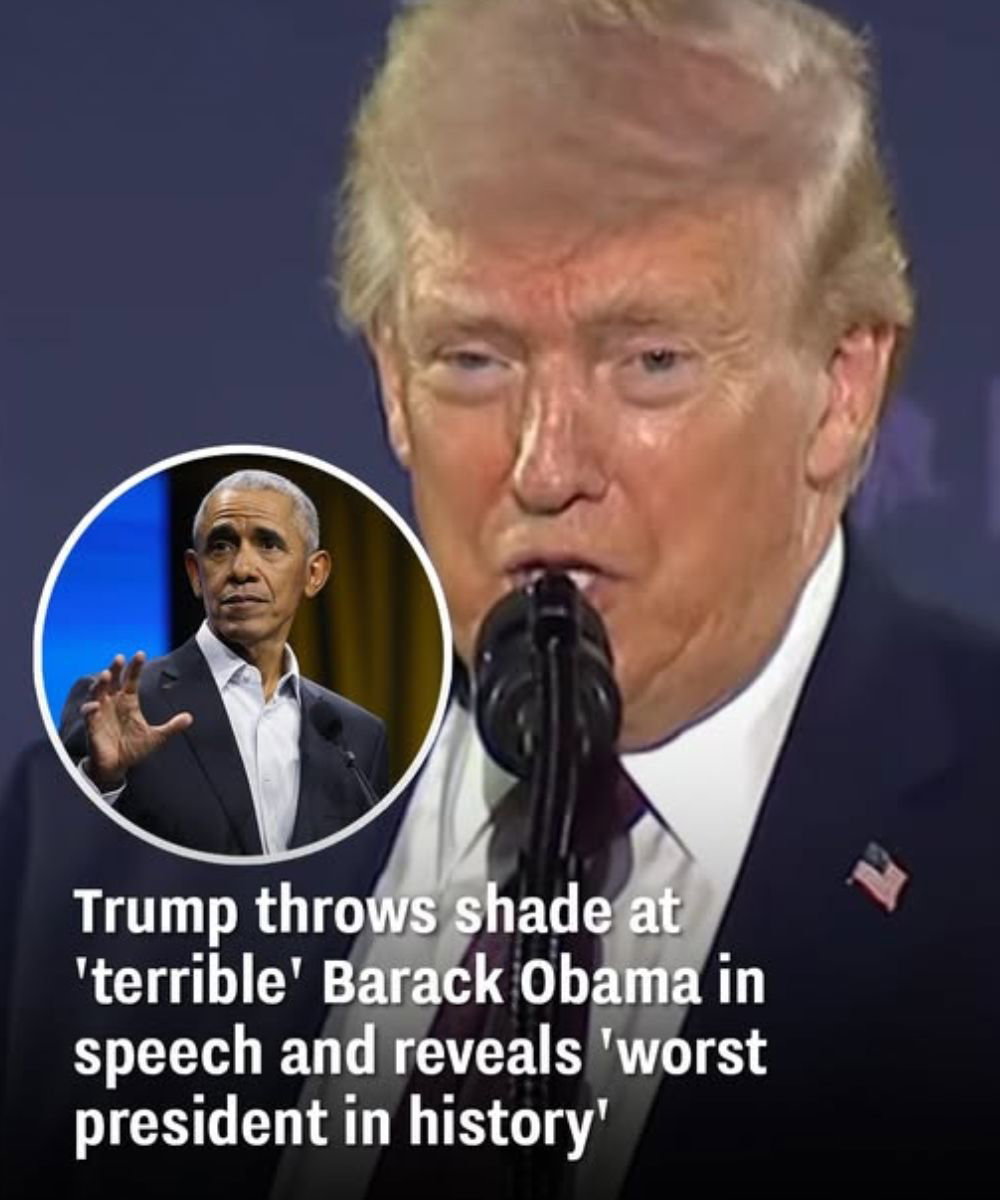
At a Washington fundraiser, Trump calls Obama “terrible” but says Biden holds the title of “worst in history”
Speaking for roughly an hour at a National Republican Congressional Committee fundraising dinner in Washington, D.C., Donald Trump took aim at two of his Democratic predecessors. He described Barack Obama as a “terrible” president but stopped short of calling him the worst, reserving that label for Joe Biden. Trump’s remarks came during a wide-ranging address that mixed political critiques with familiar themes from his past campaigns.
The event, attended by Republican lawmakers, donors, and guests, offered Trump a friendly audience and a platform to rally his party. He urged Republicans to stay united as they look ahead to upcoming elections, repeating his well-known promise to make the country strong, proud, and safe. He encouraged attendees to channel their energy into victories and spoke optimistically about the party’s chances if it stays focused and disciplined.
Trump also acknowledged the challenges of shifting polls and public opinion, noting that political fortunes can move quickly. He advised patience and persistence, emphasizing turnout, messaging, and party unity as key ingredients for success in the months to come. Throughout, his tone blended confidence with urgency as he pressed his case to a room filled with party insiders.
For many in the audience, the evening felt like a return to familiar territory. Trump revisited his central themes of border security, the economy, foreign policy, and public safety, while also drawing sharp contrasts with Democratic leaders. While his language was pointed, he also worked to energize supporters by reminding them that elections are won with organization and enthusiasm, not only with speeches.
After receiving a new party award, Trump broadens his critique of past presidents
During the dinner, House Speaker Mike Johnson presented Trump with the inaugural “America First Award,” a recognition that tied the evening to the policy slogan that defined much of Trump’s time in office. The presentation offered a ceremonial moment, setting the stage for Trump to revisit debates over presidential legacies and policy differences across administrations.
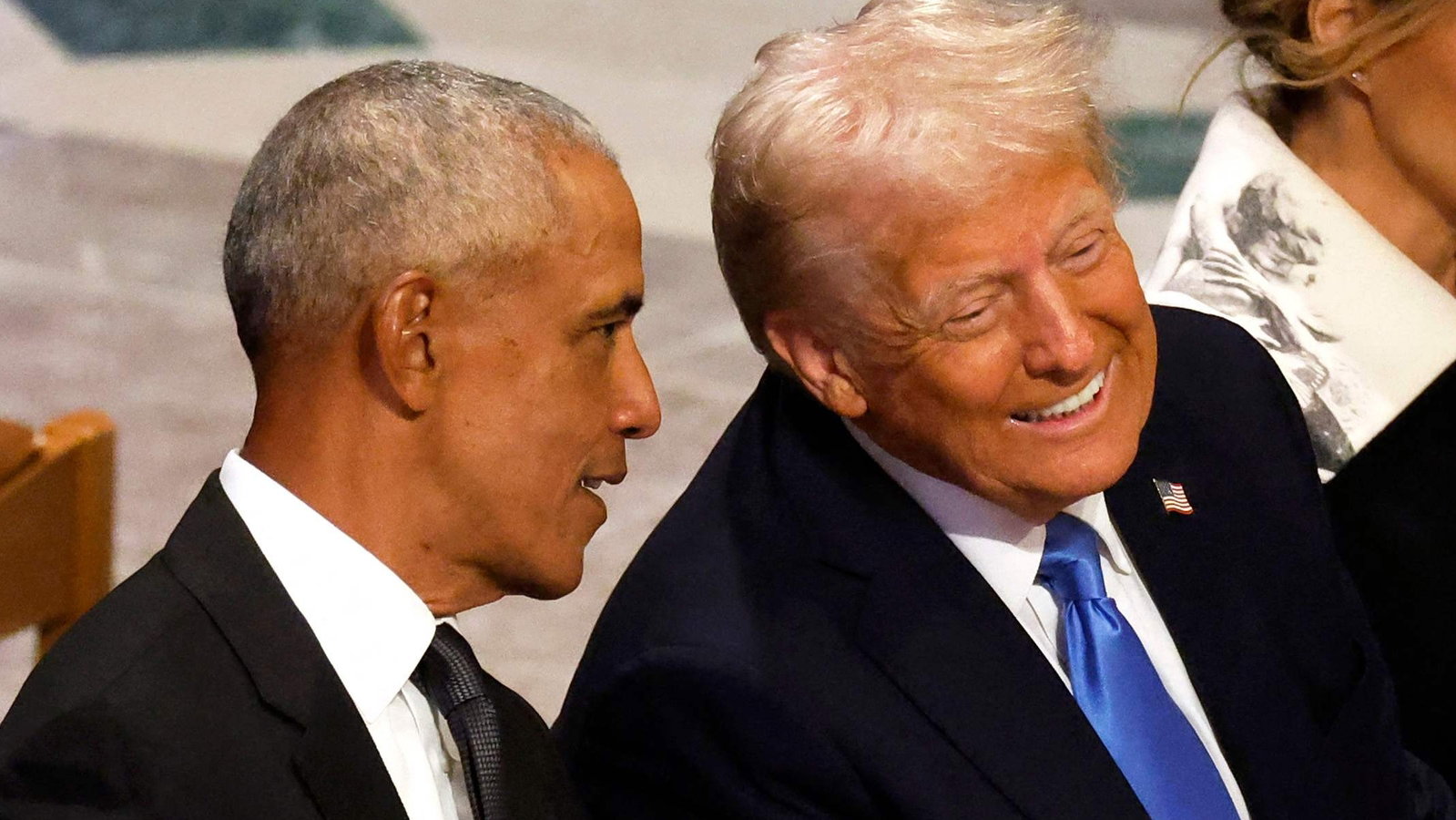
From there, Trump sharpened his criticism of predecessors, focusing most heavily on Barack Obama and Joe Biden. He portrayed Obama as divisive and ineffective, arguing that the policies of the Obama years led to deeper political strains at home and weak leverage abroad. Although he used forceful language, he made a point of reserving his harshest judgment for the current administration, saying Joe Biden is, in his view, the “worst president in history.”
Trump also revisited a dispute that has long defined the foreign policy divide between his administration and Obama’s: the Iran nuclear issue. He argued that the Obama-era agreement with Iran, commonly known as the nuclear deal, was a poor bargain that left the United States and its allies less secure. He said that the agreement gave Iran too much relief from sanctions without ending the country’s nuclear ambitions, and he reminded the audience that he withdrew the United States from the deal when he took office.
For those who may not have followed every turn of this debate, the Iran arrangement he referred to sought to limit Iran’s nuclear activity in exchange for relief from certain economic restrictions. Supporters have said it placed meaningful limits on Iran’s program and established a system of monitoring, while critics argued it was temporary, too lenient, and too narrow to address Iran’s wider behavior in the region. By returning to this topic, Trump highlighted a contrast he considers central to his record—strong pressure on adversaries, fewer concessions, and what he calls clearer red lines.
In addition to foreign policy arguments, Trump linked his critique of Democratic leadership to domestic concerns, pointing to costs of living, border enforcement, crime, and energy policy. He framed these issues as everyday worries for families and retirees, saying that stable prices, safe communities, and reliable energy are not partisan desires but basic needs. In his telling, the way to address those needs is to change course at the ballot box, though he kept his focus on party motivation rather than detailed legislative proposals during the speech.
All of this played into the broader theme of the evening: a call for Republican unity. Trump urged attendees to avoid internal divisions and to focus on what unites them. He cast the next round of elections as a decisive chance to revisit policy priorities he believes worked well before, including stricter border measures and a more confrontational stance toward certain foreign governments.
No immediate responses from Obama or Biden representatives
As of the speech and its immediate aftermath, representatives for both Barack Obama and Joe Biden had not offered public responses to Trump’s characterization. That silence is not unusual in the quick churn of political news; responses often come later, if at all. In the meantime, Trump’s remarks circulated widely, drawing attention across television segments, radio shows, and online discussion.
While the evening focused primarily on Republican enthusiasm and party fundraising, the absence of immediate replies from the Obama and Biden teams left Trump’s critique unchallenged in the moment. Whether that changes in the days ahead remains to be seen, as former presidents and current administrations sometimes choose not to amplify remarks by engaging with them directly.

Trump’s view on Iran and the Middle East tensions, and a swift denial from Tehran
Earlier in his address, Trump raised current tensions in the Middle East, referring to a recent period of heightened alert and reports of coordinated U.S.–Israel military activity that involved Iran. Without delving into sensitive operational details, he used the moment to argue that American resolve influences global behavior, and that firmness discourages adversaries. He claimed that Iran’s leaders want to reach a new agreement but are holding back because of internal and external pressures.
Trump’s broader point was that leverage matters. He suggested that strong economic sanctions, military readiness, and close partnerships with allies can bring adversaries to the table on better terms. He then connected that approach back to his decision to leave the previous nuclear arrangement, saying that his preferred strategy is to negotiate only when the United States holds the advantage, even if it requires a longer wait.
However, within hours of reports highlighting Trump’s comments, Iran’s Parliament Speaker, Mohammad Bagher Ghalibaf, publicly dismissed the notion that any such negotiations were underway. He labeled the idea as “fake news,” saying it was intended to sway financial and oil markets and to distract from challenges facing the United States and Israel. His remarks underscored how swiftly political statements can generate international responses, especially when they touch on sensitive security matters.
For observers trying to make sense of these back-and-forth claims, it helps to remember that negotiations—if they occur—are rarely straightforward. Governments send signals through public comments, private talks, and indirect channels. That means one side may claim talks are possible while the other side denies any movement, particularly when domestic audiences are listening closely. As a result, the truth can be difficult to verify in real time, and the public often receives a patchwork of statements before any concrete agreements come into view.
Still, Trump’s discussion of Iran served as a reminder that foreign policy debates remain central in American politics. Concerns about nuclear proliferation, missile programs, and regional conflicts are not abstract to many Americans, especially those who follow the news closely or have loved ones who serve in the military. These topics carry real consequences for global stability and for everyday issues like energy prices. In that sense, foreign policy is never far from the kitchen table.
Context for readers: the NRCC event, the award, and why it matters
The National Republican Congressional Committee, often shortened to NRCC, is the party organization focused on electing Republicans to the U.S. House of Representatives. Fundraising dinners such as the one in Washington bring together officeholders and supporters to bolster campaign resources ahead of election cycles. These gatherings are a chance to showcase party priorities, highlight emerging leaders, and, as in this case, feature a marquee speaker who can energize donors and volunteers.
The “America First Award” presented by House Speaker Mike Johnson was new to this event. The title echoes a theme that shaped Trump’s 2016 campaign and his term in office, emphasizing domestic priorities, economic competition, and a more transactional approach to foreign policy. By embracing that label at the dinner, Republican leaders reinforced their alignment with Trump’s core message and the voters who respond to it.
For attendees and viewers, the award was also a signal that party leaders remain closely tethered to the former president’s brand of politics. In practice, that can mean sharper contrasts with Democrats on border enforcement, energy development, spending and debt, and the posture the United States takes toward rivals overseas. It can also mean a communication style that is punchy and direct, with frequent return to slogans that supporters know by heart.
As for the crowd in the room, the response to Trump’s speech appeared enthusiastic, with familiar applause lines drawing strong reactions. Supporters appreciated his focus on inflation, public safety, and the border, while also cheering his pledge to prioritize American workers and retirees. The overall mood suggested that Republican leaders want to keep the party’s attention fixed squarely on issues they believe resonate with voters in many regions of the country.
How Trump framed the stakes for the months ahead
Looking toward the next round of elections, Trump said the path to victory runs through unity, turnout, and a clear message. He sounded a warning about complacency, reminding the audience that even favorable conditions can change quickly if a party loses focus. He urged Republicans to coordinate their efforts, support their nominees, and avoid public infighting that can dampen enthusiasm among volunteers and voters.
He also argued that Republican policies would deliver practical benefits, particularly for middle-income families and older Americans on fixed incomes. He pointed to the importance of stable prices for groceries, fuel, and utilities, and he emphasized a desire for safe neighborhoods and well-supported law enforcement. In his view, these everyday concerns are the true measure of whether a government is serving its people well.
At the same time, Trump avoided deep dives into legislative text or agency rules. Instead, he framed the choice in broad strokes, contrasting his approach to taxation, regulation, and foreign policy with what he described as the shortcomings of Democratic leadership. For his supporters, that clarity is part of the appeal; for critics, it can raise questions about specifics. At a fundraising dinner, however, big themes often take precedence over technical details.
Reactions and what to watch next
In the immediate wake of the event, Trump’s comments about Obama and Biden drew headlines, while his remarks on Iran invited quick pushback from Tehran. It is common for statements at high-profile political gatherings to ripple outward across the media, especially when they involve stark judgments about presidents past and present. Whether Democratic figures decide to respond directly may depend on the news cycle and their own messaging priorities.
For now, the takeaway for many Republicans is straightforward: stay united, emphasize core issues, and keep donors and volunteers engaged. For Democrats, the evening offered a preview of the arguments they may face repeatedly as campaigning intensifies. And for voters who follow politics closely, the night’s speeches provided another snapshot of how both domestic and foreign policy debates are likely to shape the months ahead.
As always, claims made on the political stage should be weighed against additional reporting and official statements as they become available. That is especially true for matters involving international security and negotiations, where information often emerges in pieces and at a measured pace. In the meantime, Trump’s remarks have set the tone for another round of spirited discussion about presidential legacies, America’s role abroad, and the policies each party believes will best serve the country.
Bottom line
Donald Trump used a prominent Republican fundraiser in Washington to press a sharper contrast with two Democratic presidents. He labeled Barack Obama a “terrible” leader, but saved his harshest verdict for Joe Biden, whom he called the “worst president in history.” He paired those criticisms with a call for Republican unity and a familiar set of promises focused on strength at home and abroad. He also argued that Iran wants a deal, a claim that Iran’s parliament speaker swiftly rejected as false and manipulative. As of the event’s close, representatives for Obama and Biden had not publicly responded.
For those watching from home, the message was clear and easy to follow: expect the debate to intensify, expect foreign policy to remain front and center, and expect both parties to define the next election as a choice about the country’s direction. Whether one agrees with Trump or not, the evening underscored how forcefully he intends to make his case—and how engaged his audience remains.



