Trump takes aim at several Democratic rivals in new remarks
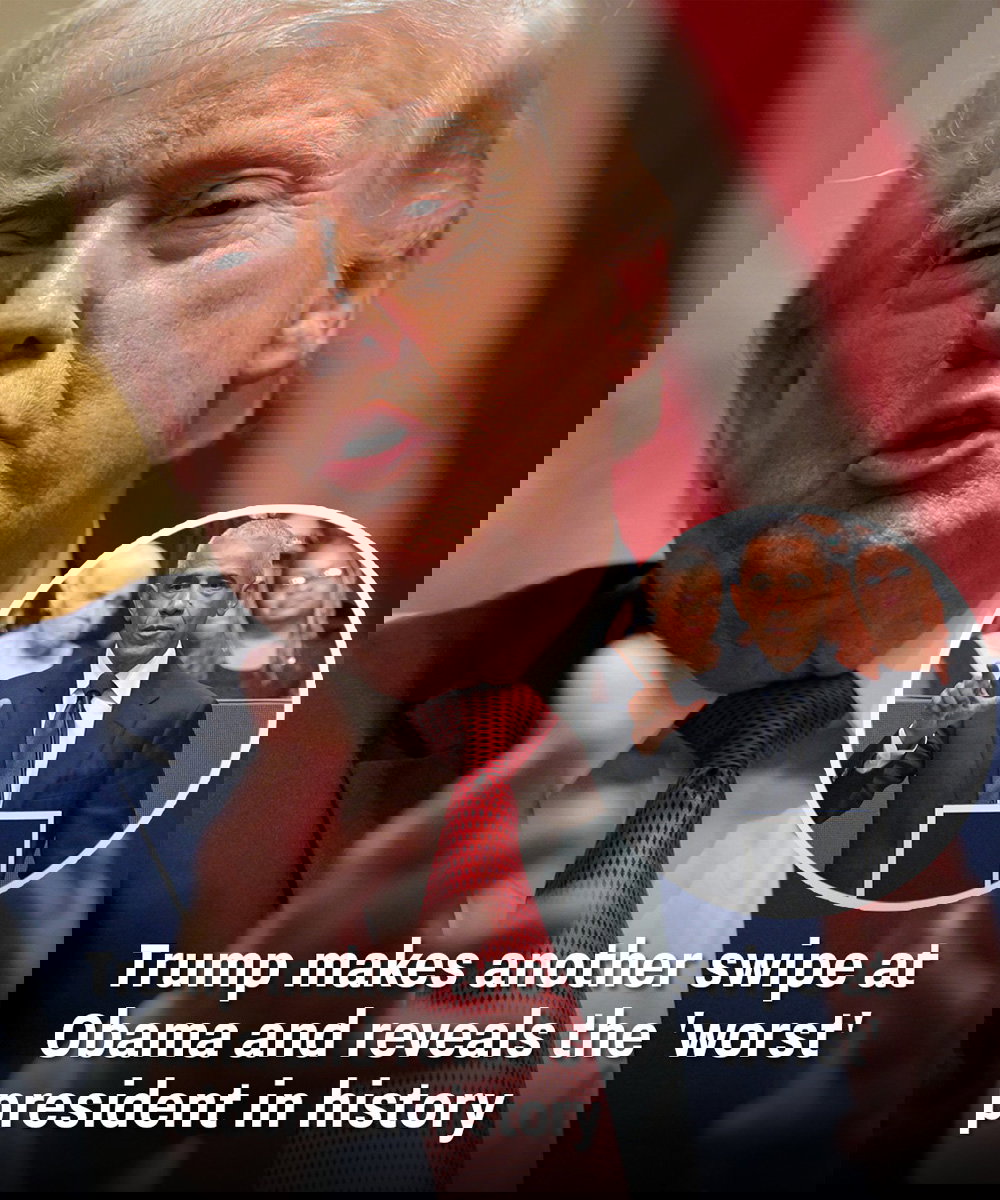
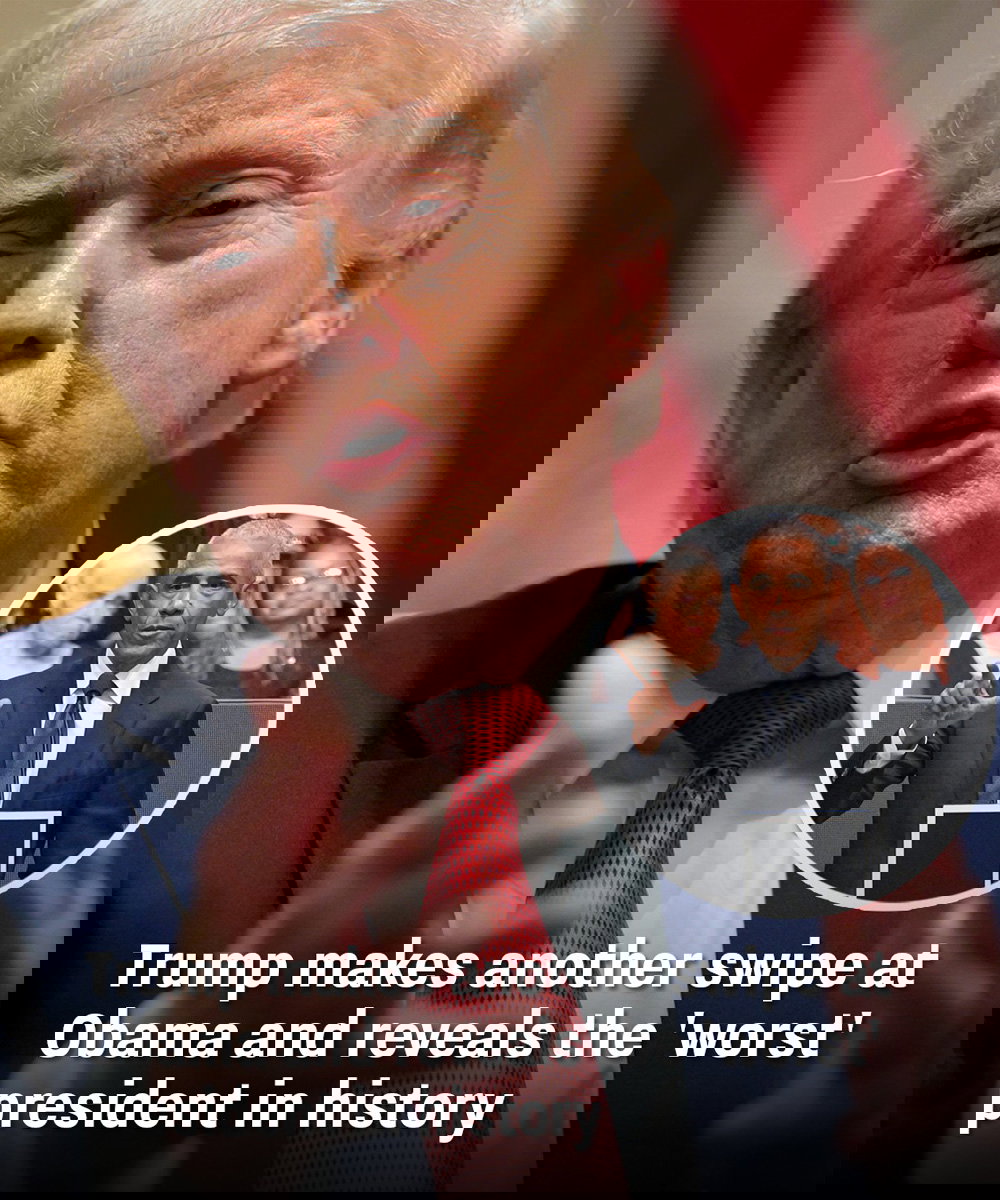
In a fresh round of public comments that drew wide attention, former President Donald Trump used a recent speech to criticize several of his longstanding political rivals. His remarks, which echoed themes familiar to those who have followed him for years, centered on President Joe Biden, Vice President Kamala Harris, and former President Barack Obama. While Trump frequently uses sharp language to draw contrasts with opponents, this latest volley prompted new discussion and pushback, especially across social media.
During the speech, Trump revisited his record in office and talked about what he views as successes, using that backdrop to argue that his rivals have fallen short. He described Joe Biden in tough terms, again assigning the unflattering nickname he has used before and branding Biden, in his view, the worst president in American history. For supporters who appreciate Trump’s blunt style, this directness can feel refreshing. For critics, the language comes across as needlessly divisive. Either way, the message was unmistakably clear and designed to make headlines.
Trump also put Kamala Harris in the spotlight, saying she was “as bad” as Biden. He then added a jab designed to land with a laugh among his audience, saying he might offer the pair an IQ test next week. Although delivered as a joke, the line was repeated widely and drew criticism from those who felt it dismissed Harris’s accomplishments and experience. Trump’s rhetoric, calibrated to energize his base, typically invites strong reactions on both sides, and this moment was no exception.
These comments came as Trump spoke about what he considers key achievements and priorities, laying out a vision tied closely to his previous tenure in the White House. By sharply contrasting himself with Democratic leaders, he attempted to cast the political choice in stark terms. His approach often marries self-promotion, humor at opponents’ expense, and firm critiques of policy and leadership—an approach that supporters see as strength and opponents see as provocation.
Remarks about Barack Obama draw fresh attention
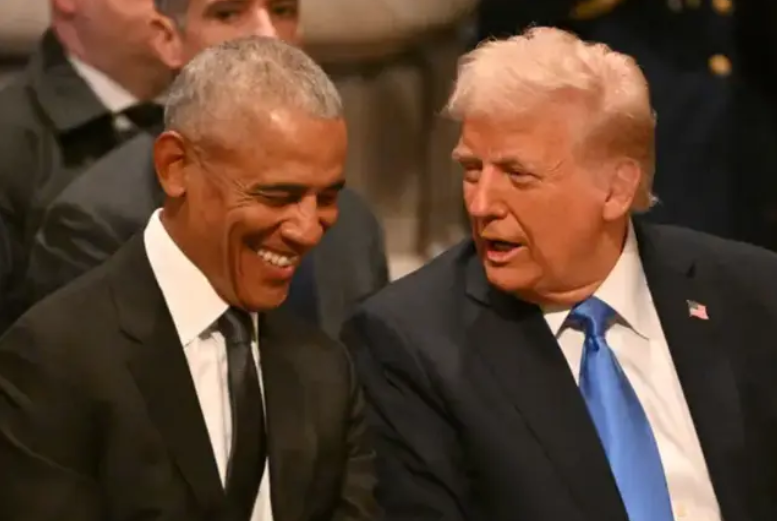
A few days later, while speaking for roughly an hour at the National Republican Congressional Committee’s fundraising dinner, Trump returned to a familiar target: Barack Obama. In these remarks, he again criticized Obama’s leadership and the effect he believes Obama’s administration had on the country. Trump has long argued that Obama’s time in office left the nation divided and on the wrong track, and he reiterated those views with little ambiguity.
He said, in part, “If you go back to Obama, he was a great divider. He divided this nation. He was a lousy president. The worst president in history was Biden. But Obama was a terrible president.” The wording underscored a ranking of recent presidents that places Biden, in Trump’s estimation, at the very bottom, with Obama not far behind. It was a simple, memorable framing designed for repeat mention on television and online.
The response to these lines arrived quickly. On social media, critics voiced frustration, saying Trump’s broad characterizations ignored policy details and nuanced assessments. Supporters, meanwhile, pointed to what they view as clear contrasts on the economy, foreign policy, and border security between Republican and Democratic administrations. The exchange illustrated a familiar pattern: bold claims met by an equal and opposite wave of rebuttals.
Several replies focused on Trump’s comments about Vice President Harris, arguing that reducing complex questions of leadership and decision-making to a quip about intelligence was dismissive and unfair. One commenter asked why Trump often mentions low IQ, suggesting the insult merely distracts from substantive debate. Another voice described Trump as lacking the standing to critique anyone’s competence. While social media reactions span a wide spectrum, the thrust of the pushback was straightforward: critics wanted more focus on policy and less on personal barbs.
Alongside the debate about presidential rankings and political performance, attention also turned to Trump’s discussion of cognitive testing. That thread resonated differently for different audiences. Some saw it as a helpful point of transparency—after all, health and acuity questions often follow presidents and presidential candidates. Others saw it as another opportunity for point-scoring, with each side eager to interpret the comments in a way that bolstered their favored narrative.
What sparked the exchange about cognitive tests
Trump drew fresh notice when he spoke at length about undergoing cognitive assessments. “I’m the only president that ever took a cognitive test,” he said, before explaining that he had taken such a test three times and that doctors praised the results. For those unfamiliar, a cognitive assessment commonly checks aspects of memory, attention, orientation, and problem-solving. Medical professionals sometimes use these tools to screen for potential issues, and they can include basic tasks such as recalling a list of words or identifying patterns.
Trump elaborated, “I took it three times. It’s actually a very hard test for a lot of people. It wasn’t hard for me… It starts off with an easy question and by the time you get to the middle it gets tougher – mathematical equations and things.” He followed that by saying, “I aced it all three times, in front of numerous doctors.” As he told it, he even received a warning beforehand that if he did poorly, word might get out. He emphasized that one doctor said he had never seen anyone get every question correct in two decades of administering the test.
It is worth noting, especially for those who have not encountered such exams, that a standard cognitive screening is not an IQ test. The tests have different aims. A cognitive screening can help identify whether someone might need a more detailed evaluation for memory or thinking changes. An IQ test, by contrast, tries to estimate certain aspects of intellectual ability using a different kind of measurement. In public discussion, these distinctions sometimes blur, which is part of why Trump’s quip about offering his rivals an IQ test drew so much attention. People reacted not just to the humor, but to the broader subject of fitness, clarity, and capability in high office.
Trump’s comments about his test results were unsurprising to those who have followed his public statements closely. He has often highlighted examples he believes demonstrate strength, stamina, or mental sharpness. For supporters, that confidence is reassuring. For critics, the self-praise sounds like boasting. Either way, the topic likely remains part of the conversation, particularly as campaigns and public scrutiny intensify.
Why these remarks matter in a heated political climate
Presidential politics frequently revolves around contrasts. Candidates draw attention to differences in record, leadership style, and priorities. Trump’s strategy—mixing policy claims with pointed personal jabs—aligns with the way he has communicated for years. That approach energizes many who feel traditional politics is too cautious or scripted. At the same time, it turns off voters who prefer a calmer tone or more detailed policy talk. The latest remarks about Biden, Harris, and Obama reflect that dynamic, delivering a message that is easy to remember and sure to spark strong reactions.
For many Americans, especially those who have observed decades of political swings, sharp language about who is the “best” or “worst” president is not new. Rankings are debated in books, on television, and around dinner tables. While historians and scholars attempt to assess presidencies using data and long-term outcomes, politicians on the campaign trail often reduce those debates to memorable lines. That is part of the theater of politics, and it is likely to continue as public figures compete for attention in a crowded media environment.
It is also important to note that labels alone rarely change minds. Voters in the middle often ask practical questions: How are prices trending? What does the job market look like? Are communities safe? Is the country respected abroad? Those everyday concerns drive many decisions. When a politician, whether Republican or Democrat, leans into dramatic claims, audiences tend to measure those claims against their personal experiences and trusted sources of information.
Trump’s focus on Obama in particular reveals a broader strategy. By criticizing a well-known former president, he not only revisits long-running disagreements but also draws a contrast that reaches beyond current headlines. Obama’s legacy remains a reference point for many debates about health care, foreign policy, and the role of government. By calling Obama a “great divider,” Trump deliberately positions himself against that legacy, appealing to voters who believe the country needs a different direction.
Supporters cheer the directness while critics see division
Reactions to Trump’s latest comments fell along familiar lines. Supporters praised the straightforward tone and the willingness to say what they feel other politicians only hint at. They argue that too much political speech is wrapped in careful language that obscures the truth, and they see Trump’s style as a corrective to that tendency. For these voters, calling Biden the worst president is not just rhetoric; it resonates with how they interpret recent events at home and abroad.
Critics, on the other hand, argued that this kind of language fuels division and oversimplifies complex challenges. They took particular issue with the suggestion that Harris’s competence could be reduced to a joke. In their view, leaders should model respect, even in disagreement, because the country faces real problems that demand collaboration and serious analysis. They also questioned the habit of grading presidents with sweeping labels, pointing out that any administration includes a mix of successes and setbacks that take time to fully understand.
Social media amplified the exchange. Comments flowing in from all sides showed how quickly a line from a speech can travel and how forcefully people respond when they feel their leaders are being unfairly maligned—or defended. One user’s question about why Trump often references low IQ highlighted a frustration with personal insults. Another person’s statement that an “unintelligent and inarticulate” president had no standing to criticize others illustrated anger moving in the opposite direction. The intensity of the responses underscored how personal politics can feel, particularly when national figures are involved.
For those in the 45–65 age range who have watched many election seasons, this back-and-forth may feel familiar. The tools have changed—television and print once dominated, while now digital platforms rapidly spread sound bites—but the rhythm is similar. Big claims surface, supporters cheer, critics rebut, and the rest of the country tries to separate signal from noise. Understanding that cycle can make it easier to process the latest headlines without feeling overwhelmed.
Context helps make sense of strong claims
When a public figure labels a rival the “worst” in history, it is wise to pause and consider the broader picture. History is long, and the presidency has evolved through wars, economic booms and busts, and major social change. Scholars often look at tangible measures—growth, employment, legislative achievements, foreign policy outcomes—over extended periods. Politicians, by contrast, typically speak to immediate concerns and try to frame the narrative in a way that energizes their side. Both have their place, but they serve different purposes.
Similarly, when cognitive testing enters the discussion, it can be helpful to remember what such assessments are meant to do. They are snapshots, not sweeping judgments. They can be reassuring, and they can also prompt further checks if there are signs of concern. People can draw different conclusions about what a given test means, and that is part of why the conversation can become muddled—especially when mixed with campaign humor and rivalry.
Viewed this way, Trump’s comments function on two levels. On one level, they are a continuation of a communication style that prioritizes boldness and memorability. On another level, they invite a debate over leadership, capability, and direction—issues that matter deeply to many voters. The push and pull between these levels is likely to define much of the political conversation as campaigns continue.
Looking ahead as the conversation continues
Trump’s latest critiques of Biden, Harris, and Obama are unlikely to be his last. As the political season heats up, messages will sharpen, and the pace of claims and counterclaims will accelerate. For those following along, especially readers who prefer a clear, straightforward recap, the key takeaways are simple. Trump declared Biden the worst president in U.S. history, described Harris in similarly harsh terms while making a joke about IQ tests, and said Obama was a “great divider” and a “terrible president.” Those comments sparked a wave of online reactions, both in support and in opposition, and they revived attention to Trump’s earlier statements about taking cognitive assessments multiple times and performing well.
Whether one agrees or disagrees with Trump’s conclusions, the core issues at stake remain familiar: leadership style, policy results, and personal fitness for office. These are the themes that tend to dominate every presidential cycle. The language may be sharper today and the timelines faster, but the underlying questions—about judgment, competence, character, and vision—are the same ones Americans have weighed for generations.
As the conversation moves forward, many people will look beyond the spotlight moments to the everyday realities that affect their families, work, and communities. In that sense, the advice for navigating a noisy political season is steady and practical. Notice the claims. Consider the source. Look for consistent patterns over time. And, when the dust settles after the latest headline, ask whether the arguments address the problems you care about most.
For now, Trump’s pointed words have done what they often do: placed him at the center of the debate and drawn clear lines between him and his Democratic rivals. Supporters feel energized, critics feel galvanized, and the rest of the country sizes up the contrast. The next chapters will be written in more speeches, more interviews, and, ultimately, at the ballot box, where the judgments that matter most are rendered by voters themselves.