

Mary Trump says a single personality trait in her uncle could pose risks far beyond U.S. borders
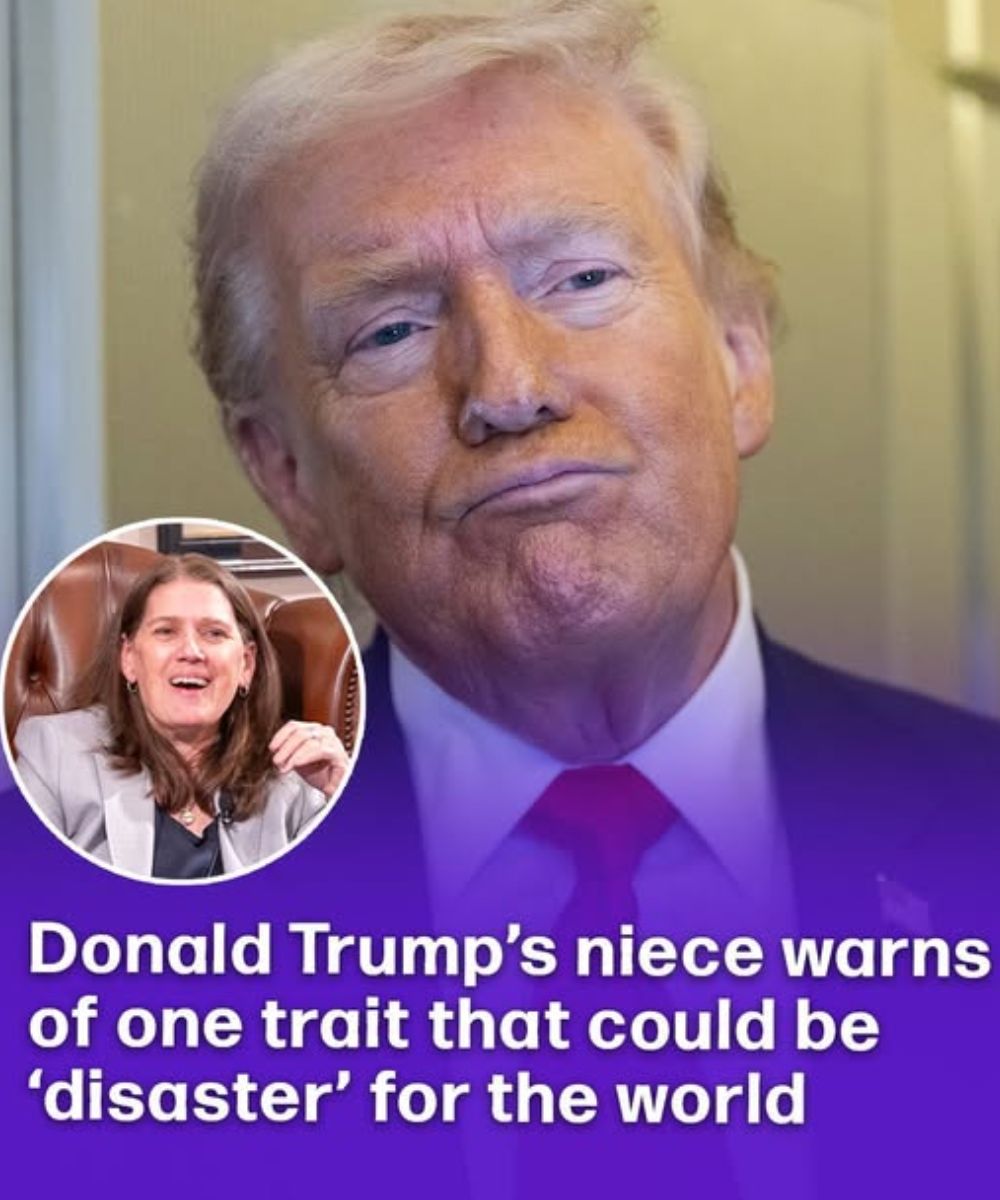
Mary Trump, a longtime critic of her uncle and the daughter of Donald Trump’s late older brother, Fred Trump Jr., shared a fresh warning about his leadership style on her YouTube platform, Mary Trump Media. Speaking in clear, direct terms, she argued that a specific pattern in his behavior could have especially serious consequences when placed on the global stage.
She described a familiar cycle: he begins by testing limits to learn what he can get away with, and if those limits are not enforced, he takes another step, and then another. In her view, this is not a momentary impulse but a method—a way of operating that becomes most concerning when it involves national and international power.

Mary then focused on what she sees as a defining response when he is finally challenged. Rather than pause or reconsider, she believes he tends to double down. It is not just a refusal to step back, she said, but an intensification. In everyday life that might simply create friction. In high office, she warned, it can compound tension and raise the odds of escalation.
In practical terms, her concern is straightforward. When a leader keeps pushing until someone says “no,” and then responds to “no” by pushing harder, the costs can mount quickly. Markets can rattle. Trust between allies can strain. Adversaries can misread signals. And in the worst cases, words can spill over into crises that are more difficult to unwind.
She believes the pattern has shown up repeatedly over time
Mary Trump said this is not a new observation for her. She sees it running through her uncle’s adult life and into his political career. In her telling, it is a through-line rather than a phase, which is why she continues to emphasize it after so many years in the public eye.
She added that, again and again, early resistance to him fades. People who speak up at first often step back later, she claimed, and that retreat seems to reinforce the very behavior they hoped to stop. Each retreat, she said, is read as permission to continue. Over time, the lesson taken is that pressure works and boundaries are movable.
Even so, she suggested there are glimmers that this dynamic may be shifting. She pointed to recent moments in which pushback has been firmer and more consistent, and to a broader public conversation about accountability. Whether this becomes a lasting change, she said, depends on whether institutions and individuals stay steady when challenged rather than wavering after the spotlight fades.
For readers who may not follow every headline, her message was simple and easy to grasp. Some leaders calm the waters when they meet a wall by stepping back, gathering new information, and adjusting course. Others, in her view, approach the wall as something to lean into harder. She places her uncle firmly in the second category and believes that distinction matters when the stakes touch every household, business, and retirement account.
She also connected the behavior she described to a broader idea many people know from everyday life: escalation. When someone invests time, pride, or public standing in a position, it can become emotionally harder to soften that position later. Rather than risk looking like they changed their mind, some people raise the stakes. Translated to global politics, she warned, that impulse can magnify small disagreements into larger standoffs.
In her view, the healthiest antidote is steady resistance to unhealthy pressure. She suggested that boundaries work only if they hold, and that mixed signals invite more testing. For those watching from home, her guidance was to pay attention not just to dramatic moments, but to how leaders respond to the first firm “no.”
Mary Trump emphasized that none of this is abstract. The push-and-respond pattern she described plays out in real policy debates and real negotiations. It shapes how partners, rivals, and citizens interpret words and actions. That is why, she said, it is more than a personality quirk—it is a risk factor when the person involved wields great power.
She also acknowledged that politics can naturally involve tough talk and strong positions. But she drew a line between principled conviction, which can bend when facts change, and what she described as a refusal to adjust even when adjustment would reduce harm. The more public pressure rewards the latter, she warned, the more entrenched it becomes.

Reports say a new 15-point plan aims to ease Middle East tensions, with strict nuclear steps listed for Iran
Amid these concerns about leadership style, reports indicate that the Trump administration has recently put forward a 15-point proposal intended to cool tempers in the Middle East. According to the BBC’s coverage, the plan calls for Iran to dismantle its nuclear capabilities and pledge not to pursue nuclear weapons under any circumstances.
Those reports also describe a framework that goes beyond a single demand. They mention the possibility of easing certain sanctions under defined conditions, encouraging civilian nuclear cooperation for peaceful energy needs, and placing limits on missile programs. Oversight by the International Atomic Energy Agency—often referred to as the IAEA—is said to be part of the envisioned verification process. There are also provisions touching on the Strait of Hormuz, a narrow but vital waterway through which a large share of the world’s oil shipments pass.
To make sense of the details, it helps to consider what each piece tries to do. Sanctions relief would aim to create incentives for compliance by offering economic breathing room if milestones are met. Civilian nuclear cooperation would, in theory, make it easier for a country to generate electricity without stepping anywhere near weapons development. Missile limits are meant to reduce the range and sophistication of delivery systems that could threaten neighbors. And IAEA involvement is designed to answer the crucial question every negotiator eventually asks: how will we know if the promises are being kept?
Press TV, Iran’s state broadcaster, reported that Tehran rejected the proposal. In its place, according to that report, Iran set out its own conditions. These reportedly include an end to ongoing hostilities, assurances that conflict will not resume in the future, compensation for damages already suffered, a wider ceasefire across the region, and formal recognition of Iran’s authority over the Strait of Hormuz.
These starting positions highlight just how complicated such diplomacy can be. Each side places its most important demands at the center, and those demands often clash. Security concerns and domestic politics shape what is possible. So do memories of past deals—what worked, what failed, and who felt burned. Taken together, the gulf between proposals is not just about technical language; it is about trust, face-saving, and long-running grievances.
Many readers will remember past efforts to negotiate over Iran’s nuclear program. Whatever one’s view of earlier agreements or withdrawals, the recurring challenge has always been the same: turning assurances on paper into behavior that can be seen and verified in the real world. That is why technical phrases such as “enrichment levels,” “centrifuge counts,” and “access for inspectors” show up so often when these issues reappear in the news, even if they can feel far removed from daily life.
The mention of the Strait of Hormuz in both reporting and reactions is especially notable. This is the narrow maritime passage connecting the Persian Gulf to the open seas. Disruptions there ripple far and fast, driving up shipping costs and, at times, energy prices. For families on fixed incomes or watching their retirement investments, volatility linked to that corridor is not just a headline. It can influence the cost of heating, fuel, and a wide range of goods.
When Mary Trump talks about the dangers of escalation, this is the kind of setting that worries her. Strong rhetoric can harden positions; hardened positions can narrow room for compromise; and narrowed room for compromise can make accidents or miscalculations more likely. In her mind, this is how a leader’s personal style can spill outward—first into a negotiation, then into markets, and finally into the daily lives of people who had no say in the matter.
At the same time, experienced diplomats often remind the public that proposals are, by design, opening bids. They stake out ambitions and red lines. Progress, when it happens, usually comes in steps, with each side moving by inches rather than miles. Patience, clarity about goals, and consistent enforcement of terms can move even very difficult issues forward. But those virtues also depend on a willingness to reassess when a tactic is not working—a point that echoes Mary Trump’s core criticism.
For those following along at home, it can help to translate the distant-sounding details into everyday terms. A demand to dismantle a capability is only meaningful if a neutral party can check the work. A promise not to build a weapon matters if there are consequences for breaking it. Economic relief matters if it is tied to actions that last longer than a news cycle. And a guarantee against future conflict is only as strong as the mechanisms that kick in when tempers flare again.
None of this means success is impossible. History shows that well-structured agreements, backed by steady enforcement and real incentives, can reduce risks that once seemed unmanageable. It does mean, however, that style and substance are inseparable. How leaders handle setbacks, how they respond when someone says “no,” and how they talk about opponents can all tilt a fragile process toward either progress or breakdown.
Mary Trump’s warning, then, is less about one dramatic moment and more about a pattern she believes repeats itself. She is urging people to watch the moments after a setback. Do leaders adjust, learn, and find a path forward? Or do they raise the temperature and accuse others of weakness? In her view, the second path brings the world closer to the kinds of outcomes most people wish to avoid.
Her message is also a reminder that citizens and institutions play a part. Boundaries do not hold because they are announced; they hold because they are enforced fairly and consistently. Those who value stability, whether in politics or the economy, often prefer predictable rules that are applied the same way to everyone. That is as true in a neighborhood association as it is in geopolitics.
As for the Middle East proposal described in news reports, it represents one more test of whether hard problems can be approached with firmness and flexibility at the same time. If both sides signal that they are willing to take verifiable steps, there may be room to narrow differences. If one or both sides insist on maximal positions without a path to verification and reciprocity, stalemate becomes more likely—and the world watches nervous headlines about oil routes and military postures all over again.
For older readers who have seen cycles like this before, from the Cold War to later conflicts, the rhythm can feel familiar. Initial demands, counterdemands, and the essential question of trust never go away. What changes are the personalities involved and the tools at their disposal. In that sense, Mary Trump’s focus on personal tendencies is not a distraction from policy; it is part of understanding how any policy might play out under pressure.
In closing, her core point is easy to grasp without being simplistic. Power magnifies habits. A habit of pushing until checked—and then pushing harder—may win some short-term battles. But on the world stage, especially where misunderstandings can have real costs, she believes it is a formula that courts unnecessary risk. Whether people agree with her assessment or not, the reminder to watch for escalation, seek verification, and value steadiness is a practical lens for anyone trying to make sense of fast-moving events.
That lens will likely be useful in the weeks ahead. If the 15-point proposal goes anywhere, the public will hear more about inspections, timelines, and phased steps. If it stalls, attention will return to rhetoric and posturing. Either way, the same questions apply: Are leaders acting in ways that cool tempers or inflame them? Are new facts prompting new decisions? And are the world’s most sensitive flashpoints being managed with the care they demand?
Mary Trump’s recent comments invite readers to keep those questions front and center. They also invite a broader, calmer kind of attention—one that looks beyond the day’s most heated exchanges to the patterns that shape what comes next. For anyone concerned about stability, that is a helpful way to watch the news, one measured step at a time.



