
What began as a polished summit at the White House turned into a moment that had people talking around the world. The gathering was planned to spotlight education and technology, but a single scene captured in photographs quickly took center stage and stirred a mix of wonder and questions.

In carefully organized sessions and speeches, Melania Trump welcomed guests to a forward-looking conversation. Yet the detail that drew the most attention was not a phrase or policy line. It was a striking, futuristic presence moving through the historic halls, creating a powerful contrast that few expected to see.
Those photos, now widely shared, seem to hold two eras in one frame. On one side, the long tradition of diplomacy. On the other, a glimpse of the tools and companions that may shape the next chapter of daily life. The result is both elegant and a little uncanny, and it has kept people engaged long after the event ended.
Beyond the first glance, the scene invites a deeper look at what the day was about: preparing the next generation with the skills and confidence to thrive as technology evolves. That larger purpose guided the agenda, and it framed the unexpected moment that followed.
A Purposeful Summit With a Twist
Inside the East Room, Melania Trump welcomed world leaders, educators, and technology innovators to a summit called Fostering the Future Together. The theme was clear and practical: how to bring education and modern tools together so young people can learn more effectively and grow into their potential.
In her remarks, she emphasized collaboration. The message was simple and encouraging. When schools, families, businesses, and governments work side by side, doors open for students who might otherwise be left out. The tone throughout was measured and calm, keeping the focus on solutions and shared responsibility.
There was a strong sense that this was not just another event on the calendar. It was positioned as a starting point for new partnerships and programs that could help children learn the basics while also gaining comfort with the technologies that are becoming common at home and at work.
Yet even as the formal program unfolded, something unusual was waiting in the wings, ready to turn the day into a moment people would remember.
Global Influence and a Historic Setting
Representatives from a number of countries sat together under the White House chandeliers, listening with interest as the vision for the coalition was laid out. The message rose above politics and borders, pointing instead to values that many people share: opportunity, curiosity, and the steady work of learning over a lifetime.
The scene felt both historic and forward-facing. Guests spoke about practical ways to widen access to high-quality learning, from early reading to science labs to hands-on projects. The idea of unity ran through the room. There was an understanding that preparing children for the future requires patience, practice, and teamwork.
Some of the most meaningful moments were quiet ones. A nod of agreement during a speech. A brief exchange at the edge of the room. A sense that even small steps, taken together, can make a large difference when the goal is to help children succeed in a changing world.
It was in this atmosphere of shared purpose and careful optimism that the unexpected guest made an appearance that turned heads.
A Diplomatic Exchange Before the Surprise
Before the moment that would sweep across the internet, Melania Trump spoke with global figures in a calm and respectful manner. Among those she engaged with was Brigitte Macron, reflecting the broader spirit of the summit. Their interaction, though brief, echoed the themes of the day: good faith, open dialogue, and a steady focus on the next generation.
There is a certain rhythm to gatherings like this. Introductions are made, ideas are compared, and commitments are discussed. In that rhythm, the guests found common ground. The goal was not to make a headline, but to build a bridge. Ironically, it was right after this measured diplomacy that the moment destined for the headlines arrived.
That timing gave the scene extra meaning. It was as if the past and the future had shaken hands, each acknowledging the other’s place in the story of education and innovation.
Then Came the Unlikely Scene
With the formalities moving along, Melania described plans for wide-ranging efforts to improve learning opportunities. She spoke of smart partnerships between public and private groups, fresh ideas for classroom tools, and practical paths to bring resources to more children.
And then, something few had anticipated appeared in the corridor. Modern engineering joined the pageantry of the White House, offering a living example of the very subject at hand: how technology is stepping off the page and into daily life.
The room did not break into chaos. Instead, there was a ripple of surprise, a sense that everyone understood they were witnessing a sign of the times. Phones were lifted. Eyes widened. A quiet buzz replaced the earlier hush as people tried to take in what they were seeing.
The Image That Captured the Internet
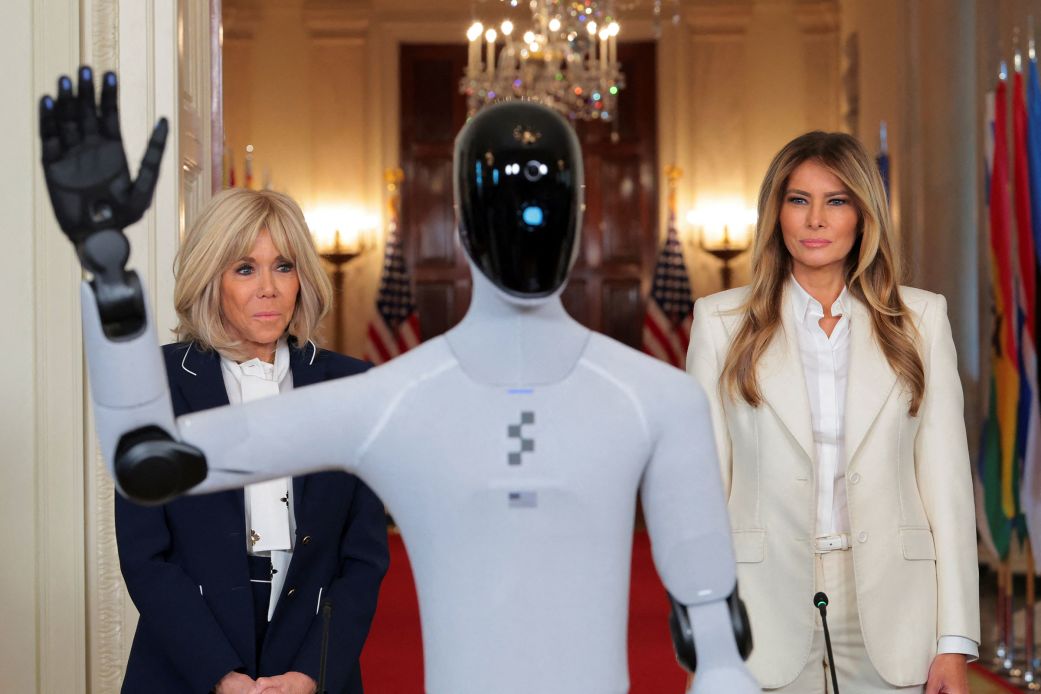
Soon after, photographs emerged of Melania Trump walking beside a humanoid robot in a White House hallway. The contrast was striking. Polished floors and classical columns on one side, and a sleek, modern machine on the other. It was a study in opposites that somehow fit together in the same frame.
What gave the image such power was its simplicity. No big stage, no dramatic lighting. Just two figures, moving with purpose, one human and one engineered, side by side. For some, it felt like a quiet promise that tradition can adapt to new tools. For others, it raised questions about how fast change is coming and how ready we are to meet it.
Within hours, the photo had traveled far beyond the event. It sparked conversation at kitchen tables, in office break rooms, and across social media. People brought their own experiences to what they saw, and that is part of why the moment stayed in the public eye.
Meet the Robot
The machine seen in those images is known as Figure 03. It is part of a new wave of humanoid robots designed to move in ways that are familiar to us. The goal with machines like this is not to replace human warmth or judgment, but to take on tasks that are repetitive, heavy, or time-consuming, and to learn from the people around them.
Figure 03 brings together sensors, software, and careful engineering so it can understand its surroundings, keep its balance, and communicate clearly. Think of it as a tool that can adapt to the situation, whether that is carrying supplies, assisting with logistics, or providing a demonstration in a learning environment. It stands as an example of how far robotics has come in a short time.
Its presence at the White House fit the theme of the day. It was not a trick or a distraction. It was a reminder that the tools students learn about in class can now stand in the same room, offering a real-world example of tomorrow’s possibilities.
For many people, seeing a humanoid robot up close changes the conversation. It stops being an idea and becomes something you can point to and discuss in clear, concrete terms.
Mixed Reactions Online

The reaction on social media was swift and divided. Some viewers found the scene inspiring. They saw it as a symbol of confidence, a sign that innovation can move in step with the institutions that shape our lives. Others described it as eerie or unsettling, unsure of how they felt watching a robot move with a human-like grace in such a historic place.
Both responses make sense. New technology often creates mixed feelings at first. It takes time to grow comfortable with devices that behave in familiar ways without being human. That pause for reflection can be healthy. It gives communities a chance to ask good questions about safety, privacy, and the right roles for machines in daily life.
Amid the back-and-forth online, one point stood out. However you feel about robots, students are already growing up with them around. The task now is to shape that future thoughtfully, with education that emphasizes curiosity, responsibility, and respect for people.
Beyond the Buzz: The Bigger Message
Even with the spotlight on that remarkable image, the heart of the summit stayed the same. Melania Trump called for collaboration, long-term planning, and a practical approach to bringing high-quality learning to more children. She spoke of opening doors and creating confidence, so students from every background can move forward with steady steps.
The day was not meant to deliver instant fixes. It was meant to build energy for the steady work that makes a lasting difference. That work includes supporting teachers, equipping classrooms, and inviting families and communities to be partners in learning. Technology has a role to play, but so do patience, kindness, and common sense.
In that sense, the robot was a conversation starter, not the whole story. It brought the future into focus, while the summit kept the spotlight on the people who will live in that future and the skills they will need to succeed.
Why This Moment Matters to Many Families
For parents and grandparents, the questions raised by the summit are practical ones. How can children learn safely with new tools? How can schools make technology feel helpful instead of overwhelming? How do we make sure that students learn the basics, like reading, writing, and problem-solving, while also getting ready for jobs that may use advanced machines?
These are reasonable questions, and the answers do not come from a single device or a single day. They come from steady progress. Well-designed lessons. Support for teachers. Simple rules that protect privacy and encourage good habits. And a mindset that treats technology as a tool people control, not the other way around.
When communities take that approach, technology becomes less intimidating. It becomes another way to give children practice thinking clearly, working with others, and finishing what they start. Those are skills that help in any decade.
A Gentle Introduction to Humanoid Robots
For anyone seeing a humanoid robot for the first time, a few points can make the picture clearer. Machines like Figure 03 do not think or feel the way people do. They follow instructions and learn patterns through software. Their greatest strength is doing the same kind of task many times with steady focus, which can be useful in settings like warehouses, clinics, or demonstrations.
Safety is built into the design. Sensors help robots notice people and objects. Balance systems help them move carefully. Communication tools allow them to respond to simple directions. None of this replaces human care or judgment. It is meant to help people by taking on work that is dull, dirty, or difficult.
In classrooms or at public events, a robot can be a teaching tool. It can show students how coding affects motion, or how sensors detect the world. It turns abstract ideas into something you can see, which can make learning feel more real and more fun.
Tradition Meets Technology in the East Room
Part of what made the images so memorable is the setting itself. The White House carries a sense of history that reaches back through generations. When a modern machine moves across those polished floors, the eye notices. The contrast invites people to think about how the past and the future speak to each other.
There is value in that conversation. Traditions hold important lessons about patience, service, and respect. Technology offers tools that can make life safer, healthier, and more efficient. When those two meet, the goal is not to erase one or the other, but to find a balance that honors both.
That is what many people saw in the photographs. A reminder that change does not have to mean losing our footing. With care and cooperation, it can mean finding a steady path forward.
Questions People Are Asking
Many viewers have wondered how common humanoid robots will become and whether they will show up in everyday places. Others are asking about rules, safety, and how to prepare students for a world where advanced machines may work alongside people. These are fair, practical questions, and they point to the importance of clear policies and steady education.
Another question comes up often: how do we keep the human touch at the center of learning and care? The answer is simple and reassuring. People lead. Machines assist. When that order is respected, technology becomes a helpful partner rather than a distraction.
There are also questions about jobs. History shows that new tools can change the kind of work we do, but they can also create new roles. Preparing students with flexible, human-centered skills—communication, creativity, and problem-solving—helps them adapt to whatever tools come next.
What Could Come Next
The summit framed the day as a beginning. The likely next steps include building partnerships that bring technology into learning in careful, useful ways. That might mean pilot programs in schools, training for teachers, or toolkits that help families understand how to use devices wisely at home.
Public events can do more than make a splash. They can start a cycle of attention, planning, and follow-through. If that cycle continues, children will see steady improvements in how they learn and practice new skills, from simple coding to thoughtful research to teamwork on real projects.
What matters most is keeping the focus on students and their growth. When that focus is clear, decisions about which tools to use become easier, and the path forward feels less confusing.
The Lasting Impression
In the end, it was not only the speeches that stayed with people. It was that unforgettable walk through a White House corridor, where a First Lady and a humanoid robot shared the frame. The image captured a meeting point between tradition and change, between familiar rituals and the possibilities of tomorrow.
Some will see the moment as bold and exciting. Others will feel cautious and prefer a slower pace. Both views have a place in a healthy conversation. What the photos made clear is that the future is not far away. It is already at the door, and we each have a role to play in shaping it wisely.
If this summit has a single lesson, it is that progress is a team effort. Families, teachers, leaders, and innovators all have something to contribute. When they work together with patience and purpose, the next generation gains not just knowledge, but confidence. And that may be the most important gift of all.
So the day will be remembered for more than a headline. It will be remembered for a picture that asked a simple, powerful question: how do we carry our best traditions forward while making room for new tools that can help us learn, work, and care for one another? The answer lies in steady steps, clear values, and a willingness to learn—qualities that never go out of style.