New reports raise questions about alleged private online activity linked to Bryon Noem
Reports circulating this week suggest that Bryon Noem, the husband of Kristi Noem, may have participated in a private online lifestyle community that has now drawn public attention. The discussion began after images said to be connected to him appeared in a media report, sparking curiosity, concern, and a wave of reactions across the political and public spheres.
According to these accounts, the images and messages point to a niche role-play subculture. While the details remain unverified, the coverage has prompted a broader conversation about privacy, online personas, and how the personal lives of public figures and their families can quickly become headline news.
Kristi Noem, who the reports note previously served as Secretary of Homeland Security before leaving that position in March, has been married to Bryon since 1992. Sources close to the family suggest that she was taken by surprise by the allegations, which center on activity in specialized internet forums that many outside the community may find unfamiliar or confusing.
The media outlet that published the story, the Daily Mail, claims to have obtained photos that appear to show Bryon in stylized attire associated with a particular online subculture. The outlet also says it has seen messages from people who describe being part of a community sometimes referred to as a “bimbofication” space—language that reflects a specific, exaggerated role-play persona rather than day-to-day identity.
For readers who may not be familiar with the term, this type of online role-play typically focuses on fantasy and self-presentation. Participants may use costumes, image filters, or character-driven posts to experiment with exaggerated styles. It is not unusual for such communities to remain private or pseudonymous, and many participants keep their involvement strictly separate from their offline lives.
The report further alleges that Bryon may have expressed particular preferences within that role-play setting and may have spent notable sums of money on online interactions, including exchanging images. Some of the figures mentioned, including totals up to $25,000, have not been independently verified, and such numbers should be approached with caution until confirmed by reliable sources.
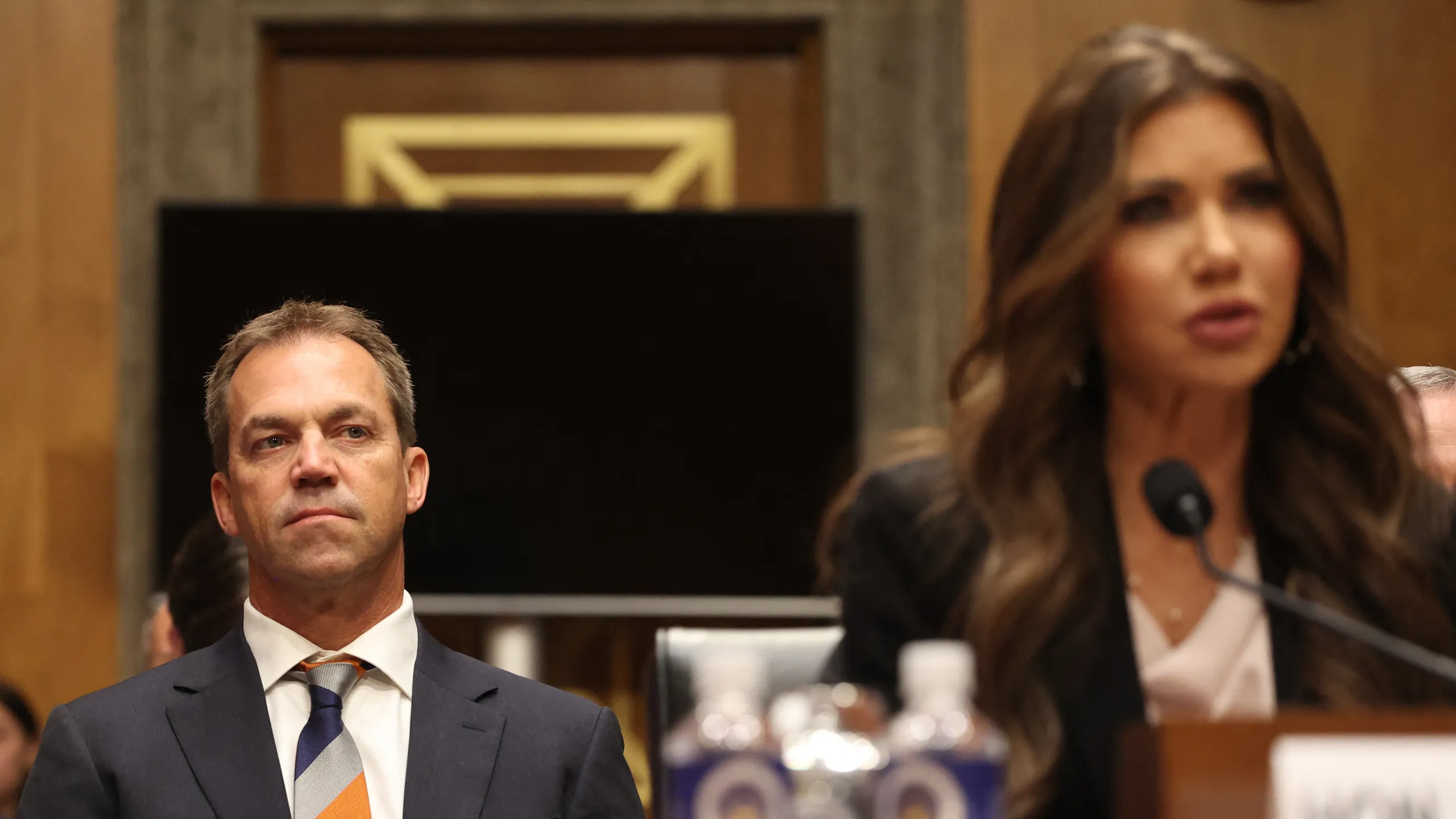
Questions about online aliases and the limits of digital privacy
The same report suggests that an alias or screen name may have been used in these communications, a common practice in private online communities where participants value separation between their public and personal lives. Even so, as many people have learned in recent years, online material can be difficult to contain, and once images or messages circulate, they can be shared widely and quickly taken out of context.
A spokesperson for Kristi Noem addressed the situation and emphasized the family’s emotional response. They said the family was blindsided by the stories and asked the public for patience and privacy. For many families, whether in the public eye or not, unexpected revelations about personal matters can be challenging and distressing.
These developments have also underlined how the internet blurs boundaries. Individuals who create a separate online persona might believe they are keeping that world at arm’s length from their daily routines. However, screenshots, forwarded messages, and the viral nature of social media can erode that separation, sometimes leading to misunderstandings or incomplete portrayals of what actually took place.
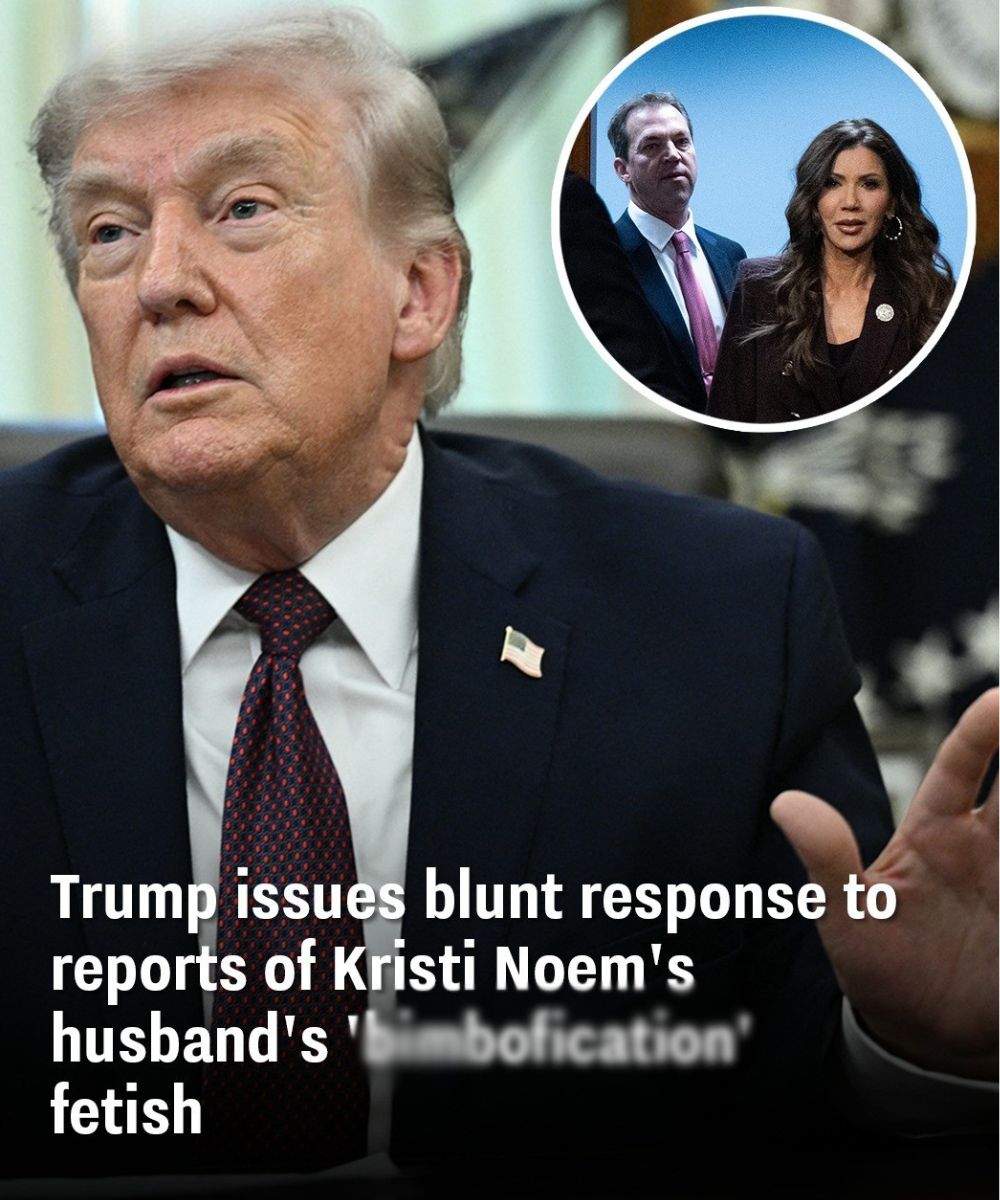
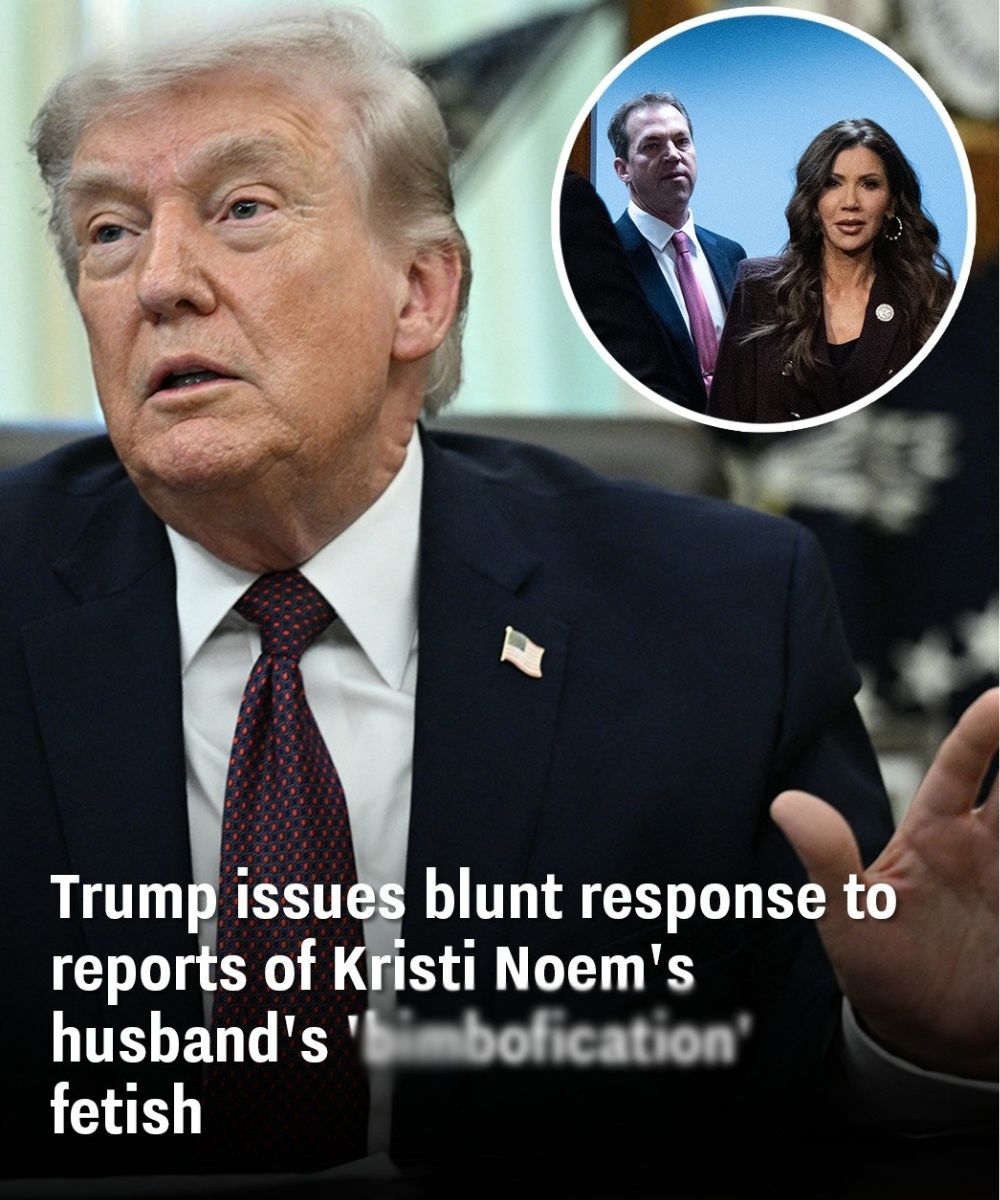
When the reports emerged, journalists asked former President Donald Trump for his reaction. He expressed sympathy, saying that if the stories are accurate, he feels badly for the family. He also noted that he had not personally reviewed all the details and therefore could not speak to the specifics. His remarks aimed to recognize the sensitivity of the situation without drawing premature conclusions.
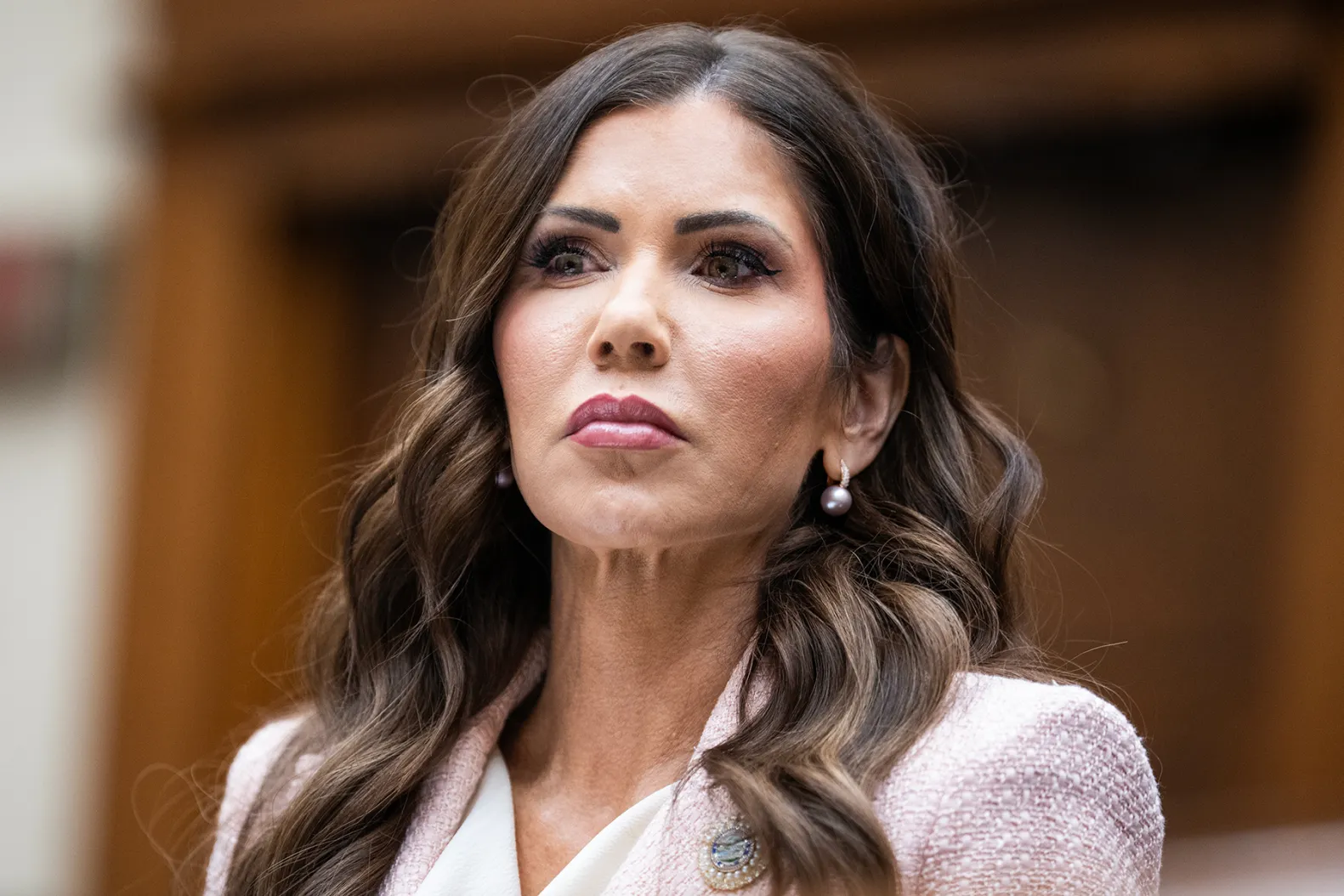
“If it’s confirmed, that’s unfortunate. I feel badly for them,” Trump says, urging caution until facts are clear
Trump’s brief statement reflects a sentiment many share: that personal matters, particularly those involving a marriage and a family, should be handled with care and avoided as political footballs. While the public has a legitimate interest in the conduct of individuals connected to government, it is also true that private, non-official behavior—especially when unverified—requires a thoughtful, measured approach in coverage and commentary.
Some national security voices have weighed in more broadly on the risks that can arise when intimate or sensitive personal information—real or fabricated—becomes public. Former officials and analysts point out that such information, if known to adversarial actors, could potentially be used as leverage in attempts at influence or coercion. This perspective is not a verdict on any specific person; rather, it is a reminder that privacy and security often travel together in the modern digital world.
As one former intelligence officer explained, when sensitive details appear in the public domain, it is a reasonable assumption that foreign services may also notice them. That does not automatically mean a vulnerability exists, but it does highlight why those in and around government are encouraged to practice strong digital hygiene and to be mindful about any online engagements that could be misconstrued or misused.
Understanding the role-play context without judgment
Many readers in the 45–65 age range may be encountering terms and communities like this for the first time. It can be helpful to remember that a great deal of online behavior takes place in fantasies, role-play, or stylized personas that are not reflective of how someone operates in their everyday life. For some, these spaces are simply a creative or escapist outlet. Others may step away from them entirely after a time, leaving only a digital trace behind.
That said, the internet rarely forgets. In a world of screenshots and cloud archives, even deleted images or messages may continue to circulate. This durability is why personal discretion is so often advised, and it also explains why families can feel blindsided when something they never expected to surface suddenly appears in public view.
Within this story, the specifics remain claims reported by a single outlet. Until confirmed by primary sources or corroborated independently, the details should be treated as allegations rather than established facts. Responsible reporting—and careful reading—means acknowledging uncertainty and avoiding leaps beyond what has actually been verified.
The family’s response and the human side of public scrutiny
According to the spokesperson, Kristi Noem and her family are processing the situation and asking for space. They share three children, and like any family, they must weigh how to address questions from friends, neighbors, and the wider public. It is easy to forget that headlines often involve real people who did not choose to be in the spotlight.
For households connected to public service, personal privacy can be especially difficult to protect. The pressure can show up at unexpected times and can linger long after a news cycle has moved on. Regardless of political views, extending a measure of compassion and patience recognizes our shared humanity and the reality that every family faces challenges, some of them quite personal.
In the coming days, the family may decide to say more, or they may choose to keep their comments brief. Either approach is understandable. What matters most, from a public perspective, is that any claims are handled with accuracy and fairness, and that the difference between verified information and rumor is respected.
Security considerations and why they come up in stories like this
When analysts mention potential vulnerability, they are generally talking about a principle rather than a judgment. If someone has information they would rather keep private—especially if it could be embarrassing or damaging—there is a possibility that an outside party could try to exploit that. This is part of why agencies encourage officials and their families to use secure communication, be cautious with unknown contacts, and keep personal and professional lives clearly separated.
However, it is essential to remember that not every private activity creates a security issue. Context matters. The key questions are whether any behavior could affect decision-making, whether it opens the door to manipulation, and whether appropriate steps are taken to safeguard personal data. In many cases, prudence and good digital habits go a long way toward minimizing risks.
In this particular situation, nothing reported so far indicates a breach of official duties. The conversation has centered on alleged private online activity, described as role-play, and on how such material—if genuine—might be perceived. Until definitive evidence and authoritative confirmations emerge, that is where the line reasonably sits.
How digital footprints form and why aliases do not guarantee anonymity
For anyone who came of age before the internet era, it can be surprising how easily online activity leaves a lasting mark. Pseudonyms and alternate profiles can provide some shelter, but they are not foolproof. Payment records, shared images, overlapping contacts, or reused usernames can create links that determined individuals may piece together over time.
Even so, many people use aliases online for legitimate reasons: to explore hobbies, to keep work and personal lives apart, or to avoid unwanted attention. The existence of an alias is not, by itself, evidence of wrongdoing. It is part of a broader digital culture in which many activities—from reading groups to fitness forums—operate on a first-name-only or screen-name basis.
When stories like this appear, it can help to slow down, look for corroboration, and consider how much is known versus how much is being inferred. That approach is especially valuable when personal reputations are in play.
Trump’s reaction and the broader political context
In his short response, Trump communicated empathy while stressing that he had not reviewed the full report. That strikes a balance between acknowledging public interest and recognizing that families deserve care in moments of uncertainty. His remarks also show how quickly personal stories can intersect with political narratives, especially when they involve figures who have held or still hold national roles.
For observers, this intersection is a reminder not to rush to conclusions. Political stories often evolve as new details surface. Keeping an open mind and focusing on confirmed facts helps prevent misunderstandings and reduces the chance of unfairly amplifying unverified claims.
Kristi Noem’s current work and what may come next
Following her departure from the Department of Homeland Security, reports indicate that Kristi Noem has taken on a new assignment as Special Envoy for the Shield of the Americas, a multinational initiative established during the Trump administration. While the details of that role were not the focus of these reports, it underscores that she remains engaged in public-facing work and will continue to draw attention, both supportive and critical.
As for what happens next, further reporting may clarify which elements of the story can be confirmed. Families sometimes provide additional statements once they have had time to process news and consider their options. Media outlets may also publish follow-up pieces that confirm, correct, or contextualize earlier claims.
In the meantime, the fair approach is to acknowledge the uncertainty, extend courtesy to those personally affected, and avoid passing along rumors as if they were settled facts. That standard is good for public discourse and for the individuals at the center of any high-profile story.
A practical takeaway for readers navigating sensitive headlines
For anyone sorting through stories that mix private life and public responsibility, a few guiding ideas can help. First, distinguish between what has been verified and what remains alleged. Second, consider whether personal behavior—especially if it is legal and private—truly bears on public duties. Third, remember that online role-play and stylized self-presentation are surprisingly common and do not necessarily reflect a person’s core character.
Finally, do not forget the people behind the headlines. Families can be hurt by rumor and speculation, and they deserve room to respond in their own time. When we give one another the benefit of patience and fairness, we help build a more respectful conversation—one that informs without needlessly inflaming.
Where the story stands now
At present, the narrative rests on media claims that include images and alleged messages tied to a private online community, along with comments from sources who say they were connected to that space. A family spokesperson has said the Noems were blindsided and are seeking privacy. Donald Trump offered sympathy while noting he had not reviewed the details. Experts have reminded the public that sensitive personal information, if widely known, can sometimes be misused—but that each case should be judged carefully and on its own merits.
As more information becomes available, clearer answers may emerge. Until then, readers are well served by a balanced view: one that recognizes the human side of the story, treats unverified reports with caution, and reserves judgment until the facts are established. In a fast-moving media environment, that kind of steady approach remains the surest way to stay informed without losing sight of fairness and empathy.