
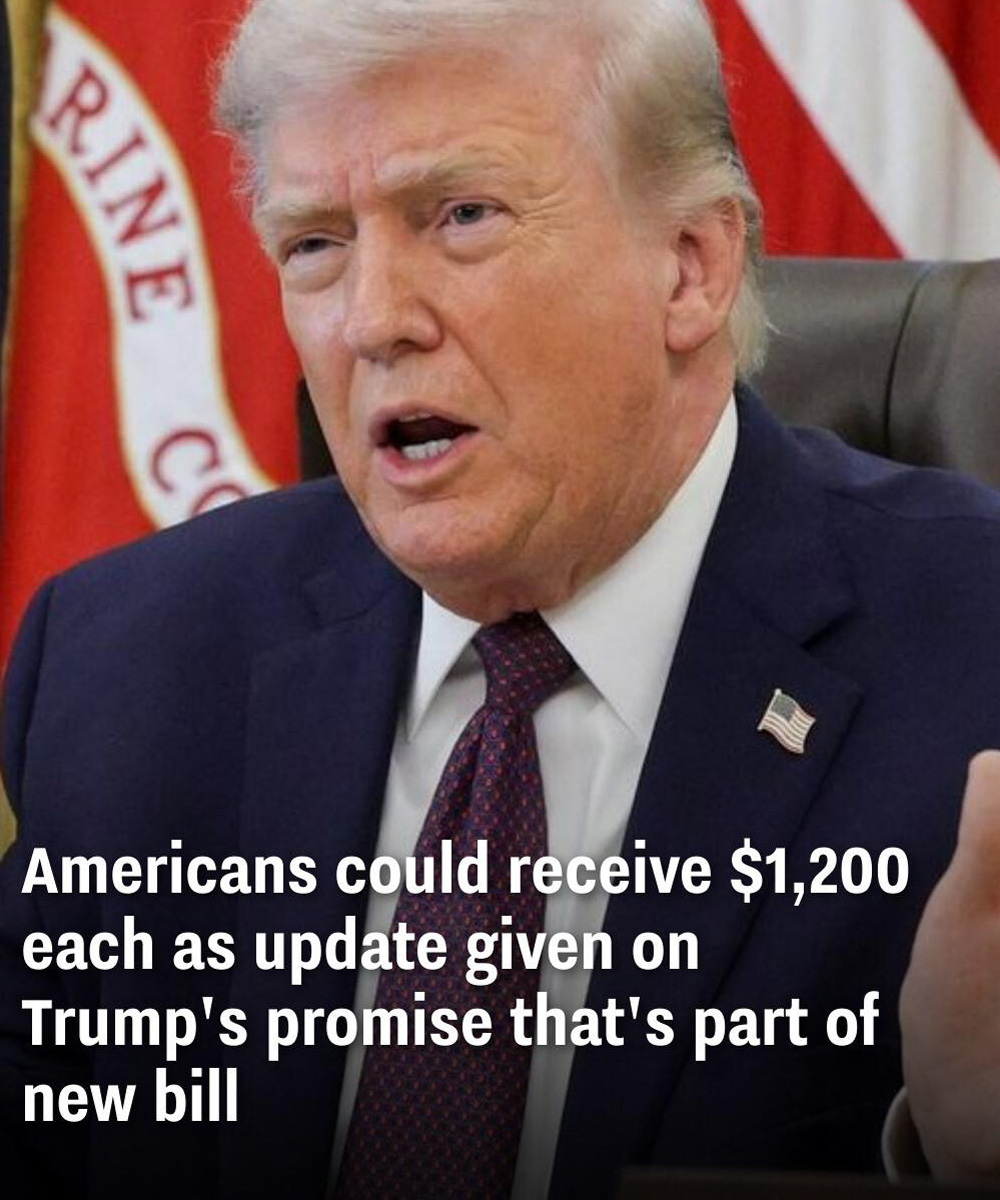
Rebates proposed to help households manage higher prices tied to tariffs and global tensions
Many families are feeling the pressure of higher prices at the grocery store, the gas station, and in everyday bills. To help ease that strain, two new bills in Congress are aiming to send money back to qualifying households. Under these proposals, eligible Americans could receive tax rebates worth as much as $1,200, with added amounts for children in the home. The goal is to give timely relief to people who have been paying more because of tariffs and other recent economic pressures.
The idea has the backing of the current administration led by Donald Trump, which has highlighted these rebates as one way to return a portion of tariff-driven costs to consumers. Supporters say that while tariffs can bolster domestic industries, they can also raise prices on common goods, and this approach would help families recoup some of what they have had to spend.
Why living costs have climbed and why relief is being discussed now
During President Trump’s second term, broad tariffs were placed on a wide range of imported goods. The intention was to strengthen American manufacturing and reduce reliance on foreign suppliers. Even so, many items that American families purchase every week still come from overseas, either in whole or in part. When the price of those imported materials rises, businesses often have to pass some of the added cost along to shoppers. The Federal Reserve Bank of New York and other observers have noted this kind of ripple effect in categories like food and household essentials.
Coffee is one simple example. The United States does not produce enough coffee domestically to meet demand, so beans are brought in from abroad. If those imports become more expensive, the cost can show up on the shelf. The same pattern can affect electronics, clothing, and many everyday items that rely on global supply chains.
On top of the tariff impact, recent global events have added extra pressure. Rising tensions involving Iran led to a disruption in the Strait of Hormuz, a key waterway that handles a significant portion of the world’s oil shipments. When shipping is constrained in such a crucial channel, oil prices can jump quickly. Energy costs are a major input throughout the economy, so increases there can filter into transportation, manufacturing, and eventually the prices consumers pay.
Oil prices have surged and markets have reacted to fresh uncertainty
As oil prices climbed, financial markets saw renewed volatility. Investors watch energy costs closely because they affect everything from airline tickets to heating bills. For households, higher oil prices often mean elevated gasoline and utility costs, which can tighten monthly budgets and reduce what is left over for savings or other expenses. In this environment, lawmakers have been exploring ways to directly cushion consumers from the combined impact of tariffs and energy-related price spikes.
In response, the administration has signaled support for a plan that would deliver payments to eligible households, giving people a straightforward way to recover part of what they have paid out due to higher prices. While the exact timing and final details depend on Congress, the intention is to create a simple, predictable benefit that households can count on if the bills pass.

One measure was introduced by Senator Martin Heinrich on March 12. Known as the Tariff Refunds for Working Families Act, it focuses on tax rebates aimed at families bearing higher costs tied to tariffs. Senator Heinrich has emphasized that Americans are seeing these price increases in ordinary purchases, from groceries to household goods, and that the rebate would return a portion of those costs to consumers.
The bill has drawn support from several senators, including Cory Booker, Ruben Gallego, and Kirsten Gillibrand, according to reporting on the proposal. Their backing reflects a growing interest in relief that is straightforward to understand, delivered through the tax system, and targeted to those most affected by rising costs.
Earlier, President Trump had talked about larger rebates connected to tariff revenues, sometimes cited as potentially reaching up to $2,000. In some discussions, there was consideration of routing more of those funds to importers to address supply chain pressures. The new proposal, however, turns the focus squarely toward households and directs relief to consumers through a defined set of income thresholds and family-based amounts.
How the proposed rebate would be calculated and who could qualify

The Tariff Refunds for Working Families Act uses a sliding scale based on income, so that households with lower or moderate earnings would receive larger benefits. Under the framework as introduced, individuals with incomes up to $90,000 could receive a $600 rebate. Heads of household with incomes up to $120,000 could also receive $600. Married couples filing jointly with incomes up to $180,000 could be eligible for up to $1,200.
In addition to the base amount, there is a proposed add-on of $600 for each dependent child. That means families would receive relief that grows with household size, recognizing that larger families often face higher monthly expenses. The exact size of any payment would still depend on the income rules in the final bill, but the intent is clear: to direct meaningful help to families who are absorbing higher prices.
A separate, similar proposal has been put forward by Congressman Henry Cuellar in the House of Representatives. That version would extend eligibility to taxpayers with incomes under $400,000, while also including additional amounts for children. While the two proposals are not identical, both share the principle of sending relief to families in a way that is simple to administer and easy to understand.
It is important to remember that these measures are still proposals. Congress would need to pass them and send them to the President for signature before any payments could be issued. If that happens, Americans could then see the rebates show up through the tax filing process or a similar system designed by the Treasury and the IRS. The exact method of delivery will be clarified if and when the bills advance.
What this means for everyday budgets and how the money could help
For many households, an extra $600 or $1,200 can make a real difference. It can help cover a month of groceries, several utility bills, or a portion of rising insurance premiums. For parents, the additional $600 per child could offset higher costs for school lunches, after-school activities, or simply the weekly shopping cart that has gotten more expensive over the past year.
Consider a married couple earning a combined $150,000 with two children. Under the Senate proposal as described, they could receive a $1,200 base amount, plus $600 for each child. While the final details will determine the exact payment, the structure shows how families could see support that reflects their size and needs. For a single filer earning $70,000, a $600 rebate could help cover rising fuel costs or the jump in the price of staple items.
For retirees or those close to retirement, the rebates could help balance fixed incomes with fluctuating expenses. If you draw from Social Security, a pension, or retirement accounts, unexpected increases in food, fuel, and household supplies can quickly add up. A one-time rebate can help smooth those bumps and reduce the need to draw extra funds from savings during a period of market volatility.
How this differs from past stimulus checks
Many people remember the federal stimulus checks that went out during the pandemic. Those payments were broad-based and aimed at stabilizing the economy during an emergency. The new proposals are more targeted. They are designed to refund some of the costs associated with tariffs and related price increases, rather than to stimulate the economy broadly. The amounts are also tied to income cutoffs and family size, similar to prior relief programs, but the purpose is specifically to offset the burdens that have grown as import costs and energy prices have pushed up everyday expenses.
Another difference is the likely delivery method. Because these are described as tax rebates, they would most likely be handled through the tax system. In practice, that can make it easier for the IRS to verify income, dependents, and filing status using information most taxpayers already provide each year. Details on timing and whether payments would arrive as advance rebates or when filing a return would be finalized if the legislation moves forward.
What to expect next and an overview of the timeline
For now, the path runs through Congress. The bills will be reviewed, debated, and possibly amended. If both the Senate and the House pass compatible versions, they would then be sent to the President to be signed into law. Only after that step would the responsible agencies set up the payment process. While it is not possible to predict the exact schedule, supporters have emphasized the need for timely relief given the pace of price increases in recent months.
If you are watching for updates, the most important thing is to pay attention to official announcements about eligibility, amounts, and how to claim the rebate if it is not automatic. If you typically file a tax return, it is likely that the IRS would use your most recent filing to determine your eligibility and the amount you would receive. If you do not normally file, guidance would likely be provided to help you submit the necessary information.
How to prepare so you can receive a payment quickly if the bills pass
While nothing is final yet, you can take a few simple steps to be ready. Make sure your most recent tax return is accurate and complete, including your filing status, income, and the number of dependents in your household. If you had a major life change, such as a new child, a change in marital status, or a move, be sure that your records reflect it. Keeping your direct deposit information up to date on your tax filings can also help you receive any payment faster if the government issues electronic transfers rather than mailing checks.
It can also be helpful to gather any documents that support your current income and dependents, especially if your situation looks different from the last return you filed. Being organized will make it easier to respond quickly if there are instructions to verify details or to submit a simple form for those who do not normally file.
What this could mean for retirees and those nearing retirement
Older Americans often live on fixed or semi-fixed incomes, which can make inflation feel especially sharp. If you are between 45 and 65, you may be juggling mortgage or rent payments, supporting children or grandchildren, and planning for retirement. Rising prices can put pressure on those plans. A targeted rebate, even a one-time payment, can help cover essential costs without having to dip as deeply into savings or investments during periods when markets are unsettled. For those already retired, a rebate can also provide a cushion against increased utility and medical expenses.
It is wise to consider how you might use a rebate thoughtfully if it becomes available. Some people may choose to apply it to high-interest balances, while others might set it aside for upcoming bills or an emergency fund. The right choice depends on your personal situation, but having a plan in mind can help you make the most of the money when it arrives.
Common questions and practical answers
People naturally want to know how these payments would be delivered and whether they would be taxed. While the final rules would be explained if the bills pass, tax rebates are typically not counted as taxable income. Delivery could be through direct deposit when possible, with paper checks for those without bank information on file. If you have received federal payments by direct deposit in the past, the process may look familiar. Clear instructions would be issued by the Treasury Department and the IRS if and when the legislation becomes law.
Another frequent question is whether there will be any applications to fill out. If you are already filing a tax return, it is likely that the information you provide there would be enough to calculate your rebate. For those who do not usually file, there may be a simple way to submit basic information so that the payment can be issued. In prior programs, non-filers had access to special tools to register for payments; that kind of approach could be used again, though we will not know the exact method until final guidance is published.
There is also interest in how much variation there could be in the final numbers. Because the bills are still being debated, amounts and thresholds could be adjusted. The figures being discussed now give a good picture of the intent: a $600 base for individuals under $90,000, $600 for heads of household under $120,000, and up to $1,200 for married couples under $180,000, plus $600 per dependent child. If changes occur, they would be announced as part of the legislative process and summarized clearly once the bill language is final.
Staying safe from scams and misinformation
Whenever government payments are in the news, scammers may try to take advantage. Be cautious with unsolicited phone calls, texts, or emails asking for your Social Security number, bank account details, or an upfront fee to “release” a payment. Official agencies will not charge you to receive a rebate and will not ask you to share sensitive information by phone or by clicking a link in a message. If checks are authorized, they will either arrive automatically based on your tax information or through a clear, publicly announced process. Rely on official statements and trusted news sources for updates as the bills move through Congress.
The bottom line and what to watch
The proposed rebates are meant to give households a measure of relief from higher everyday costs tied to tariffs and recent global developments. The Senate bill from Senator Martin Heinrich would use a sliding scale based on income, with additional amounts for children, and it has drawn support from several lawmakers. A House bill introduced by Congressman Henry Cuellar follows a similar idea with broader income eligibility. Both measures are still in the early stages, and details could change, but the central aim is the same: to help Americans manage the rising cost of living by returning some of the dollars they have effectively paid through increased prices.
If you are keeping an eye on this effort, the most important steps are simple. Make sure your tax records are current, watch for official updates, and think ahead about how you might use the funds to strengthen your household budget if the payments are approved. In a time of higher prices and economic uncertainty, every bit of clarity and preparation can help. Should Congress pass the bills and the President sign them, many Americans could see rebates that provide timely and practical support.



