
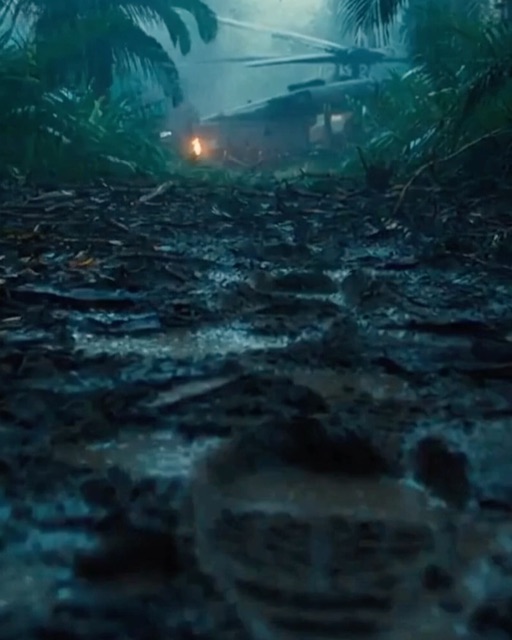
Bullets were chewing the leaves an inch above my skull when the radio hissed and a calm female voice said, “Ground Team Alpha, keep your heads down.”
My blood ran cold.
We were twelve men, pinned and bleeding, no air support, QRF forty minutes out. The target had been bait.
Every route out was a kill lane. I’d already done the math.
We wouldn’t last ten.
“Who is this?” I snapped, mud in my teeth.
“Someone who doesn’t miss,” she said. Then the first crack echoed – clean, not suppressive.
The enemy gunner tearing us apart just folded. A second shot.
The spotter dropped. A third.
The one giving orders vanished into the brush.
“Holy – ” Rodriguez whispered, eyes wide.
The radio popped again. “I count twenty-five hostiles in your area. Give me two minutes. And whatever you do… don’t shoot the person coming from your six.”
My heart slammed so hard I could feel it in my trigger finger. Six o’clock was a wall of vines and shadow.
No movement. No sound.
Just the wet, heavy breathing of men waiting to die or be saved.
Another crack. Another.
The jungle started to go quiet in patches, like someone turned the volume down on the parts trying to kill us.
I glanced back, finger on the safety, every hair on my neck standing up.
Leaves shivered. A shape separated from the green.
Small. Steady.
Close enough to touch.
And when the vines parted, my jaw hit the mud—because the face looking back at me wasn’t a stranger. It was the last person I ever expected to see in a war zone, and in her hand was something that made my stomach drop.
“June?” I said, and I heard my own voice crack.
She stared at me like I was a solution she hadn’t planned for and lifted a black box with a red flip cap.
It was a clacker, the kind you use to set off a ring of charges, and I’d seen tripwires webbing our flank.
“You set this?” I forced out, because there were a thousand things crashing in my head and all of them were bad.
“Not a chance,” she said, sliding next to me without a sound. “I stole it.”
My brain took a half second to catch up. She was drenched in sweat, face streaked with green, eyes wired and focused like I remembered from when we were kids throwing rocks at tin cans.
Only back then she was holding a water gun on the porch, not a suppressed bolt rifle and a pack that hummed like it had a heartbeat.
“You left home,” I managed, as if that explained any of this.
“Not the point,” she said, and her voice stayed calm while her hands moved. “On my mark, we’re going to cut through your five to the streambed.”
Rodriguez blinked at me, then at her. “Am I concussed, or is that your sister?”
I couldn’t answer him, because the guilt pounding through me hurt worse than the round that had grazed my thigh. “How are you here?”
“I’m working,” she said, as another clean shot snapped somewhere high above us. “And right now, I need you to keep your boys alive.”
Her hair was shorter than I remembered, hacked blunt under a cap, and there was a scar on her jaw that hadn’t been there before. She pushed the clacker into my palm and covered my hand with hers hard enough to make my knuckles ache.
“If I tell you to hit it, you hit it,” she said. “Don’t think. Don’t argue.”
There was dried blood crusted under her ear. There was a hole in her sleeve she hadn’t even looked at.
I wanted to ask a hundred questions and none of them mattered. “Copy,” I said, even though my stomach stayed in my boots.
She nodded once, and then said into her mic, “Two more down left ridge. On your feet. Now.”
We moved because her voice took the slack out of the fear and turned it into muscle memory. We low-crawled through mud that smelled like copper and rot, then sprinted in bursts past tree trunks as thick as trucks.
Rounds snapped past us from deeper in the canopy where the wind never touched, but the pattern had changed. The fire wasn’t a wall anymore.
It was scattered, frantic, and behind us.
June never looked back. She counted off every five yards under her breath, breathed in the spaces, and shot like she was writing her name.
She didn’t miss.
When the streambed opened, I saw why she’d picked it. It was a cut in the earth, narrow and steep on either side, a trough that forced the fight into a straight line instead of a circle.
“Drop in and go north,” she said. “Stay below the corkscrew fig roots.”
We slid down into damp shade cool as a locker, water up to our boots. A machete had been through here sometime this morning.
Fresh cuts shone pale on the vines.
I recognized the work, because I’d done the same thing on a hundred insertions. It was a wayfinding language written in green and brown.
June moved ahead, and I saw in the way she pressed her palm to the wall of earth that she knew this place better than we did.
“Where are we?” Rodriguez panted, like the fight had knocked geography clean out of his head.
“El Yunque’s shoulder,” she said, not even winded. “North face.”
Rodriguez shot me a look that said what I was thinking. We were in Puerto Rico, in US territory, in a jungle thicker than a lie, on an op that suddenly felt like it lived in a grey nobody wanted to explain.
“Targets aren’t cartel,” June said, like she could hear the questions buzzing behind my teeth. “They’re private.”
Her mouth curled when she said it like the taste was bad. “They’re contractors out of a fake rescue startup that’s been robbing recovery funds and hiding bodies in the forest.”
Rodriguez stumbled, and I caught his arm and yanked him along. “This was supposed to be a snatch-and-grab,” he said. “Our intel said one high-value advisor and a skeleton crew.”
“Our intel was fed,” she said, and the way she said our made my stomach twist, because it put us on the same side of a line I hadn’t drawn in years. “Somebody sold you to save a loss.”
My chest went cold. “Who?”
“I’ll tell you when we’re not in a shooting gallery,” she said, and tossed a smoke can over the lip of the trench. “Left ridge, three o’clock.”
The crack that followed pulled a man-shaped shadow down like a puppet with cut strings. Then the jungle breathed, and you could feel the change like heat rolling off a grill.
We got distance and the angles shifted. We weren’t prey anymore.
The stream bank twisted and opened into a low, black culvert under what used to be a park road. June lifted a palm for silence and listened like the water could tell her a secret.
“Go,” she said, and one by one we went under.
The smell crawled into your nose and stayed there. It was wet rubber and rot and soil fed by a million fallen leaves.
I slid forward on my belly and banged my shoulder against poured concrete etched with years of names. It was a tunnel that schoolkids had chalked once, before the rise in storms and the sudden drop in visitors.
“Keep your lights off,” June whispered. “Eyes will adjust.”
Her voice echoed small in the round tunnel, and the men behind me breathed the same breath. I bumped forward, knees scraping, and when I came up on the other side the world was a different thing.
The light was good but indirect. The trees here rose tall and straight.
There was no gunfire, only the hiss of wind in leaves and the distant slap of water that meant a fall ahead.
Rodriguez came up blinking hard, then grinned like a kid hitting the surface of a pool. “We out?”
“Not yet,” June said, and checked the edges with a glass so small it fit inside her palm. “We’re in their quiet zone.”
“Quiet zone?” I asked, because the word spiked the hair on my arms.
“They’ve got sound traps and pressure plates rigged on the tourist trails,” she said. “They leave a corridor for their couriers so they don’t lose toes.”
“You’re telling me we were walked into a ring on US soil,” Rodriguez said, and even whispering he put a fist into the mud like he could punch the earth itself. “What the hell are we doing out here?”
“Somebody let it happen,” June said, and met my eyes. “And somebody thought you wouldn’t make it out to talk.”
She held my gaze for half a heartbeat and then broke it. “Move.”
We ghosted forward, sticking to the cut like we were glued there. The jungle above us sang like nothing bad had ever happened under its leaves.
June led us by markers I would’ve missed in a lifetime. A strip of bark peeled the wrong way.
A leaf crushed backward, not forward.
A bit of twine tied under a root where no one but the small animals and the right kind of human would ever see it.
When the waterfall came, it was a white curtain over rock like ribs. June slid behind it and vanished, and I hesitated because there was a small mean voice in me that had been alive since she’d left home on a bus he and I had fought over.
“Cole,” she said from the dark, and I squeezed through.
Behind the water was a chamber carved into rock and braced with old timber. It smelled like sawdust and steel shavings.
June slid a steel case off a shelf and shoved it into my chest. It was heavy enough to make my shoulder dip.
“Open,” she said, and kept her eyes on the slit in the falls where the world outside moved.
Inside was ugly. There were four cheap plastic phones wrapped in foil, one sat phone with a gouged screen, a thumb drive the size of my nail, and a laminated map with breaks in the ink where someone had folded it wrong a hundred times.
There were also three badges.
They were the kind tourists buy at a gift shop to feel connected to a park, except these weren’t tourist junk. They were law enforcement creds with federal seals and names I didn’t recognize.
One of them was for a recovery official who had been on the news last year, standing on a stage a mile from here, making promises to people who needed them.
I didn’t realize I was shaking until June’s hand hit the back of mine. “Stop,” she said, and my jaw snapped shut like I’d been chewing glass. “We take this and go.”
Behind me, Rodriguez squinted at the map. “What is this, June?”
“Routes,” she said. “Cash drops.”
She didn’t look proud of it. “Proof.”
“Proof for who?” I asked, but part of me already knew.
“Everyone who won’t believe a rumor,” she said. “And everyone who told me to leave it alone.”
It landed in my ribs and sat there, heavy and hot. “Who told you to leave it alone?”
“The same people who told you to come here,” she said softly.
She flinched then, barely, and dropped under my arm as somebody outside finally worked up the nerve to sweep the waterfall. The burst stitched water and air and hit the wood where her head had been.
Rodriguez swore, and June slammed her palm into a switch on the rock like she’d been waiting for it. The back wall swung on a hinge that a generous person would’ve called stubborn.
We went down into dark again, but this time it was on our feet. Metal stairs hummed under our boots.
“June, what is this?” I asked, because the shape of the place was wrong. It had the feel of a shelter that had been useful long before us.
“CCC build,” she said. “Depression-era.”
“Does it connect to the road?” Rodriguez asked, because he was at least as smart as I wanted him on my flank for.
“It connects to a culvert with a grate I can pop,” she said. “North access.”
The tunnel bent and bent again, and then the brightest sun I’d seen all day slapped my face.
We came out in a boulder field that looked like God had spilled his marbles here and left them. The air tasted like salt. There were gulls.
We weren’t far from the coast.
“How did you find us?” I asked, because that piece kept banging on my skull like a trapped bird.
June hesitated like she wanted to tell the truth and also punch me. “I never lost you,” she said. “I’ve had your team tag since the plane touched down.”
“That’s… illegal,” Rodriguez said, not because he cared about the line, but because we’d all gotten used to the line not moving unless someone said it out loud.
“It’s also why you’re breathing,” she said, and didn’t bother to apologize.
She took out a compact radio no bigger than a cigarette pack and ticked off a string of numbers I didn’t know. “We’re seven minutes to hardtop,” she said, and then put a hand on my chest to stop me. “Cole, look at me.”
I did, because I’d been doing that since we were kids and I knew sometimes the look was the whole thing.
“Do not answer your command channel,” she said. “Do not call the QRF and give them our location.”
I felt the words hit the part of my brain that hates disobeying as a reflex. “That’s suicide.”
“It’s the opposite,” she said, and held up the clacker again. “They’re bouncing your traffic.”
“Who is they?” I asked, and my voice sounded like it was someone else’s.
She looked at me for three long seconds, like she could put it off if she stared hard enough. “Your tasking officer,” she said. “Commander Ritchie.”
The world felt like it had pulled a shoulder out of its socket. “That’s impossible.”
“It isn’t,” she said, and each word landed like a nail. “He’s been taking money and favors to steer teams into holes.”
Rodriguez made a noise like you make when you see the first crack in a ship hull. “For what, June?”
“Silence,” she said. “Experience erased.”
Nobody spoke for a breath that lasted forever.
Then I said the one thing I could say that wasn’t a scream. “We get out, we get proof, and we get him.”
“Right now we get you to the car,” she said, and started moving again.
The next ten minutes hurt in ways I’ll feel for the rest of my life. My left leg burned and stuck and the rifle grew into a log.
The sun cut the air into white ribbons. The ocean pushed up the wind from where it hit the long white line of the beach south of Luquillo.
When we finally hit pavement, it was a forgotten stretch of service road snaking through scrub and palms. There was a rust-red pickup by the ditch with a faded sticker for a surf shop on the back glass and a dent that looked just like the ones teenagers always leave.
June threw one of the phones into the brush, stepped on it twice, and shoved us into the truck like a schoolteacher with a bell about to ring.
“Who’s this belong to?” I asked, rolling my shoulders to keep a cramp from setting in.
“A friend,” she said.
She didn’t explain further. She didn’t have to, because friends who left their keys in the sun visor on a day like this were the kind you could trust to ask questions later.
We drove.
June kept her hands calm on the wheel and ducked us down a road that wasn’t on most maps. She flicked her eyes to the rearview every five seconds without looking like she was doing it.
Rodriguez dozed like exhausted men do, in little jerks and starts that catch on dreams shaped like muzzle flashes.
I stared at the dashboard where a faded picture of a kid with a missing tooth was stuck to the crack. It had the sun-bleached look of an old promise.
“You disappeared,” I said.
She sank into her seat by a fraction. “I did.”
“You didn’t call,” I said, and heard the twelve-year-old in me who had waited by the phone for a summer that became a year.
“I wasn’t allowed to,” she said, and tightened her hands on the wheel. “And I’m not saying that to make it okay, Cole.”
She glanced at me and back to the road. “I’m saying it because I want you to know I tried every day not to do it again.”
It was like letting go of a bad tooth that had rotted all the way down. It hurt and then it didn’t.
We crossed two small bridges and a stretch of road where the sea pushed spray across the asphalt like breath. June passed a bus stop where a woman in a blue dress held a little boy’s hand and watched the cars pass like fish.
By the time we reached the first cluster of houses, the radio on the dash spat my name.
“Alpha lead, report,” it said, but the voice wasn’t Ritchie. It was someone lower on the tree with a name I didn’t know, and it sounded like he’d been handed a hot rock he didn’t want.
June turned the volume down with one finger. “Don’t,” she said.
I didn’t, and it turned out to be the easiest thing I did all day.
We pulled into a garage that was half-finished, the kind men work on after they get home from night shifts. A light hung bare from the ceiling.
June shut the door and the world was cut to a slice. I watched dust in the beam like snow.
She peeled off her pack and went to a cabinet built into the wall. Inside was a printer the size of a microwave and a black case with a label I knew not to read.
She slid the thumb drive in, and lines began to appear on the printer like a spider was working a web nobody wanted in their house.
“Backup,” she said, and I heard in that word the hundreds of times in our lives she had been the one to say “put an extra sweater in your bag” and “write the number down twice.”
The pages came out hot. They were numbers and routing codes and signatures scrawled by men who didn’t think anyone would care.
June taped a page to the inside of her forearm with medical tape, the way she used to tape a cheat sheet about planets inside a notebook when she was twelve.
She handed me one and something else. It was my father’s coin, worn by thumbs that had never been still.
I stared because this was a different kind of gut punch. “You took it,” I said.
“I carried it,” she said, and her mouth trembled and smoothed. “Through the worst nights.”
“You could’ve told me,” I said, and I didn’t say anything else because there was nothing else that wouldn’t make a fight we didn’t have time to have.
We left the garage and the day hit us like a dog that had missed us. The street was quiet.
A woman watered plants on a porch and didn’t look at us. A cat watched from under a truck like it rented the shadow.
June tucked one of the burner phones into a hole in a wall where a cable came through. “Breadcrumb,” she said.
We headed toward a place only locals parked for the beach. A siren went past, then another.
June lifted her chin at the sound like she was measuring it. “They found the falls,” she said.
We walked across sand the color of pale sugar and tucked into a cluster of palms where the shade held. A man selling ice shaved into roses waved and didn’t stop waving.
June’s radio clicked. “Parcel One delivered,” a woman said, and my head snapped up because the voice had the same tone as June’s.
“Parcel Two en route,” another voice said. “Bird nested.”
June smiled small and fierce. “They’re with me,” she said when she caught me looking. “And nobody knows they exist.”
For a second I saw her not as my sister but as someone who had built something from the ground up because the people above her would not.
“How many?” I asked.
“Enough to make the bad men sweat,” she said. “Not enough to show up on a budget sheet.”
The team drifted closer to us in ones and twos, picking shade and sand and a place to sit where their backs felt good. The beach smelled like sunscreen and salt and last night’s fish.
Rodriguez tilted his face to the sun like he was listening with his skin. “This is the weirdest debrief I’ve ever had,” he said.
“You want weird,” June said, “wait until I show you the inside of the boardroom.”
We didn’t have to wait long.
The burners started to ring in sequence, and June answered each one with yes or no like she was flipping coins and catching them on the back of her hand. She said three street names I knew and one I didn’t.
Then she turned to me. “You ready to hear it the way it really is?”
“I’m ready to hear it from you,” I said, and that was the truth that felt like finally standing up after a long time on my knees.
“Ritchie’s been feeding taskings to an NGO that doesn’t exist,” she said. “They roll into disaster zones, build photo ops, and rob the place clean.”
“They want the cameras,” Rodriguez said, pulling at threads. “They don’t care if the pipes never get fixed.”
“They care if they make the numbers look good,” she said. “So the next contract comes and the next donation hits and the right politician nods like a bobblehead.”
“If we go up the channel, it dies,” I said, and June nodded once.
“The channel is the target,” she said. “We go sideways.”
I do not like sideways when people I love are on the line, but sometimes sideways is the only way a wedge can move something heavy.
She handed me another page. It was names linked to wire transfers and the things people always swear they didn’t know about. “We put this in the hands of someone who still has a spine,” she said.
“US Attorney?” I asked.
“And a reporter who won’t sell it for clicks,” she said. “And your Master Chief.”
I winced, because our Master Chief was as straight as an arrow, and if he saw his own command sitting where June said it sat he’d break it like dry kindling and not lose a night’s sleep.
“You sure about dragging him in?” I asked, because hate and love don’t always come in neat boxes.
“I’m sure about making it impossible to bury,” she said.
We made the calls from three different phones in three different places under three different pieces of sky. The ocean watched like it had seen worse and better and would again.
By sunset there were men in jeans and tucked-in polos walking like they were trying not to look federal. There was a woman with her hair back and a look in her eyes like she had learned the hard way to leave before the last drink.
They took copies and went away without saying thanks. June didn’t look for it.
We drove north again and stopped where the hills went soft. There was a house with a tin roof and a porch that sighed when you stepped on it.
It was our aunt’s place and it was the kind of safe that didn’t show up on a map. June’s face changed when she saw the wind chimes.
Something hard in it let go.
Aunt Lupe hugged her until June made a small noise you make when you want to be strong and can’t be anymore. Then she moved to me and smacked the back of my head and cried on my shirt until the fabric got cold.
Inside, the table had a cloth with lemons on it and a smell like onions and the bread she made when she wanted to fill you up at the end of a thin week.
We sat and didn’t say anything for a while because food is a language you use when you’re not ready for the other one.
Later we stood out back and watched a storm pour a curtain of rain on the hills while the ocean blinked in and out of view. June leaned against the rail.
“You hate me a little less?” she asked, and tried for a smile that had too much history in it.
“I don’t hate you at all,” I said, and it was the first time I had let sense win over the thing that keeps score. “You know that.”
She nodded like she wanted to believe it but had practice not trusting the easy version. “I kept your coin,” she said.
“You did,” I said, and turned it over in my fingers. “I’m glad you did.”
We watched the rain, and for the first time since the first bullet cracked bark above my head I felt like my heart figured out it wasn’t in a race.
The next morning, we watched a man in a suit try to smile for cameras while federal agents walked up behind him in the neat way they do, like they’re just talking. He stopped mid-sentence.
June didn’t cheer. She didn’t need to.
My phone buzzed. It was our Master Chief with three words and a period at the end like a gavel.
We got him.
There were hearings and names and a lot of talking that made the truth longer than it needed to be. Some people lost jobs.
Some people lost their freedom.
Ritchie did both, and June sat in the back of the room with a braid down her back like the time we got church-bad as kids and had to sit where the pastor could keep an eye on us.
He didn’t look at me when they read the charges. He didn’t have to.
He looked at the floor like he’d finally seen the weight he’d been carrying and realized it could crush a world.
After, we drove back to the water because that’s where our heads got quiet. We walked along where the tide left lines like a hand thinking out loud.
Rodriguez called and told me he’d put in for leave and was taking his mom to see the winter lights on the mainland because he’d been promising for three years. I told him to send pictures.
June kicked at a shell and laughed when it chased her down the beach like a tiny ghost. “Remember when I said I never lost you?” she asked after a minute.
“I do,” I said.
“I meant it,” she said. “Even when I shouldn’t have.”
“You mean spying on me,” I said.
“Watching over you,” she said, and held my stare long enough to make me smile. “Same word, different heart.”
We sat on the tailgate of the same dented truck under the same sky worn thin by the same sun and ate mangoes that dripped down our wrists. We didn’t talk big.
We talked small. That’s how the big things come back.
She told me about the first time she went under with no one to catch her and how that night she slept in a closet because the walls felt kind. I told her about the time I almost drowned off Oahu and the taste in my mouth was enough to keep me on land for six months.
We didn’t try to win the conversation. We just let it go where it wanted.
Later, I went back to the team and the bridge and the drills and the way a day is shaped when your name is on a page that says you belong to a thing bigger than yourself. June went back to her patchwork that looked messy from far away and like a miracle when you stood up close.
We made a rule. We broke it sometimes.
The rule was this: say when you can, and when you can’t, trust that the other one is still there.
Months later, I got an envelope in the mail with no return address. Inside were three pictures and a receipt for a grant I didn’t know I’d applied for.
The pictures were of a pump station and the clean white square where a rusty pipe used to be and the face of a woman I didn’t recognize crying. The grant was for a community up in the hills with a name like a song.
June didn’t sign the card. She didn’t have to.
We took leave and went to see for ourselves. The kids there had eyes that took in everything and gave back what you put in with interest.
A man in a hat too big for his head put his hand on my shoulder and said, in the slow way older people do when they want to be sure you really hear it, thank you.
I tried to say I hadn’t done anything. He shook his head once, hard.
“You stayed,” he said.
June squeezed my arm so hard I knew I’d bruise. I didn’t mind.
We walked back to the car in the kind of heat that makes you taste your teeth. We didn’t turn on the radio.
“What if none of this had worked?” I asked, because sometimes the what if lives in me and throws rocks at the windows.
“It did,” she said, and she wasn’t arguing with me. “And it will again.”
“You don’t sound tired,” I said, tilting my head to look at her like I used to when I wanted to figure out a magic trick.
“I am,” she said. “But I know where to put it now.”
She looked at me like she had when we were kids stealing guavas off the neighbor’s tree, daring me to climb higher and not fall. “You do too.”
There’s a kind of math in life that has nothing to do with numbers. It’s about what you give and what you take and what you carry so someone else doesn’t have to.
Maybe weight is a kind of love you can hold.
I think about that when a door slams in the team room and everyone jokes louder than they need to so no one hears the echoes.
I think about it when I see a certain brand of coffee in a grocery aisle a thousand miles from the island and remember how June holds a cup with both hands when she’s pretending not to get warm.
Sometimes, late, the radio hisses with nothing in it, and I wait for a voice I didn’t know I needed to hear for years to cut through.
Sometimes it does.
It tells me to keep my head down and my heart sharp and my promises close enough that my hands can reach them.
And when it doesn’t, I know that I can still do the one thing that counts. I can stand, even if it’s just so someone else can breathe.
The day we said goodbye again, we didn’t do the big movie thing with the squeeze and the long last look. We sat in a parking lot and watched people buy plantains and milk.
June laughed at a bumper sticker. I rolled my eyes.
She handed me back my father’s coin. I gave it back to her.
“Keep it,” I said. “Bring it home when you’re ready.”
She nodded, and that was it. We left without falling apart.
People think hero is a word you write in all caps and put on banners. It isn’t.
Sometimes it’s the person who shows up with a clacker and a plan you don’t like and saves your life even when you didn’t think you deserved them to. Sometimes it’s the choice to tell the truth knowing it will make your world smaller first before it lets it grow.
Sometimes it’s staying a minute longer on a line that hurts to hold.
If there’s a lesson in that day, it’s this. Help doesn’t always look how you expect, and the people we cut out of our lives to make room for our pride might be the ones who pull us out of the worst holes we’ll ever be in.
Listen when the voice you love tells you to get your head down. Trust the hand that slaps your chest not to stop your heart but to restart it.
And when you get out of the kill zone—whatever your version is—don’t waste the gift. Put it somewhere it grows.



