
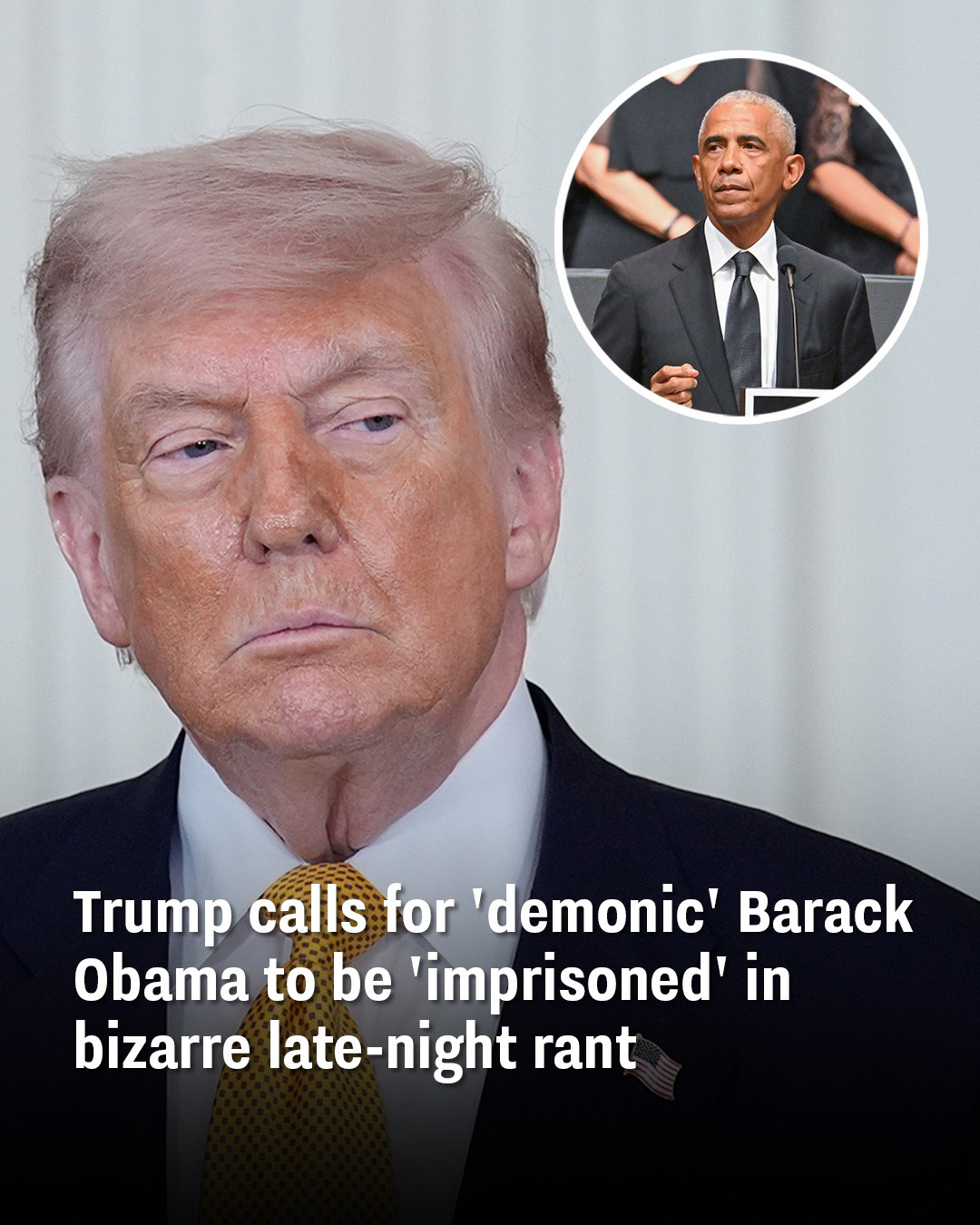
Trump unleashes a late-night posting spree targeting Barack Obama and Hillary Clinton
In a burst of activity posted in the middle of the night, Donald Trump shared a long string of messages on Truth Social that zeroed in on two of his most frequent political rivals, former President Barack Obama and former Secretary of State Hillary Clinton. The posts, which numbered well over fifty, mixed direct statements from Trump with a series of reposts and screenshots from supportive accounts, creating a fast-moving stream of accusations and taunts.
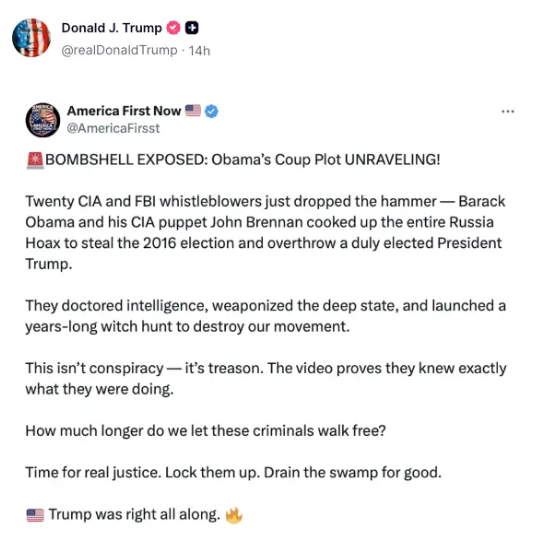
Much of the overnight commentary revolved around Obama, whom Trump described in extremely harsh terms. One of his reposts characterized the 44th president as the “most demonic force in American politics in decades,” language that set the tone for the rest of the barrage. Alongside that, Trump amplified calls for sweeping arrests of political opponents, singling out Obama by name.
In one widely discussed message, Trump shared a post urging authorities to arrest, prosecute, and incarcerate several figures for what was described as treachery, treason, and seditious conspiracy. The call ended with an explicit focus on Obama, whom the post named first. The request was not backed by new evidence in the posts and echoed familiar themes that have circulated in Trump’s orbit for years.
For those less familiar with the platform, Truth Social is Trump’s primary online megaphone. Where most networks call a shared message a repost or retweet, the platform labels it a “retruth.” During this overnight rush, Trump relied heavily on these retruths to amplify strong claims made by allied accounts, sometimes adding brief comments of his own and sometimes letting the shared posts stand without additional explanation.
“Arrest Obama the traitor,” read one of the shared posts Trump amplified
Among the messages Trump boosted was a claim from a pro-MAGA account asserting that Obama fabricated evidence of Russian interference in the 2016 election. The idea, which has circulated in some corners of social media for years, runs counter to the conclusions of multiple official reviews. U.S. intelligence agencies concluded in 2017 that Russia carried out a broad effort to influence the 2016 race. A special counsel inquiry and a bipartisan Senate investigation later detailed a range of Russian activities, including hacking and propaganda, even as they reached differing conclusions about other questions. To date, no credible public evidence has emerged showing that Obama invented or falsified that interference.
Elsewhere in the overnight stream, Trump returned to a familiar allegation: that federal agencies under Obama spied on him before the 2016 vote. He again called this “the biggest political crime in American history.” Variations of this claim have been repeatedly investigated. Reviews have acknowledged serious problems and errors in certain surveillance applications connected to a former Trump campaign aide, but investigators have not found proof that Obama ordered an unlawful, politically motivated spying effort on Trump personally. In plain terms, the broad accusation remains unproven.
Trump’s feed also featured older video clips and televised segments repackaged to appear current, pointing viewers to material tied to the long-running debates over Russian interference. Some of the posts blended commentary by prominent political figures with references to a 2020 intelligence community report. The effect was to suggest a straight line from disputes over the 2016 election to the accusations Trump revived overnight, even though the clips circulated without new documentation to support the sharpest claims. At the time those earlier assertions were making the rounds, Obama brushed them off as “bizarre” and a “weak attempt at distraction.”
For readers who may not follow every turn of this online back-and-forth, it can help to separate the parts. There are, first, the established findings that Russia took steps to influence the 2016 election through hacking and information operations. Separate from that are claims that Obama concocted evidence or orchestrated an illegal spying campaign. Those latter charges have been asserted repeatedly by Trump and some allies, but they have not been substantiated by official inquiries. As of now, they remain allegations without proof.
Other late-night posts tried to tie Obama to Hillary Clinton’s private email server
Trump’s feed also revived the long-argued controversy over Clinton’s use of a private email server during her time as secretary of state. In the overnight posts, Obama was portrayed as somehow implicated in that matter as well. Here too, it is worth recalling what is on the public record. After a lengthy investigation, the FBI concluded in 2016 that Clinton and her team were “extremely careless” in handling classified information but did not recommend criminal charges. That outcome has remained a lightning rod in American politics, yet there has been no official finding that Obama directed wrongdoing in the episode.
As the stream of posts continued, Trump’s language remained sharp and personal, blurring lines between political criticism and fierce personal condemnation. For supporters, this forceful tone can feel like long-overdue pushback. For detractors, it reads as reckless and inflammatory. However one sees it, the overnight messages were clearly meant to seize attention, dominate the conversation, and rally Trump’s base around familiar grievances.
Some of the posts appeared to recycle material from previous years, sometimes without clear dates or context, which can make it confusing for casual readers to sort what is new from what is old. This is a common feature of social media debates: older videos and headlines can be clipped, reframed, and reintroduced to fit the mood of the moment. When that happens, it becomes even more important to check time stamps, compare sources, and ask whether any fresh facts have come to light to justify renewed claims.
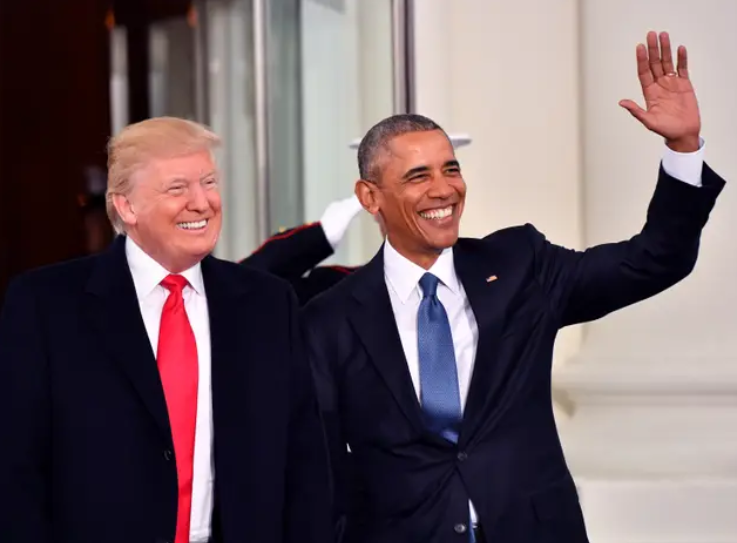
All of this unfolded against a broader backdrop of long-standing political rivalry. Trump has for years blasted Obama as a divider and a poor leader, and he did so again in his remarks earlier this year, where he criticized not just Obama but also President Joe Biden. Obama, for his part, has at times rebuked Trump for language and behavior he sees as crossing basic lines of dignity and fairness, especially when it comes to family.
In recent interviews, Obama has also reflected on how his ongoing involvement in politics affects home life. He explained that continuing to serve as a prominent voice for his party long after leaving the White House has introduced “genuine tension” in his marriage to Michelle Obama. As he put it, people often judge his post-presidential role without any comparison to how earlier presidents handled their retirements, which can make the scrutiny feel particularly intense for his family.
Obama told The New Yorker that the attention and demands of public life are not always easy for those closest to him. “It does create a genuine tension in our household, and it frustrates her,” he said of Michelle’s feelings about the unending swirl around politics. He added that while he tries to be understanding about the public’s expectations, it does not erase the toll that sustained political combat can have at home. “They don’t care about the fact that no other ex-president was the main surrogate for the party for four election cycles after they left office.”
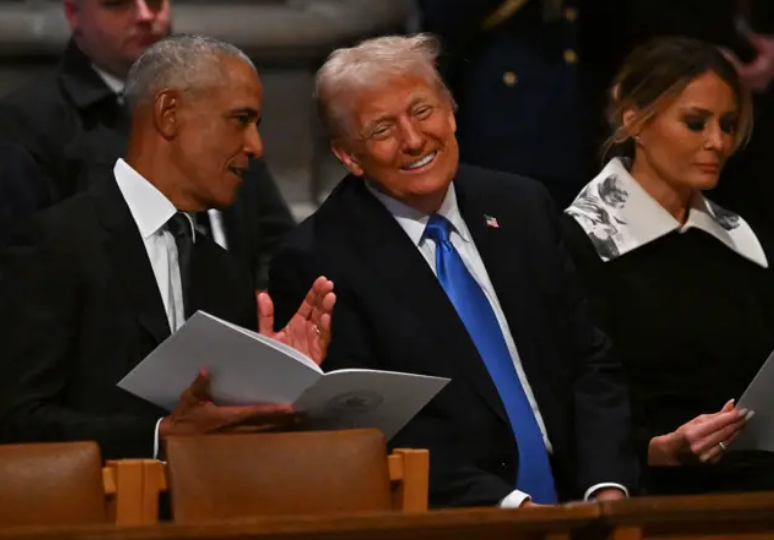
The enmity between Trump and Obama has rarely cooled. Speaking at a Republican fundraising dinner earlier this year, Trump painted Obama as a major source of division in the country, calling him a “terrible president” and railing against his record. He also repeated his view that Biden is the worst president in history, placing Obama close behind. These kinds of sweeping statements are common in political speeches intended to energize supporters and draw headlines, and they reflect a strategy that Trump has often used to frame his opponents in stark, memorable terms.
Obama, meanwhile, has condemned several instances in which he feels Trump has crossed moral lines, including a recent moment when Trump shared a racist video portraying Barack and Michelle Obama as apes. Obama said he is particularly protective of his family in such circumstances. “I’m always offended when my wife and kids get dragged into things, because they didn’t choose this,” he told The New Yorker, adding that he expects even fierce political rivals to avoid demeaning family members. “That’s a line that even people whose politics I deeply reject, I would expect them to care about. I would never talk about somebody’s family in that way.”
To put the overnight flare-up in perspective, it may help to consider what, if anything, could follow from such public calls to arrest a former president. In the United States, criminal investigations and prosecutions require evidence that can stand up in court. Prosecutors must meet a high burden of proof, and defendants are entitled to due process. No matter how strongly a political figure urges law enforcement to act, arrests do not occur without legal grounds and judicial oversight. When big claims are made without new documentation, the practical result is often more heated debate rather than immediate legal action.
For readers who remember the tumult of 2016 and the years that followed, the themes in Trump’s posts will sound familiar. They revive long-running disputes about the Russia investigation, the surveillance of a campaign aide, and the handling of Clinton’s emails. Over time, official inquiries have produced detailed public reports on each topic, acknowledging errors and misjudgments in certain processes while also rejecting some of the most dramatic accusations. Because many of those findings are technical, they can be hard to summarize in a single sound bite, which is part of why simpler and more dramatic narratives continue to circulate online.
Social media encourages fast, emotional reactions. Late at night, when fewer people are posting and the news cycle is quieter, a burst of provocative content can reach an eager audience and set the next day’s agenda. Trump has long understood this rhythm. By posting a steady stream of messages and retruths in quick succession, he gave supporters a shared storyline to repeat and opponents a fresh list of statements to challenge. Either way, attention flows toward him, which is often the point.
For those in the 45-to-65 age range who may prefer plain facts over online drama, a few practical reminders can help when encountering posts like these. First, check whether any new official documents, court filings, or sworn testimony accompany the claims. Second, note the dates on video clips and screenshots; older material can be presented as if it is brand-new. Third, keep an eye out for strong language in place of specifics. Adjectives like “demonic” demand attention, but they are not evidence.
None of this means political criticism should stop. In a healthy democracy, citizens are free to question leaders and demand answers. It does mean, however, that harsh words travel faster than careful facts, and we all benefit from pausing long enough to see what can be verified. In the case of Trump’s late-night posts, the most serious assertions rest on longstanding allegations that, so far, official reviews have not substantiated.
In the days ahead, more back-and-forth is likely. Allies will share and defend Trump’s overnight statements. Critics will challenge them and highlight the lack of new evidence. Commentators will argue over tone, fairness, and responsibility. Through it all, the story will keep returning to an old rivalry between two of the most visible political figures of the past decade. Whether one views the clash as necessary accountability or tiresome theater, it continues to shape how many Americans see their politics—and each other.
For now, the overnight spree stands as another example of how today’s political conversation often unfolds online first, framed by charged words and rapid-fire reposts. The claims are out there. The counterclaims are too. Sorting it all out requires patience, context, and, above all, a steady focus on what can actually be proved.
As with many viral moments, the most useful question may be the simplest: what, exactly, is new here? In this case, beyond attention-grabbing language, the core allegations are familiar, the supporting material is recycled, and the legal landscape remains unchanged. The volume is higher, but the substance is largely the same. Understanding that difference can help anyone, regardless of political leanings, navigate the noise with a little more clarity.
And while these late-night statements will spark many conversations, the bedrock of American life remains the same: disputes are resolved through evidence and law, not through social media blasts. That perspective may not be as exciting as a headline, but it is steadier—and, in the long run, more reliable.



