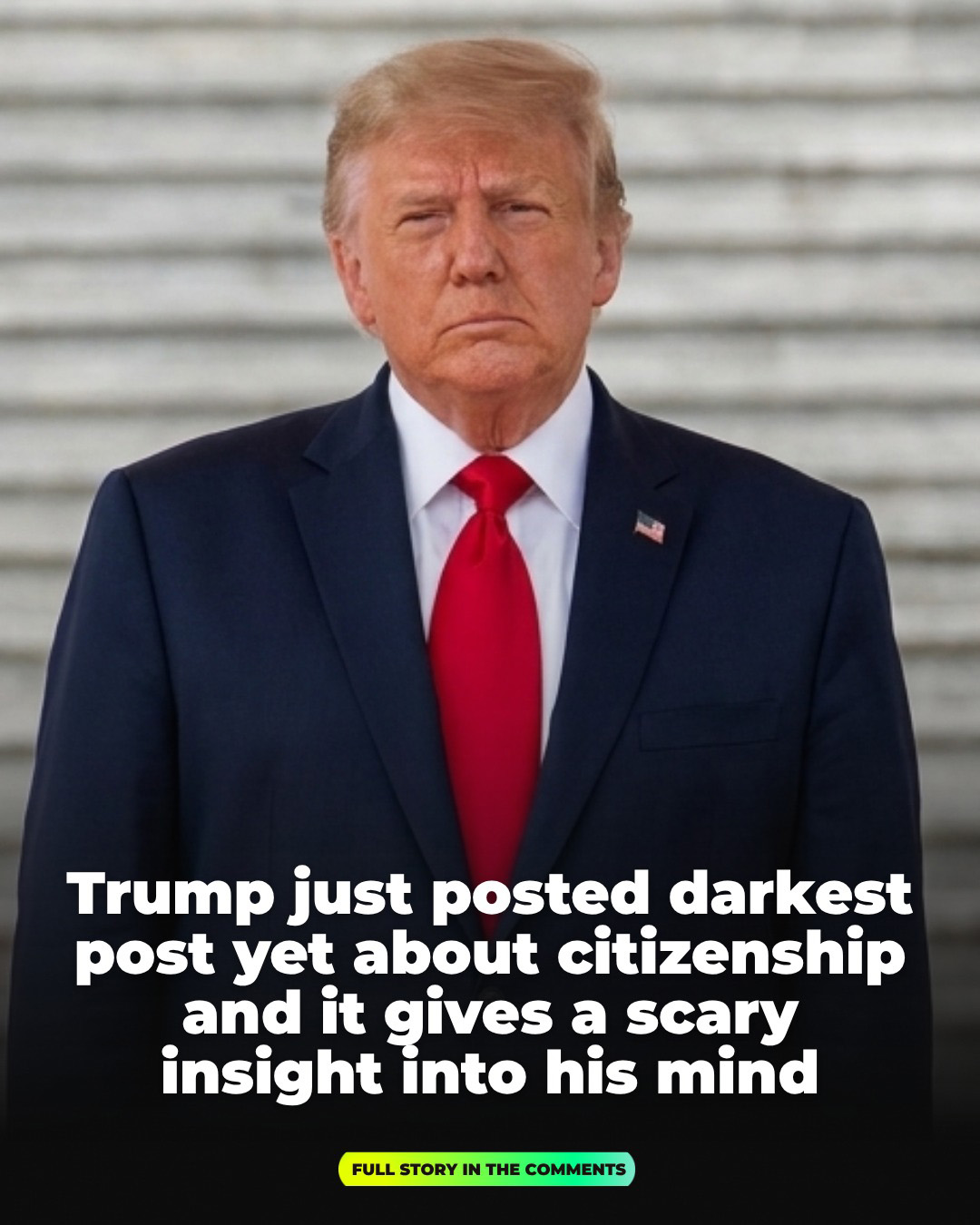
Late on Sunday night, President Donald Trump filled his Truth Social feed with a steady stream of messages that were hard to miss and even harder to ignore. The posts ranged from glowing praise of himself to a striking prediction about a looming Supreme Court fight over citizenship. For anyone trying to understand where his attention is focused right now, this burst of activity offered an unusually clear view.
In the middle of the flurry, he wrote a simple “Thank you!” and celebrated what he called “Excellent Poll Numbers.” The boast stood out because it did not refer to a specific survey and came amid broader indications that his standing with the public has been slipping. The overall picture painted by the late-night posts was a mixture of bravado, grievance, and anticipation of legal battles, all wrapped in the image-heavy, punchy style that has long been his signature online.
What did Trump predict about citizenship?
The most eye-catching claim centered on birthright citizenship, the long-standing rule that people born in the United States are citizens under the Fourteenth Amendment. In one of his posts, Trump predicted that the Supreme Court would strike down his executive order meant to end birthright citizenship. He described the current approach to citizenship as “unsustainable, unsafe, and incredibly costly,” and suggested that without his change the United States would be “the only Country in the World” with such a policy.
That framing was dramatic and sweeping. Birthright citizenship has been part of American life since the Reconstruction era, and attempts to change it have repeatedly run into constitutional questions that go to the heart of what it means to be a citizen. The Supreme Court has never taken such a change lightly, and any executive order aimed at narrowing or redefining citizenship by birth would face an immediate and intense legal challenge. Even Trump’s own preview suggested he expects the justices to push back.
Beyond the legal forecast, there was a sharp rhetorical edge to how he framed it. Language like “unsustainable” and “disaster” is meant to convey urgency and crisis. It also sets the stage to argue that, if the Court rules against him, it will be ignoring a serious problem. It is a classic move in political communication: define the stakes in stark terms, then claim responsibility for either the solution or the warning. For those trying to keep up, it helps to remember that many countries around the world use different systems to determine citizenship, and experts note that several still grant citizenship to most people born within their borders. The debate here is not about whether the United States stands entirely alone, but about how the Constitution has been read for generations.
To many readers, the most revealing part of the prediction was not the policy itself but the way he talked about the Court. Preemptively forecasting a defeat often serves as a way to shape the narrative of what comes next. If he is right and the policy is blocked, he can say he warned it would happen and cast the Court as the obstacle. If he is wrong and it stands, he can claim vindication. Either way, the message on Sunday night showed that he is preparing his audience for a high-profile clash.
The tone and timing of the late-night surge
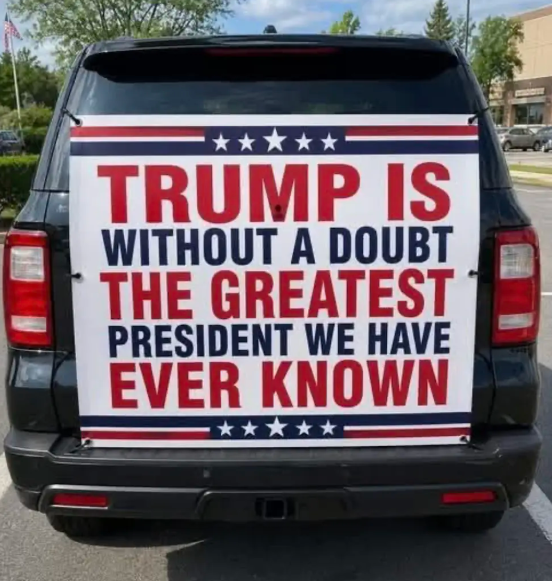
Within an hour of that prediction, the pace of posts accelerated. Trump shared or reposted another 17 messages, many of them glowing endorsements from supporters. Some were straightforward messages calling him the greatest president ever. Others leaned on imagery, including AI-generated pictures crafted to look polished, heroic, and larger than life. One image, layered with gold cursive script, declared him “The Greatest of All Time.” Another showed a car bearing a banner that insisted he is the greatest president Americans have ever known.
For anyone not steeped in the daily churn of social media, it is worth pausing on what those images are designed to do. AI-generated pictures have become a powerful tool because they are quick to make and easy to share. They create a feeling more than they argue a point, and that feeling can be persuasive. When a leader shares those images himself, it signals that he welcomes that form of praise and wants it prominently attached to his name. In a crowded media environment, repetition and visual flair help messages stick. Sunday night’s stream did plenty of both.
Where did the “excellent poll numbers” come from?
Trump’s triumphant “Thank you!” about “Excellent Poll Numbers” did not point to a specific survey, which raised immediate questions. Polls can vary from day to day, and campaigns often cite internal numbers that differ from what the public sees. Even so, several recent public surveys have shown him underwater with key groups and lower overall approval than he would like to advertise.
At one point in the posting spree, he highlighted a claim suggesting that a CNN survey showed Republicans now consider him more beloved than Ronald Reagan. That is the sort of comparison designed to make a splash. Yet the broader picture presented by CNN last week told a different story, with an analysis headlined around the idea that he has become historically unpopular. The takeaway of that piece was straightforward: by multiple measures, and even when compared with the period right after January 6, 2021, his unfavorable ratings appear as high or higher than before.
For readers trying to sort out the contradiction, a few reminders can help. First, polls are snapshots, not verdicts. They reflect who was asked, when they were asked, and how questions were framed. Second, campaign-aligned figures often highlight the one favorable number that stands out from a mixed batch. Finally, trend lines matter more than a single weekend’s spike. When a leader proclaims soaring popularity but most public evidence shows erosion, it is wise to take a breath and look for the fuller context before drawing conclusions.
Frustration with the Supreme Court, in his own words
Another theme running through the late-night uploads was disappointment with justices he once praised. Trump took particular aim at Neil Gorsuch and Amy Coney Barrett, two members of the Supreme Court appointed during his first term. He criticized them over decisions related to tariffs, arguing that they had not remained true to him. In a striking mix of fondness and frustration, he wrote, “I ‘Love’ Justice Neil Gorsuch! He’s a really smart and good man, but he voted against me, and our Country, on Tariffs, a devastating move. How do I reconcile this? So bad, and hurtful to our Country. I have, likewise, always liked and respected Amy Coney Barrett, but the same thing with her.”
Those lines capture a tension that has surfaced before. Supreme Court justices do not serve a president; they serve the Constitution and the law as they interpret it. Over time, even justices chosen by a particular administration often hand down decisions that administration dislikes. That is not a betrayal; it is how the system is built to work. Still, Trump’s message made clear he sees the decisions as personal and consequential, especially on economic tools like tariffs, which he has championed repeatedly. By airing that frustration publicly, he signaled that similar rifts could loom if the Court resists him again on citizenship.
Why this late-night window matters
There are moments in politics when tone tells you as much as content. Sunday night felt like one of those moments. The tone was urgent, defensive, and celebratory all at once. He pressed a dramatic case on citizenship, braced for a legal loss, praised himself without hesitation, and singled out judges for not aligning with his preferences. To anyone following from home, the combination was revealing because it put his priorities in one place, in his own voice.
Birthright citizenship is not just another line in a policy platform; it is a bedrock part of American identity for generations of families. Changing it by executive order would be legally untested ground, and even supporters of reform often look toward constitutional amendments or legislation rather than an executive directive. Trump’s choice to predict the Supreme Court will block his approach suggests he knows how steep the climb would be. It also sets up a ready-made explanation should the policy stall: that the justices stopped a needed fix.
At the same time, leaning so heavily on glowing tributes and AI-polished images was a way to keep his supporters energized. The more vivid the praise looks, the more people feel they are part of a winning team. This is not a new strategy in modern politics, but the scale and speed of Sunday’s posts brought it into sharp focus. It was less a conversation with the broader public and more an attempt to speak directly to those already inclined to cheer.
Reading posts like these with care
When leaders post in rapid bursts, it can feel overwhelming. A helpful approach is to separate what is a claim about the future from what is a statement of fact today. A prediction that the Supreme Court will strike down a policy is not a ruling; it is a forecast. A boast about poll numbers is not the same as the underlying data. And an AI-crafted portrait is not proof of anything other than the message its creator wants to send.
For those who want to stay informed without getting swept away, it often helps to look for multiple sources and to check whether the most dramatic lines are supported elsewhere. If they are, the story will hold up when you return to it tomorrow. If they are not, it will fade as the next wave of posts arrives. Either way, taking a measured view protects you from the whiplash that comes with late-night political theater.
The bigger picture behind the citizenship fight
Beneath the showy parts of Sunday’s feed lies a serious policy debate. Birthright citizenship affects not just theoretical cases but real families, including children born to immigrants, travelers, and members of the military stationed on American soil. Redefining who is and is not a citizen at birth would ripple through schools, hospitals, workplaces, and communities. It would also shape how the United States is seen abroad, since citizenship rules speak volumes about national values.
Because the Constitution’s text and history sit at the center of the issue, the Supreme Court is the inevitable referee. The president’s suggestion that the justices will reject his executive order is a recognition that the legal case is far from simple. For decades, arguments to narrow birthright citizenship have faced an uphill climb. Bringing that fight back to the center of national attention tells us that he sees political upside in the confrontation, whether he ultimately wins in court or not.
What to watch next
In the weeks ahead, watch for whether a formal executive order on citizenship is issued and how quickly it draws court challenges. Keep an eye on whether the Supreme Court indicates any willingness to take up related questions this term or the next. On the political front, notice whether his messaging continues to pair sweeping legal predictions with striking visual praise. And on the public opinion side, look at the trend lines rather than any single celebratory post about polls.
Finally, pay attention to how he talks about the justices going forward. If Sunday night was a preview, he may continue to describe disagreements as personal letdowns. That style will test the line between political messaging and respect for an independent judiciary. It is one thing to argue that a court got the law wrong; it is another to suggest that justices should be “true” to the person who nominated them. The difference matters, especially as major questions about citizenship, trade, and executive power return to the national stage.
Bottom line
Trump’s late-night flurry was more than a handful of posts. It was a window into how he wants the next phase of debate to unfold. On citizenship, he cast the issue as a crisis and forecast that the Supreme Court would stand in his way. On popularity, he claimed momentum even as broader indicators suggested the opposite. And on the Court, he blended affection with reproach, signaling that disagreement will be taken as a personal slight.
For readers, the best takeaway is simple. Keep your footing, take the long view, and return to the fundamentals. The Constitution has guided the country through bigger storms than a burst of midnight messages. The courts will do their work, the data will keep coming in, and the country will continue to sort out questions as old as citizenship itself. Sunday night offered a stark look at one leader’s mindset, and with it a reminder that even the loudest posts are only one chapter in a much larger story.