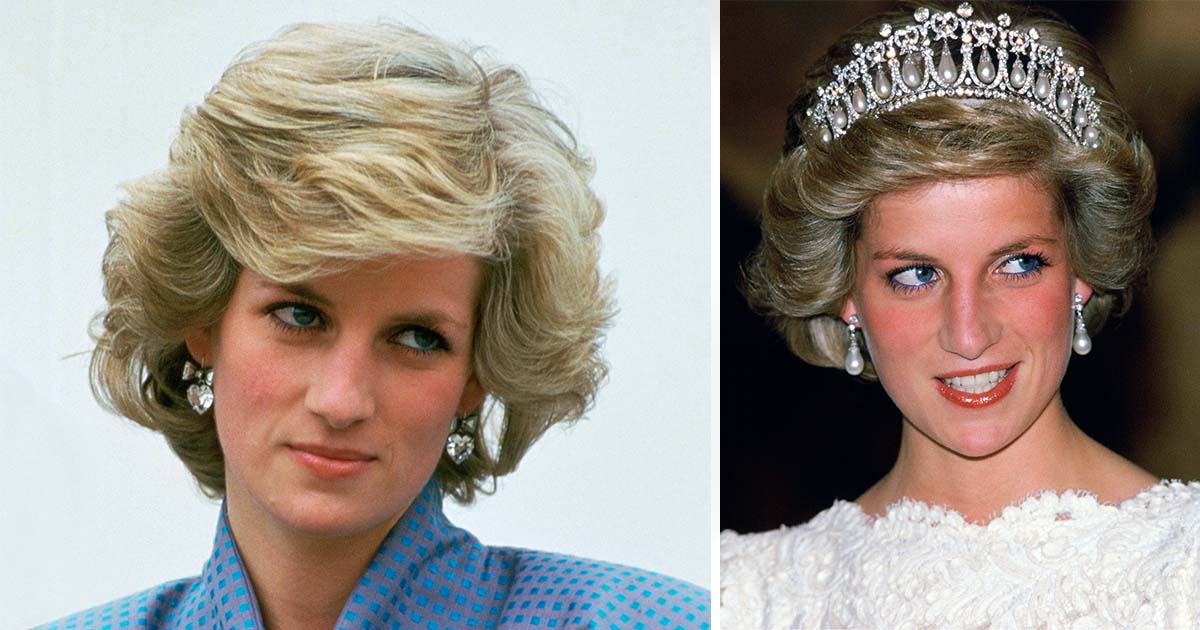
Decades after her passing, Princess Diana remains a figure of warmth, kindness, and courage for millions of people around the world. Her compassion made her beloved, and her untimely death left a lasting ache that many still feel today. Even now, new glimpses into her private world continue to surface, reminding us that behind the dazzling public smile was a woman who laughed, struggled, hoped, and persevered.
Among the most revealing windows into her life are her letters and cards. Some are deeply personal and solemn. Others, perhaps surprisingly, show a mischievous sense of humor that many did not expect. Recently, two cheeky greeting cards that Diana sent to the last King of Greece, Constantine II, were sold at auction. They offer a delightful, irreverent peek at a lighter side of the “People’s Princess” that would have startled even those who knew her well.
A playful side the world rarely saw
The two cards Diana sent to King Constantine II were friendly, funny, and unmistakably daring. One card showed a drawing of a nude man leaning on a tree with the saucy caption, “Adam came first….Men always do!….” The second displayed a nude woman alongside a bawdy riddle that read, “What’s the definition of the Perfect Man?” It was followed by the punchline: “A midget with a 10″ tongue who can breathe through his ears!”
Each card carried a personal note from Diana, signed with warmth and affection. One was inscribed, “Dearest Tino, lots of love from Diana.” The other read, “Dearest Tino, proudest love as always, from Diana.” To some royal traditionalists, this kind of playful humor might have seemed shocking, even improper. Yet to friends, it was another example of Diana’s gift for breaking down stuffiness with a twinkle in her eye and a very human laugh.
King Constantine II, known to friends as Tino, had a longstanding friendship with Diana. Although the precise reason she sent these spirited cards is not recorded, the auction house suggested she likely came across them, thought immediately of him, and decided to share a private joke. The cards did not mark a birthday or official occasion, which makes them feel even more personal and spontaneous.
Sold at auction and cherished for their charm
In May, these two greeting cards went up for sale at Dominic Winter Auctioneers. They achieved a final price of about $7,000. The result reflected not only the cards’ novelty but also Diana’s enduring appeal. Collectors and admirers alike are drawn to items that capture her voice, her humor, and her remarkable ability to be at once regal and relatable. These cards show a woman who did not let palace protocol smother her personality, a woman who could be both dignified and deliciously cheeky.
For many who admired Diana from afar, seeing this playful side is a comforting reminder that she was not just a symbol on a balcony or a figure in a procession. She laughed at risque jokes, teased her friends, and reached for humor during difficult times. In that way, these cards add an important thread to the tapestry of who she really was.
Letters that spoke of strain, courage, and heartbreak
The humor of those cards stands in poignant contrast to another set of Diana’s writings that came to light earlier. During her painful split from then-Prince Charles, Diana wrote a series of emotional letters to her friends Susie and Tarek Kassem. Thirty-two of those letters, composed during some of the most challenging months of her life, later sold at auction for around $169,663, after being estimated in the region of $110,000.
In those private notes, Diana gave voice to the crushing pressure she felt as she navigated a very public breakup. In one letter dated April 28, 1996, she explained that she had to cancel a trip to Italy and apologize to her friends because of how she was feeling. She wrote, “I am having a very difficult time, and pressure is serious and coming from all sides. It’s too difficult sometimes to keep one’s head up, and today I am on my knees and just longing for this divorce to go through as the possible cost is tremendous.”
A few weeks later, her worries extended to her own privacy and safety. “As I don’t have a mobile, it is difficult to discuss personal issues as my lines here are constantly recorded and passed on,” she confided in another message. The strain of constant scrutiny, uncertainty, and life under a relentless spotlight weighed heavily on her. At one point she added, “If I’d known a year ago what I’d experience going through this divorce I never would have consented. It’s desperate and ugly.”
These were not the writings of a detached royal. They were the words of a young mother trying to keep going, all while being watched and judged by the world. The letters make clear how grateful she was for the kindness of close friends during those dark times.
Advice from the Queen and a note of gratitude
As the situation between Diana and Charles deteriorated, even Queen Elizabeth II stepped in. In December of 1995, the Queen advised that the marriage should end. The very next day, Diana wrote another heartfelt note to the Kassem family. “I may have been described as a butterfly but I don’t want to fly away from this loving family,” she told them tenderly. She went on to say she was “immensely touched” by their protection and care, adding in a striking admission that she had “never had such love and support from a married team before.”
Those words underscore how much Diana relied on trusted friends when life in the palace felt isolating. Auction representatives later described the letters as “frankly astonishing,” both for their emotion and their candor. They show Diana steadying herself with the help of people who saw her not as a princess, but as a person in pain.
Behind palace walls, and the power of friendship
Commentators close to the sale observed how strong the bond was between Diana and the Kassem family. Their friendship began at the Royal Brompton Hospital, and quickly deepened. These letters, written in moments of vulnerability, reveal not only how uncertain the future felt for Diana at the time, but also how much hope and strength she drew from simple acts of kindness. Some proceeds from the sale were directed to charities dear to both Susie and Diana, a gesture that reflected the princess’s lifelong commitment to using personal trials to benefit others.
The tragic night in Paris
As everyone remembers, the story of Diana’s life took a terrible turn in late August 1997. Shortly after midnight, the car carrying her crashed in the Pont de l’Alma tunnel in Paris. Emergency teams fought to stabilize her at the scene, and she was transported to Pitié-Salpêtrière hospital, one of France’s leading emergency centers. There, surgeons worked with urgency and care to save her life.
Among the medical staff was Dr. MonSef Dahman, who later described the intense effort to resuscitate the princess. He recalled how the team tried defibrillation, cardiac massage, and administered adrenaline, doing everything in their power to restart her heart. For a time he felt a glimmer of hope, but her internal injuries were too severe. Despite their best efforts, they could not bring her back. His recollections are heartbreaking, yet they also honor the dedication of those who fought for her in those final hours.
Chilling premonitions that stirred debate
In the years that followed, further letters related to Diana sparked public discussion. In 2003, her former butler, Paul Burrell, revealed that he had kept certain personal papers at her instruction. Among them was a note in which Diana expressed fear that someone might stage a car crash as a means to harm her. She mentioned “brake failure and serious head injury,” and wrote of feeling she was entering the most dangerous phase of her life. The note was unsettling to read, and it fueled speculation that continues to this day.
It is important to remember that such claims have been examined and debated exhaustively, often with conflicting views. What cannot be disputed is that Diana was under immense pressure and felt deeply vulnerable. Her letter, whether a warning prompted by anxiety or something more, is a stark reminder of how precarious her world could feel behind the scenes.
Paul Burrell, the princes, and a painful rift
Paul Burrell began working for Charles and Diana at Highgrove House in the late 1980s and remained close to Diana until her death. After 1997, he found himself at the center of public attention when questions arose about items he had in his possession. A 2002 court case against him collapsed when it emerged he had informed the Queen that he was safeguarding some of Diana’s belongings. Soon after, he published a book about his years of service. That decision deeply upset Prince William and Prince Harry, who issued a statement at the time describing the publication as a betrayal.
In later years, Harry revisited those feelings in his memoir. He wrote that the book angered him, describing it as self-serving and accusing Burrell of trading on his mother’s memory. Harry said it made his “blood boil.” Burrell, for his part, maintained that he had only ever tried to protect Diana and her legacy. He later responded to Harry’s comments by saying that the prince had changed and that Diana would have disapproved of such bitter public disputes.
Whatever one’s view of the arguments, the human cost is clear. The princess whom millions loved was also a mother, and these disagreements show how raw the emotions around her memory can still be. It is another reason her letters and cards carry such weight: they allow Diana to speak for herself, in her own way.
From laughter to heartache, a fuller portrait of Diana
Putting the pieces together, a fuller picture emerges. On one hand, there are the spirited greeting cards to King Constantine II, brimming with ribald humor and friendly affection. They show that Diana could be playful and bold, unafraid to deflate formality with a wink. On the other hand, there are the intimate letters she sent during the divorce, in which she confided exhaustion, fear, and the heavy burden of public life. These voices are not contradictory; they are complementary. The laughter kept her going. The honesty kept her grounded.
Those who knew Diana often described her as someone who felt things strongly and cared for people deeply. The cards and letters affirm that. Even when she was struggling, she reached out to friends rather than shutting down. Even when she could have hidden behind a royal facade, she chose to be candid. That mix of humor and heart is part of why she remains so beloved today.
Why these discoveries still matter
For many, seeing Diana’s own handwriting brings back memories of the first time they watched her on television, or the day they joined millions in mourning. These new and newly rediscovered documents draw us closer to the person behind the headlines. They help us understand how she navigated complex pressures, how she met sorrow with courage, and how she never lost her ability to find a reason to smile.
The auctions also serve another purpose. By preserving and sharing these pieces of history, they invite us to reflect on what truly endures. Titles change. Castles pass to new owners. But character, kindness, and a sense of fun can echo for generations. The princess who shook hands with patients others ignored, who knelt to speak with children eye to eye, and who dared to speak up when she felt something was unjust, still inspires people to this day.
A legacy remembered with affection
It may be startling to discover that Diana sometimes sent cheeky cards with jokes that would raise an eyebrow at a palace tea. Yet that very surprise is part of her charm. She was not carved from marble. She was lively and human. She could be naughty and nurturing, candid and compassionate, all at once. The cards to King Constantine II, sold for $7,000, are small but telling souvenirs of that spirit.
Alongside them, the heartfelt letters from the turbulent mid-1990s, which realized a six-figure sum at auction, reflect a woman under immense pressure who never stopped caring. Together, they round out our understanding of Diana. They do not shrink her to a single image on a magazine cover or a single moment on a balcony. They allow her to be fully herself, which is all she ever wanted to be.
As time moves on, new generations are introduced to Diana through photographs, documentaries, and the memories of those who knew her. For those who lived through the era, these letters and cards may stir feelings that are still tender. For those who did not, they offer a gentle invitation to meet the real person behind the title. Either way, the effect is the same: we remember her with warmth, gratitude, and a smile she taught so many of us to share.
May the rediscovery of her words—and her wonderful, sometimes impish humor—keep her close to us. And may her example of empathy and resilience continue to guide those who look for grace, even in hard times.