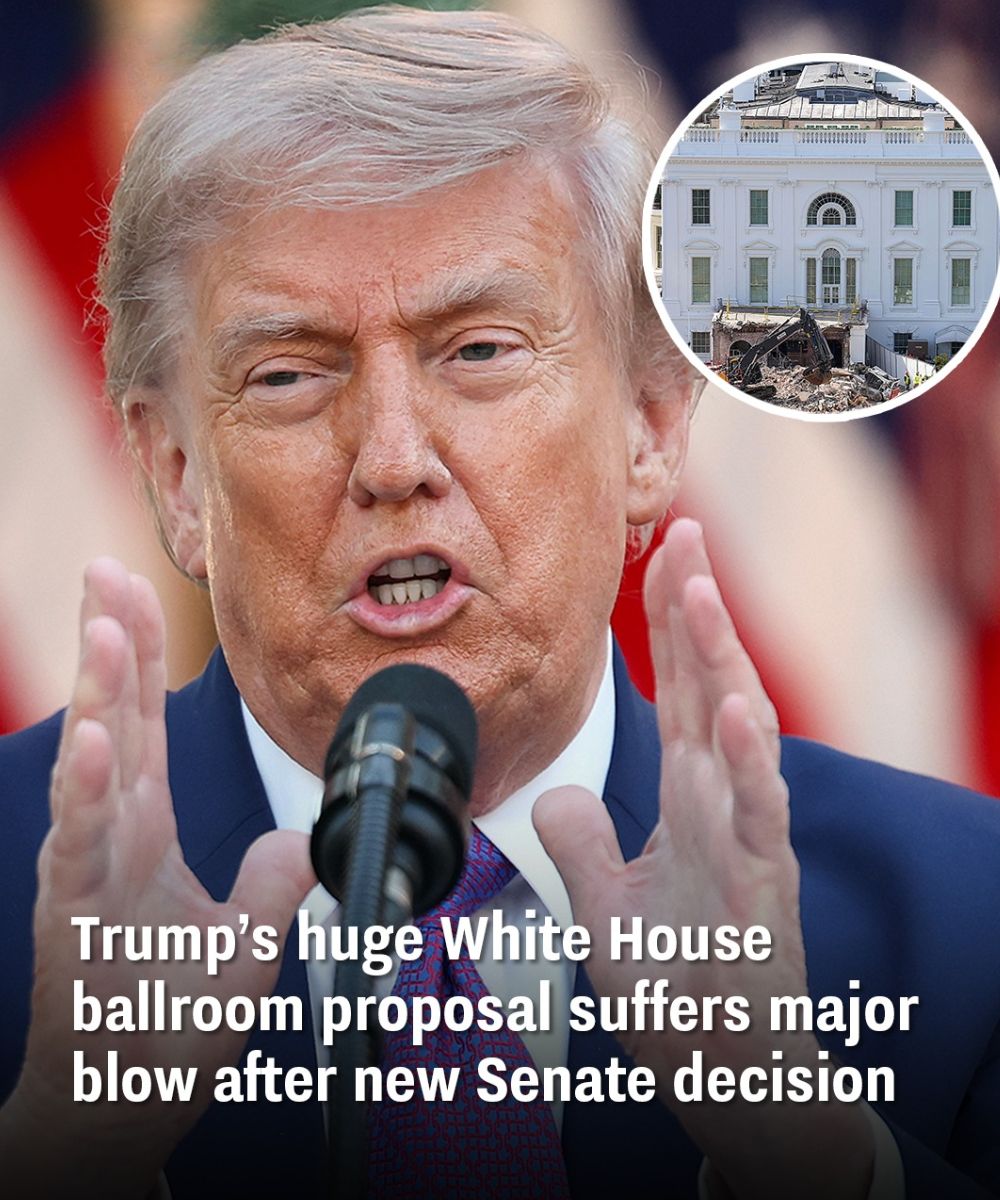
A procedural setback stalls a $1 billion security request tied to a proposed White House ballroom
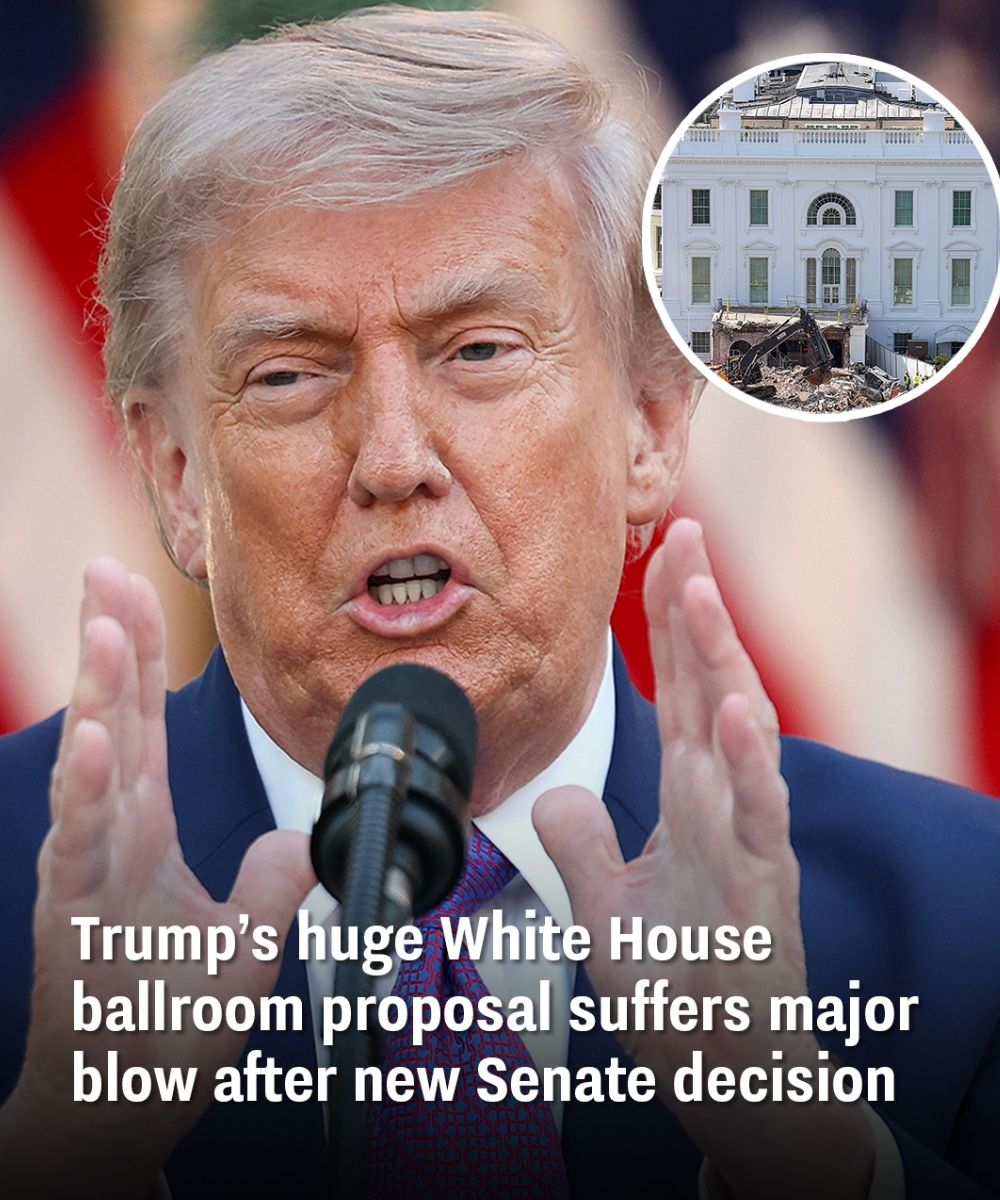
A key Senate ruling has paused a sweeping $1 billion security funding request connected to former President Donald Trump’s plan for a heavily fortified, 90,000-square-foot White House ballroom. The money had been folded into a broader Republican immigration enforcement bill designed to move under special budget rules that allow passage with a simple majority. Late Saturday, the Senate parliamentarian determined the funding was too broad to qualify under those narrow rules, stopping it from advancing in its current form.
The decision dealt an early blow to Republicans and gave Democrats a quick opening win in what is shaping up to be a tense, high-profile fight over both immigration enforcement and White House security spending. While the call from the parliamentarian is not the end of the road, it forces Republicans to revisit their approach and rewrite the language if they hope to move any portion of the package forward through the same fast-track process.
Democrats were swift in declaring victory. Senate leaders argued that the proposal, as drafted, asked taxpayers to shoulder far more than basic security needs. They framed the decision as a safeguard against what they saw as an overreach, emphasizing that detailed spending of this size should go through regular order with full debate, rather than a narrowly tailored budget mechanism.
Republicans countered that the intent was strictly safety-focused and that the scope could be clarified. They emphasized that the ballroom itself would rely on private donations, and that the federal funds were directed toward enhanced security infrastructure and operations in and around the White House complex. Even so, the parliamentarian’s ruling sent them back to the drafting table, at least for now.
What the ruling means in plain terms
For many Americans, especially those who don’t follow the daily twists and turns of Senate procedure, this moment may feel confusing. The Senate parliamentarian is a nonpartisan official who advises on what the chamber’s rules do and do not allow. When a bill tries to use a special budget pathway that bypasses the traditional 60-vote threshold, its contents must meet strict criteria. If a section is considered too broad, unrelated, or out of bounds, the parliamentarian can say it does not qualify to move ahead under those rules.
That is what happened here. The request for $1 billion in White House-related security spending was deemed too expansive for the narrow process Republicans were using. That does not mean security upgrades are off the table altogether. It does mean that, in its current form, this portion cannot ride along on that particular fast-track bill.
The result is a pause, not necessarily an end. Lawmakers who want the funding will need to rewrite it, attach it to a different bill, or pursue it through the regular legislative path. Each option has pros and cons, including different vote thresholds, timelines, and political trade-offs.
Democratic reaction and early political fallout
Democrats quickly celebrated the parliamentarian’s call. They argued that taxpayers should not be put on the hook for what they described as an extravagant undertaking. Senate leaders highlighted that this first skirmish signals how closely they plan to scrutinize any future attempt to slip large-scale projects into narrowly tailored budget measures.
Some Democrats used vivid language to make their point. One senator criticized the idea as a lavish, palace-like vision, saying Americans should not spend even a single dime supporting such a design. To them, the proposal seemed to blur the line between necessary safety measures and a grand construction project that they believed could be funded through other means, if pursued at all.
Republicans pushed back on that framing. They stressed that the ballroom itself, as proposed, would be paid through private contributions rather than taxpayer dollars. From their perspective, the federal component focused on security-related upgrades that are typical for a complex that hosts world leaders, state functions, and large public events. A spokesperson for Senate Republican leadership summed up the next steps concisely on social media, suggesting it was time to redraft, refine, and resubmit.
Why the White House security funds were blocked under Senate rules

The short answer is that the Senate’s special budget tools come with strict limits. When lawmakers use a process that allows bills to pass with a simple majority, each part of the legislation must clear tests about budget impact, scope, and relevance. If a section looks too expansive or does not meet the narrow criteria, it can be ruled out of bounds. In this case, the parliamentarian decided the proposed White House security package was too broad for the fast-track lane Republicans selected.
There is also the question of content. Even though Republicans argued that the federal dollars focused on security—not the ballroom structure itself—opponents pointed to the close ties between the project and the requested funds. The proposal reportedly included a new visitor screening center, more training for agents, and extra protection for large White House gatherings. Supporters said those were common-sense upgrades. Critics questioned whether bundling them under a bill tailored to a different policy area was appropriate.
A complicating recent event added urgency. After an incident at the White House Correspondents’ Association dinner last month, in which a man was charged with attempting to assassinate Donald Trump, the Secret Service requested resources to strengthen security. Trump himself argued on social media that if a specially fortified ballroom had already been completed, the incident would not have occurred, adding that the project could not be built fast enough. That statement underscored the security rationale but also further fused the ballroom vision with the funding debate.
For those following at home, it helps to remember that none of this means the Senate is against protecting the White House. Rather, it reflects rules about how and where certain types of spending can be considered, especially when lawmakers are trying to pass bills more quickly than usual. The parliamentarian’s advice focuses on process, and, in this instance, the process did not match the scope of the request.
Where the ballroom concept stands now

The proposed 90,000-square-foot ballroom has traveled a bumpy legal road. A federal judge previously halted construction, saying the president had exceeded his authority. That pause did not last. In April, an appeals court allowed work to continue while the case moves forward. As of now, the legal questions have not been fully resolved, but the project was cleared, at least temporarily, to proceed pending the outcome of the litigation.
This legal backdrop is separate from the funding debate under way on Capitol Hill. Even if the ballroom’s design and construction rely on private donors, public money would still be needed for certain security, staffing, and operational aspects of the broader White House complex. That distinction—between private funding for a facility and public funding for security—has become a central talking point on both sides.
For Americans of all ages, it can be helpful to think of the White House the way you would any historic building that doubles as a workplace and an event space. Safety, screening, communications, and emergency response must all be modernized from time to time. The question before Congress is how much to spend, how to prioritize those upgrades, and what legislative path to use.
What remains in the larger immigration enforcement bill
Although the parliamentarian removed the White House security request from the fast-track lane, Republicans emphasized that the broader immigration enforcement package remains largely intact. That legislation includes about $72 billion to fund Immigration and Customs Enforcement and Customs and Border Protection through September 2029. The push follows a 76-day government shutdown earlier this year, which stemmed from a deadlock over ICE funding.
Supporters of the immigration bill argue that long-term funding stability helps frontline agencies plan, train, and staff for complex missions at the border and in the interior of the country. Opponents have voiced concerns about oversight, civil liberties, and the scale of the commitment. Those debates will continue, but for now, the central structure of the enforcement package is still standing after the parliamentarian’s decision.
Security versus spectacle: how both sides are framing the ballroom idea
At the heart of the public conversation is a tension many can relate to. One side sees a practical response to new and evolving security needs for a building that hosts world leaders and high-profile events. The other side sees a grandiose project, out of step with fiscal restraint, and worries that tying it to broader funding asks could obscure the true price tag for taxpayers.
Supporters argue that a purpose-built, secure venue could reduce risks for large gatherings, streamline screenings, and improve coordination among protective details. They say the White House today must do more with less, often adapting historic rooms not designed for modern event security. A dedicated space, they argue, could keep ceremonial functions safer and more predictable.
Critics respond that the White House already has spaces that support official events, and that the East Room and other areas have hosted state functions for generations. They question the need for something on the scale of 90,000 square feet and warn that even if donors fund the structure, the ongoing costs of security and operations often fall to taxpayers. They also urge careful scrutiny to ensure that emergency appropriations or fast-track bills are not used to advance construction projects without full debate.
How the process could move forward from here
Republican leaders signaled they plan to revise the bill language based on the parliamentarian’s guidance. In practical terms, that might mean narrowing the request, breaking it into smaller pieces, or moving security-related items to a different bill that travels through regular order. A regular-order approach can take longer and usually requires broader bipartisan agreement, but it also allows for more detailed hearings and amendments.
Another possibility is a standalone security package that is carefully drafted to pass the parliamentarian’s tests if lawmakers still hope to use a fast-track route. Crafting such a bill takes time and meticulous attention to scope, cost, and direct budget impact. The more tightly tailored the proposal, the more likely it is to survive procedural review.
In the meantime, Democrats have made clear they will scrutinize any new attempt. After celebrating the initial ruling, they indicated they are prepared to challenge future drafts if they believe the scope strays beyond what the Senate’s rules allow. That sets up a likely back-and-forth in the weeks ahead, with each side trying to claim the mantle of fiscal responsibility and public safety.
What this means for everyday Americans
For many people, it can be hard to square the idea of a lavish-sounding ballroom with a legitimate need for stronger security. The split reflects a broader debate about how the country balances tradition and modern safety in a historic seat of government. Even if the ballroom is privately financed, the security environment that surrounds high-profile events remains a public responsibility.
If you are watching from home, the key points are straightforward. First, the parliamentarian’s decision does not settle the question of security upgrades. It only determines which path this particular request can take under Senate rules. Second, Republicans can try again with a more narrowly defined request or through a different legislative channel. Third, Democrats have signaled they will keep pushing for detailed oversight and a tighter scope on any security spending connected to the ballroom plan.
All of this will likely play out across multiple news cycles, and it may intersect with other high-stakes negotiations on funding, immigration policy, and government operations. That means the outcome could take time, and the final shape of any White House security package may look very different from what was proposed initially.
The bottom line and what to watch next
Right now, the $1 billion White House security proposal faces an uphill climb in its current form. The parliamentarian’s ruling closed the door on using the narrow procedural path Republicans chose, at least until the proposal is revised. Republican leaders say they are working on changes. Democrats say they are ready to challenge anything they see as overreach.
If Republicans produce a trimmed-down, clearly defined security package, it could have a better chance of advancing. Alternatively, they might pair a revised request with other widely supported measures to build a broader coalition. Either route will require careful drafting, public explanation, and, most likely, negotiation across the aisle.
Meanwhile, the legal case surrounding the ballroom’s construction will proceed on its own timeline. With an appeals court having allowed work to continue while litigation unfolds, the physical project may move forward even as Congress debates the connected security funding. That split pathway—one legal, one legislative—adds complexity and ensures that the conversation will not end soon.
In the weeks ahead, expect to hear more about what counts as truly necessary White House security, how much it should cost, and which rules should govern how it is approved. As those discussions continue, lawmakers on both sides will aim to reassure the public that safety remains the priority, even as they disagree on the size, speed, and structure of the spending.
For now, one thing is clear. The initial attempt to attach a far-reaching White House security request to a fast-moving immigration bill has been rebuffed. Whether a refined version survives—and whether it ultimately includes support tied to a new ballroom—will depend on how precisely the next draft is written, how convincingly it is explained, and how much bipartisan support it can gather.
Until then, the debate over the White House ballroom and its associated security needs will remain a vivid example of how policy, procedure, and politics meet in the halls of the Senate, where even well-intended ideas must pass the test of the rules before they can become reality.