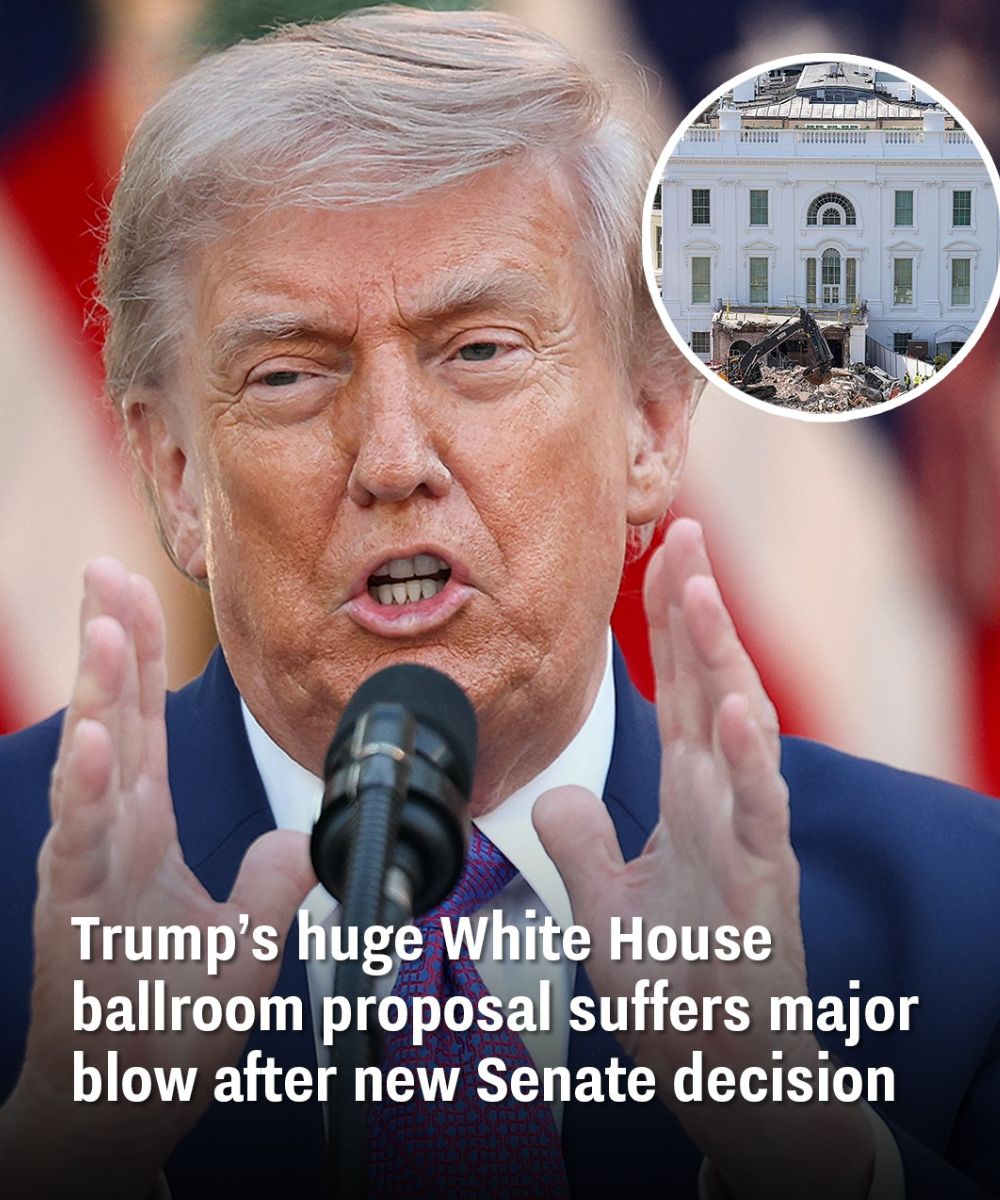
Donald Trump’s proposal for a heavily secured White House ballroom has run into a major setback after a $1 billion funding request was blocked on procedural grounds.
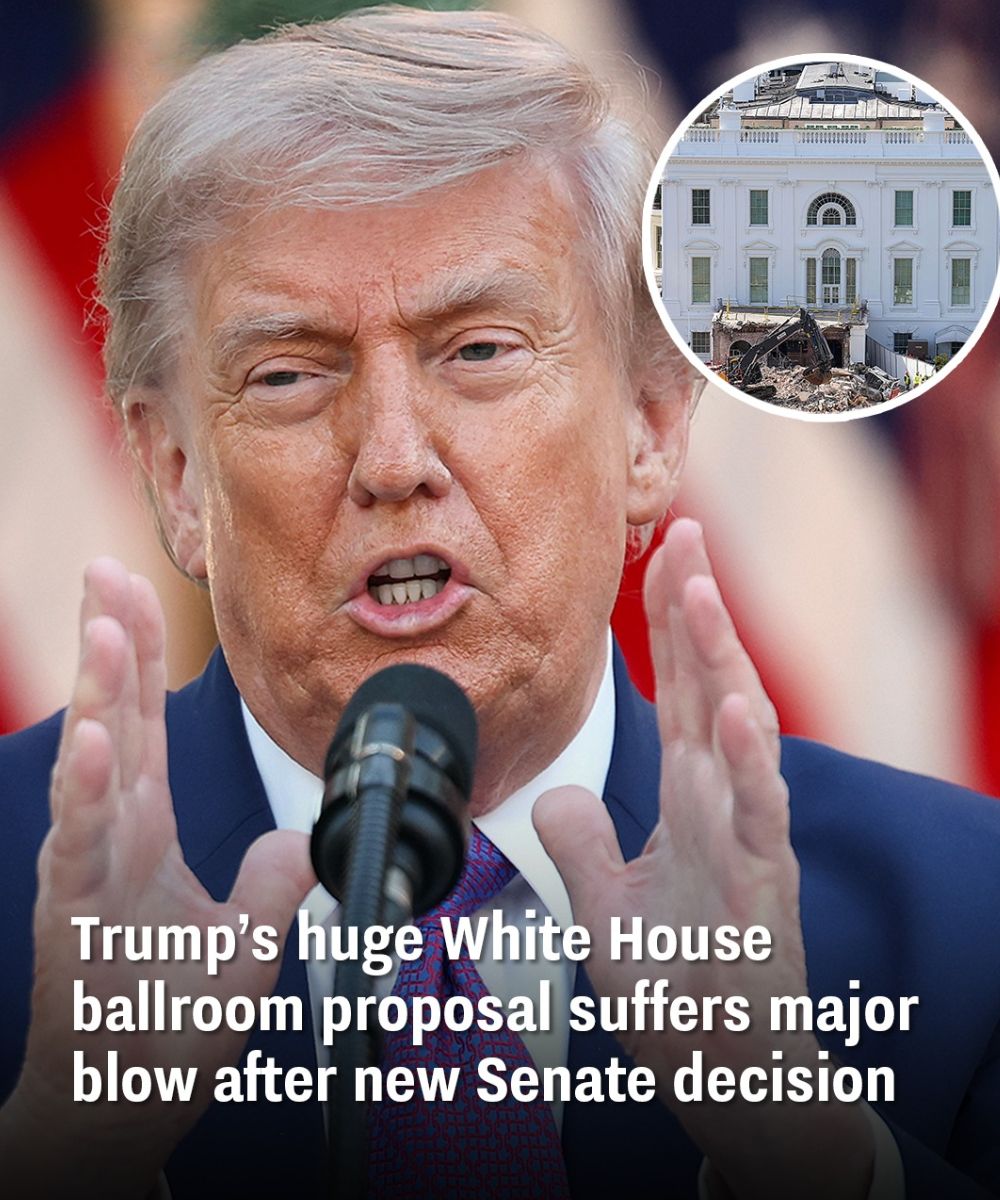
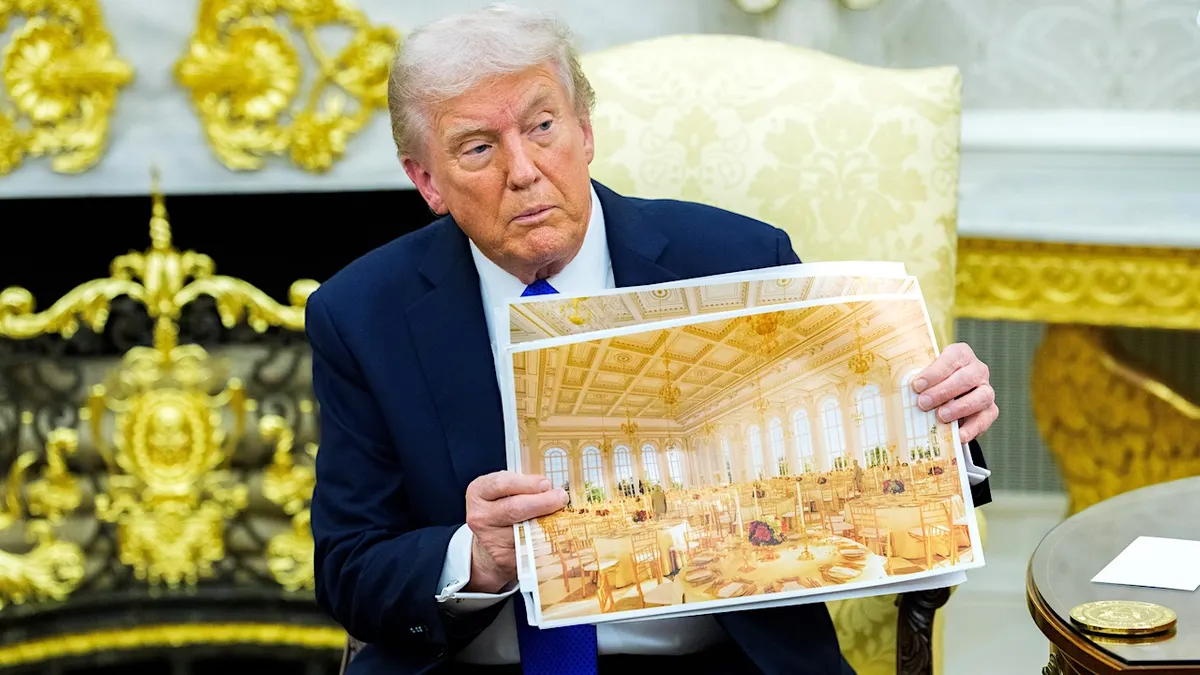
A high-profile request to set aside $1 billion for White House security upgrades, an effort closely associated with Donald Trump’s push for a 90,000-square-foot ballroom on the grounds, has been halted in the Senate for now. The interruption did not come from a floor vote or a shift in party support, but from a procedural ruling that said the way the money was being folded into a larger Republican budget measure did not meet the chamber’s rules.
Republicans had attempted to include the funds within a broader immigration enforcement bill designed to advance under a streamlined process that allows passage with a simple majority. Late Saturday, the Senate parliamentarian determined that the security funding was too expansive to qualify under the limits of that fast-track approach. That ruling effectively removed the $1 billion request from the package, at least in its current form.
The decision handed Democrats an immediate and visible win in what is shaping up to be a long and contentious fight over the measure. It also set the stage for a more drawn-out debate about how, or even whether, the White House should pursue major construction and security enhancements connected to the ballroom concept.
Senate Majority Leader Chuck Schumer moved quickly to frame the development as a victory for taxpayers. “Republicans tried to make taxpayers pay for Trump’s billion-dollar ballroom,” he said on Saturday evening, before adding, “Senate Democrats fought back and stopped their first attempt.” He signaled that Democrats would be prepared to object again if Republicans try to rework the language and bring the idea back in a different form.
What comes next is not only a tactical question for both parties but a practical one for the agencies responsible for protecting the presidency. The Secret Service and other security professionals have argued that upgrades are overdue, especially for large, high-profile events that draw significant crowds and media attention. Still, the push to secure the money via a narrow budget avenue ran into a wall of Senate rules that are designed to keep such fast-track bills tightly focused on spending and revenues, without broader policy or construction elements riding along.
Why was Trump’s White House ballroom funding blocked?
The short answer is that Senate procedure, not a final political judgment, got in the way. The parliamentarian, a nonpartisan official who interprets chamber rules, concluded that the proposed funding package was too broad to fit inside the specific Republican budget mechanism being used. In plain terms, the rules for that process are strict, and the ballroom-related security funding did not fit tightly enough to satisfy them.
That technical ruling had big consequences. Once the decision came down, the money could not remain attached to the immigration enforcement bill without risking the entire bill’s eligibility for the faster, simple-majority path. Democrats embraced the ruling and quickly cast the ballroom plan as an unnecessary extravagance. Oregon Senator Jeff Merkley argued that Americans should not spend “a single dime” on what he called a “Louis XIV-style ballroom.”
Republicans countered that the heart of the request was about safety, not style. They emphasized that the ballroom itself, according to their plan, would rely on private donations for construction costs, while the federal dollars were aimed at critical security needs. Those improvements, they said, could include a new visitor screening center to better control access, expanded training for agents who handle crowded events, and heightened protective capabilities for major White House gatherings.
Ryan Wrasse, a spokesperson for Senate Republican leadership, brushed off suggestions that the setback spelled the end of the effort. Posting on X, he noted that “none of this is abnormal,” a nod to the many times Congress has had to reshape proposals to satisfy procedural rules. He summarized the Republican response in three words: “Redraft. Refine. Resubmit.”
The push for enhanced security funding has been particularly intense following an incident last month in which a man was charged with attempting to assassinate Trump at the White House Correspondents’ Association dinner. That episode renewed attention on the vulnerabilities that can accompany large formal events, especially those that blend political figures, media, and entertainment in densely packed venues.
Trump himself has argued that the new ballroom would significantly strengthen event security. He wrote on social media that the incident would not have taken place if the “Militarily Top Secret Ballroom” currently being built at the White House had already been in operation. “It cannot be built fast enough!” he added, framing the ballroom as an answer to both safety concerns and the need to host large-scale gatherings under tighter control.
For readers who may not follow Senate procedure closely, it helps to think of this as a rules-based detour rather than a dead end. The parliamentarian’s ruling did not say the White House or Congress can never fund more security. It said the particular way this $1 billion was being tucked into the immigration bill did not meet the limits of the chosen budget route. Lawmakers can try again with narrower language, a different legislative vehicle, or a new package that better satisfies the rules. But each of those options will take time, and each one invites another round of political argument.
Security professionals often emphasize that venues work best when they are planned from the ground up with safety in mind. A ballroom designed for high-profile events could, in theory, centralize screening, reduce improvisation, and allow for a consistent security footprint. Critics, however, worry about costs, optics, and the possibility that a grand space could become a symbol of excess. These differing perspectives explain why the funding approach becomes as important as the plan itself; the path chosen signals priorities and shapes public perception.
Will the ballroom still be built?

The project has already taken a winding path through the courts. A federal judge initially blocked construction, finding that Trump had overstepped his authority. That pause raised questions about how quickly any on-site work could proceed and under what legal framework. However, in April, an appeals court allowed the work to continue while the larger case moves forward. That means certain elements can proceed in the interim, even as the ultimate legal questions remain unsettled.
In practical terms, the legal green light from the appeals court is provisional. It permits ongoing activity but does not guarantee a final outcome in favor of the project. Court cases like this can take months, sometimes longer, and each new ruling can tighten or loosen what is allowed at the construction site. If the project is to advance smoothly, it will need not only legal clearance but also a stable stream of funding for the security components that surround the ballroom plan.
On that front, Saturday’s procedural ruling did not unravel the entire Republican budget package. The broader bill remains largely intact and still includes about $72 billion to fund Immigration and Customs Enforcement and Customs and Border Protection through September 2029. For many Americans, these agencies are familiar in name but not always in day-to-day detail. ICE focuses primarily on interior immigration enforcement, detention, and removal operations, while CBP handles border security, ports of entry, and customs processes. Keeping those agencies funded is an ongoing priority, and the memory of this year’s 76-day government shutdown—sparked by disputes over ICE funding—still looms over the debate.
Republicans said they are now revising the bill to take into account the parliamentarian’s guidance. That could involve trimming or clarifying the scope of the security items, finding a new legislative vehicle, or separating certain provisions so that only the most clearly eligible pieces are placed on the fast-track path. Any of those strategies could bring the question back to the Senate floor quickly, but each will require careful drafting to avoid another rules-based objection.
For supporters of the ballroom and related upgrades, the argument is straightforward: after years of escalating security challenges, creating a purpose-built event space with modern protections is common sense. They point to the growing complexity of high-profile gatherings, the importance of secure perimeters, and the need for better screening facilities that reduce bottlenecks and confusion. The right design, they say, can vastly improve both safety and efficiency, while also providing a dignified setting for state functions.
Opponents see it differently. They view the ballroom as a costly symbol that sends the wrong message, particularly if any part of it appears to rely on taxpayer dollars. Even with private donations funding the structure itself, they argue, a project of this scale naturally drags in federal expenses for security and operations. In their view, it is better to allocate scarce funds to focused upgrades that do not require a dramatic expansion of White House facilities.
At the heart of the standoff is a familiar Washington story: process and perception can matter as much as substance. The process question is whether security dollars can be justified under tightly defined budget rules. The perception question is how voters will respond to a major project framed, by critics, as a luxury—especially in a season where spending and priorities are under a microscope.
Looking ahead, a few milestones are worth watching. First, whether Republicans can produce a revised proposal that the parliamentarian accepts for the streamlined path. Second, whether Democrats decide to support any narrower version of the security funding, or whether they continue to resist on the grounds that it is entwined with the ballroom plan. Third, what the courts decide as the legal case moves forward, since a definitive ruling could either clear the way for construction or push the project back to square one.
For people who visit Washington or follow White House traditions, the implications are concrete. If a secure ballroom is ultimately built and paired with modern screening and protective systems, large events could become more predictable and potentially safer. Guests might see changes to how they are admitted, how bags and equipment are inspected, and how movement is managed inside the venue. If the project falters, the White House will likely continue to rely on a patchwork of temporary setups—tents, screening stations, and movable barriers—that can be effective but are not always ideal for comfort or consistency.
The political winds will also play a role. Leaders in both parties understand that large sums tied to the White House attract intense public scrutiny. That is why the detail about private donations has featured so prominently in Republican talking points, and why Democrats have stressed that taxpayer protections must come first. It is also why procedural rulings like Saturday’s can carry so much weight: they offer a clear, rules-based reason to slow down, reassess, and decide whether the argument for the expense is compelling enough to try again.
The episode offers a reminder that, in Congress, setbacks are not always final. Proposals can be reshaped to answer specific objections. Language can be tightened. Funding streams can be separated and realigned. As Ryan Wrasse put it, the path forward is to “Redraft. Refine. Resubmit.” If Republicans follow that script, a revised version of the security request could return to the Senate with a leaner design intended to pass procedural muster.
For now, though, the reality is simple. The $1 billion security request linked to Trump’s ballroom plan is on hold, the parliamentarian has set a clear boundary, and both parties are recalculating. Supporters remain convinced the improvements are urgently needed, citing the recent security scare and the pressures of hosting major events. Critics are equally determined to block what they see as an unnecessary and expensive expansion. Until a narrower path emerges—or a different bill provides a more suitable home for the funding—the plan’s fate remains uncertain.
As the debate continues, everyday concerns should not be lost. Safety at public events matters. So does responsible spending. Clear planning, transparent funding sources, and careful adherence to established rules are the ingredients most likely to produce a solution that protects both people and public trust. Whether that solution includes a new White House ballroom—or relies on more targeted security upgrades—will depend on the negotiations, rulings, and revisions still to come.
In the coming weeks, expect more drafts, more statements, and more back-and-forth. The courts may issue new findings. Senate drafters may unveil tighter language. Security officials may continue to press their case, presenting assessments of risks and potential fixes. Each of these steps will add clarity to a question that, after Saturday’s ruling, has only grown more pointed: can a vision for grand events and modern protection be reconciled with the rules, the budget, and the politics of the moment?
Until there is a final vote or a definitive court decision, the only certainty is that the discussion is not over. The parliamentarian’s decision has paused the plan, not ended it. What happens next will be shaped by patience, precision, and the willingness of lawmakers to either find common ground or make a clearer case to the public about why this particular project deserves to move ahead.