
Director Adam Marcus has looked back on a difficult chapter from his career and shared some blunt thoughts about working with Val Kilmer years ago on the 2008 thriller Conspiracy. In a now-removed social media post, Marcus described Kilmer as the most challenging person he ever worked with, using language that was as strong as it was surprising. His comments have stirred up fresh conversation about what really goes on behind the scenes in Hollywood, how time changes the way people talk about their experiences, and how complicated a public figure’s legacy can be.
A tough memory from an old set
Marcus, known to many fans for directing Jason Goes to Hell and for his long involvement in the horror and thriller world, spoke plainly about his experience on Conspiracy. He referenced Kilmer by recalling his famous roles as Iceman in Top Gun and Doc Holliday in Tombstone, then said that working with him on that particular project made the production unusually difficult. According to Marcus, if the same behavior happened today, the reaction would be swift and unforgiving. While he did not go into detailed, step-by-step examples in the removed post, his broad characterization made clear how strongly he felt about what happened during that shoot.
It is never easy to hear a filmmaker describe a colleague in such harsh terms, especially when that colleague is no longer here to respond. Even so, Marcus’s words appear rooted in his own recollections of a stressful working environment. Film productions are high-pressure situations by their nature. Schedules are tight, budgets are limited, and each day brings new problems to solve. When a key relationship on set is strained, those challenges can quickly grow. Marcus’s comments suggest that the mood on Conspiracy was strained far more than usual.
Because the original post has been removed, readers are left mostly with summaries and the simple fact that Marcus chose to speak up, with no sign that he wants to walk back his account. For some, that invites curiosity. For others, it raises caution about judging old situations far in the rearview mirror. Both reactions are understandable, especially for those who remember just how many stories circulate about big personalities in the film business.
The movie at the center of the story
Conspiracy arrived in 2008 and centered on a disabled special operations veteran, played by Kilmer, who becomes entangled in dark and dangerous secrets. Despite having a bankable star and a premise with built-in suspense, the film did not find its footing with critics or with a wide audience. After a modest rollout, it went straight to DVD, and many reviews at the time were unkind. That disappointing reception likely made the shoot feel even tougher for those who had invested so much in getting the film made. When a movie struggles, the people who poured their energy into it often feel the sting for years.

Directors and actors sometimes clash on how best to bring a scene to life. That isn’t unusual. Strong-willed artists can disagree about tone, pacing, or even the smallest details of a character’s behavior. In many cases, those disagreements lead to sharper, better work. In other cases, they sour the atmosphere and make each day harder than the last. Marcus’s remembrance suggests the latter, at least for him, and it helps explain why this single experience still stands out to him after so many years and so many other projects.
For viewers who only see the final product, it can be surprising to learn how messy the process sometimes becomes. A two-hour film can represent months of long days, constant adjustments, and thousands of small choices from hundreds of people. When a key relationship turns rocky, the effect can ripple through departments, from camera and lighting to hair and wardrobe. The larger the personality, the larger those ripples can feel. That may be part of what Marcus was trying to convey: the sense that the stress went beyond ordinary creative friction.
Val Kilmer’s larger-than-life career
Val Kilmer left a significant mark on American movies. From early roles that showed off his charisma to career-defining turns in Top Gun, The Doors, and Tombstone, he built a reputation for intense commitment to his characters. That intensity, celebrated by fans who admired his bold choices, sometimes came with stories that painted him as exacting and difficult on set. Over the years, accounts about his methods and temperament have ranged from admiring to critical. In an industry that thrives on mythmaking, such stories tend to follow any star with Kilmer’s level of fame.
It is important to remember that everyone experiences a working relationship differently. One person may find a colleague’s approach inspiring and a welcome challenge. Another may experience the same behavior as disruptive or hurtful. Marcus’s post comes from his perspective, rooted in the specific circumstances of Conspiracy. That lens is worth noting, especially when discussing someone whose life and work have been so widely seen, debated, and, at times, misunderstood.
Fans who cherish Kilmer’s performances often speak about the force of his presence on screen. Whether he was trading sharp dialogue with Tom Cruise, reinventing a historical icon, or finding the strange heartbeat of a complex character, he brought something singular to his roles. With that level of commitment sometimes comes friction. The film business has many examples of intense artists who could be difficult colleagues. None of that excuses poor behavior, but it may help explain how talents and temperaments can collide in ways that are hard to resolve while the cameras are rolling.
Health struggles and a later-life resurgence
Years after Conspiracy, Kilmer faced a profound health battle. He was diagnosed with throat cancer, a fight that changed his life and, in time, his voice. Even after losing his natural speaking voice, he continued to work, create, and share his story. His courage in making appearances and engaging with fans despite those challenges earned renewed respect from many who saw not only the movie star, but the person behind the image.
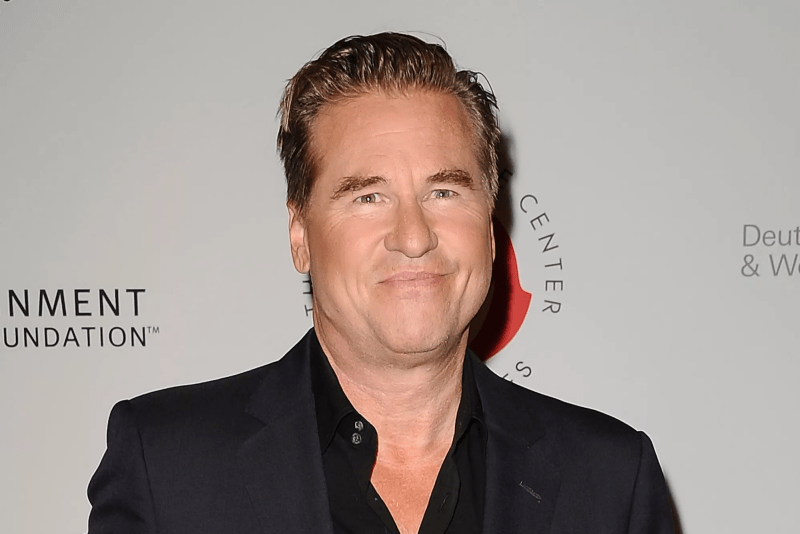
Tragically, Kilmer died in April 2025 from pneumonia at the age of 65. For admirers who had grown up with his films and followed his health journey, the loss felt personal. It is natural that, in the wake of someone’s passing, people tend to focus on the best, warmest memories first. That is part of how we grieve. Against that backdrop, Marcus’s decision to speak plainly about a bad experience landed with particular force. Some questioned the timing. Others felt that honesty, even when it is uncomfortable, has its place, especially when the story belongs to the person telling it.
The truth is that both feelings can be valid at once. It is possible to honor a person’s accomplishments and acknowledge the comfort their work brought to so many, while also recognizing that some collaborators recall painful moments. That is part of the complexity of a life lived in public—and part of the complexity of any long career, especially in a creative field where tensions often run high.
What Kilmer said about himself
In his 2021 documentary, simply titled Val, Kilmer reflected on his life and career with candor. He admitted that at times he behaved poorly or oddly, and he did so without asking for pity or trying to rewrite the past. He also said that he had no regrets about the path he walked and that he felt blessed by the opportunities he had. That mixture—accepting past faults while expressing gratitude—gave many viewers a fuller picture of the man behind the roles.
Hearing Kilmer in his own words makes discussions like this both easier and harder. Easier, because it reminds us that he knew he could be difficult and did not always make the right choices. Harder, because it underscores the humanity that can get lost when public conversations reduce someone to a single label. Neither saint nor villain, he was a talented, complicated person. Marcus’s account represents one chapter in a much larger story.
The tension between memory and mourning
When someone has passed away, people often hesitate to voice hard truths, fearing it might seem like speaking ill of the dead. Marcus, by all appearances, understood that reaction might come and accepted it. He chose to tell his experience as he remembered it. Others who worked with Kilmer might tell a different story. That is often how memory works, especially around stressful times. Two people can walk through the same door and come away with very different impressions of what they saw inside.
For those of us who watched Kilmer’s movies over decades, this tension can feel personal. We might remember the thrill of seeing him on screen for the first time, or sharing a favorite performance with our children or friends. Then we hear a difficult account from a director like Marcus and wonder how to hold those things together. The answer may be found in patience and perspective: it is possible to keep admiring the art while acknowledging that the making of it was not always kind.
How Hollywood has changed—and how it hasn’t
Marcus suggested that behavior tolerated years ago might not be tolerated today. In many workplaces, including film sets, expectations have shifted. There is more discussion about respect, boundaries, and the responsibility of leaders to protect a healthy environment. Social media also means that stories travel faster. What once might have stayed a rumor on a set can quickly become headline material. That can be good, because it brings accountability, and tricky, because complex situations are often reduced to a few heated lines of text.
At the same time, some things in the film world remain the same. Making movies is still demanding, often chaotic, and full of strong opinions. People are still people, with all the stress and pride and fear that come with putting their names on something viewed by millions. The clash between creative vision and practical reality guarantees that there will be disagreements. How those disagreements are handled can shape not only the work, but the way those involved remember it years later.
Separating the art from the artist
For many longtime movie lovers, the question of whether to separate art from artist has no simple answer. Some feel that a great performance can and should be appreciated regardless of the personality behind it. Others feel that knowing more about what happened off camera changes the way they see what is on screen. Both responses are natural. Human connection to art is rarely tidy. It can be joyful and complicated at the same time.
In Kilmer’s case, the power of his best work remains. So does the knowledge that people who stood beside him did not all have the same experience. Marcus’s words are a reminder that our favorite films were made by real people, not just names in opening credits. Honoring the best of those films does not require ignoring the hardest parts of their creation. Instead, it invites a fuller understanding of everyone involved.
Why this story still resonates
Stories from old sets resurface for many reasons. Sometimes a person is finally ready to share. Sometimes a new anniversary, documentary, or passing renews interest. And sometimes, as with Marcus’s post, a few raw sentences can capture attention because they cut through the usual public relations polish. The fact that the original message was removed has not erased it; once words are out in the world, they tend to stay there, echoed by those who saw them and quoted by those who remember.
For those who have followed Kilmer’s life and work, the renewed conversation can feel bittersweet. We are reminded of how much he gave to the screen, how profoundly illness altered his path, and how much courage it took to keep sharing himself with the world. We are also reminded that not every colleague remembers him fondly. That is not a contradiction so much as a reflection of a full, complicated human life.
A balanced takeaway
Adam Marcus’s candid words about Conspiracy are striking because they are so straightforward. He says a difficult experience was, for him, the worst of its kind. That is his truth, and he has chosen to tell it. Val Kilmer, for his part, left a legacy of memorable performances, admitted to his own flaws, and met severe health challenges with grace and determination. Those facts can live side by side. Holding them together requires patience, kindness, and a willingness to see more than one angle at once.
If there is a lesson for those of us who watch from the other side of the screen, it may be this: art that moves us often comes from people who are themselves moved—by ambition, fear, love of the craft, or simple stubbornness. That mix can lead to magic and, sometimes, to pain. Listening carefully to all the voices involved helps us appreciate the magic without overlooking the pain. In doing so, we honor the work, the workers, and the audiences who have carried these stories in their hearts for so many years.
As time goes on, more people who worked with Kilmer will likely share their own memories, good and bad. Each account will add to the picture rather than complete it. That is the nature of legacy. It is not a single headline or a single quote. It is a mosaic—of performances, moments on set, private choices, public struggles, and the feelings of those who watched from the seats. Marcus’s story is one tile in that mosaic. Kilmer’s films are many others. Together, they tell a complicated, deeply human story, one that invites compassion for everyone involved.