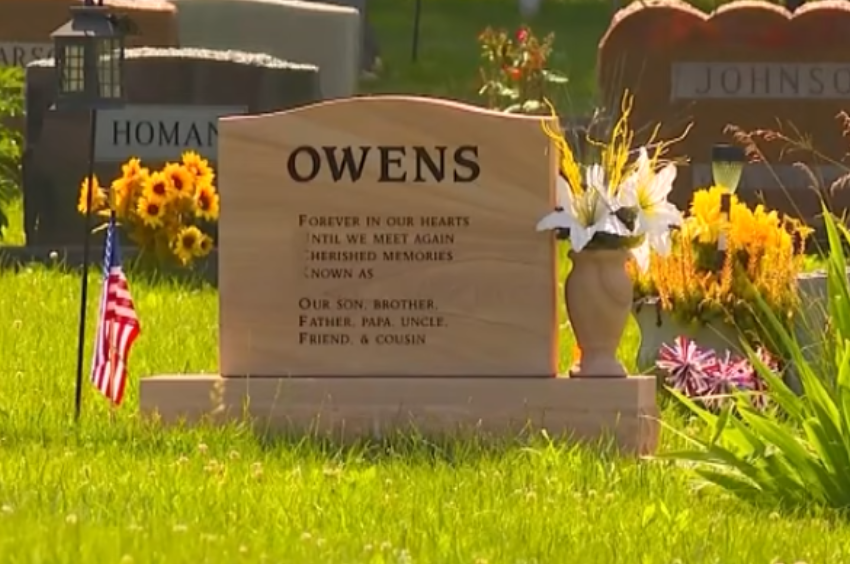
A quiet Iowa cemetery faces an unusual dispute
A small rural cemetery in Iowa has become the focus of a surprising community debate. A family’s loving tribute to a man they adored includes a hidden message carved into his headstone. Some visitors see it as clever and personal. Others say it crosses a line that should not be crossed in a public resting place. As word of the unusual inscription spread, what started as a private memorial has grown into a wider conversation about dignity, humor, and the boundaries we set in shared spaces.
At first glance, the monument looks like many others. It honors a man named Steven Paul Owens with warm and traditional words about who he was: a son, a father, a grandfather, a brother, an uncle, a cousin, and a friend. The inscription expresses love, remembrance, and the kind of thoughtful recognition you would expect a family to offer someone they miss deeply.
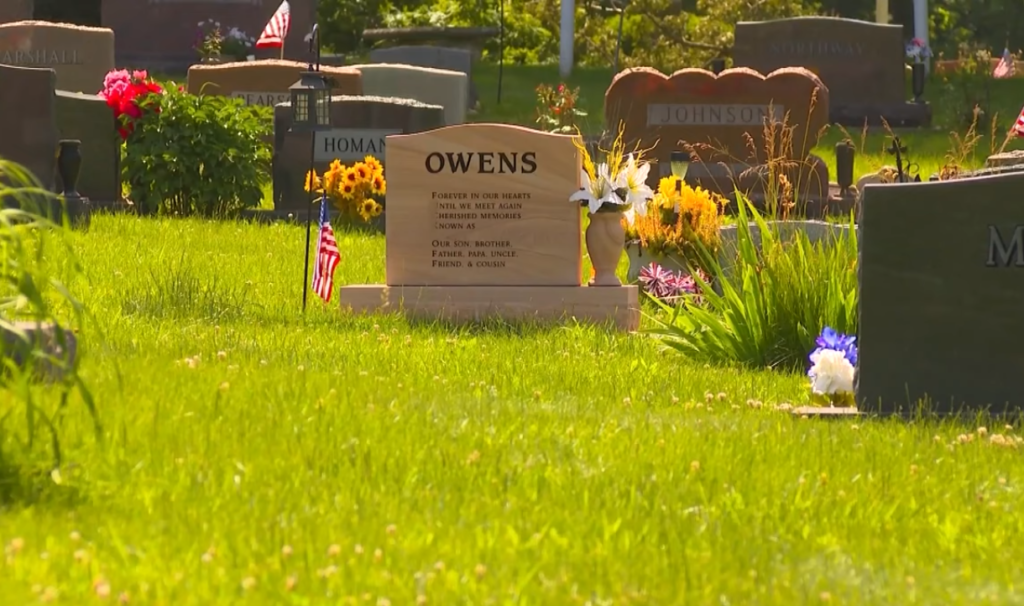
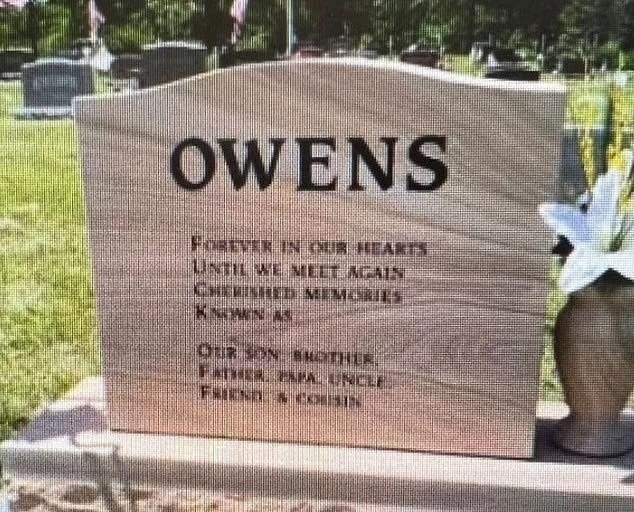
But when you look more closely, something unexpected appears. The first letter of each line has been arranged to form an acrostic. Acrostics are a familiar literary device in which the first letters of a series of lines spell out a word or phrase. Here, the word formed is a coarse one. To the family, it was a playful, private joke that perfectly matched the sense of humor of the man they loved. To others, it feels jarring in a cemetery where families come seeking comfort and quiet reflection.
Why the family chose a hidden message
Relatives of Steven Paul Owens say the inscription was never meant to offend or upset anyone. Instead, they describe it as a final, fitting wink to a man known for his dry sarcasm, easy laughter, and a way of teasing that meant you were part of his circle. In their view, this message was not an insult. It was a sign of affection — a clue to his personality that would draw a smile from those who knew him best.
Owens passed away in September 2021. According to his children, he was widely loved in their family. He teased, he joked, and he liked a spirited back-and-forth, the kind that ends with grins rather than grudges. They say he sometimes used strong language, but often with a twinkle in his eye rather than meanness in his heart. That flavor of humor was part of how he bonded with the people he cared about.
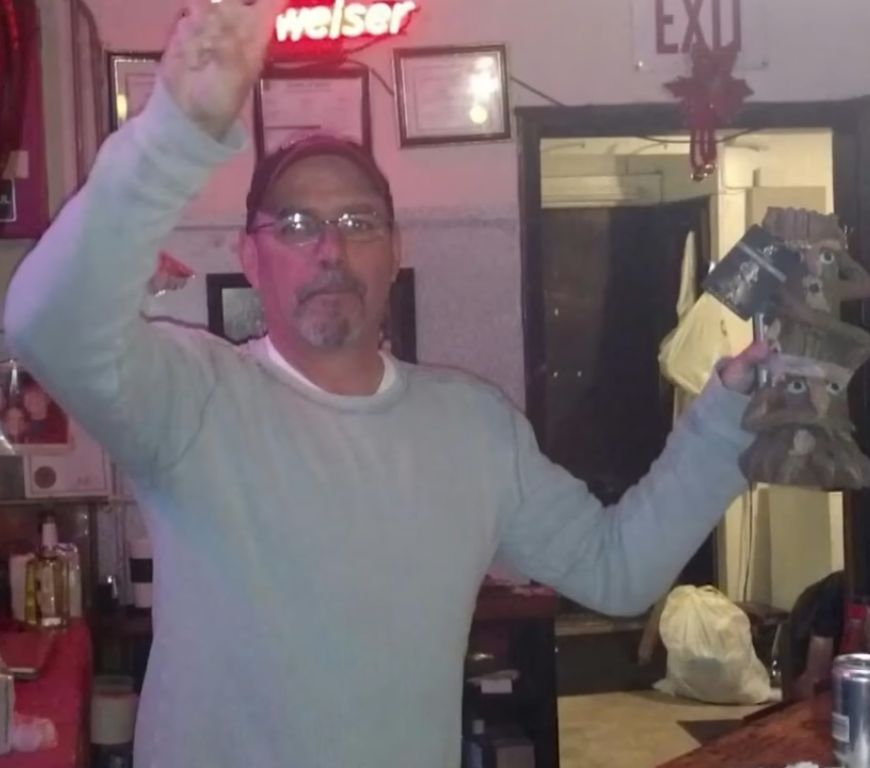
His daughter has explained that friends and relatives understood the phrase spelled out on the stone as a kind of good-natured salutation — a way of saying, “you’re one of us.” In their world, it was a familiar joke, softened by tone and context, never meant to drive anyone away. In their view, using that hidden word was an honest, heartfelt way to let the stone sound like him, even now.
The idea for the acrostic reportedly started with a relative and quickly found support across the family. They worked with the memorial company to design a stone that would look classic and respectful at first glance, while quietly tucking in that playful nod to Owens’s style. To them, this was not a stunt. It was a personal signature, the kind of detail that made the headstone feel less generic and more truly his.
How the cemetery officials see it
The local township trustees who oversee the cemetery view the matter differently. From their perspective, a public burial ground has to consider the comfort and expectations of all who visit — not only the wishes of any one family. Trustees reportedly objected to the monument before it was installed, raising concerns that the hidden profanity was not suitable for a place meant for reflection and mourning. They worried about setting a precedent that could make future decisions harder and more contentious.
Despite these objections, the memorial company went ahead with installation. Whether this was due to miscommunication, a difference in interpretation, or a breakdown in the approval process is not entirely clear. What is clear is that once the stone was in place, it drew more attention, and the township began looking for options to have it removed.

Supporters of removal argue that cemeteries need consistent standards to preserve a peaceful atmosphere for everyone, from young children visiting a grandparent’s grave to older visitors who come regularly to remember loved ones. They point out that if one rude word is allowed, it may become difficult to explain why other strong language or provocative phrases should be refused. In their view, the line must be clear and firm, or it risks vanishing entirely.
Trustees also say their responsibility is broad: to uphold the overall dignity of the cemetery and the comfort of all families, not to rule on the personal sense of humor of any individual. That does not mean they judge the deceased harshly, they say. It means they have to think ahead about the rules that preserve a sense of calm and respect in a shared public space.
Why the family stands by the headstone
Owens’s relatives, for their part, believe the controversy misses the heart of the tribute. They say the headstone was created out of love, not to provoke or shock. The inscription was designed to celebrate the man they knew — a father, grandfather, and friend whose jokes helped lighten life’s heavier moments. They feel saddened by efforts to remove the stone and hope others can understand the difference between a cruel insult and a warm, if cheeky, inside joke.
They also point out that nothing on the surface of the monument shouts for attention. The stone looks much like any other. The message is not scrawled in large letters or aimed at passersby. It sits quietly in the background, noticed mostly by those who linger and look closely. In their view, this discreteness matters, and it should count for something when weighing whether the stone belongs.
Acrostics, memory, and where we draw the line
Acrostics are hardly new. Poets, songwriters, and even puzzle makers have used them for centuries to add a layer of meaning that sharp-eyed readers can discover. At their best, they are a wink hidden in plain sight, a small game between writer and reader. In this case, though, the word spelled out is not gentle or poetic. It is coarse. And that changes how people feel when they find it.
For some, this difference makes the acrostic inappropriate in a cemetery. For others, it feels like a true reflection of a full life — because people are not only solemn and soft-spoken. They joke, they tease, and sometimes they use rough language among those who know them well. The question becomes less about literary style and more about the purpose of a cemetery: a place for personal remembrance or a shared space where decorum should prevail at all times. The truth is that it is both. Holding those two roles in balance is never simple.
How cemetery rules typically work
Most cemeteries, especially those overseen by a township or other public body, have regulations describing what can and cannot be engraved on markers. Families often submit designs for review before installation. In practice, many stones are routine, and approvals are quick. Problems arise when something unusual appears — especially something that can be interpreted two ways, such as a hidden message. If the words on the face are polite but the letters add up to a rude term, is the message permitted or not? Different boards may answer that question differently.
In many communities, the goal of cemetery rules is to avoid surprises that might upset people during already emotional visits. This is why policies often forbid obvious profanity, political slogans, or images that could be seen as disrespectful. Hidden messages make that job more complicated, because they are not always obvious, and not everyone will see them the same way.
Possible paths toward a solution
When disagreements like this one arise, sometimes the best solutions are practical rather than perfect. One option might be modest adjustments to the engraving that keep the heart of the tribute but break the acrostic. Adding a small decorative symbol or an extra word to one line may be enough to change the initial letters so they no longer spell anything objectionable. Another approach could involve adding an additional line of text, such as a favorite saying or a date, to naturally disrupt the sequence.
There are also cosmetic possibilities. Some families and cemeteries have agreed to add a small border, flourish, or engraving mark near the line starts. This preserves the look and flow of the memorial while gently softening the acrostic effect. Other times, placement can help; if a nearby plant, stone base, or frame obscures the very edges of each line, the letters become less obvious to casual observers.
None of these ideas are perfect, and none will please everyone. But they reveal a path many communities choose: keeping a family’s love and voice present, while trying to reduce the chance that others will be unsettled when they visit their own loved ones.
The legal backdrop, simply explained
While the law can be complicated, a simple way to think about it is this: cemeteries often have rules that function like terms of use. If a family wants to place a monument on cemetery property, even though they pay for and maintain the stone, the cemetery’s policies still apply. In publicly governed cemeteries, those policies are typically set by a board or trustees. Courts, when asked to review such disputes, tend to look at whether the rules are clear, consistently applied, and reasonably related to the cemetery’s purpose.
This is not the same as what might be allowed on a private lawn or a social media page. A cemetery is a special place. Freedom of expression remains important, but it is often balanced with other interests — such as preserving a peaceful and respectful atmosphere for everyone who visits. That is one reason why cemetery disputes are often settled locally, through discussion and compromise, rather than by sweeping legal rulings.
The role of the memorial company
Families rely on memorial companies to guide them through design and approvals. When a design includes an unusual feature, it is especially important that everyone is on the same page. If a cemetery objects to a design and the company proceeds anyway, hurt feelings and confusion can follow. Communication breakdowns like this are not unique to one town; they can happen anywhere. The key is to restore trust quickly, clarify the approval steps, and make sure similar surprises are less likely in the future.
A community conversation about respect and remembrance
For neighbors and visitors, the heart of the matter is not only about rules. It is about how we remember those we love. Some families choose solemn poetry. Others pick a favorite song lyric or a line from Scripture. Some include a hobby symbol, a sports logo, or even a light-hearted phrase that captures a person’s spirit. The goal is always the same: to make sure the name on the stone feels like the person who lived that life.
In the case of Steven Paul Owens, his relatives felt that a playful, hidden nod to his humor was exactly right. Those who favor removal believe that even a quiet joke can feel out of place if it uses a word many people find crude. Both sides care about respect; they simply define it differently. One side sees respect in honesty — in telling the truth about who a person was, wit and all. The other side sees respect in restraint — in keeping the space calm, gentle, and free of anything that might jar the grieving.
For older visitors who have walked through many seasons of life, this conversation may feel familiar. Over time, what counts as “proper” or “acceptable” can change. Styles shift. Humor changes. Communities evolve. But the desire to leave a mark of love does not. That is why discussions like this one can be hard, and why they matter. They ask us to hold both care for individuals and care for the common good, at the same time.
What might happen next
From here, several outcomes are possible. The trustees and the family could meet again to find a simple adjustment that keeps the tone of the memorial while removing the concern over the acrostic. The cemetery could decide to clarify its policies so that future families know exactly what is permitted. The memorial company might offer practical fixes at little or no cost, in the interest of goodwill. In some cases, stones are left in place with minor changes that satisfy both sides. In other cases, replacement is discussed, though most families hope to avoid that step.
Whatever the final decision, the hope is that the process is steady, kind, and focused on understanding. A cemetery is a place where stories meet. Each headstone represents years of memories, the ups and downs that make a life. Even when a disagreement arises, it can be handled in a way that honors both the person being remembered and the neighbors who come to remember their own.
Holding on to what matters most
In the end, everyone involved seems to want the same basic things — to keep the cemetery peaceful, to honor a man who was deeply loved, and to help families feel that their grief is met with compassion rather than conflict. The family of Steven Paul Owens remembers a warm, witty presence who used humor to show affection. The trustees remember their responsibility to every visitor who steps through the gates. Both wishes deserve a hearing.
This unusual Iowa headstone has drawn attention far beyond its quiet corner of the state, not because people enjoy arguing, but because it touches something deeply human. We want our goodbyes to sound like us. We also want the spaces where we say those goodbyes to feel safe and respectful for everyone. Balancing those hopes is never easy. But with patience, open conversation, and a bit of creativity, communities often find a path that keeps love at the center — where it belongs.
However the final verdict comes down, one truth is certain. A stone, no matter how carefully carved, is only part of a legacy. What lasts longest are the stories told at kitchen tables, the laughs remembered at family gatherings, and the quiet moments when a favorite memory arrives unannounced and brings a smile. In that sense, the spirit of a person outlives any single word — hidden or not — and keeps speaking in the lives of those who knew them best.