Understanding Palmistry in Simple Terms
Many people have looked at the lines on their palms and wondered what stories they might tell. The art of reading these lines is called palmistry, or chirology. It has been practiced in many cultures for centuries, not as a strict science, but as a way to reflect on personality, tendencies, and life patterns. Think of it as a gentle mirror for self-discovery rather than a set of hard rules. If you have ever been curious about the meaning of an “M” shape on your palm, you are in the right place. We will walk through the main lines, how to spot this “M,” and what people traditionally say it may suggest about you.
Before we begin, remember that palmistry is a cultural tradition and a bit of fun. It is not a medical, legal, or financial guide. Still, many find it meaningful, even comforting, because it encourages us to look at our strengths and habits with fresh eyes. With that in mind, let’s explore your palm together at an easy, unhurried pace.
How to Look at Your Palm Comfortably
Find a place with good light and sit where you can rest your forearm. Gently open your hand without stretching it too tightly. When the hand is relaxed, the lines appear more natural and clear. For many people, the left hand is said to reflect inherited tendencies and inner traits, while the right hand shows how life has unfolded through choices and experiences. If you are right-handed, you may look at the right hand for current patterns and the left for the you beneath the surface. If you are left-handed, simply reverse the idea. There is no single rule, so feel free to compare both hands and notice what stands out.
It also helps to trace the lines softly with a fingertip. Move slowly. You are more likely to notice where a line begins, where it ends, and where it crosses other lines. As you do this, you will see how an “M” might naturally appear when the main lines intersect in a certain way.
Meet the Main Lines on Your Palm
Across most palms you will find three primary lines: the life line, the head line, and the heart line. Many people also notice a fourth line called the fate line. These lines can be long or short, deep or faint, straight or curved, and they may be broken or continuous. All of these natural differences are normal. As you read the descriptions below, do not worry if your lines look a little different. Hands, like faces, are wonderfully individual.
The Life Line: More Than Energy and Vitality
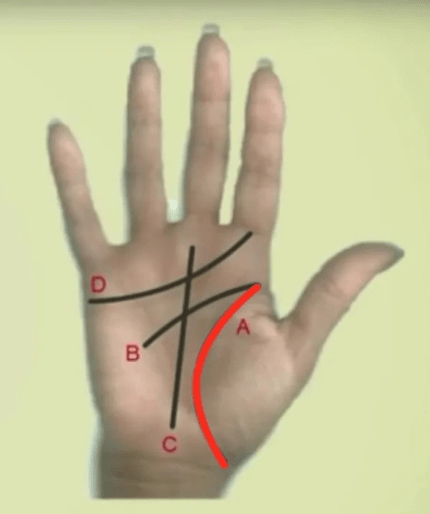
The life line begins between the thumb and the index finger and curves downward toward the wrist. Some believe it reflects vitality, resilience, and how you meet the rhythms of life. Despite the name, it does not predict lifespan. A long or deep line is often read as a sign of strong life force and steadiness under pressure. A shorter or fainter line can suggest a person who may be sensitive, adaptable, or who conserves energy wisely. If the line is broken or changes direction, it might reflect changes, big decisions, or turning points that shaped your path.
If your life line is bold and smooth, you might recall times when you handled demanding situations with calm determination. If it is thinner or delicate, you may be more selective about where you spend your energy, preferring quiet focus over constant activity. Neither way is better; they are simply different approaches to living well.
The Head Line: Clarity, Curiosity, and How You Think
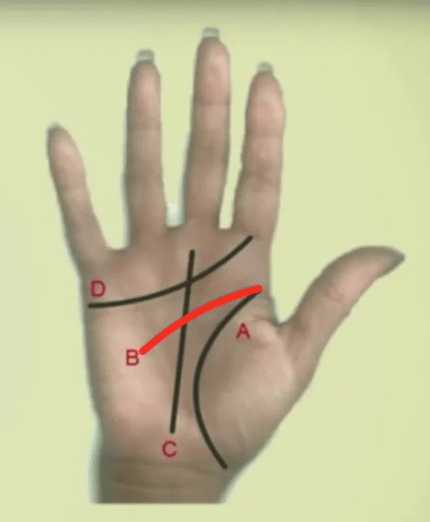
The head line usually runs horizontally across the palm, beginning near the life line between the thumb and index finger and extending toward the opposite side. It is often associated with your style of thinking, decision-making, and problem solving. A clear, straight line can point to practical thinking and a preference for common-sense solutions. A long, flowing line may show imagination, depth, and an ability to see many sides of a situation. A deeper line can be linked with good recall and a strong focus, while a line that wanders or breaks might hint at changes of interest, new learning, or a mind that enjoys variety.
Some hands show the head line connected to the life line at its beginning. This can be read as a sign of steadiness, caution, and balance between thought and action. When the lines begin a little apart, it may suggest independence and a willingness to take on challenges solo. Picture the times you carefully weighed your choices versus the moments you followed your own compass with confidence. Both experiences shape wisdom.
The Fate Line: The Pull of Circumstance and Opportunity
Not everyone has a strong fate line, and that is perfectly fine. When present, it often runs from the base of the palm upward toward the middle. It is associated with the role that outside forces and life circumstances may play in your path. A long, defined fate line is sometimes read as a sign of strong character development at an early age and a life shaped by steady purpose. A shorter or fainter line may point to a path influenced by chance meetings, timely opportunities, and unexpected events that opened new doors.
If your fate line curves or shifts, it may reflect those chapters when you changed direction, started something new, or responded to life as it unfolded. Consider the jobs you took, the moves you made, or the relationships that shifted your course. The line does not judge these events; it simply invites you to acknowledge them as part of your story.
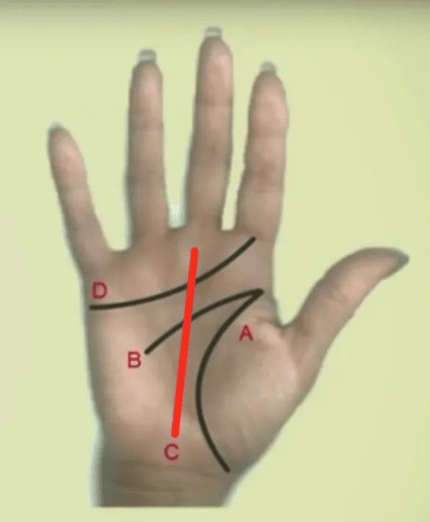
The Heart Line: Feelings, Bonds, and How You Love
The heart line stretches from beneath the fingers, often starting under the index or middle finger, across toward the pinky. It is tied to how you give and receive care, what you value in relationships, and how openly you express your feelings. A broad, clear heart line may suggest warmth, loyalty, and a steady connection with a partner. A line that is especially deep and reddish can be read as passionate intensity, while a thinner line may reflect a gentle, private nature that prefers soft gestures over grand displays.
Some heart lines show small breaks, forks, or changes. These are often associated with the impact of important relationships or emotional chapters that left a mark. If the head and life lines meet in such a way that echoes the heart line, some readers say this can signal a tender heart that may feel experiences very deeply. Remember, none of this is a verdict; it is a way to recognize how life has molded your emotional style and the care you give to those you love.
Finding the “M” on Your Palm
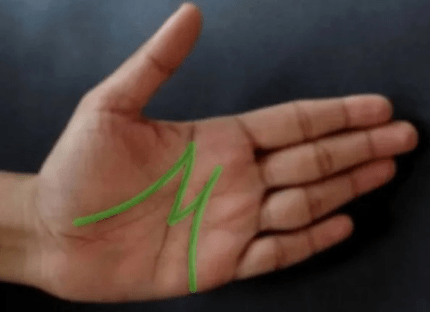
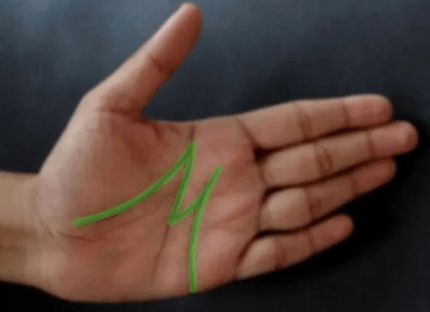
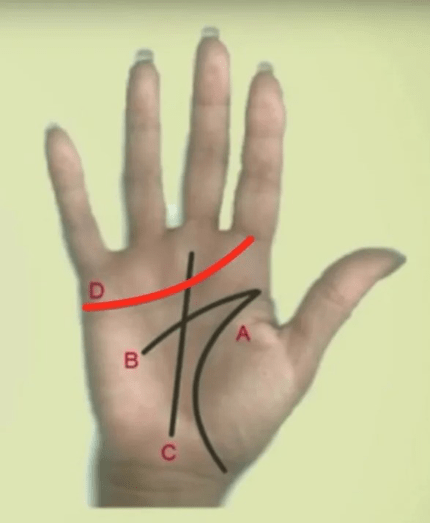
Now let’s talk about the “M.” Many people notice that when the head line, heart line, life line, and sometimes the fate line meet or cross in particular ways, they can trace out the shape of the letter M. For some, the M is bold and clear. For others, it appears more faintly, created by subtle intersections rather than a single, simple stroke. If you do not see it at first, relax your hand and try again under bright light. Sometimes the shape becomes clearer when you compare both hands.
In many palm-reading traditions, having an “M” is seen as special. It is often linked with qualities like sound judgment, a strong inner compass, and a practical kind of intuition. People who notice this pattern sometimes describe themselves as good at reading a room, quick to sense when something is not quite right, and patient enough to work through puzzles until they are solved. The “M” is not a guarantee of success or a promise of perfect choices; rather, it is a friendly nudge that you may be especially equipped to notice patterns, spot inconsistencies, and follow through with integrity.
What the “M” Is Said to Suggest
Those who study palmistry often say the “M” combines the best of the major lines. The heart line lends warmth and compassion. The head line contributes clear thinking. The life line offers steadiness and staying power. If the fate line also plays a role, it can symbolize a sense of direction, whether it arrives through careful planning or fortunate timing. Together, these lines create a reminder that heart, mind, and action can work as a team.
Some readers also believe that people with a clear “M” tend to be honest and keen observers of honesty in others. They may be the kind of friend who notices when a story does not add up or when someone is not being straight with themselves. This does not mean they are suspicious by nature; it often means they are attentive, thoughtful, and willing to ask gentle questions that bring clarity.
If You Do Not See an “M,” What Then?
Not every hand forms an obvious “M,” and that is completely normal. Your strengths do not vanish if the letter is not there. You might notice hints of the shape in one hand but not the other. You might also see a pattern that is close to an M but not quite. Palmistry invites you to look for themes and to see your hand as a living map that changes over time. Even subtle lines can describe someone who is wise, dependable, and perceptive. It is the whole hand, not just one feature, that tells your larger story.
It may help to revisit your palm over the months and years. As you age, your skin changes, and sometimes lines do too. Thicker skin, daily work, moisturizers, and even hydration can influence how clear the lines appear. Try noticing patterns rather than fixating on a single sign. Your experiences, values, and choices matter far more than any single crease.
Everyday Examples That Bring the Lines to Life
Imagine a time you steadied a family member during a difficult patch. A firm life line might echo that resilience. Picture a day when you weighed the pros and cons carefully and chose the reliable path; a straightforward head line often matches that mindset. Think of a deep, loyal partnership or a long friendship that taught you patience; a balanced heart line can reflect such warmth. If your work life or personal path included unexpected turns that eventually led to a better fit, a curving fate line may smile at those chapters. When these lines combine to sketch an “M,” it can feel like a signature of integrity and follow-through.
For many in midlife and beyond, looking at the hand is a way to honor everything you have navigated so far. You have learned how you make decisions, what you value in relationships, and how you respond to change. The palm simply gives you another lens to appreciate those lessons.
Simple Tips for Clearer Reading
If the lines seem faint, try viewing your palm in daylight or under a warm lamp. A touch of hand cream can make the skin more comfortable, but let it absorb first so the lines do not blur with shine. If reading your own hand feels tricky, ask a partner or a friend to trace the lines as you look on. You may notice details more easily when someone else gently points them out. Comparing both hands can also be illuminating, especially if one seems to show the “M” more clearly.
It can help to pause and take a breath as you look. Palm reading can be a quiet, mindful practice. You might even jot down what you notice in a small journal: what the lines look like now, what you think they suggest, and how that lines up with your lived experience. Over time, you may enjoy seeing how both your life and your reading of the lines evolve.
Common Questions, Answered Calmly
People often ask whether the life line predicts how long they will live. In palmistry, it does not. It is more about vigor, approach, and resilience. Others wonder whether a broken heart line means they are doomed in love. It does not. Many see those changes as signs of important lessons learned, deeper empathy, and wiser choices going forward. Some worry if they do not have a fate line at all. There is no problem with that; many happy, successful people have faint or barely visible fate lines.
Another frequent question is whether the “M” is rare. Depending on how one defines the shape, it is not uncommon to find some version of it on many hands. The emphasis is not on rarity, but on the personal meaning you draw from seeing your head, heart, and life patterns working together. If an “M” inspires you to trust your judgment, be truthful, and follow through on your commitments, then it is already serving a helpful purpose.
Gentle Cautions and a Warm Perspective
While palmistry can be a pleasant and thoughtful pastime, it should be kept in perspective. Use it to spark reflection, not to make major life decisions. For matters of health, always rely on qualified medical guidance. For finances, seek professional advice. For relationships, communicate openly with your loved ones. Palmistry does not replace these pillars of practical wisdom. Instead, it can encourage you to notice your own patterns and to honor the strengths you have developed through experience.
If your palm shows an “M,” take it as a friendly reminder of your capacity to blend caring, clear thinking, and steady action. If your palm does not show it, take heart—your values speak for themselves in how you live, how you love, and how you help others. A single shape on the skin cannot measure the full reach of your character.
Bringing It All Together
When you look at your palm, you are really looking at your story. The life line invites you to remember your resilience. The head line reflects your way of understanding the world and making choices. The heart line honors your capacity to care and connect. The fate line, when visible, nods to the flow of circumstance and the choices that carried you forward. If those lines give you an “M,” it can feel like the signature of someone who is resourceful, principled, and attentive to the truth.
Even more meaningful than any pattern is what you do next. You might choose to approach your days with a bit more patience, to listen a little more closely, or to trust your good sense when a decision needs to be made. In that way, the lines on your palm become not just marks to be read, but gentle prompts to live with intention.
A Thoughtful Farewell
Set aside a few quiet minutes, perhaps with a cup of tea, and look at your hands—the hands that have worked, comforted, built, and held. Notice the lines, the soft curves, the places that speak of time well lived. If you spot an “M,” smile and remember what it represents. If you do not, smile anyway and honor the person you have become. May this simple exploration leave you feeling grounded, capable, and warmly connected to your own story.