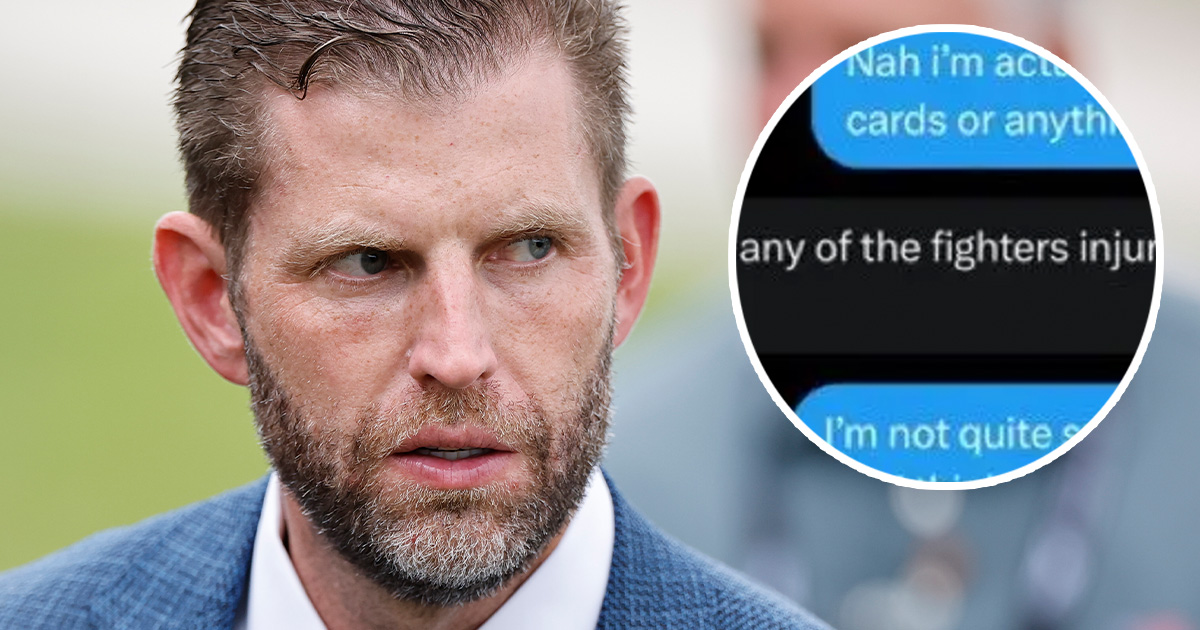
A surprising storm of speculation surrounded a high-profile Ultimate Fighting Championship gathering at the White House, where members of the Trump family and several well-known guests attended as part of Freedom250, a broader celebration of the nation’s 250th anniversary. In the hours leading up to the action, social media erupted over screenshots that appeared to show a private conversation between Eric Trump and retired UFC great Daniel Cormier. The messages allegedly suggested questions about fighter injuries and even whether any of the bouts might be fixed. Almost as soon as the images began circulating, attention turned to whether they were authentic and what they might mean. Before long, both Eric Trump and Daniel Cormier responded, and their comments only deepened the mystery.
What set off the controversy
Public interest spiked when screenshots that looked like private messages on X, the platform once known as Twitter, began making the rounds. The images suggested a late-night exchange that reportedly touched on sensitive topics, including who might be hurt, how those injuries might affect outcomes, and whether any fights could be “rigged.” The timing of the screenshots, landing just before a headline-making event at the White House, poured fuel on an already heated conversation that mixed sports gossip with political spotlight.
As the images spread, they triggered instant debate. Some readers took the screenshots at face value, treating them as evidence of attempted insider behavior. Others were immediately skeptical, pointing out how easy it has become to fabricate online conversations, whether through clever editing or advanced tools that can faithfully mimic the look and feel of real posts. When the stakes involve sports betting and a sport as closely watched as the UFC, the public’s response tends to be sharp and swift.
The White House UFC event and Freedom250 explained
The event at the center of this story took place at the White House as part of Freedom250, a series of observances celebrating America’s 250th year. The UFC’s presence at such a prominent venue drew widespread attention. For many, it symbolized the sport’s remarkable journey from fringe spectacle to a mainstream attraction that commands millions of fans and major broadcast slots. The occasion brought together athletes, celebrities, and political figures under one very visible roof, putting every word and every image in a bright national spotlight.
In such a setting, any suggestion of controversy travels fast. That is especially true in today’s media environment, where discussions about sports, politics, and technology frequently overlap. The combination made for a combustible mix, and the swirl of accusations and denials quickly became a major talking point that overshadowed the actual competition for many observers.
The alleged private messages
According to the screenshots that circulated, the supposed exchange began late on a Saturday night and stretched past midnight. The messages portrayed one side asking pointed questions about upcoming fights, including inquiries that would raise eyebrows for anyone concerned about fairness, betting, and the integrity of competition. One of the most widely shared lines suggested an interest in a specific matchup and hinted that an upset could be expected. It was the kind of detail that invites suspicion, because even the perception of inside knowledge can undermine public trust in a sport.
In the same images, the messages attributed to Daniel Cormier read as firm and straightforward. The replies rejected any idea that fights could be scripted or manipulated, and the tone indicated frustration that the question would even be posed. For anyone who follows combat sports, Cormier’s reaction as shown in the screenshots matched the values he has often spoken about: fairness, professionalism, and respect for the athletes who put their bodies on the line.
Some accounts claimed that the screenshots were shared from Cormier’s own profile, accompanied by a message condemning insider behavior. Those who saw the images argued they looked genuine. But others said that plenty of online tools can produce realistic-looking message threads and even mimic timestamps, making it nearly impossible to judge authenticity based on appearance alone.
Eric Trump’s response
Eric Trump addressed the controversy plainly and strongly. He stated that the screenshots were not real, saying he had never reached out to Daniel Cormier and that the images were fabricated using artificial intelligence. He described the situation as troubling and pointed to the broader issue of advanced technology being used to create convincing, but deceptive, content. From his point of view, the images were a clear example of misinformation intended to mislead the public.
Trump emphasized that he did not send messages to Cormier and expressed concern that such forgeries can spread quickly and cause lasting damage before facts can catch up. In his view, the disappearance of certain posts after initial publication was a sign that the material was untrustworthy from the outset. His response encouraged people to be more vigilant about what they see online, especially when it involves sensational claims.
Daniel Cormier’s response and the confusion that followed
Daniel Cormier’s role in the conversation became less clear as the story developed. After the screenshots gained traction, he posted a message that led some to question whether the images had ever been real. Speculation swirled that his account could have been compromised, that the screenshots might have been staged, or that there was some other explanation behind the scenes. Many observers hoped that Cormier would expand on his remarks to clarify what had happened, but the situation remained muddy.
Some members of the mixed martial arts media said they had seen Cormier’s initial post before it disappeared. Their observations kept the debate alive. At the same time, others insisted the entire episode had all the signs of a digitally engineered hoax that took advantage of a major public event and the reputations of two very recognizable figures. In the absence of clear, verifiable evidence, neither side could convincingly settle the matter.
No proof the messages are authentic
At this stage, there is no confirmed proof showing that the alleged messages are real. Both Eric Trump and Daniel Cormier have made statements or implications pointing away from authenticity. Without access to reliable, verifiable records, and without an independent confirmation that could be trusted by all parties involved, the claims remain unproven. That leaves the public in a familiar modern predicament: trying to sort truth from fiction in a fast-moving online environment where appearances can be deceiving.
For now, the fairest conclusion is that the images raised questions but did not provide answers. They grabbed attention because they touched on sensitive topics, but attention is not the same as evidence. Until a credible, transparent verification emerges, the logical position is to regard the screenshots with caution.
Why sports betting and insider information are such a sensitive mix
The very idea that a fight could be fixed, or that confidential injury information might be shared privately to influence betting, is a serious one. The integrity of any sport depends on the belief that competitors are doing their best and that outcomes are not prearranged. Even a rumor about insider access can harm confidence in the product fans are paying to watch. Regulators, sportsbooks, and the organizations that stage the fights all invest heavily in keeping competitions fair. When those lines are crossed, or even when they are rumored to be crossed, it triggers strong responses for good reason.
In recent years, betting on sports has become far more accessible. Legal wagering is now available in many states, and fans who once simply watched for entertainment can place a stake on who wins and how they win. This broader accessibility makes clear rules and oversight even more important. Sports organizations and state regulators work to detect suspicious patterns and investigate when something seems off. All of that is designed to protect fans, protect competitors, and protect the credibility of the sport itself.
Because of these concerns, allegations of inside information do not remain quiet for long. They get attention from the public, the press, and sometimes official watchdogs. The fact that this particular story involved well-known personalities only amplified the scrutiny.
Could advanced fakery be part of the story?
Eric Trump’s response focused on a topic that affects everyone online today: the growing realism of fabricated media. Sophisticated tools can now generate screenshots that are extremely convincing. They can also create lifelike images, audio, and even video. This technology has many positive uses, but in the wrong hands, it can cause confusion quickly. That is why many organizations, from newsrooms to technology companies, are investing in ways to verify sources and detect manipulation.
For everyday readers, especially those who do not spend a lot of time studying the latest gadgets and apps, it can be tricky to tell what is real and what is not. A good rule of thumb is to look for multiple credible sources that confirm the same detail. Another is to pay attention to whether the person supposedly involved publicly confirms or denies what is being shared. In this case, both of the key people named pushed back against the screenshots, a reminder that caution is wise when reacting to surprising posts.
How the story kept growing
Part of what kept this issue in the spotlight was timing. The UFC event at the White House was already a headline generator. With cameras, celebrities, and a packed schedule, anything unusual was bound to draw notice. Add in the fact that many fans were already focused on the fights and the pageantry of the occasion, and it is easy to see how a set of screenshots, real or not, could draw a crowd’s attention. The more people shared them, the more others felt compelled to weigh in, and the cycle continued.
Another reason the story endured is that it sits at the crossroads of three powerful topics: sports, politics, and technology. Stories that touch on any one of those subjects can travel widely. When all three overlap, the effect is multiplied. People care deeply about the honesty of competition, the behavior of public figures, and the reliability of what they see online. That combination can make even uncertain claims feel urgent to discuss.
What to watch for next
Moving forward, there are a few developments that could bring clarity. One possibility is that a thorough digital audit could confirm whether the screenshots originated from a legitimate account or were manufactured elsewhere. Another is that the platforms themselves could release data to indicate whether an account was accessed in an unusual way, which sometimes happens when accounts are hacked or spoofed. In the absence of that kind of independent confirmation, the story is likely to remain in the realm of speculation.
On the sports side, organizations like the UFC and regulatory bodies tend to take allegations involving betting and integrity very seriously. If they see reasons to be concerned, they can open inquiries, seek information from the platforms involved, and coordinate with betting operators to look for any suspicious activity around a particular fight. Those measures take time, and officials are often careful about what they share publicly until they have firm findings.
Keeping perspective as a fan
For longtime sports fans, especially those who have followed combat sports through many eras, it helps to remember that rumors can surge and fade quickly. There have been times in the past when dramatic claims unraveled once closer inspection began. There have also been moments when real problems were uncovered, and reforms followed. The healthiest approach is to keep an open mind without jumping to conclusions, and to weigh information based on the strength of the evidence rather than the heat of the moment.
It is also worth acknowledging the athletes themselves. Fighters train for months, put their health on the line, and accept an outcome that can hinge on a single mistake. Their livelihoods depend on the perception that every contest is fair. That is why even the rumor of wrongdoing can feel so intense and personal within this community. Respecting that reality helps explain why emotions sometimes run high when stories like this emerge.
The heart of the matter
Stripped of the noise, this story comes down to a simple question: were the shared screenshots real, or were they fabricated? At the moment, there is no clear proof that they were authentic. The individuals named have rejected them, and key pieces of the record have vanished or changed, making independent verification difficult. Without that proof, treating the images as suspect is the responsible course.
At the same time, the intensity of the public reaction reveals something important about where we are today. People want to believe that competitions are honest, that public figures speak and act transparently, and that the media they see online reflects reality. When any of those beliefs is challenged, even by rumor, it creates a powerful response. That response is understandable, but it also calls for patience and care.
Final thoughts
The UFC’s White House appearance as part of the Freedom250 commemoration was intended to showcase athletic excellence on a national stage. Instead, the build-up became dominated by a swirl of claims and counterclaims fueled by a handful of contentious screenshots. Eric Trump has said those images were fabricated using advanced tools and that he never contacted Daniel Cormier. Cormier’s public comments have not confirmed the screenshots as real, and some messages that were briefly visible online later disappeared, adding to the uncertainty.
In the absence of verifiable proof, the most sensible position is to reserve judgment. Technology can create very convincing fakes, and social media can spread them widely before facts can be sorted out. For fans who care about fairness in sports and reliability in news, this is a reminder to look for credible confirmation, to consider the source, and to accept that sometimes the clearest answer is that we do not yet know. As more information becomes available, it will either support the claims or reveal that this was one more online rumor that burned bright and faded just as quickly.
Until then, the focus can return to what drew people to the event in the first place: the athletes, their training, and the honest competition that makes live sports so compelling. If there is anything to this controversy, time and proper investigation will bring it to light. If not, it will stand as a cautionary tale about how easily a dramatic story can capture attention, especially when it arrives at the intersection of sports, politics, and the fast-changing world of technology.