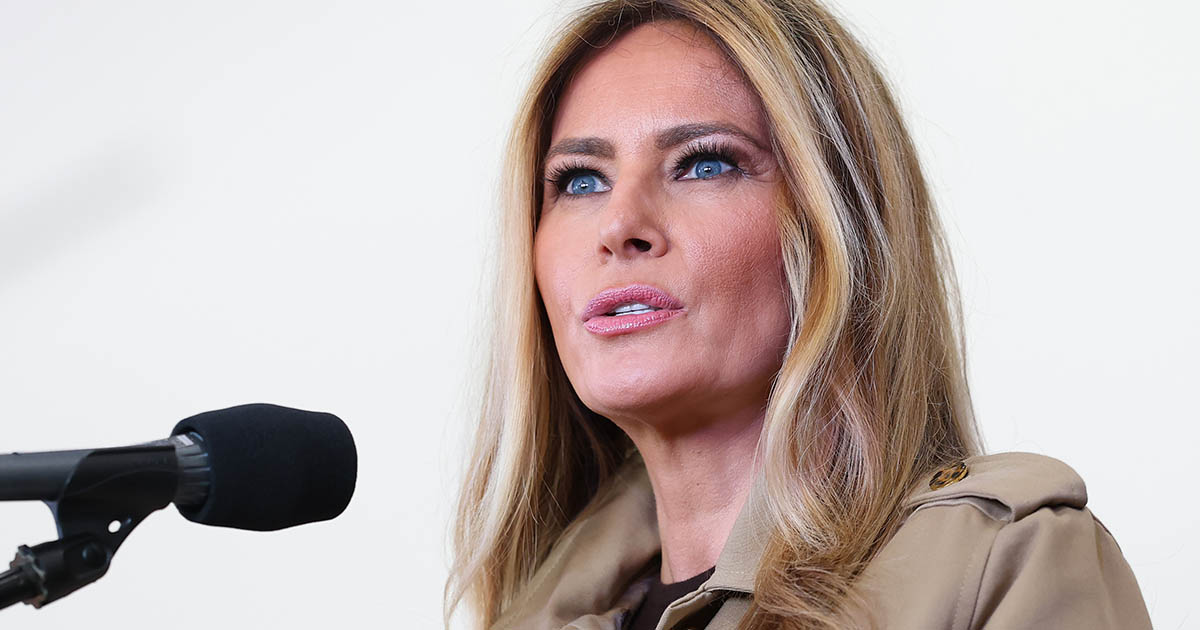
First Lady Melania Trump and Second Lady Usha Vance made their first joint visit to North Carolina, spending a day with service members, spouses, and children at Camp Lejeune. The occasion blended warmth and gratitude with a sober look at the future, as the First Lady shared personal thanks to the community and also issued a serious warning about how rapidly changing technology may reshape tomorrow’s battlefields.
A first joint visit focused on service and family
Camp Lejeune is the largest Marine Corps base on the East Coast, and it has long been a place where families carry a heavy share of the nation’s load. During their visit, Melania Trump and Usha Vance met with Marines, military spouses, and children, taking time to hear about daily life on base, the rhythms of deployment and homecoming, and the unique challenges military families shoulder together.
Their schedule included a visit to Lejeune High School, where they greeted students and teachers and sat in on a discussion about artificial intelligence. It was a chance to connect generations: leaders from Washington listening to teenage voices, and young people hearing directly why their studies and questions matter at a moment when technology is changing at lightning speed.
For many in attendance, the sight of both the First Lady and the Second Lady arriving together sent a simple message: your service is seen, and your sacrifices are not forgotten. The visit emphasized moments of encouragement, conversation, and respect for the strength of families who move frequently, plan around deployments, and make a community wherever they are stationed.
A small hiccup, then a warm message of thanks
At the high school gymnasium, Melania Trump offered brief remarks that centered on gratitude. An early technical issue interrupted her speech as a microphone squealed with feedback, prompting a quick pause and a handoff while staff fixed the problem. The moment passed, and the First Lady continued with calm and a smile, turning immediately back to the people she had come to recognize.
“I want to thank you, all of you, because you are military families behind our nation’s defense, and thank you for your service,” she said once the audio was restored. She added a personal note from home, saying, “My husband, the president, is sending best regards. We are both thinking of you, and you’re in our thoughts and prayers for holidays, every day, but especially for the holidays.”
It was a message many in the audience understood well. Time away from loved ones can be even harder during the holiday season, and the First Lady acknowledged that reality directly. The focus on family, faith, and everyday service set the tone for what came next, as she shifted from thanks to a topic whose consequences could eventually touch every household connected to the armed forces.
Turning to the future: AI and the battlefield
The visit included a roundtable with students on artificial intelligence, and the First Lady used that setting to speak plainly about a subject she has raised before: the immense power of AI and the responsibility that comes with it. In front of Marines, their spouses, and their children, she did not mince words about the stakes.
“AI will alter war more profoundly than any technology since nuclear weapons,” Melania Trump said, framing the transformation in terms anyone who remembers the Cold War can appreciate. She underscored that the speed of decision-making in future conflicts will be a defining factor, with more steps becoming automated than ever before. “Artificial Intelligence will take center stage in the theater of war.”
Her point was not to alarm for the sake of it, but to be candid about what many experts are now discussing: the way modern tools can sort through information in the blink of an eye, direct machines to act, and compress timelines from hours to seconds. That kind of acceleration can help save lives, but it also raises ethical and strategic questions that require careful planning and wise leadership.
Why the First Lady is engaging students on AI
Melania Trump’s interest in how technology shapes young people’s lives is not new. In September, she hosted a meeting of the White House Task Force on Artificial Intelligence Education as part of her Be Best initiative, highlighting how classrooms and families are already grappling with these tools. At Camp Lejeune, she continued that conversation with the next generation, encouraging students to think critically about both the promise and the pitfalls of AI.
Bringing that discussion into a military community added a special layer of meaning. Many students at Lejeune High School have parents who serve. If the nature of service changes because of AI, those changes may affect their lives in very practical ways—from the training their parents receive to the kinds of missions they undertake.
For the students, it was also a reminder that their own education matters. Learning how to understand new technologies, ask good questions, and use tools responsibly is part of being ready for the future, whether they choose a military path, a technical career, or something entirely different.
What “AI in warfare” could mean, in plain language
Artificial intelligence is, at heart, a set of computer techniques that help machines spot patterns, make predictions, and carry out tasks that once needed human attention. On a battlefield, that could include tools that quickly map terrain, scan drone footage for threats, or help commanders choose the safest and fastest route for a mission. Imagine the way a GPS can now reroute your car around traffic in an instant; AI seeks to offer that kind of instant guidance on a far more complex scale.
Some of these systems are already being tested in support roles. They can help schedule maintenance before a vehicle breaks down, translate languages in real time, and alert medics to prioritize certain cases. In these roles, AI can be like an extra set of eyes and ears—always on, always scanning—freeing people to focus on judgment, leadership, and care.
But speed cuts both ways. If military decisions happen faster, there is less time to double-check whether a computer has made the right call. That is why the First Lady’s emphasis on “speed” spoke so strongly to her audience. Service members and their families know that careful choices and clear communication save lives. As AI takes on more tasks, the human voice of caution, experience, and ethics remains essential.
What it could mean for military families
For families, the practical effects of AI may look different from household to household. Some service members may need new training to work alongside advanced systems. Others may see deployments change in length or in character, with more focus on technology-driven roles. There could be more opportunities to learn specialized skills that translate well into civilian life after service.
At the same time, new tools often bring new worries. Families might wonder how decisions are made, how safety is ensured, and how quickly policy keeps up with innovation. Clear communication from leaders, reliable education for service members, and strong support for spouses and children will help communities stay steady through change, just as they have through earlier eras of transformation.
Melania Trump’s message acknowledged both sides of that coin. By saying out loud that AI may reshape warfare, she made space for honest questions and for the planning that keeps families resilient. Preparedness has always been a hallmark of the military community, and technological change is no exception.
Balancing caution with hope
It is worth remembering that technology is not only about risk. The same tools that raise hard questions can also save lives. In disaster relief, AI can help locate survivors faster. In medical settings, it can assist doctors in spotting warning signs early. In training, it can create safer ways to practice difficult scenarios. These are the kinds of uses that many hope will become the standard, even as the nation carefully decides where to draw lines in combat settings.
That balance—using the best of innovation while protecting human judgment—requires patience and humility. The First Lady’s remarks invited the community to continue that conversation together, recognizing that the people who serve and the families who support them have a right to be heard as policies take shape.
Usha Vance’s presence and a spirit of partnership
Second Lady Usha Vance joined the visit, underscoring the idea that caring for service members is a shared effort. Meeting students, teachers, and families side by side with the First Lady projected unity and continuity. For the community at Camp Lejeune, it was a reminder that support does not rest on one office or one person—it is a partnership that includes leaders, educators, neighbors, and the families themselves.
By appearing together at the high school and listening to students’ thoughts on AI, both leaders demonstrated a willingness to engage directly with those who will inherit the future. That kind of engagement can be encouraging to parents and grandparents who want to see their children grow up in a country that takes both innovation and responsibility seriously.
Community moments that matter
Beyond the formal remarks, the visit featured the quieter interactions that often mean the most. The First Lady and Second Lady greeted students, shook hands with Marines in uniform, and spoke with spouses about daily life. Those brief conversations send a powerful and personal message: you are seen, you are valued, and you are not alone in the challenges you face.
In a place like Camp Lejeune, where the calendar is often arranged around training cycles and deployments, simple moments of connection matter. Hearing a genuine thank-you in person can be a boost that lasts long after the motorcade has left the base gates.
A message measured in gratitude—and realism
The microphone glitch at the start of Melania Trump’s remarks offered a small, human moment that many in the gym took in stride. What stood out was not the interruption but the return to a clear message of thanks and recognition. The First Lady’s words about AI added a layer of realism—an acknowledgment that the world is changing quickly and that the men and women who serve, and the families who stand behind them, will feel those changes sooner than most.
Her call to stay attentive to the speed and scope of new technology resonated, particularly with those old enough to remember how swiftly the world shifted during earlier eras of innovation. It was a reminder that wise leadership, steady communities, and well-informed citizens make the difference in how any powerful tool is used.
Learning together, planning ahead
At Lejeune High School, the conversation about AI did not aim to make students experts in a day. Instead, it underscored a practical approach: learn a little more each week, ask clear questions, and think about how new tools affect real people. That approach can serve anyone well, whether a student just starting out, a young Marine on the cusp of a first deployment, or a parent balancing family responsibilities with a spouse’s demanding schedule.
For communities like Camp Lejeune, staying informed about AI is part of staying prepared. It means understanding both the benefits and the boundaries—celebrating what can make life safer and easier while insisting on safeguards that keep human dignity at the center of every decision.
Respect, readiness, and the road ahead
As the visit concluded, what remained was a blend of gratitude and forward-looking resolve. The First Lady thanked military families for the strength they show day after day. She recognized the sacrifices that are often invisible to outsiders. And she sounded an unmistakable note of caution about the pace of change, especially in matters of war and peace.
The families of Camp Lejeune know better than most that history does not move in a straight line. But they also know that strong communities, good leadership, and careful planning can carry people through change with confidence. That spirit was on display throughout the day, from the high school gym to the conversations in hallways and classrooms.
In their own words and actions
“AI will alter war more profoundly than any technology since nuclear weapons,” the First Lady said, a statement that cast a long shadow but also pointed to a simple truth: it is better to face the future with eyes open. By pairing that warning with appreciation for military families—and by speaking directly with students who will live in that future—she linked duty, education, and preparedness in a way that felt both honest and constructive.
“Artificial Intelligence will take center stage in the theater of war,” she added, underlining that the tempo of conflict will likely be faster, more data-driven, and more automated. For those who serve, and for those who love them, that makes clear-headed discussion not just useful but necessary.
A thoughtful close to a meaningful visit
The day at Camp Lejeune was not about answers set in stone. It was about acknowledging the people who keep the country safe and beginning a conversation about the tools that may shape their work in the years ahead. Between a warm expression of thanks and a frank warning about AI’s potential, the First Lady’s visit invited a community already known for resilience to keep doing what it does best: support one another, learn together, and stay ready for whatever tomorrow brings.
For the military families at Camp Lejeune—and for anyone watching from home—the takeaway was clear. Gratitude and vigilance can coexist. Pride in service can sit alongside careful scrutiny of new technology. And in a world where change arrives faster every year, staying informed and staying connected with one another remain two of the surest ways to navigate the future with confidence.