

Marriage works best when trust, warmth, and honest conversation are part of everyday life. Still, even in good relationships, emotional distance, curiosity, or personal struggles can sometimes pull a married woman’s attention toward another man. When that pull grows stronger, it can turn into a kind of emotional fixation that creates confusion, guilt, and tension at home.

Emotional obsession is not the same as physical infidelity. In many cases, nothing physical has happened. The bond often begins quietly, through attention, admiration, shared stories, or the comfort of being understood. When we notice the signs early, couples can talk openly, reset healthy boundaries, and protect the relationship before deeper harm is done.
Understanding Emotional Obsession Versus Ordinary Attraction
It is natural for people to notice others from time to time. Ordinary attraction fades and does not change daily choices or priorities. Emotional obsession is different. It shows up as repeated thoughts, secret interactions, strong anticipation about messages or meetings, and a steady shift of emotional energy away from the marriage. The focus becomes constant, not casual, and it begins to influence behavior.
1. She Keeps Bringing Him Up in Conversation
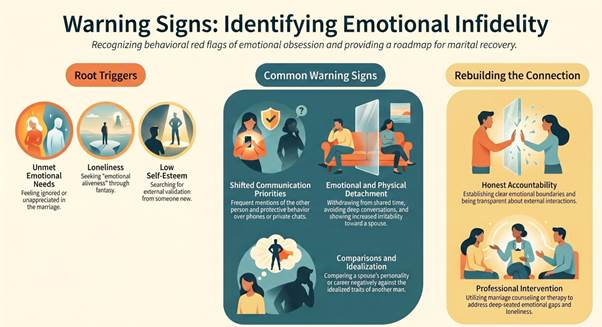
One clear sign of growing attachment is frequent mention of the other man’s name in everyday talk. Even if the topic is unrelated, he slips into the story. She might recount his opinions, mention his small acts of kindness, or share his accomplishments. Over time, these mentions may become a regular feature of conversation, as if he lives in the background of her thoughts.
At first, this can seem harmless, especially if he is a coworker or a friend. Yet a steady pattern of talking about him often points to a growing emotional presence. It suggests that he has become a mental priority, taking up space that once belonged to shared moments and familiar topics with her spouse.
2. She Feels Emotionally Farther From Her Husband
Emotional energy is limited. When more of it flows toward another person, the marriage may feel thinner and quieter. A woman who is becoming fixated might seem distracted at home, less excited to share news from her day, or reluctant to open up about worries and dreams. Conversations may feel brief or practical rather than warm and personal.
This distance can be subtle at first. She may be present in the same room but seem somewhere else in her mind. There may be fewer affectionate gestures, less interest in couple time, and a general sense that closeness is harder to find. For many couples, this is one of the earliest signs that the emotional connection is shifting.
3. She Prioritizes Contact With Him
Today’s technology makes constant communication easy. When a woman becomes emotionally dependent on another man’s attention, texting and messaging can take center stage. She may check her phone often, feel a rush of excitement when it lights up, or delay other activities to respond quickly.
This habit can become a cycle. The more she reaches out, the more she anticipates his replies. The anticipation itself can feel rewarding, which encourages even more contact. Over time, messages that began as friendly or professional can grow into daily support, private jokes, and a steady exchange of personal thoughts that should belong to the marriage.
4. She Compares Her Husband to the Other Man
Comparisons are especially dangerous in love. When fixation grows, the other man may be cast in a flattering light while her spouse is seen more critically. She might compare sense of humor, responsiveness, ambition, looks, or how well each one “understands” her. Even if she does not voice these comparisons aloud, they can color her feelings and raise her expectations.
It is important to remember that comparisons are often unfair. The other man is usually seen in selective moments, free of the real-life responsibilities and stress that couples share at home. The more energy she invests in imagining his strengths, the more her spouse’s normal human flaws can feel larger than they really are.
5. She Puts Extra Care Into How She Looks Around Him
There is nothing wrong with wanting to look nice. But a sudden and specific effort to look particularly good when she expects to see or speak with one person can signal attraction. She may pay more attention to clothing, grooming, fragrance, or even how she speaks and carries herself during those interactions.
Often, this comes from a deep wish to be noticed and valued. Positive feedback and compliments can feel energizing, especially during times of stress or low mood. When that need for validation becomes tied strongly to one person outside the marriage, the emotional attachment can strengthen quickly.
6. She Begins to Hide or Edit Information
Secrecy is a strong warning sign. Even if nothing physical has happened, hiding texts, clearing call logs, changing passwords, or giving vague answers about time spent with this person points to crossed boundaries. She may minimize the connection when asked or insist that it is “just friendship,” while also protecting the privacy of those conversations.
In a healthy marriage, privacy and honesty can live together. Each partner can have personal space without hiding important details. When details are hidden because the truth would cause concern, that secrecy usually reflects emotional investment that is moving in the wrong direction.
7. She Fantasizes About a Different Life
As fixation deepens, daydreams may grow. She might imagine what it would feel like to attend events together, take trips, or start a new chapter with him. In those imagined scenes, the frustrations of everyday life fade, and the other man appears as a steady source of joy and understanding.
These fantasies can be powerful because they are not weighed down by real-life challenges like bills, chores, health issues, or family responsibilities. They offer a quick escape from routine. Over time, the mind can mistake that escape for proof that happiness lies elsewhere, even though fantasy rarely holds up under the weight of everyday living.
8. She Becomes Defensive When He Is Mentioned
When relatives or a spouse notice the closeness and ask careful questions, defensiveness can appear. She may respond sharply, change the subject, or accuse others of being controlling or suspicious. The strong reaction often comes from an inner conflict between what she knows is right for the marriage and the feelings she does not want to give up.
Defensiveness does not automatically mean betrayal. It does, however, suggest that the emotional bond has reached a point where it feels risky to discuss openly. For couples, this is a moment to pause, breathe, and find a gentler, more respectful way to talk about what both people are seeing and feeling.
9. She Loses Interest in Nurturing the Marriage
As emotional energy shifts outward, the marriage may feel neglected. Plans for date nights, shared hobbies, or simple rituals like evening tea may fade. She may be less patient during disagreements or less willing to work through problems. The relationship can begin to feel like an obligation rather than a cherished partnership.
When this happens, both partners can feel hurt and alone. The good news is that interest can return when attention returns. With honesty, effort, and time, couples can rebuild friendship, affection, and trust. The key is to recognize the drift early and gently turn back toward one another.
Why Emotional Obsession Happens
There is usually more than one reason behind emotional fixation. Sometimes it begins with unmet emotional needs, such as a lack of appreciation, kindness, or quality time. Life transitions in midlife, including career changes, health concerns, caring for aging parents, or children leaving home, can also stir up loneliness or restlessness that makes outside attention feel especially comforting.
Stress can play a role. When daily pressures pile up, it is tempting to seek relief in a relationship that feels easy and validating. Past wounds, low self-esteem, or unresolved conflicts at home can add to the pull. And because modern communication is always within reach, a simple chat can quickly become a steady flow of emotional support that competes with the marriage.
Understanding these roots does not excuse broken boundaries. It does, however, guide couples toward solutions that address the real issues, rather than only the symptoms. When both partners feel heard, valued, and safe, the need for outside attention usually diminishes.
Can a Marriage Heal After Emotional Attachment Forms?
Yes, many marriages do heal. Recovery is possible when both partners are willing to be honest, patient, and consistent. The first step is acknowledging what has happened, even if nothing physical occurred. Clear, kind conversation opens the door to rebuilding trust.
Reducing or pausing contact with the other person is often necessary so that the marriage can regain strength. Transparency about communication and schedules can help, not as punishment, but as a bridge back to safety. Some couples find that setting specific boundaries around phones, social media, and private messaging calms anxiety and creates room to reconnect.
Professional support can be invaluable. A skilled counselor provides neutral ground, helps both partners speak and listen well, and turns conflict into problem-solving. Together, couples can rebuild routines that support closeness, such as unhurried time each week, affectionate rituals, and practical teamwork in the home. Forgiveness takes time, but with care and steady effort, many couples come out stronger and wiser.
If You Notice These Signs, Try a Calm, Caring Approach
If these signs sound familiar, a gentle conversation is the best place to start. Choose a peaceful moment, speak simply about what you have noticed, and share how it makes you feel. Aim for understanding, not winning. Accusations can push a partner away; curiosity and care invite honesty.
Setting healthy boundaries is not about control. It is about protecting what matters most. Agree on what is comfortable and respectful regarding private messages, one-on-one time with others, and emotional sharing outside the marriage. If the topic feels hard to handle alone, invite a professional to guide the discussion.
Alongside these steps, take good care of yourselves as individuals. Rest, movement, friendships, and personal interests all support emotional health. When each person feels strong and supported, the marriage has more resilience and warmth.
Frequently Asked Questions
What are the common signs that a married woman is emotionally attached to another man?
Frequent thoughts about him, repeated mentions of his name, a strong desire to message or check for messages, subtle secrecy, and turning to him first for emotional comfort are common signs. Over time, these behaviors shift energy away from the marriage, making the spouse feel less involved and less needed.
Why might a married woman become fixated on someone else?
Emotional neglect, loneliness, stress, or major life changes can leave a person hungry for connection. When someone new offers steady attention, kind words, and understanding, it can feel like a lifeline. Without clear boundaries, that comfort can grow into fixation, even if she values her marriage.
Can emotional obsession harm a marriage even if nothing physical happens?
Yes. Emotional affairs can create deep mistrust and pain. They often bring distance, arguments, and confusion about priorities. If not addressed, the pattern can lead to long-term damage and, in some cases, separation. The sooner the couple talks and rebuilds safety, the better the outcome usually is.
How is simple attraction different from emotional obsession?
Simple attraction is brief and does not change daily choices. Emotional obsession tends to be constant and absorbing. It often involves secrecy, a strong need for contact, idealized comparisons, and a growing lack of interest in the marriage. The difference lies in intensity, frequency, and the way it reshapes behavior.
How can a married woman stop thinking about another man and refocus on her marriage?
It helps to set clear boundaries, reduce unnecessary contact, and be honest about what is happening. Sharing feelings with a spouse or a counselor can ease the burden. Rebuilding closeness through regular time together, practical teamwork, and affectionate gestures turns attention back to the relationship that matters most. Patience is key, because changing habits of thought takes time.
What should a husband do if he notices these signs?
Calmly express what you have observed and how you feel, without blame. Ask for openness, suggest practical boundaries, and invite counseling if needed. Show consistent care and steadiness. Healing happens faster when both partners feel respected, heard, and safe.
Is it ever appropriate to remain friends with the other man?
Sometimes limited, respectful contact is possible, especially if children, work, or community roles require it. The key is clarity. Transparent communication, shared expectations, and strong boundaries protect the marriage. If contact repeatedly stirs up strong emotions or secrecy, more distance is usually wise.
Final Thoughts
Emotional fixation rarely appears overnight. It often begins with small moments of attention, kind words, or the comfort of being understood. When those moments multiply without clear boundaries, the emotional bond can grow stronger than intended. The good news is that awareness opens the door to change.
By noticing early signs, speaking with care, and rebuilding the habits that create closeness, couples can protect their bond and often come out more connected than before. Trust, respect, simple daily kindness, and honest conversation are the building blocks. With patience and steady effort, many partners find their way back to each other and create a marriage that feels both secure and warm.



