
Your feet can tell you a surprising amount about your health. If you are between 45 and 65, you may notice changes in how your feet feel from time to time and chalk it up to a long day, aging, or shoes that do not quite fit. Still, frequent tingling, burning, numbness, swelling, or slow-healing spots on the feet can be early warning signs of diabetes or problems with blood sugar and circulation. Paying attention to these changes can help you catch issues sooner and protect your long-term health.
In simple terms, high blood sugar over time can harm nerves and blood vessels. Because your feet are farthest from the heart and carry your weight all day, they often show trouble first. Think of them as your built-in alert system. If something seems off with your feet again and again, it is worth checking your blood sugar and talking with a healthcare professional.
Why the Feet Often Show the First Clues
When blood sugar stays high for a long period, it can damage small nerves and narrow the blood vessels that carry oxygen and nutrients. Doctors call this nerve damage diabetic neuropathy, and the reduced blood flow is often referred to as poor circulation. Together, they can make feet feel strange, heal more slowly, and become more prone to infections. Because of that, many clinicians say your feet can act like a natural blood sugar meter.
If you notice several of the following symptoms repeatedly, do not ignore them. A simple blood test can tell you a lot, and early steps can prevent bigger problems later.
1. Tingling or a Pins-and-Needles Feeling
An early sign of high blood sugar affecting the nerves is a prickly, buzzy, or pins-and-needles sensation in the feet. Some people compare it to tiny electric zaps or the feeling you get when your foot “falls asleep,” except it happens more often and without a clear reason. This happens because sugar damages the protective covering of nerves, and the signals they send become confused or overactive.
If tingling comes and goes but keeps returning, it deserves attention. Noticing this sign early is helpful because managing blood sugar, staying active, and working with your doctor can slow or even prevent further nerve changes.
2. Burning Feet, Especially at Night
Hot, burning, or stinging sensations in the feet are common in people with diabetes that is not well controlled. The feeling may be mild during the day but can flare up in the evening or while you are trying to sleep, making it hard to get comfortable. Nighttime worsening is typical with nerve irritation.
Simple steps may bring some relief, such as gentle stretching, wearing soft socks, or keeping sheets loose over the feet. Still, the most important step is checking in with your healthcare provider and reviewing your blood sugar plan.
3. Numbness or Reduced Feeling
Numbness can be sneaky. You may not feel a pebble in your shoe, a blister forming, or a small cut. Because pain is your body’s built-in warning system, losing some of that sensation raises the risk that a tiny problem turns into a bigger one. Numbness usually signals that nerve damage has been going on for a while.
If you notice that your feet feel dull or less sensitive, start a daily foot check. Look at the soles, heels, and between the toes. If you cannot see well, ask a family member to help or use a handheld mirror. If you find a sore that does not improve, call your healthcare provider.
4. Foot or Calf Cramps
Cramps in the arches, toes, or calves, especially at night, can be linked to poor circulation. When the blood vessels are narrowed or stiff, muscles do not get the oxygen they need during activity or rest, which can lead to painful spasms.
Occasional cramps happen to most people, but frequent or severe cramping paired with other foot symptoms is a reason to check blood sugar and circulation. Gentle stretching, staying hydrated, and walking regularly can help, but do not overlook the need for a medical check if cramps keep returning.
5. Cuts, Blisters, or Sores That Heal Slowly
One of the most important warning signs is a wound that lingers. High blood sugar affects the body’s ability to fight infection and delays the repair of skin and tissue. A small blister from a shoe seam, a nick from trimming toenails, or a cracked heel can take weeks to mend if blood sugar is elevated.
Slow healing is a red flag because open skin can invite infection. Keep minor wounds clean and covered, and see a healthcare professional promptly if you notice redness that spreads, warmth, swelling, or drainage. Early attention can prevent more serious complications.
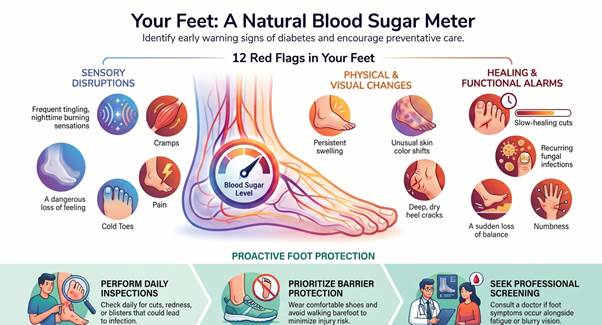
6. Dry, Cracked, or Flaky Skin on the Feet
Diabetes can reduce sweat and oil production in the skin, leaving feet dry and more likely to crack. Those tiny splits, especially around the heels, can be uncomfortable and offer germs a way in. Autonomic nerve changes, which affect moisture and temperature control, play a role here.
A simple routine makes a big difference. Wash gently with warm water, dry carefully between the toes, and apply moisturizer to the tops and bottoms of the feet, but not between the toes where dampness can lead to fungus. If cracking is deep or painful, ask your doctor or podiatrist for a medicated cream or additional care.
7. Swelling in the Feet or Ankles
Noticeable puffiness around the ankles or swelling that leaves a mark when you press with a finger can point to circulation issues. In people with diabetes, swelling can also be related to heart or kidney strain, especially if it is persistent. Shoes may feel tighter by the end of the day, and socks might leave deeper lines.
Elevating your feet when sitting and wearing well-fitted, supportive shoes can provide comfort, but ongoing swelling deserves a medical review. If swelling appears suddenly or comes with shortness of breath, chest discomfort, or one leg much larger than the other, seek urgent care.
8. Foot Pain When Walking
Pain in the feet or calves that starts with walking and eases when you rest can be a sign that the muscles are not getting enough blood. Doctors sometimes call this claudication. If it becomes hard to walk even short distances without discomfort, it is important to discuss circulation and blood sugar control with your provider.
Comfortable, cushioned shoes and a gradual walking plan can help improve blood flow. However, pain that limits daily activities is not something to push through without guidance. A checkup can uncover whether diabetes-related circulation changes are part of the problem.
9. Changes in Foot Color
Healthy feet usually keep a steady color. With circulation problems, you may notice they look unusually pale when elevated or reddish-purple when dangling. Some people see blotchy areas, a bluish tinge, or darker spots that linger. These color shifts can be signs that blood is not moving well through the smaller vessels.
Temperature differences between your feet or between toes can tell a similar story. If color changes are new or persistent, mention them at your next appointment, especially if they come with pain, tingling, or swelling.
10. Cold Feet Even in Warm Weather
Do your feet feel chilly while the rest of you feels fine? Poor circulation linked with diabetes can reduce the warm blood reaching your toes, leaving them cold much of the time. This can happen even when the room is comfortable or you are wearing socks.
It is wise to rule out other causes like thyroid issues or anemia with your doctor, but if cold feet appear alongside tingling, numbness, or color changes, diabetes-related circulation problems may be part of the picture. Warm, breathable socks and regular movement can help, but the key is addressing the underlying cause.
11. Fungal Infections and Toenail Changes
High blood sugar makes it easier for fungus and bacteria to grow. You might notice itchy, peeling skin between the toes, small blisters, or thickened, discolored toenails that are harder to trim. These infections can be stubborn and may return if blood sugar stays high.
Keep feet clean and dry, especially between the toes, and change socks daily. If you suspect a fungal infection or your toenails become thick and painful, ask your provider about treatment. Treating small problems early helps prevent bigger ones.
12. Unsteadiness or Loss of Balance
Nerves in your feet do more than feel pain and temperature; they also tell your brain where your feet are in space. When those signals are dulled by neuropathy, balance can suffer. You might feel less sure on uneven ground, need to hold the railing on stairs, or catch yourself wobbling more often.
Simple home adjustments can reduce fall risk, such as removing loose rugs, improving lighting, and wearing supportive shoes indoors. Balance exercises and physical therapy can also help. If you notice increasing unsteadiness, speak with your doctor so you can protect yourself from falls.
Why These Symptoms Matter
Many adults live with undiagnosed diabetes for years. During that time, the nerves and blood vessels can be quietly damaged. Foot symptoms are the body’s way of tapping you on the shoulder. Acting early can prevent infections, ulcers, and more serious complications that sometimes lead to hospitalization or surgery.
It is not about alarm; it is about awareness. If several of these signs sound familiar and they keep coming back, that is your cue to get tested and start a plan.
When to Check Your Blood Sugar
Consider getting your blood sugar tested if you often notice tingling, burning, numbness, slow-healing spots, color changes, swelling, or pain when walking. Testing is especially important if you also have other risk factors, like a family history of diabetes, carrying extra weight around the middle, high blood pressure or cholesterol, a history of gestational diabetes, or being less active than you would like.
Your provider may suggest a fasting glucose test, an A1C test that shows your average blood sugar over the last two to three months, or a glucose tolerance test. These are simple blood tests that can offer clear answers and guide your next steps.
Practical Foot Care for Everyday Life
Daily routines go a long way. Check your feet each day, including the soles and between the toes. Wash gently and dry well, then use a moisturizer on the tops and bottoms of your feet, avoiding the spaces between the toes. Choose soft, breathable socks and shoes with room for your toes and good cushioning. If a shoe rubs or feels tight, do not force it—friction can lead to blisters.
Trim toenails straight across to avoid ingrown nails, and never cut corns or calluses yourself. If you see a sore, blister, or crack that does not improve in a few days, or if you notice spreading redness or drainage, call your healthcare provider or a podiatrist. Small problems are much easier to treat than big ones.
Moving more helps your circulation. Even short walks, gentle stretches, and simple foot and ankle movements while sitting can improve blood flow. If you smoke, ask your provider for help quitting; it makes a big difference for your blood vessels and your overall health.
Talking With Your Doctor
Bring up your foot symptoms at your next visit, even if they seem mild. Describe when they started, how often they happen, and what makes them better or worse. If you can, take off your shoes and socks so your provider can examine your feet. Ask whether you should have your A1C checked, whether your blood pressure and cholesterol are on track, and what steps you can take right now to protect your nerves and circulation.
Final Thoughts
Your feet are often the first place to whisper that your blood sugar needs attention. Tingling, burning, numbness, swelling, color changes, and slow-healing spots are not just annoyances; they are valuable clues. Listening to those clues, getting tested, and taking small daily steps can protect your nerves, improve your circulation, and help you stay active and comfortable for years to come.
If several of these twelve symptoms sound familiar and keep returning, reach out to a healthcare professional and ask for a blood sugar check. Early action really can change the path ahead.
Questions and Answers
1. Can your feet really show early signs of diabetes?
Yes. Because diabetes affects nerves and blood flow, your feet often show changes first. Tingling, burning, numbness, dry and cracked skin, slow-healing spots, and nighttime foot pain are common early signals. Think of your feet as helpful messengers—if they keep sending signals, it is wise to get your blood sugar checked.
2. Why do numbness and tingling happen in the feet?
Persistently high blood sugar can damage the small nerves that carry signals from your feet to your brain. This condition, called diabetic neuropathy, may cause tingling, pins-and-needles, burning pain, or numbness. Addressing blood sugar early can slow nerve damage and reduce symptoms.
3. Are cold feet linked to diabetes?
They can be. Poor circulation related to high blood sugar may reduce warm blood flow to the toes, making feet feel cold even when the room is comfortable. Cold feet that come with numbness, color changes, or pain are a good reason to talk with your provider about blood sugar and circulation.
4. Why do foot wounds heal slowly in diabetes?
High blood sugar weakens the immune response and reduces blood flow, both of which slow healing. Even minor cuts or blisters can linger and become infected if not managed promptly. Cleaning, protecting, and monitoring any wound—and keeping blood sugar in a healthy range—are key steps.
5. How can I protect my feet if I have diabetes or high blood sugar?
Adopt a simple daily routine. Check your feet every day, keep them clean and moisturized, wear comfortable supportive shoes and soft socks, and avoid walking barefoot. Keep your blood sugar, blood pressure, and cholesterol within target ranges, and stay active. If a problem does not improve or you notice spreading redness, swelling, or drainage, contact your healthcare provider promptly.



