“Keep your mutt quiet, sweetheart,” Lieutenant Craig sneered in the pitch-black Kandahar valley. “Let the real soldiers work.”
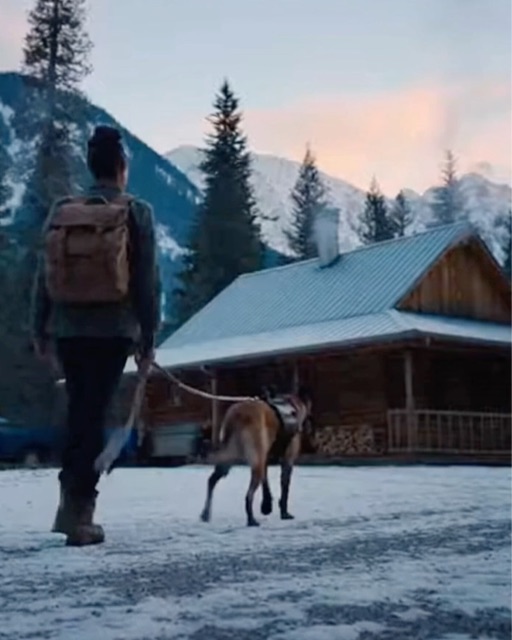
I was a 5’4” female K9 handler attached to an elite combat team. For two weeks, they treated me like a glorified babysitter. I swallowed their insults and kept my eyes on the dirt. I never told them about the devastating tragedy years prior, or the faded ink from my highly classified past life hidden beneath my uniform.
At 4:30 AM, my dog Ryder stopped dead in his tracks.
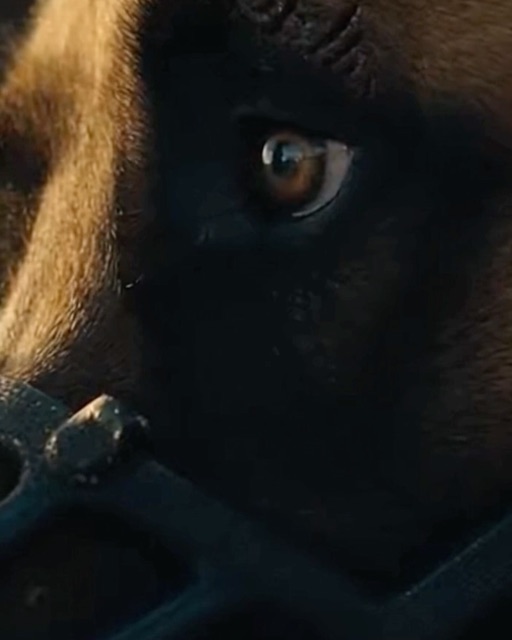
He planted his paws into the dirt and let out a low, vibrating growl. In forty-three combat deployments, Ryder had never given a false positive. My blood ran cold. I knew exactly what that throaty growl meant.
Danger was waiting patiently in the dark.
I broke protocol and stepped in front of the team. “Sir, stop,” I pleaded, my heart hammering against my ribs. “It’s a natural choke point. He’s picking up a trap.”
Craig didn’t even turn his head. He waved his hand with visible disgust. “Move the dog out of my way, or I’ll strip you of your position right now.”
He shoved past me, confidently marching into the narrowest stretch of the valley.
I saw the metallic glint of the tripwire a fraction of a second too late.
Craig’s heavy combat boot came down directly against the taut wire.
Click.
The entire canyon plunged into a deafening, terrifying silence. Craig froze instantly, the color completely draining from his face as he realized his boot was pinning a pressure-release trigger. If he lifted his foot a millimeter, we were all dead.
The rest of the ‘elite’ team panicked, stepping back in absolute horror, completely frozen by fear.
But I didn’t panic.
I calmly unclipped Ryder’s leash, walked right up to the trembling Lieutenant, and slowly rolled up my right sleeve. When Craig looked down and finally saw the emblem tattooed on my forearm, his eyes widened in sheer terror, and I leaned in and whispered, “My designation is Master Sergeant Jenkins, Senior Explosive Ordnance Disposal Technician. Now, for the love of God, don’t move a muscle.”
His arrogant smirk was gone, replaced by the slack-jawed expression of a man staring at his own ghost. The tattoo was a simple, stark design: a bomb, wreathed in laurels, with a shield bisecting it. The insignia of the 71st Ordnance Group. EOD. The bomb squad.
I knelt, my movements fluid and practiced, ignoring the shocked gasps from the rest of the team. Ryder sat down a few feet away, perfectly still, his eyes locked on me. He knew this drill. This was a different kind of work.
“Flashlights,” I said, my voice low and even. “Red lens only. Point them at my hands, not the device.”
A few shaky beams of red light cut through the darkness, illuminating the ground around Craig’s boot. It was a pressure-release plate, connected to what looked like two stacked artillery shells. It was crude but brutally effective.
“Sir,” I said, my eyes never leaving the trigger. “I need you to describe the sensation under your foot. Is the pressure even? Do you feel a spring?”
He could barely speak, his throat working to form words. “It’s… it’s solid. Just a click. No give.”
That was good news. It meant it was likely a simple mechanical trigger. But simple didn’t mean safe.
I pulled a small, worn leather pouch from my vest. Inside were the tools of my former trade: wire cutters, forceps, a multi-tool. They felt unnervingly familiar in my hands. I hadn’t touched them in three years. Not since the incident.
“I am going to shift some of this gravel,” I told him, my voice a calm anchor in the sea of his terror. “I need you to remain perfectly still. Do not shift your weight. Do not breathe too deeply. Understand?”
He gave a short, jerky nod. The sweat was pouring down his face, dripping from the tip of his nose onto the dirt.
I began to gently brush away the small rocks, grain by grain. The red light revealed the full picture. The pressure plate was wired to two 155mm shells, buried just beneath the surface. The blast radius would have vaporized us all and brought half the canyon wall down.
My hands were steady, a stark contrast to the storm raging inside me. My heart ached with a phantom pain, a memory of another device, another night, another friend. I could almost hear Mark’s voice, his easy laughter before a mission. I pushed it down. I had to.
“Okay, Lieutenant. I see the detonator assembly,” I said. “There are two wires. I’m going to attempt to cut the primary.”
One of the other soldiers, a corporal named Harris, spoke up. “Shouldn’t we… shouldn’t we try to put something heavy on it? A rock?”
“Negative,” I snapped, my focus absolute. “The slightest shift in pressure could complete the circuit. I have to sever the connection first.”
I chose my tool, a pair of ceramic-bladed cutters that wouldn’t conduct electricity. I positioned them over the green wire. This was the moment of truth. The moment where training, instinct, and a little bit of luck all converged.
My mind went quiet. The fear, the memories, the arrogant Lieutenant – it all faded away. There was only me, the wire, and the silent promise I’d made to every soldier I worked with.
I took a breath. And I cut.
Nothing happened. The world remained silent, save for the sound of a dozen men finally exhaling at once.
“The primary is cut,” I announced. “But don’t move yet. There could be a secondary, anti-tamper trigger.”
I worked for another five minutes, my fingers tracing wires, my eyes scanning for anything out of place. Finally, I was satisfied. “Okay, Lieutenant. On my count, I want you to lift your foot straight up and step back. Slowly. On three. One… two… three.”
Craig lifted his boot as if it weighed a thousand pounds. He stumbled back, caught by two of his men. His legs gave out, and he slid to the ground, gasping for air like a man who had just surfaced from the deep.
I carefully dislodged the pressure plate and disconnected the detonator caps from the shells. The immediate threat was neutralized.
I stood up, brushing the dirt from my knees. The entire team was staring at me, their expressions a mixture of awe, confusion, and profound respect.
I turned to Ryder and gave him a soft pat on the head. “Good boy,” I whispered. He licked my hand, his job done.
Back at the forward operating base, the story spread like wildfire. The cocky Lieutenant saved by the quiet K9 handler who was secretly a bomb disposal legend.
Craig found me later that day, as I was grooming Ryder outside our small quarters. He stood there for a full minute before he said anything.
“Jenkins,” he started, his voice rough. “I… there’s no excuse for how I treated you. For how I treated your dog.”
I didn’t look at him. I just kept brushing Ryder’s thick coat. “No, sir. There isn’t.”
“I was an idiot,” he admitted. “An arrogant fool. You saved my life. You saved all of our lives. Thank you.”
I finally stopped and met his eyes. They were clear of the bravado I was used to. He seemed smaller, somehow. “You’re welcome, sir. Just listen to the dog next time.”
The dynamic of the team changed overnight. The whispers and snide remarks stopped. My input was not only welcomed but actively sought on every patrol. Craig, to his credit, became my staunchest advocate.
But something else was bothering me. The bomb. As I documented it for the report, I couldn’t shake a feeling of unease. The wiring pattern, the way the detonator was crimped… it was clean. Too clean for a typical insurgent IED. It was professional. It was familiar.
I spent hours in the intelligence tent, poring over EOD reports from the last five years. My blood ran cold when I found it. A report from three years ago, from a province hundreds of miles away. A device with an identical signature.
The device that had killed my EOD partner, Mark.
The official report had called it a new, unstable type of insurgent device. But I had always known, deep in my gut, that it wasn’t. It was too precise. It was a trap laid by an expert.
Now, here it was again. The same ghost, in a new valley.
I took my findings to the base commander. He was skeptical. “Sergeant, this is a huge leap. You’re connecting two incidents years and miles apart based on a wiring style?”
“It’s more than a style, sir,” I insisted. “It’s a signature. Like a fingerprint. I was there. I saw the first one up close.”
It was Craig who stepped in. “Sir, I was there for the second one. I saw Sergeant Jenkins work. If she says they’re connected, I believe her.”
His support was the push they needed. A quiet investigation was launched. My mission changed. I was no longer just a K9 handler. Ryder and I were tasked with hunting for more of these devices, to try and track the bomb maker.
We went out on dozens of patrols, but this time, I wasn’t in the background. I was up front, reading the ground, with Ryder as my partner. The work was grueling, and every step was fraught with tension. The ghost of Mark was always with me, a constant reminder of the stakes.
One afternoon, Ryder alerted on a seemingly empty stretch of road near a small village. There was no visible sign of disturbance. No tripwire, no pressure plate.
“He’s got something,” I told Craig. “But it’s deep.”
We spent an hour carefully excavating the area. What we found was chilling. It wasn’t a bomb. It was a small, buried cache. Inside was a set of specialized tools, spools of colored wire, and several non-electric detonators. It was a bomb maker’s resupply kit.
And tucked inside the lid was a small, laminated card. It was a military ID. The name on it was Daniel Croft. He was a former British SAS demolitions expert who had been dishonorably discharged and had dropped off the grid five years ago. He was a mercenary, selling his skills to the highest bidder.
The intelligence about Croft painted a dark picture. He held a grudge against coalition forces after his discharge, blaming them for a botched operation that had ruined his career. The operation in question? It was one my EOD unit had provided support for. Mark had been the lead tech on that mission.
It was all starting to make a terrifying kind of sense. This wasn’t random. It was personal.
Using the intel from the cache, we tracked Croft to a network of caves in the foothills. The mission to capture him was greenlit immediately. As we prepared to move out, Craig pulled me aside.
“Jenkins, you don’t have to do this,” he said, his face etched with concern. “This is personal for you. No one would blame you for sitting this one out.”
I looked over at Ryder, who was waiting patiently by the door of the MRAP, ready to go. “This ghost has followed me long enough, sir,” I replied. “It’s time I faced it.”
The cave system was a nightmare. Every shadow felt like a threat. Ryder was a champion, his nose leading us through the dark tunnels, flagging two more of Croft’s intricate traps before we ever got close to them. Each one I disarmed felt like a small victory, a step closer to closure.
We found him in the largest chamber, working at a makeshift table under the dim light of a lantern. He wasn’t surprised to see us. It was as if he’d been waiting.
“Master Sergeant Jenkins,” Croft said, his British accent calm and cool. “I was wondering when you’d show up. I heard you’d traded your wire cutters for a leash.”
He had his hand on a large, ominous-looking box with a single red button on it. A dead man’s switch.
“It’s over, Croft,” Craig ordered, his rifle trained on him.
Croft just smiled. “It was over for me a long time ago, Lieutenant. This is just tying up loose ends.” He looked directly at me. “Your partner, Mark. He was good. But he wasn’t good enough for the trap I laid for him. I wanted him to know it was me.”
A cold rage washed over me, but I held it back. “The trap wasn’t for him, was it? It was for me. I was the lead tech that day, Croft. Mark was my number two. You killed the wrong person.”
The smile vanished from Croft’s face. For the first time, he looked uncertain. “What? No. The intel said the lead was a man.”
“Your intel was wrong,” I said, taking a small step forward. Ryder let out a low growl at my side. “You’ve been chasing the wrong ghost for three years. All this hate, all this work… and you missed your target.”
He stared at me, his whole twisted worldview crumbling in a single moment. The man who had defined himself by his meticulous planning and precise execution had made a fatal, catastrophic error. His revenge was hollow.
I saw his thumb twitch over the button. “Don’t do it, Croft,” I said, my voice softer now. “It’s not worth it. It’s done. Let it be done.”
He looked from me to the button, then back again. His shoulders slumped in defeat. He slowly, deliberately, lifted his hand from the switch and raised it into the air.
It was over.
The capture of Daniel Croft dismantled a huge IED network and saved countless lives. But for me, it did something more. It silenced the ghosts.
Back on base, I knew my time as just a K9 handler was over. I had found a way to bridge the two parts of myself – the EOD tech and the handler. I had faced the source of my trauma and walked away stronger.
Craig received a commendation for his leadership on the mission. In his speech, he spent most of the time talking about the bravery of Sergeant Jenkins and her partner, Ryder. He had learned the hard way that true leadership isn’t about giving orders; it’s about listening to the experts on your team, no matter who they are.
My life didn’t go back to the way it was. It moved forward. I accepted a position as an instructor, training a new generation of both EOD techs and K9 handlers, teaching them the invaluable lesson of trust and teamwork.
Sometimes, the greatest strength isn’t found in the armor we wear or the rank on our collar. It’s found in the quiet loyalty of a trusted partner, the courage to face our deepest fears, and the humility to admit when we are wrong. It’s about understanding that sometimes, the most important voice in the room isn’t the loudest one, but the one with four paws and a low, knowing growl.