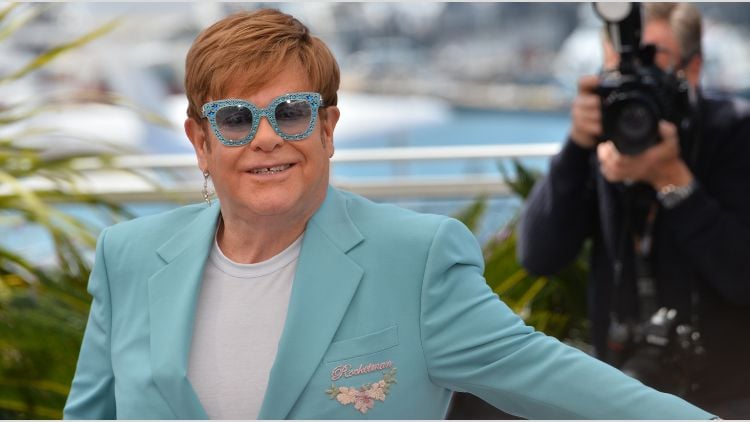
At a recent edition of the Rock & Roll Hall of Fame Induction Ceremony, the legendary singer‑songwriter Elton John reportedly experienced a tense, behind‑the‑scenes outburst that has already generated headlines. According to multiple sources, the 78‑year‑old “Rocket Man” faced mounting frustration when the evening’s schedule ran significantly behind, prompting him to lash out at event organizers prior to taking the stage to deliver a tribute performance.

The Build‑Up to the Incident
Elton John was scheduled to perform a tribute to the late Beach Boys co‑founder and songwriting icon Brian Wilson during the ceremony held at the Peacock Theater. As sources indicate, the show’s running order slipped substantially, and backstage activity began to feel chaotic. John is reported to have grown increasingly agitated at the mounting delays, given that his own plane was waiting and the entire logistics of his exit were time‑sensitive.
One insider recounted how John was overheard shouting to staff: “What the hell is wrong with you people? Nobody knows what they’re doing!” At another point he allegedly exclaimed: “My plane is waiting!” His impatience, driven by both the lateness of the show and his impending travel, appears to have triggered the meltdown.
The Outburst and Its Context
While this type of behaviour may seem surprising for someone of John’s stature and experience, industry sources emphasise that he has long held very high standards for production and performance. Over the years, his reputation for being a perfectionist — and on occasion, volatile when things don’t go his way — has been well documented.
In the current incident, backstage staff were scrambling: running through timing adjustments, hurriedly coordinating with John’s team and dealing with the pressure of a legacy‑act performance alongside schedule slippage. John himself reportedly did not have his usual piano brought to the stage, but despite the absence and last‑minute scrambling, the performance went ahead.
The show‑business environment is, by nature, high‑pressure — particularly when dealing with iconic artists, high‑stakes tributes and complex logistics of live broadcast or live‑event productions. In this case, the convergence of delays, travel constraints and John’s personal standards appear to have created a perfect storm for his outburst.

The Performance That Followed
Despite the backstage commotion, John ultimately took to the stage and delivered the tribute. He performed an emotional rendition of “God Only Knows,” in honour of Brian Wilson. In his remarks, John described Wilson as his greatest songwriting idol, saying that Wilson “was the one that influenced me more than anybody else when it came to writing songs on the piano.” The moment amidst the ceremony was reportedly deeply felt — the audience, aware of Wilson’s passing earlier in June at age 82, recognised the weight of the tribute.
John’s performance thus walked the tightrope between spectacle and sincerity: the backstage drama aside, he delivered a respectful and poignant homage to a figure who shaped his own artistic path.
Interpreting the Meltdown
Several factors lend themselves to understanding why John’s meltdown occurred at this moment:
- High expectations and tight scheduling: For someone like John, whose career spans decades and who continues to uphold a high bar, delays and disorganisation backstage may trigger frustration more readily than for others.
- Travel and commitments: Sources noted that John had a plane waiting — the pressure of a large production plus imminent departure can elevate tension.
- Tribute stakes: The performance was to honour Brian Wilson — a major influence on John. When the circumstances are both professional (performing at a hall‑of‑fame event) and personal (paying tribute to one’s hero), the emotional stakes are high.
- Accumulated pressure: Beyond the immediate moment, John’s history reveals that he is not immune to moments of stress turning into outbursts, especially in high‑stakes or chaotic environments.
Past Behavior and Relevance
This incident sits within a broader pattern of high‑profile musicians, including John, reacting strongly when production expectations are not met. For his part, John has in previous decades been linked with more than one backstage meltdown — notably a clash with Tina Turner in 1999 during a rehearsal for “Divas Live,” where reportedly he stormed off after being shown how to play an arrangement.
Such past occurrences do not excuse the behaviour, but they provide context: John has a long history of being exacting and sometimes volatile when his standards or schedule are challenged. In this sense, the latest incident appears less as an aberration and more as a reaffirmation of a particular professional temperament.
Reactions and Implications
The immediate reaction among attendees and observers appears to be a mixture of surprise and a degree of sympathy. Some backstage personnel reportedly ducked out of the way; others seemed to feel the tension but recognised the causes. While the outburst may not reflect well on the production team, it also highlights the reality of high‑pressure live events where stars of John’s magnitude carry their own set of expectations.
From a reputational standpoint, it’s unlikely that John’s standing will be significantly harmed by this incident. His legacy as a musician, performer and cultural icon remains intact. However, it may serve as a nuance in how live‑event producers engage with veteran artists: ensuring smooth logistics, clear scheduling and respectful coordination become even more essential when dealing with artists who bring not just name‑value but deeply personal investment.
Lessons for Event Production
For producers, event planners and live‑show coordinators, the incident underscores several key operational lessons:
- Buffer time and contingency planning: Especially for legend acts, scheduling must allow margin for backstage movement, travel constraints and artist preferences.
- Clear communication: Ensuring that the artist and their team are fully briefed on schedule changes, delays and backup plans can help diffuse frustration.
- Respect for artist history and emotional stakes: When an artist is delivering a tribute to someone who influenced them deeply, the emotional dimension may amplify sensitivity to disruption.
- Logistics coordination: Travel, equipment (in this case, equipment such as a piano), stage logistics and artist exit plans all need to be managed in parallel to avoid last‑minute upheaval.
- Backstage culture: The environment behind the curtain often lacks the glamour of the main stage but is crucial in enabling the performance. Calm, respectful backstage management can prevent small problems from escalating.
Broader Reflection on Legacy Acts
The moment also reflects a larger dynamic in modern entertainment: artists who have built lasting legacies continue to perform, make appearances and command large events. But time, travel demands, evolving production models and uncompromising expectations can create friction. In many ways, each performance is both a celebration of that legacy and a logistical challenge — blending artistry with commerce, spontaneity with rehearsal, and showmanship with stamina.
For Elton John, this incident may be a reminder of both the power and the pressure of being a living legend. The tribute to Brian Wilson was deeply meaningful to him, and the frustration backstage can be seen as a reflection of his desire to honour that moment fully — to ensure everything aligns with his vision and the respect he holds for his musical forebear.
Concluding Thoughts
In sum, the reported backstage meltdown by Elton John at the Rock & Roll Hall of Fame induction ceremony is less about scandal and more about the intersection of high‑stakes performance, ageing infrastructure, tight schedules and an artist’s commitment to excellence. John’s reaction — while perhaps dramatic — appears rooted in a genuine concern to deliver a meaningful tribute on time, under conditions that met his expectations.
Despite the outburst, he did step on stage, deliver the planned performance and did so with emotional weight. In a way, the meltdown becomes part of the narrative: the tension before the execution, the challenge of logistics behind the curtain, and then the release of the moment in the spotlight.
Ultimately, this episode serves as a reminder that the seemingly effortless magic of live performance rests on many moving parts — including the patience, temperament and preparation of the artists themselves. For Elton John, the moment may simply be one more chapter in a long, storied career of both triumphs and tall tales behind the scenes.