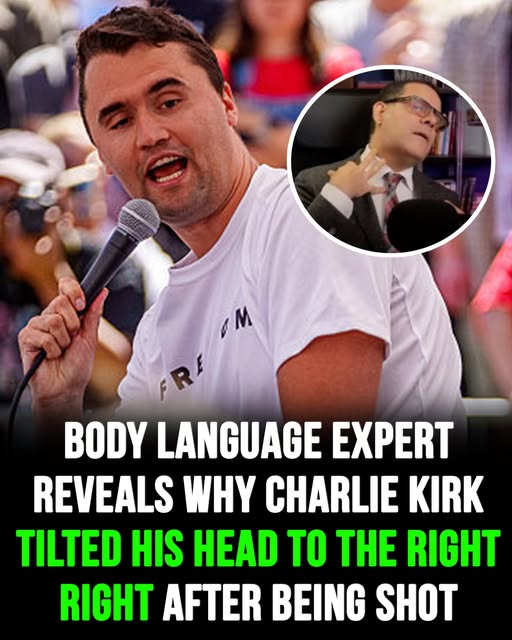
The tragic shooting of Charlie Kirk, a well-known political figure, has inevitably provoked a wave of conspiracy theories. Many have noticed a peculiar detail in the footage of the incident: Kirk’s head tilts to the right immediately following the gunshot. This has led some to speculate that the gunman must have been positioned on his right side.
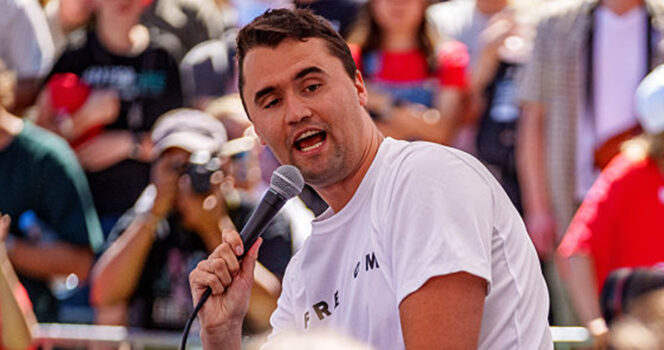
However, a body language expert has stepped forward to provide clarity and dispel some of these rumors.
Why Conspiracy Theories Flourish
In times of uncertainty, conspiracy theories often provide a comforting narrative. They offer a seemingly logical explanation for events that defy easy understanding, helping people feel as though they’re uncovering hidden truths. The chaotic nature of high-profile incidents may draw many into a whirlwind of speculation, quickly spreading even the most unlikely ideas.
In the wake of the attack on Charlie Kirk, numerous theories have emerged, with some suggesting it was orchestrated beyond the apprehended suspect, 22-year-old Tyler Robinson. Among these theories, one has focused on the direction of Kirk’s head movement.
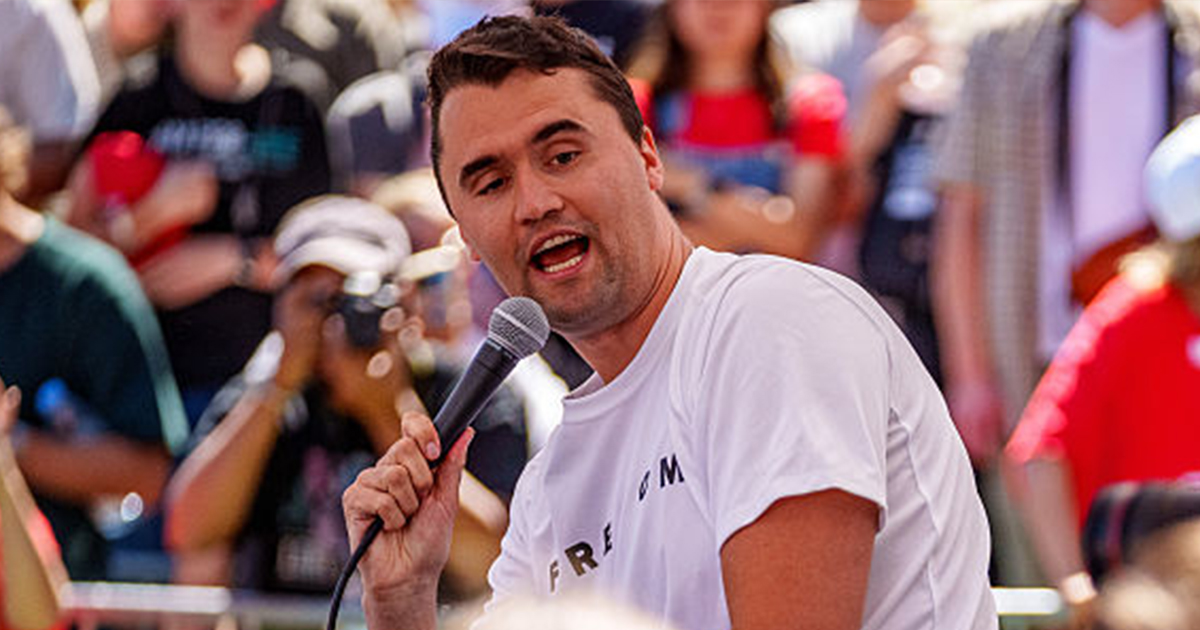
Charlie Kirk, a prominent activist, was addressing an audience at Utah Valley University on September 10, 2025, as part of his “American Comeback Tour” when he was tragically shot. Videos show Kirk’s head distinctly tilting to the right at the moment of impact.
Body language and persuasion expert Jesús Enrique Rosas has taken to video media to challenge the widespread theory attributing Kirk’s head movement to the attacker’s position.
Understanding the Body’s Response
Rosas points out that assessing the trajectory of a bullet and the body’s subsequent reactions can often be misunderstood. If a gunshot had come from Kirk’s right, he explains, the natural tilt would likely be to the left given the immediate physical impulse toward the wound. Thus, the rightward head tilt could, in fact, suggest a different angle of entry, possibly from the left or a forward angle.
When a person is shot, their body may react in unforeseen ways due to the force and shock experienced. Kirk’s head movement, according to Rosas, could reflect an automatic bodily response trying to cope with the sudden trauma, rather than providing a clear indicator of the assailant’s positioning.
Also sharing insights into this matter is Derek Van Schaik, a well-followed neuropsychologist, offering further perspective on the incident through his social media platform.
Neuropsychology’s Perspective
Van Schaik analyzed the event using detailed timing equipment, concluding that Charlie Kirk remained aware for only a fraction of a second after being hit. “Reality cannot be comprehended in those brief moments,” he elucidates, explaining that the timing was too swift for Kirk’s mind to react or register the severity of what occurred.
Despite the quick onset of incapacitation, which usually happens within milliseconds, Kirk did not have the psychological capacity to realize he was harmed. Van Schaik emphasizes that due to the immediate nature of the blackout, Kirk was not able to perceive it as pain or an injury.
Footage capturing Kirk’s instinctive hand movement to his neck before collapsing left many questioning its cause. According to Van Schaik, “Many observers inaccurately attribute this reflex to what is known in forensic circles as decorticate posturing.”
An Expert’s Clarification
This phenomenon occurs when there’s substantial damage to the brain’s higher areas, which was not the case here, Van Schaik clarifies. Instead, Kirk’s movement likely stemmed from an instinctive, instantaneous reaction rather than a result of such severe neural injury.
Through these expert insights, it becomes evident that while conspiracy theories thrive in moments of confusion and sadness, there are often more plausible explanations rooted in the science of human physiology and neuropsychology. Together, they paint a clearer picture of the heart-wrenching events that unfolded that day.