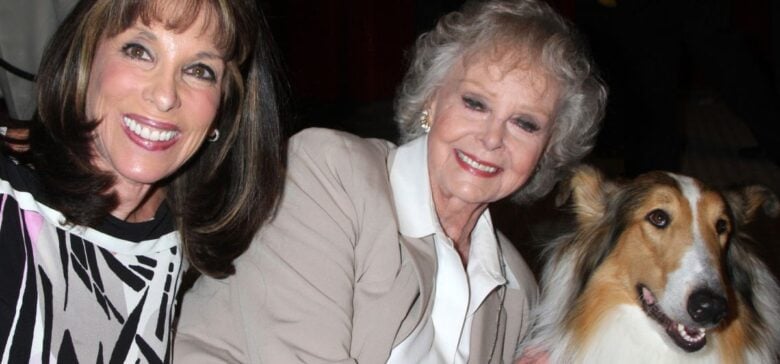
The world of television has lost one of its most enduring and beloved figures. June Lockhart, whose presence on screen for decades made her a household name, passed away peacefully in her home in Santa Monica, California, at the age of 100.
A Family Legacy and Early Career
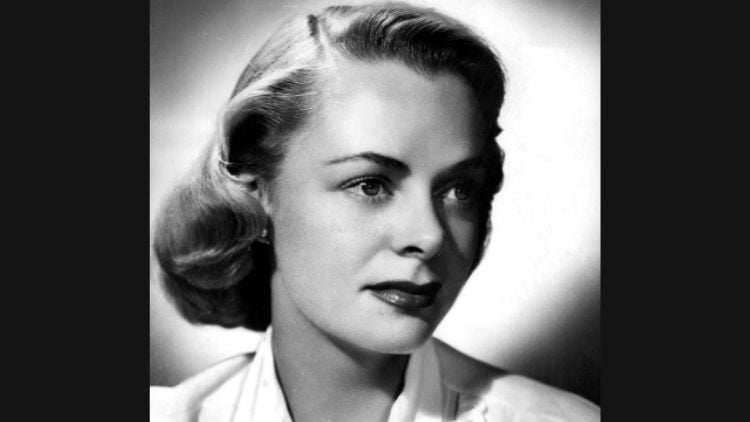
Born on June 25, 1925, in New York City, June Lockhart was the daughter of actors Gene and Kathleen Lockhart, and from an early age she was immersed in the performing arts. She made her stage debut at just eight years old and her film debut in 1938 with A Christmas Carol, playing the daughter of characters portrayed by her real‑life parents. During the 1940s she appeared in several films including Meet Me in St. Louis, some of her earliest screen‑work that began to build her reputation beyond being the daughter of established actors.
Television Fame: The Ideal “TV Mom”
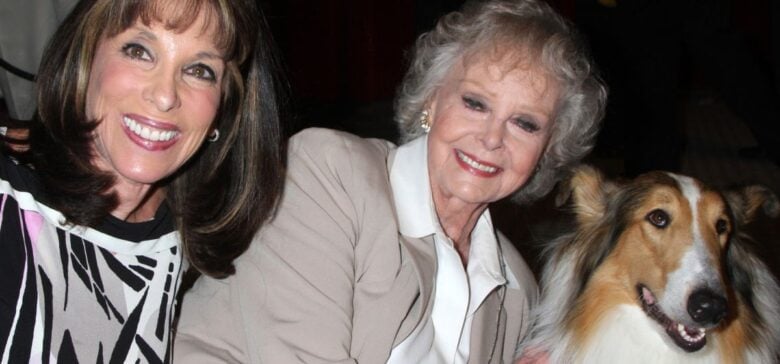
Lockhart’s transition to television cemented her place in popular culture. In 1958 she took on the role of Ruth Martin on the CBS series Lassie, stepping into a series that had already enjoyed tremendous popularity. Her warm, caring portrayal of a mother figure raised the orphaned Timmy and became for many viewers the archetype of the ideal TV mom.
A few years later, in 1965, she turned to a very different kind of mother role: the matriarch Maureen Robinson in the sci‑fi series Lost in Space. Here she took her place aboard the spaceship Jupiter II, venturing into the unknown with husband and children in tow. She brought to this role the same grounded warmth that had characterized her earlier work—but within a futuristic, fantastical context.
These two roles—Ruth Martin and Maureen Robinson—spanned the decades of classic American television and defined her public persona: reliable, loving, strong in the face of challenge. According to her longtime family spokesperson, Lockhart remained intellectually engaged until the end, reading major newspapers daily and staying aware of current events.
A Lifetime of Work and Reinvention
Beyond those two signature series, Lockhart’s career was remarkably long and varied, spanning stage, film and television. She earned a special Tony Award in 1948 for her work on Broadway, and later appeared on a variety of television shows, including guest spots and recurring roles well into the 21st century. Her ability to adapt and continue working across eras of entertainment underscores what few performers achieve: staying relevant across changing media landscapes.
Lockhart also embraced roles outside her familiar “mother” archetype. Though she may have been best known for nurturing figures, she herself described her true life as more adventurous and independent—reportedly attending rock‑music shows, driving tanks, and going on balloon rides.
Cultural Impact and the Meaning of Her Roles
What makes June Lockhart’s career particularly notable is the emotional resonance she created. Her portrayal of Ruth Martin offered comfort and stability in the late 1950s to early 1960s television landscape, when family dramas were key elements of viewers’ weekly routines. She became for many households a symbol of maternal devotion and warmth. Her later work on Lost in Space introduced a new generation to her: in a goggle‑eyed era of sci‑fi escapism, she embodied the calm centre of a family thrown into extraordinary circumstances.
Beyond entertainment, her presence had a ripple effect: she was cited in various accounts as inspiring young viewers—particularly of Lost in Space—to pursue science and space‑related careers. Reports say that astronauts themselves recalled watching the show and pointed to her character as part of their inspiration. In that sense, Lockhart’s work bridged entertainment and aspiration.
Personal Life and Final Years
Lockhart’s personal biography is rich: she was married twice, first to John F. Maloney (with whom she had two daughters) and then to architecture professional John C. Lindsay; both unions ended in divorce. She remained active in her later years, not only professionally but socially and intellectually—reading often, staying engaged in current affairs, and maintaining a lively curiosity about the world. Her longtime friend and spokesperson described her as “very happy up until the very end”, underscoring that her longevity was coupled with engagement and vigor.
At the age of 100, Lockhart passed away of natural causes on October 23 2025, at her home in Santa Monica, California. According to her spokesperson, she died peacefully.
Legacy and Why It Matters
Why does June Lockhart’s career matter? First, she serves as a touchstone for multiple eras of television—a time when families gathered around the screen, when the image of the TV mom had cultural weight, and when science fiction began to permeate popular consciousness. Her transition from wholesome domestic dramas to interstellar adventures mirrors changes in American entertainment and wider cultural shifts.
Second, she carried her roles with authenticity and warmth, creating characters that viewers trusted and loved. That kind of connection is rare; to remain beloved across decades, and then to continue working and adapting rather than disappear, marks her as exceptional.
Third, her off‑screen persona adds a layer of richness. The fact that she remained intellectually curious, engaged in politics and culture, and refused to be defined solely by her screen image means her life offers more than nostalgia—it offers a model of longevity, relevance, and personal evolution.
Finally, the fact that she reached the milestone of 100 years gives us pause not just to remember her roles, but to reflect on the arc of a life lived in the spotlight and beyond it. Her passing marks the end of an era in entertainment, but her body of work continues to live on in reruns, archives and memory.
In Closing
June Lockhart may be best remembered as the mother of Timmy and Lassie, or the matriarch of the Robinson family floating in space—but she was more than that. She was a woman who began in the golden age of Hollywood, witnessed enormous shifts in television and culture, and carried herself with dignity, warmth and adaptability. Her roles were iconic, but her life was full, rich and much broader than any one character.
For generations of viewers she stood for comfort, for family, for adventure—and for the idea that no matter how far the spaceship traveled or how chaotic the farm became, she would remain the calm center of the story. Her departure leaves a void, but the legacy she leaves behind remains luminous.