A moment of sorrow for the hockey community
The hockey world is grieving the loss of one of its most memorable competitors. Claude Lemieux, a four-time Stanley Cup champion known for his fearless playoff performances and unwavering determination, has died at the age of 60. The NHL Alumni Association confirmed his passing, and reports have indicated that his death was by suicide. News of his loss has left teammates, rivals, and generations of fans reflecting on a career that left a lasting imprint on the sport.
For many longtime fans, Claude Lemieux represented a brand of hockey built on grit, nerve, and an iron will to win. He wasn’t merely a skilled player; he was a presence. He played hard, he played physical, and when the stakes were highest, he found a way to step forward. That combination made him unforgettable to those who watched him and to those who played with or against him.
He inspired strong emotions across the league. Some admired his courage and clutch scoring. Others disliked his agitating style. Many felt both at the same time. Yet no matter where you stood, there was one constant: when spring arrived and the pressure rose, he delivered. That was the quality that defined him most clearly—he lived for the biggest moments, and he often owned them.
A career defined by championships and clutch goals
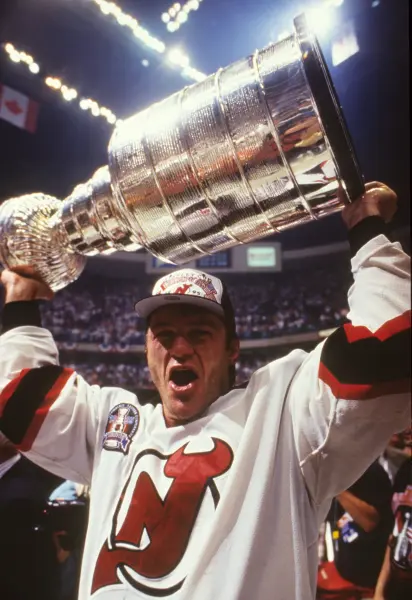
Across a remarkable 21-year NHL career, Lemieux lifted the Stanley Cup four times with three different teams. He first hoisted it with the Montreal Canadiens in 1986, a run that helped set his reputation as a postseason difference-maker. Almost a decade later, he powered the New Jersey Devils to their first championship in 1995, then did it again with the Colorado Avalanche in 1996, and once more returned to the top with the Devils in 2000. Few players have written their names into playoff history as firmly as he did.
His postseason record remains one of the most striking parts of his legacy. Lemieux scored 80 playoff goals, a total that places him among the most dependable clutch performers the league has seen. He had a knack for timing—appearing in the right spot at the right second and striking with authority. In tight games, in late series, in moments that decided seasons, he found ways to be the difference.
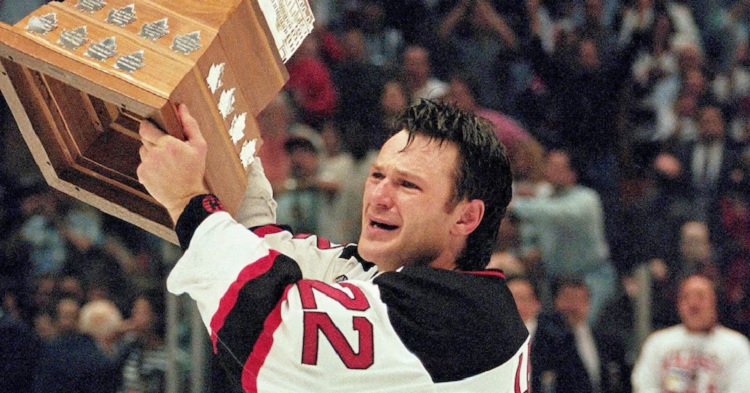
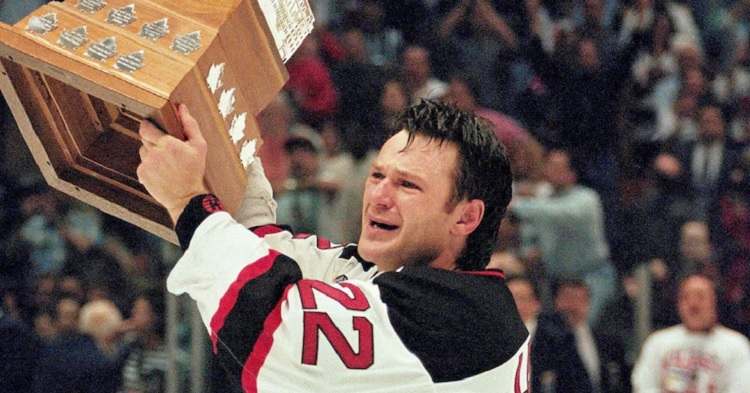
One year stands out in particular. In 1995, Lemieux helped guide the Devils to their first Stanley Cup, and his impact was unmistakable. He earned the Conn Smythe Trophy as the most valuable player of the playoffs, sealing his standing as the kind of competitor every team wants when the margin between victory and defeat is razor-thin. Devils fans have carried those memories with them ever since.
Tributes came quickly after the news broke. The New Jersey Devils remembered him not only as a pivotal performer on the ice but as a figure admired by supporters who appreciated his commitment to winning. As the team put it, he was “a clutch player on the ice and greatly appreciated by Devils’ fans off it,” and his role in bringing the first Stanley Cup to New Jersey “will forever be remembered.”
The edge that defined an era
Lemieux’s game was forged in a hard-edged era of hockey, and he leaned into that identity with full force. He became one of the league’s most well-known agitators, a player who lived on the fine line between physical intensity and outright disruption. He was old-school in the best—and sometimes most combustible—sense. He would go to the tough areas, finish his checks, and never back away from confrontation. That spirit made him the heartbeat of many playoff runs and the focus of some of the sport’s fiercest battles.

His rivalry with the Detroit Red Wings in the mid-1990s is part of hockey lore. After the infamous hit on Kris Draper in 1996, tensions between the Avalanche and the Red Wings reached a boil and stayed there for years. Games between those teams felt like events, and Lemieux was often at the center of the storm. To this day, people still recall the intensity of those nights, the noise in the buildings, and the sense that every shift carried the weight of a season.
Yet there was more to him than the fireworks. Beneath the tough exterior was a ferocious competitor who never forgot why he played—to help his team win. Opponents might have bristled at his tactics, but many also respected the way he raised his level under pressure. Coaches trusted him in the final minutes. Teammates counted on him when the next goal mattered most. That reputation was earned the hard way, one high-stakes moment at a time.
A lasting place in hockey history
Only days before his passing, Lemieux appeared in Montreal to carry the ceremonial torch before Game 3 of the Eastern Conference Final. For fans who had watched him grow from a young forward in Quebec to a seasoned champion, it was a meaningful sight. The gesture served as a reminder that his name and his accomplishments still resonate deeply across hockey cities where memories run long.
He also stayed connected to the sport after his playing days ended, working as a player agent and cheering on his son, Brendan Lemieux, as he built his own NHL career. Seeing a second generation lace up at the highest level is a special point of pride for any family, and it showed how strong the game’s pull remained for him.
Along with the tributes from organizations and former teammates, fans in Montreal shared a simple message that felt fitting: “Tu es chez toi ici, Claude Lemieux! Welcome home.” It echoed across social channels along with the familiar rallying cry, “Go Habs Go,” capturing both respect and affection for a player whose highlights helped define a generation.
Remembering the competitor—and the person
When we talk about Lemieux, we inevitably talk about the playoffs. We remember the grit, the fearless rushes to the net, the timely goals, and the stare that seemed to say he wanted the pressure that made others shrink. But it is just as important to remember the person, not only the competitor. News of his passing is a difficult reminder that even those who appear strong, successful, and larger than life can carry private burdens that others may never see.
His story resonates with so many long-time hockey followers because it mirrors the values they admire: sticking up for teammates, meeting the moment with courage, and never losing sight of the ultimate goal. That is how he earned respect in locker rooms across the league. That is why his name surfaces whenever conversations turn to the players you want in Game 7.
For older fans who watched the sport evolve through the 1980s, 1990s, and early 2000s, Lemieux’s career offers a bridge between eras. He was part of a generation that embraced physical, high-stakes hockey while also showcasing the speed, skill, and intelligence needed to survive in a faster, more disciplined league. His adaptability was another hallmark. He knew when to press, when to hold back, and when to seize the one chance that separated elation from elimination.
Why his playoff legacy endures
What makes a player “clutch” is hard to put into numbers, even for those who have spent a lifetime watching the game. With Lemieux, you could see it. He thrived under pressure because he wanted the responsibility. He took the puck when it mattered, absorbed hits to make plays, and understood that the playoffs demand sacrifices and nerves of steel. He made a career of threading that needle.
His 80 playoff goals did not happen by accident. They reflect anticipation, courage, and a rare ability to deliver on difficult nights. Whether it was finding soft ice in front of the net, taking a defender wide, or cashing in a rebound, he had the instincts that turn narrow chances into lasting memories. That is why his name still comes up each spring when broadcasters and fans talk about who steps up when the lights burn brightest.
He was also the kind of player who shaped series beyond the score sheet. His intensity could tilt a game’s emotion. He could pull opponents into battles they did not plan to fight, breaking their rhythm and creating space for his teammates. In the playoffs, where momentum is everything, that quality matters almost as much as a goal.
Tributes and shared memories
Across the hockey community, reactions to his passing have carried the same themes: admiration for his accomplishments, gratitude for the championships he helped secure, and recognition that his competitive spirit made the sport more compelling to watch. Former teammates have spoken about his leadership and his fearlessness. Longtime fans have recalled where they were for this goal or that series, and how often his fingerprints were on the turning points.
Supporters in New Jersey point to 1995 as a franchise-defining moment. Those in Colorado recall the early days of the Avalanche and a rivalry that lifted the league into must-watch territory. Fans in Montreal remember a proud franchise regaining its shine in 1986 and the spirit of a hometown player who carried the torch of tradition. In every city, the thread is the same: when it mattered, he made a difference.
On loss, hope, and help
Losing a figure like Lemieux is painful, not only because of what he accomplished but also because it reminds us how fragile life can be. If you or someone you know is struggling, you are not alone. In the United States and Canada, help is available by calling or texting 988 for immediate support. Many people find it helpful to talk to someone who will listen without judgment, and these services are available at any time, day or night.
Reaching out for help is a sign of strength, just as it took strength for Lemieux to stand in the face of pressure so many times during his career. The courage to start a conversation can open a path toward understanding and healing. Families, friends, and communities are often ready to support, and professional resources can make a meaningful difference.
A legacy that will outlast the final buzzer
Claude Lemieux played the game with conviction. He embraced the moments that define legacies, and he did so with a fire that fans and foes could feel from their seats. No matter how you remember him—as a champion, a clutch scorer, an agitator, a leader—his impact on the sport is undeniable. He was part of some of hockey’s most unforgettable nights, and generations of fans will continue to share those stories.
In the end, that is what remains: the memories of a player who thrived when the pressure was heaviest, who earned respect the hard way, and who brought joy, tension, and triumph to the arenas where he played. The sorrow felt now is matched by gratitude for all those moments. For so many who love the game, he will always be there—in the roar of a playoff crowd, in the clatter of sticks on the bench, and in the belief that one player can change everything when the season hangs in the balance.
Across hockey cities and living rooms, the sentiment is simple and sincere. Thank you for the memories. Thank you for the championships. And thank you for showing what it looks like to meet the biggest moments head-on. For fans who watched him over the years, that legacy will not be forgotten.
Tu es chez toi ici, Claude Lemieux! Welcome home. #GoHabsGo