“Kick my dog again, Sheriff – and your whole department goes down on camera.”
I didn’t shout it. I whispered it. Close enough for his aftershave to burn my nose, loud enough for the whole diner to go quiet.
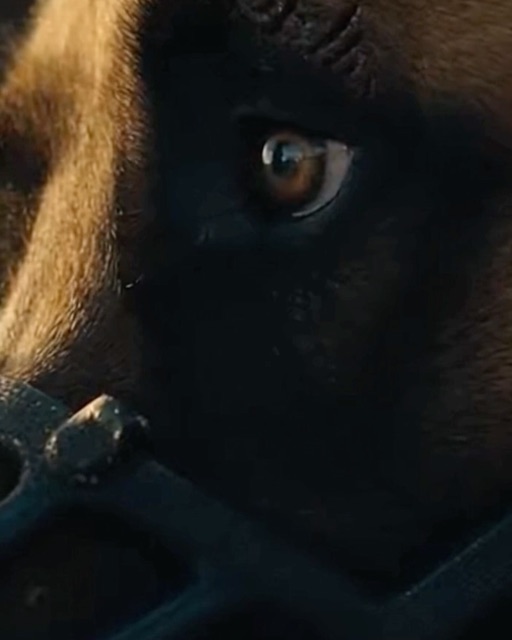
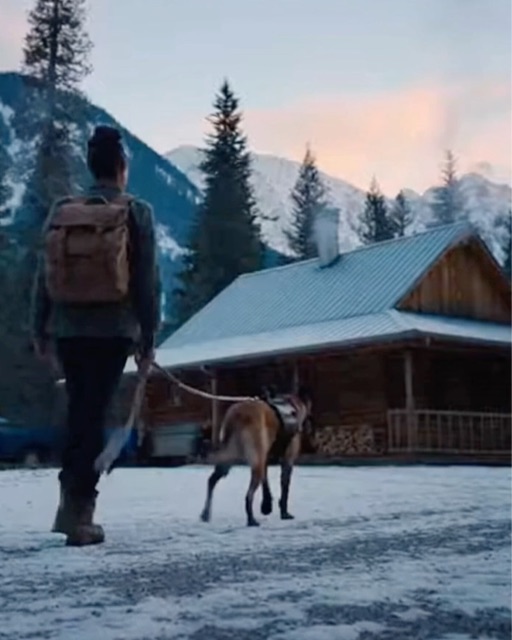
Twelve years in Naval Special Warfare taught me to love silence. That’s why I moved to Ashford Ridge with Kodiak – steady eyes, a scar by his ear, the only heartbeat I trusted when mine pounded at 3 a.m.
But on my second Sunday here, Sheriff Clayton Rusk swaggered into Miller’s like he owned it, Deputy Travis Keene glued to his shoulder. He “accidentally” tipped my coffee, let it run over the edge toward Kodiak’s paws, and when Kodiak gave one warning rumble, Rusk nudged him with his boot. Deliberate. Dirty.
My blood ran cold. I tapped two fingers on the leash. “Leave it.” Kodiak froze like a statue. That should’ve been the end.
It wasn’t.
That night, a cruiser tailed me home with its lights off. In the morning, there was a “Dangerous Dog” notice taped to my door. Of course there was.
So I did what I used to do overseas when the rules got rewritten mid-mission. I stopped waiting. I clipped Kodiak’s harness – his old unit rig, the one with the hidden lens you’d never notice unless you’d worn one.
By lunch, Rusk and Keene were at my gate with a smug clipboard and a borrowed animal crate. My jaw clenched so hard I tasted metal.
“You’re in my town now,” Rusk said. “Keep that mutt in line, or I will.”
His boot twitched toward Kodiak again.
The red light under Kodiak’s patch blinked once.
My heart slammed. “One more time,” I told him softly. “Give me one more kick.”
He smirked and stepped closer. The whole world narrowed to leather on gravel, the weight shift in his heel, the way every voice on the street went dead.
I kept my eyes on his and said, calm as a cut wire, “Kick my dog again, Sheriff—and your whole department goes down on camera.”
He froze. Keene’s fingers slipped on the clipboard.
I waited until they left, then slid the microSD from Kodiak’s harness with shaking hands. I popped it into my laptop, hit play… and the first face that appeared on the footage wasn’t the Sheriff’s at all—it was a kid’s.
I recognized him instantly. Daniel Rusk. The Sheriff’s son.
He’d been walking down my street just moments before his father’s cruiser pulled up. Kodiak’s camera, angled low, caught him perfectly. Daniel looked over his shoulder, his face pale and slick with sweat.
Then Deputy Keene stepped into the frame, without the Sheriff.
The audio was faint, just the rustle of wind and distant birdsong, but the video was crystal clear. Daniel slipped a small, padded envelope to the deputy. Keene took it without looking at it, palming it smoothly before tucking it into his jacket.
It was a blink-and-you-miss-it exchange. Dirty. Practiced.
I rewound it. Then I watched the rest. The footage of Rusk’s threat was exactly as I remembered, a perfect piece of evidence. But it was no longer the main event.
This wasn’t just a bully with a badge. This was something rotten, and the Sheriff was either part of it or covering for his own son.
My first instinct was to dump the whole thing online and let the internet tear them apart. But a firestorm isn’t a strategy. It burns everything, the innocent along with the guilty.
I needed to understand what I was looking at. I needed more than a single, grainy video of a nervous kid and a crooked deputy.
The next morning, I left Kodiak at home. I told him to guard the fort, and he gave me a solemn look that said he understood the mission.
I drove back to Miller’s Diner. The bell over the door jingled, and a few heads turned. The whole town had heard about my little chat with the Sheriff.
I took a seat at the counter. Old Man Miller came over, his face a roadmap of worry lines. He wiped the counter with a damp cloth, his movements slow and deliberate.
“Coffee, Ben?” he asked, his voice low.
“Please,” I said. “And a question, if you’ve got a minute.”
He nodded, pouring the dark liquid into a thick ceramic mug. He leaned in, pretending to check the sugar dispenser.
“People are talking,” he mumbled. “Saying you poked the bear.”
“The bear came to my yard,” I replied quietly. I took out my phone and slid it across the counter, a short, edited clip already playing. It just showed Daniel and Keene. No sound. No context.
“Ever see anything like this?” I asked.
Miller squinted at the screen. His jaw tightened almost imperceptibly. He slid the phone back to me and went on wiping the counter, his eyes scanning the quiet diner.
“That boy,” Miller finally said, his back still to me. “Daniel. He’s been a storm brewing for years. Got a taste for things his allowance can’t cover.”
He paused, then added, “His father keeps the wind at his back.”
A young waitress refilling ketchup bottles nearby shot me a nervous glance. Her name was Sarah. I’d seen her a few times. She always gave Kodiak a piece of bacon, slipping it to him when she thought no one was looking.
“And Keene?” I prompted Miller.
“Keene does whatever Rusk tells him. Always has.” Miller finally turned to face me, his eyes full of a tired resignation that spoke volumes. “Look, Ben. This town… it has deep roots. Some of them are poisoned. You go digging, you better be ready for what you find.”
He was warning me off. Protecting me. But I wasn’t looking for a fight. I was just refusing to back down from one.
Later that afternoon, Sarah found me outside while I was walking Kodiak. She wrung her hands, her gaze darting up and down the street.
“My brother,” she said, her voice barely a whisper. “He’s in county for six months. They said he had pills on him.”
I waited.
“He was with Daniel Rusk that night. The cops showed up, and suddenly the pills were in my brother’s pocket. Daniel went home with his dad.”
Her story clicked into place with the video on my laptop. Daniel wasn’t just a user; he was moving things. And his father and Keene were his clean-up crew, framing other kids to keep Daniel’s record spotless.
“I’m sorry,” I said, and I meant it.
“Don’t be sorry,” she said, her eyes flashing with anger. “Be careful. They do their real business out at the old cannery. By the river. Trucks come in late. No one goes near it.”
She hurried away before I could thank her. She’d given me the next piece of the puzzle. A location.
That night, I became a ghost again. I dressed in dark clothes, packed a small bag with my night-vision monocular and a long-lens camera, and left my truck a mile away from the abandoned cannery.
Kodiak was with me. He moved through the overgrown fields with a silence that still amazed me. He was an extension of my senses, his ears twitching at every snapped twig, his nose testing the air.
We settled into a concealed position on a small ridge overlooking the cannery’s loading docks. The place was a skeleton of rust and broken windows, bathed in the cold light of a half-moon.
For hours, there was nothing but the sound of crickets and the river rushing nearby. My training took over. The waiting, the stillness, it was an old, familiar friend.
Just after 2 a.m., headlights cut through the darkness. Not a cruiser, but a beat-up pickup truck. A few minutes later, a large commercial van followed, its engine rumbling low.
Deputy Keene got out of the pickup. Daniel Rusk hopped out of the passenger side. He looked jumpy, constantly checking his phone.
The back of the van rolled open. Two men I didn’t recognize started unloading wooden crates. They weren’t moving pills. The crates were too big, too heavy.
I zoomed in with my camera. One of the crate’s lids was splintered. Inside, I could see the distinct shape of firearms. Military-grade. Not just pistols and hunting rifles, but automatic weapons.
My blood turned to ice. This was infinitely worse than I’d imagined. This wasn’t about protecting a spoiled kid’s petty drug dealing. This was major. This was federal.
Then another car pulled up. A sedan. Sheriff Rusk got out.
He wasn’t there to bust anyone. He walked over to the men from the van and shook their hands. He clapped his son on the shoulder, a proud father overseeing the family business.
The camera was rolling. The long-range mic I’d set up was picking up every word.
“Payment’s in the truck,” Rusk told one of the men. “Count it. We’ll have the rest moved before sunrise.”
“Your boy is getting good at this,” the man said with a gravelly laugh, gesturing toward Daniel.
“He learns fast,” Rusk said, his voice dripping with a corrupt pride that made my stomach turn.
Suddenly, Kodiak shifted beside me, letting out a low, almost inaudible growl. He wasn’t looking at the cannery. He was looking behind us.
My head whipped around. A figure stood silhouetted against the moonlight, not twenty yards away. They had a rifle. They’d circled around us.
We’d been so focused on the target, I’d missed the counter-surveillance. It was a rookie mistake. A deadly one.
The figure raised the rifle. I didn’t have a weapon. My mission was intel, not engagement. I had Kodiak, the gear, and a whole lot of trouble.
There was no time to think. I gave Kodiak a silent hand signal, one we’d practiced a thousand times. The “Chaos” command.
He exploded from our cover, not at the man with the rifle, but toward the cannery, barking with the fury of a dozen dogs. He was a dark blur, a guided missile of noise and aggression, drawing every eye toward him.
Lights flashed in our direction. Shouts echoed across the yard. “What was that?” “Get the dog!”
The man with the rifle hesitated, his attention pulled toward the commotion. It was the only opening I’d get.
I didn’t run. I moved low and fast, away from the threat, melting back into the darkness. I gave a short, sharp whistle, a recall command that would cut through any noise.
Kodiak broke off his attack instantly and veered into the woods, a ghost disappearing between the trees. He met me a hundred yards back, his breathing heavy but his eyes bright with adrenaline.
We made it back to the truck without being followed. My heart was hammering against my ribs, but the hard drive with the video and audio was safe in my pocket.
Back at my house, I watched the footage. It was all there. The faces, the crates, the guns, the conversation. It was a clean, undeniable indictment of the entire operation.
Once again, I thought about posting it. The rage in me wanted to. I wanted Rusk’s smug face plastered everywhere.
But I thought of Sarah. I thought of Miller. If a war kicked off in Ashford Ridge, they would be the civilian casualties.
There was a better way. The right way.
I spent the next two hours packaging the evidence. I encrypted the files, put them on three separate drives, and wrote a short, anonymous note detailing the time, place, and individuals involved.
I didn’t call the FBI. In operations like this, you never knew how high the rot went or whose pocket a local field agent might be in.
Instead, I reached out to a man I hadn’t spoken to in five years. A journalist named Peterson, who I’d met in a war zone. He was a man who valued truth more than a headline.
Then, I drove two hours to the state capital and mailed one package to the State Bureau of Investigation, and another to a P.O. box I knew belonged to Peterson. The third drive, I kept as my insurance policy.
Then I went home, and I waited.
For three days, the silence in Ashford Ridge was heavier than ever. Rusk drove past my house twice a day, a quiet act of intimidation. I sat on my porch with Kodiak, watching him, letting him see I wasn’t running.
On the fourth morning, it happened.
It wasn’t loud. There were no sirens. Just a quiet procession of unmarked state cars rolling into town as the sun came up. They hit the Sheriff’s department, the cannery, and Rusk’s home simultaneously.
It was a clean, professional sweep. By 8 a.m., Sheriff Rusk, Deputy Keene, and Daniel were all in custody. Peterson’s story broke online an hour later, a meticulously detailed account backed by irrefutable evidence. The town was in shock, but beneath it, I could feel a collective sigh of relief.
A few weeks passed. The autumn leaves started to turn, painting the ridge in shades of gold and red. Ashford Ridge had a new, interim Sheriff, a woman from the state office who had a firm handshake and kind eyes.
One afternoon, she pulled up to my gate. I was out front, fixing a loose board on my porch, Kodiak dozing in a patch of sun.
She got out of her car and walked over, stopping a few feet away.
“The state prosecutor sends his thanks,” she said. “Unofficially, of course. The anonymous tip was… comprehensive.”
I just nodded, not saying a word.
“They’re looking at reopening a few cases,” she continued. “Including a possession charge against a young man named Michael. Sarah’s brother.”
I felt a knot in my chest loosen. “That’s good to hear,” I said.
She smiled, a genuine, warm smile. She reached into her pocket and pulled out a small, jerky treat.
“For your partner,” she said, holding it out.
I glanced at Kodiak. He lifted his head, looked at her, then looked at me. I gave him a slight nod. He trotted over and took the treat from her hand gently.
She watched him for a moment, then looked back at me. “You know, for a guy who wanted a quiet life, you sure know how to make a lot of noise.”
“It was quiet,” I said, looking down at the dog who had saved my life more times than I could count, in more ways than one. “He just doesn’t like bullies.”
After she left, I sat on the porch steps, and Kodiak rested his head on my knee. The silence I’d moved here for finally settled around us. It wasn’t empty anymore. It was peaceful.
I realized then that the skills I’d learned in the dark corners of the world weren’t just for fighting wars. They were for protecting a home. True strength wasn’t about the noise of the battle, but the quiet integrity you held onto when no one was watching. It wasn’t about firing the first shot, but about having the patience and the courage to make sure you only had to fire one.
Or, in my case, none at all. I was just a man who loved his dog. And sometimes, that’s all you need to be to change the world, even if it’s just one small, quiet town at a time.