The Day a Simple Name Made Him Cry
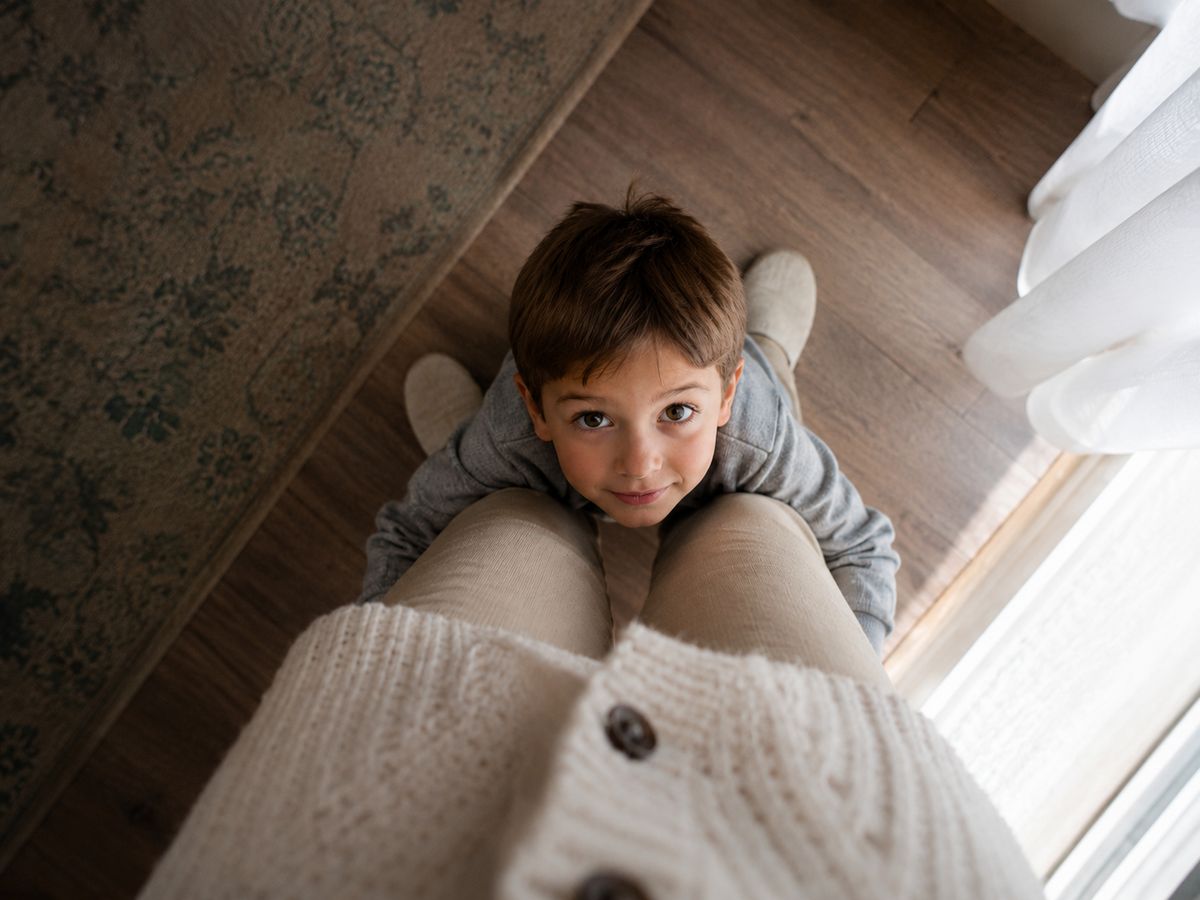
I still remember the first time my grandson looked up at me with those bright, curious eyes and called me by my first name. He was not quite three, a whirlwind of energy with cookie crumbs on his cheeks and a plastic dinosaur clutched in one hand. He smiled, delighted with himself, and chirped, “Linda!” as if he were presenting me with a bouquet of sunshine.
We all laughed at first. How could we not? My son, Jason, gently corrected him. My daughter-in-law, Nora, knelt down, soft-voiced and warm, and said, “That’s Grandma, sweetheart.”
What happened next turned the air still. My grandson’s laughter vanished. His little face crumpled. He burst into a sob so deep and sudden it seemed to swallow the room. He dropped his toy, clamped his hands over his ears, and cried like the word itself had hurt him. Jason rushed to scoop him up. Nora rubbed his back, whispering, “It’s okay. No one is going to make you say it. You’re okay.”
We blamed it on a long day and a small child’s big feelings. Toddlers are mysterious that way. But what I told myself was ordinary turned out to be the beginning of something I did not yet understand.
Months of Mixed Feelings
Weeks turned into months, and the pattern never changed. My grandson adored me. The moment I walked through the door, he barreled toward me with outstretched arms. He wanted to show me his drawings, to sit in my lap and tell me about the “very fast” cars in his books, to giggle under a blanket fort we built with mismatched pillows.
And every time, he called me “Linda.”
“Hi, Linda!” “Look, Linda!” “Bye, Linda, love you!” The sweetness in his voice could have melted stone. But each time that name fell from his mouth, a small ache settled behind my smile. I had dreamed of being “Grandma” long before he was born. To me, it wasn’t just a title. It felt like a place—soft and safe, full of bedtime stories, holiday pajamas, and little hands slipping into mine. “Grandma” was a role I had pictured a thousand quiet times, a promise of belonging I carried in my heart.
Instead, I was Linda.
People told me not to take it personally. They assured me he would outgrow it. Some even said it was cute. Nora never pushed him after those first few attempts. She corrected him gently, once, and then let it go. At first, I admired her tenderness. Later, as the months wore on, a whisper of doubt crept in where my patience used to be. I am not proud of that. But it is the truth.
I wondered if Nora preferred that her mother be the “Grandma” in his life. I wondered if she discouraged him from using the word with me. Every time that ugly thought rose, I felt ashamed. Nora had always been kind—genuinely kind. She checked on my health, sent photos of my grandson in his Halloween costumes, and welcomed me into their home with the ease of someone who believed families work best when love makes room. Still, the ache grew under the surface like a bruise I tried not to press.
The Sunday Dinner That Changed Everything
One evening after a cozy family dinner—pot roast and mashed potatoes, the sort of meal that feels like a hug—I was drying dishes while Nora packed leftovers. My grandson had laughed so hard at one of Jason’s silly animal sounds that milk came out his nose. We were all content and a little sleepy. When it was time to leave, my grandson ran up and hugged me around the waist. “Bye, Linda!” he said brightly, as if gifting me a treasure.
I kissed his soft hair, told him goodbye, and watched him scamper back to the living room. Then I followed Nora into the kitchen and asked the question that had been pressing on my heart for nearly a year.
“Nora,” I said gently, “why have you never really corrected him?”
She paused, her shoulders tightening almost imperceptibly. When she turned toward me, there was a shine in her eyes that told me the answer would not be simple. “Please,” she whispered. “Please don’t ever ask him to call you ‘Grandma.’”
The room went very quiet. I blurted the fear I’m still ashamed of. “Did you teach him not to?”
Her face folded with hurt. “No.” She steadied herself, both hands on the counter. “Linda, I swear I didn’t.”
“Then what is this?” I asked, my voice thinner than I intended. “Why does he panic when anyone says it?”
Nora glanced toward the living room. I could hear our boy chattering to his toys. When she spoke again, her voice was barely more than breath. “Because he thinks grandmas leave forever.”
The Truth a Little Boy Overheard
As Nora explained, a woman in their neighborhood had died months earlier. She was a grandmother who sat on her porch, handing out popsicles in summer. My grandson knew her well enough to wave and smile. He witnessed the sadness on the street, heard adults murmuring, and—as children do—started asking questions.
Somewhere in that tender confusion, he overheard someone say, “Grandmas leave forever.” Those three words—meant as a clumsy explanation for death—lodged inside his small heart like a thorn. He took them literally. To protect me, to keep me here, he refused to use the word he thought could make me disappear.
I sank into a chair, the weight of understanding settling heavily over my earlier hurt. All those months, my grandson had not been rejecting me. He had been trying to save me, in the only way his three-year-old mind could imagine. “He calls you Linda,” Nora said softly, “because he thinks that keeps you here.”
Before I could answer, a small voice drifted from the living room, clear as a bell ringing in a quiet church. “Grandmas leave forever.”
We found him kneeling on the rug, lining up toy animals. He was lost in play, not speaking to us, just repeating a rule the world had taught him by accident. He tapped a little bear and added solemnly, “Aunt May said that when Mrs. Patterson died.”
How We Gently Untangled His Fear
Aunt May is my elderly aunt—sweet as pie, wrapped in lavender cardigans that smell like powder. I could easily imagine her, on that sad day, saying something simple to explain a complicated truth. And I could just as easily imagine how a little boy, listening from the edge of a room, might catch the words and mistake them for a rule about life.
I sat on the rug beside him, folded my legs, and kept my voice very calm. “Sweetheart,” I asked, “who said that to you?” He blinked and answered simply, “Aunt May.” His small shoulders tightened when I asked another question: “Did she say it to you?” He shrugged in that toddler way that means yes and no all at once. “She was talking,” he said. “I heard her.”
So we began, patiently, to untie a knot that had been pulling at his heart. “Can I tell you something about names?” I asked, and he climbed into my lap as if my voice had reached out both arms. I stroked his curls and spoke carefully, because children catch not just words but the feelings wrapped around them.
“A name can’t make a bad thing happen,” I told him. “If I call you ‘pumpkin,’ you don’t turn into a pumpkin. If I call Daddy ‘Captain Dinosaur,’ he won’t become a dinosaur.” He smiled a little—just enough for hope to slip through. Jason, standing behind us, muttered “A tragedy” and made us both giggle.
“Grandma,” I continued gently, “is simply a name for a special kind of love. Saying it cannot make me leave. It cannot make me disappear. I am here because I love you, and nothing about that word can change my love.”
He searched my face, brave and serious. “But Mrs. Patterson was a grandma.” “She was,” I said, “and she died because she was old and sick, not because anyone called her by her name.” He looked at Nora for confirmation. She nodded through tears. He turned back to me with his eyes shining. “You won’t go away if I say it?”
“Never because of that,” I promised. “Not ever.”
He leaned his forehead to mine and breathed, waiting, thinking, testing the floor under a word that had felt dangerous for so long. Then, in a whisper as soft as a secret, he tried it. “Grandma?”
My answer came out half-laugh and half-sob. “Yes, sweetheart.” He smiled through the shimmer in his eyes. “Hi, Grandma.” In that instant, every ache I had carried turned to gratitude so sudden it felt like light.
A Visit and an Apology
A week later I knocked on Aunt May’s door. She opened it in her house shoes, worry already rising in her face at the sight of mine. When I told her what our boy had overheard, she pressed a hand to her mouth and sat down hard. “Oh, Lord,” she said, her voice trembling. “I said that?”
I took her hand and squeezed. “You were trying to explain something too big for a little heart. He heard the words and missed the meaning.” She cried and apologized and cried some more, and I believed every apology. I was not angry. By then I could see the whole picture clearly: love spoken plainly, a child listening from the hallway, grief passing through a family in the only language anyone could find. Sometimes we hurt each other without meaning to, not through cruelty but through accidents—through love misspoken.
What We Learned as a Family
Since that night, my grandson mostly calls me “Grandma.” Once in a while—especially if he’s tired, overwhelmed, or tucked behind a big feeling—“Linda” slips out like an old reflex. I don’t correct him when it happens. I know what it means now. It’s the echo of a fear that used to be enormous and is, blessedly, growing smaller.
We handle the word carefully but hopefully, like a fragile seedling we want to help grow strong. When he says “Grandma,” I smile a little extra so he can see the world stays steady. When “Linda” spills out, I respond with the same warmth so he can feel the ground is safe either way. Children learn trust slowly, by watching the adults they love keep showing up.
And we, the grown-ups, learned to be gentler with ourselves too. Nora and I talked honestly about how silent hurts can grow into stories that aren’t true. She shared how she and Jason worried that pushing the title would deepen our grandson’s fear. I admitted how left out I felt and how my worries had turned, unfairly, toward her. We forgave each other where we had misunderstood. Families are built of these small, brave truths.
The Quiet Moment I Had Dreamed Of
Not long ago, my grandson burst into my house, breathless with excitement. “Grandma! Grandma, where are you?” he called, his voice ringing down the hallway like music. I stepped from the kitchen, and he launched himself into my arms so enthusiastically I had to grab the wall to steady us both.
He held up a crinkled paper. “I made you a picture,” he announced, chest puffed with pride. There were swirls of color, a dinosaur, three blue circles, and a figure with purple hair that might have been me if I had suddenly decided to look very modern. At the top, in neat adult handwriting, Nora had written the words he dictated: ME AND MY GRANDMA.
I went to the bathroom and had a quiet cry—the good kind. Sometimes the thing you wait for does not arrive with trumpets. It comes softly, wrapped in a child’s voice and a messy drawing, and when it lands in your hands, your heart opens wide enough to let the light rush in.
If Your Grandchild Says Something That Stings
To every grandparent who has felt that little pinch of hurt when a child stumbles over what to call you, I wish I could pour you a cup of tea and tell you this story across a kitchen table. Children do not always understand what we mean, and we do not always understand what they fear. Between those two truths is a space where patience can work miracles.
Ask gentle questions. Offer calm explanations. Let love be larger than a title for a little while. And if a child holds tight to a name you didn’t expect, consider that it might be guarding something precious in their heart—a hope, a worry, a wish to keep you close. With time, tenderness, and a promise spoken out loud, those small hearts learn that love does not vanish when a word is spoken. It grows steadier.
A Final Thought I Hold Close
These days when I hear “Grandma,” I don’t just hear a title. I hear the courage of a child who faced a scary idea and learned, step by step, that the world can be kinder than he feared. And on the rare days when “Linda” pops out, I hear the echo of love trying to keep me safe. Either way, I answer with open arms. I am his, and he is mine. No name can change that.
What’s the most innocent thing a child in your life has ever said that turned out to carry a much deeper meaning? I ask myself that question often, and it always leads me back to gratitude—for second chances, for patient conversations, and for the tender way families find their way back to one another.