
A tender Oscars moment that started an important conversation
Goldie Hawn has charmed audiences for more than half a century, and she still brings that same glow to every appearance. At the 2025 Oscars, she shared the stage for a presentation with Andrew Garfield, and what unfolded was both heartfelt and unexpectedly enlightening. Andrew grew emotional as he spoke about how much his late mother adored Goldie and how her films brightened their lives. In that quiet, human moment, Goldie turned to him and admitted she was having trouble reading the teleprompter because of her cataracts. It was honest, a touch humorous, and above all relatable for many of us.
That small confession resonated far beyond the ceremony. It opened the door to a real, everyday topic for older adults: changing vision. Goldie’s candor reminded us that even people we’ve watched on the big screen for decades navigate the same age-related challenges that many of us do. Rather than pulling back, she met the moment with warmth, and the room responded with the same.
Understanding cataracts in simple terms
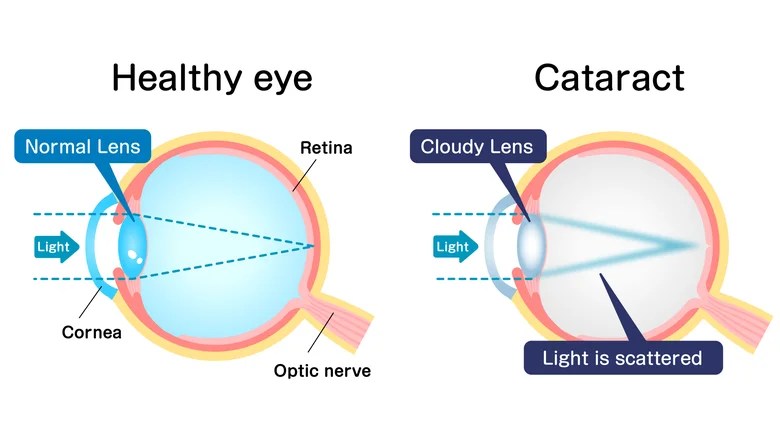
Cataracts are a clouding of the eye’s natural lens. Think of the lens as a clear window that focuses light so you can see crisp images. Over time, that window can become foggy, which means light doesn’t pass through as cleanly and everything starts to look less sharp.
In the early stages, you might hardly notice anything. Maybe you need a bit more light when you read. Maybe bright headlights start to feel harsher than they used to. As cataracts progress, words on a page can blur, colors may look muted, and nighttime driving can become uncomfortable because of glare and halos around lights. You might also find yourself changing your glasses prescription more often and still not seeing as clearly as you expect.
These changes rarely happen overnight. They tend to creep in gradually, which is why many people shrug them off at first. But if you find yourself squinting at menus, avoiding evening outings because of glare, or holding your phone farther and farther away, it could be time to ask an eye doctor to take a closer look.

How common are cataracts?
Cataracts are one of the most common vision changes that come with getting older. Health organizations estimate that roughly one in six people worldwide live with cataracts at any given time. In the United States, more than half of adults by age 80 either have a cataract or have had cataract surgery. That may sound daunting, but it also means you are far from alone, and proven help is available.
Although aging is the most common reason cataracts develop, they are not limited to one age group. Some people develop cataracts earlier because of other health conditions, long-term steroid use, past eye injuries, or genetic factors. Very rarely, babies can be born with cataracts. For many, though, it is simply a natural part of life’s progression—just like graying hair or laugh lines that tell the story of a well-lived life.
Why Goldie’s openness matters
Goldie Hawn has been in the public eye since the late 1960s, and her work has delighted generations. Hearing her speak frankly about trouble reading the teleprompter was more than a celebrity aside. It gave a face and a voice to something many viewers experience daily. When someone so beloved acknowledges a challenge, it can lift the weight of stigma and encourage others to seek help without embarrassment.
For those of us in our late forties, fifties, and sixties, vision changes can feel frustrating. There is a natural desire to power through, to put off appointments, or to believe that needing better light is just a quirk. Goldie’s moment showed that paying attention to our eyes is not vanity or fussiness; it is a practical step toward staying independent, active, and engaged with the people and activities we love.
Signs you might be noticing
Many adults first notice glare from headlights, streetlights, or shiny surfaces. Colors may look less vibrant. You might see halos around lights in the evening. Reading small print can grow tiring unless you have a strong light source, and even then the words may not look as crisp as they used to. You might also notice double vision in one eye or need to update your glasses prescription more often without feeling fully satisfied with the result.
None of these signs automatically mean you have cataracts, but together they paint a picture your eye doctor can quickly evaluate. A routine, painless eye exam can confirm what is happening and how far along it is. The good news is that, when the time is right, cataracts are very treatable.
Today’s treatment is straightforward and highly effective
Cataract surgery is among the most common and successful procedures in modern medicine. In most cases, it is an outpatient visit that takes less than an hour from start to finish, with the procedure itself often lasting closer to 15 to 30 minutes. Your eye is numbed with drops and, in many clinics, you receive a mild sedative to help you relax. You stay awake, but you should feel comfortable throughout.
During the procedure, the surgeon removes the cloudy natural lens and replaces it with a clear artificial lens called an intraocular lens. This new lens stays in your eye permanently. Many people notice clearer vision within a day or two, and colors often look brighter. Most of the time, people go home the same day and rest with a protective shield over the eye. Over the next several weeks, you use prescribed eye drops while your vision continues to sharpen.
It is common to have one eye done first and the second eye scheduled later, allowing the first eye to heal. Your doctor will talk with you about lens options, such as a standard lens that focuses at a single distance or premium lenses designed to reduce reliance on glasses for certain tasks. Not everyone is a candidate for every lens type, but your care team will walk you through what makes sense for your eyes and lifestyle.
Living well before and after surgery
If your cataracts are mild or you choose to wait on surgery, there are simple ways to make day-to-day life easier. Brighter, focused lighting helps with reading and crafts. Sunglasses that block ultraviolet light and a brimmed hat can reduce glare outdoors. Indoors, adjusting font sizes on your phone, tablet, or computer makes screens more comfortable. Anti-glare coatings on glasses may also improve comfort under bright lights and when driving at night.
After surgery, most people experience a smooth recovery. You may notice some mild scratchiness, tearing, or light sensitivity in the first day or two. Following the drop schedule and protecting the eye when you sleep helps the healing process. Many resume light activities quickly, and your care team will let you know when to return to exercise, housework, or driving. The vast majority of patients say they wish they had done it sooner.
Familiar faces who have walked this path
Goldie is in good company. The painter Claude Monet famously struggled with cataracts late in life, which altered how he perceived colors until he sought treatment. Actor Mila Kunis dealt with a cataract in her younger years related to inflammation in the eye, something she spoke about after keeping it private for a long time. Broadcaster Larry King had cataract surgery later in life and even sported an eye patch for a bit while he healed. Savannah Guthrie, co-anchor of the Today show, developed a cataract after an eye injury and expressed joy at how much clearer her world looked after surgery, calling the experience a gift.
Stories like these can be comforting. They remind us that cataracts are not a personal failing or a sign of weakness. They are a common medical issue with a well-understood solution. Hearing others talk about their experiences can make the decision to seek care feel far less intimidating.
What to expect when you talk to your eye doctor
A comprehensive eye exam will likely include a review of your health history, a check of your vision with and without your current glasses, and a careful look inside your eye after gentle dilation drops. None of this is painful, though your near vision may be blurry for a few hours after dilation. If a cataract is present, your doctor will describe how advanced it is and whether your daily activities are being affected in a way that makes surgery worthwhile.
If you decide the time is right, your clinic will take measurements of your eye to select the best lens power for your needs. This is a quick, noninvasive process. You will also receive simple instructions to prepare for the day of surgery and for the short recovery afterward. If you have questions about driving, reading, work, exercise, or hobbies, your care team can tailor guidance to your routine so that the transition feels seamless.
Common concerns, gently answered
One of the biggest worries people share is fear of pain. The numbing drops and gentle sedation used for cataract surgery are designed to keep you comfortable. You may see lights or soft shapes during the procedure, but you should not feel pain. Others wonder about safety. While every medical procedure carries some risk, cataract surgery has a strong record of success. Your surgeon will review the small but real risks and how they are minimized.
People also ask whether they will still need glasses. The answer depends on your eyes and the type of lens you choose. Many people enjoy clearer distance vision after a standard lens, and some still use readers for close work. Premium lenses may reduce the need for glasses across different distances, though they are not the right fit for everyone. An honest conversation about your goals—reading, driving, crafting, golf, or computer work—helps your doctor recommend the most sensible option.
Seeing the bigger picture
What lingers from that Oscars moment is not just the glamour of the event but the human connection between two people on stage. Andrew Garfield’s tribute to his mother and Goldie Hawn’s gracious response brought laughter and feeling to the room. When Goldie mentioned her cataracts, she did not dwell on difficulty. She did what she has always done so well: she brought ease and openness, turning a private challenge into a shared understanding.
For many of us, that is the heart of healthy aging—staying candid about what is changing, seeking support when we need it, and refusing to let fear or embarrassment keep us from seeing clearly, literally and figuratively. Cataracts can dim the world, but they are highly treatable. When you are ready, help is close at hand.
Practical steps you can take today
If your vision seems a little off, consider making a routine eye appointment, especially if it has been over a year since your last exam. Share exactly what you are noticing—glare, difficulty in dim light, color changes, or frequent prescription updates. Clear descriptions make it easier for your provider to tailor the evaluation to your needs.
At home, choose brighter, directed lighting for reading chairs, sewing tables, or workbenches. Take breaks to reduce eye strain, and tilt screens to minimize reflections. When you head outdoors, wear sunglasses that block ultraviolet rays and add a brimmed hat for extra comfort. Small changes like these do not replace treatment, but they can make daily tasks more comfortable while you consider next steps.
Embracing clarity—on screen and in life
Goldie Hawn has spent a lifetime lighting up screens, and her willingness to speak plainly about her eyesight is another kind of light—one that guides and reassures. Many in our age group know the feeling of dimming vision and the hesitation that sometimes follows. But we also know the satisfaction of facing a challenge head-on and finding straightforward solutions.
If you are noticing signs of cataracts, take heart. You are in good company, and modern care is firmly on your side. The path to clearer vision is well traveled, highly effective, and easier than many people expect. And just as Goldie’s films have offered laughter and warmth across the years, your next chapters can be bright, sharp, and full of color.
A final word of encouragement
Your eyes help you savor life’s details—the faces you love, the hobbies that absorb you, the confidence of driving where you want to go. Cataracts can get in the way, but they do not have to stay there. With an honest assessment, a practical plan, and a caring team, you can reclaim the clarity that makes each day feel vibrant. That, perhaps, is the most enduring message from a brief exchange on a grand stage: honesty opens doors, and care brings back the light.