I wanted to do something simple but meaningful for our anniversary. After twelve years of balancing our life around flight schedules and layovers, it felt right to meet my wife where she had always met the world: on a plane. She was a flight attendant working her very last trip before retiring, and I decided to surprise her by quietly taking a seat on that flight. I thought I would make her smile, give her a hug at landing, and tell her that after all the years of missed dinners and delayed holidays, I finally made it to one of “her” anniversaries too. I did not expect the captain’s announcement that followed. It changed everything I thought I knew—about the day, about my marriage, and about myself.
Our life together, shaped by timetables and tarmacs
Anyone married to someone who works in the sky knows what it means to live around departures and returns. Plans move. Dinners shift. Birthdays go virtual because a thunderstorm sits over Denver or a crew gets reassigned at the last minute. My wife, Laura, and I learned early to hold our calendar with open hands. We had our share of romance, absolutely—we just had to work a little harder to protect it. There were anniversary meals at ten at night, gifts passed at front doors in uniforms, and Christmas mornings that started with a kiss and a wave goodbye.
What never changed was how much I admired her. She made strangers feel safe at 30,000 feet. She remembered names and small fears. She always noticed the person who needed a little extra kindness. I loved that about her—and sometimes, I envied it, because I wanted to be the one to take care of her like that, too.
The ache we carried and the choice to stop trying
There was one wish we could not seem to turn into reality. We wanted a child. At first, hope came easily. Then hope became planning, and planning became a map of tests, charts, procedures, and long drives home in silence after hard news. We tried IVF—twice. The first time, Laura bought tiny white socks to believe out loud. The second time, she bought nothing at all. Both attempts failed. After more specialists and more numbers that tried to make grief sound clinical, the message was the same: conceiving naturally was highly unlikely.
Grief like that doesn’t announce itself with a clear ending. It lingers. It sits at the table with you and changes the way you look at the future. A few months before our tenth anniversary, Laura said very quietly that she wanted to stop. She said she was tired of building our life around something that kept not happening. I took her hand and said we would stop. We would find a gentler way to live.
Her last trip—and my plan to be there
Two years later, Laura told me she was ready to retire. After so many years in the air, she wanted a simpler rhythm at home. The timing surprised us both—her final rotation ended on our anniversary. True to form, she apologized for it. I told her we would celebrate the day after. She smiled, and we left it at that. But I couldn’t shake the feeling that I could still turn the day into something good. So I booked a ticket on her flight without telling her.
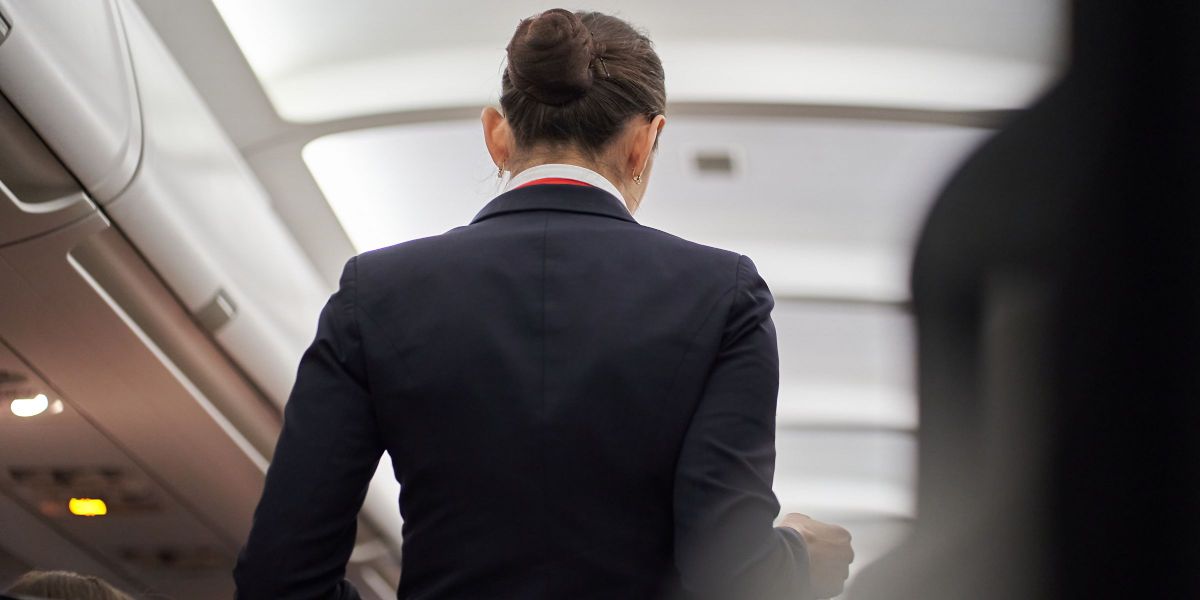
I boarded early and kept my head down, certain the surprise would make her laugh. I spotted her up front helping a man tuck an oversized bag into the bin. Even after twelve years, the sight of her in uniform still took the air out of my chest. She hadn’t seen me yet. When she finally turned and our eyes met, her face went from shock to a smile that said everything. She mouthed, “You idiot.” I grinned back. In that instant, the surprise was already worth it.
The announcement that stopped time
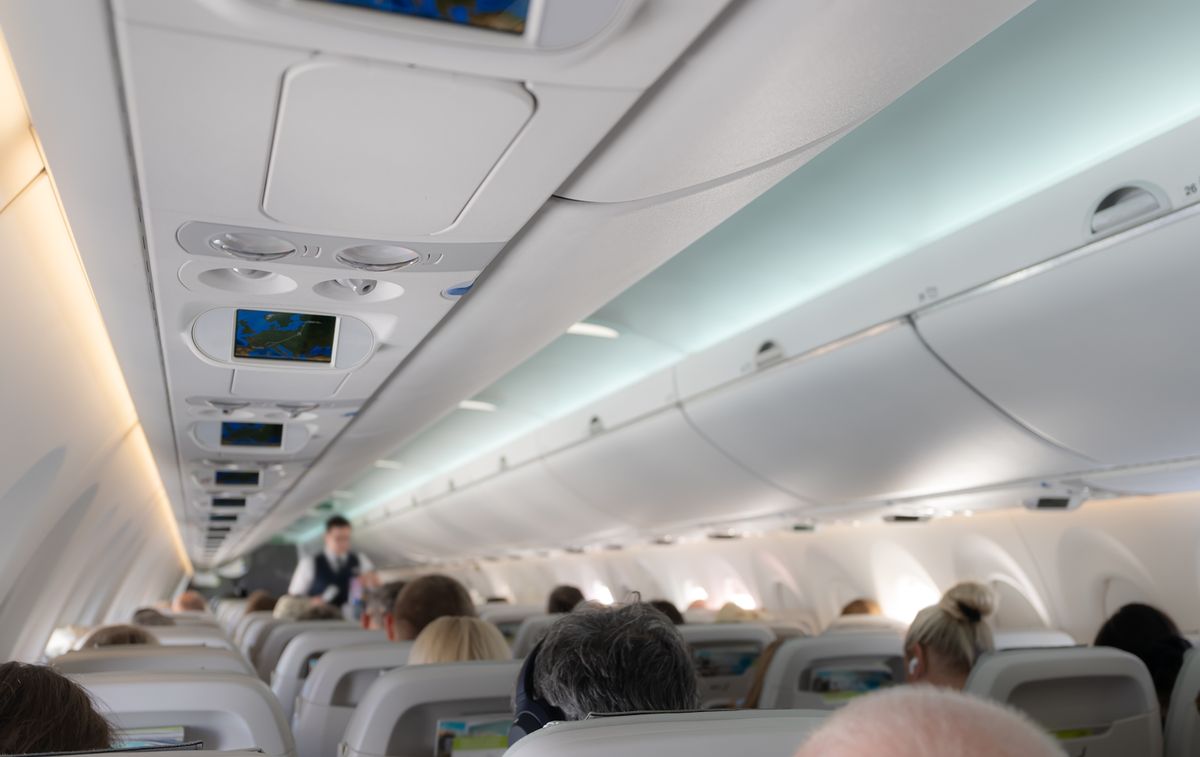
We pushed back from the gate, the engines rumbled, and the captain began the standard welcome. I barely heard him. I was watching Laura, memorizing the way she moved through the aisle on this final day. Then his voice changed. He asked for everyone’s attention to recognize a special crewmember. The cabin fell quiet. I thought it would be a sweet retirement acknowledgment. Perhaps they had flowers waiting at the gate.
But the words that followed were not about retirement alone. The captain said the airline’s medical department had received results from routine tests. Then he said something I will never forget: Laura was expecting a baby. The cabin burst into applause. People cheered. A woman across the aisle whispered, “How wonderful.”
I could not move.
What I had kept to myself—and why that mattered
Years earlier, during our testing, I had quietly done a fertility check on my own. The result I received was devastating: the doctor said that, for me, biological fatherhood was so unlikely that it should not be considered a realistic hope. By then, Laura had already been through so much. I thought I was sparing her more pain by not adding my result to the pile of heartbreak. I told myself that the overall medical picture already pointed to “highly unlikely,” and naming myself as part of the reason would only shift blame, not lighten grief. I buried the result and never told her. I convinced myself it was protection. In truth, it was fear.
Sitting there on her flight, listening to applause echo around the cabin, I heard that old sentence clang in my head like a bell: You cannot be a biological father. And because I had never questioned that test, I drew a straight line to the worst conclusion a husband can make. I wish I could say I reacted with patience. I didn’t. I shut down.
Words that can’t be taken back
After landing, there were hugs and photos for her last day. She looked stunned and radiant. I must have looked like I had seen a ghost. When we finally reached the parking garage, she asked me what was wrong. Her voice was bewildered, almost pleading. Instead of talking to the woman I loved, I spoke to my fear. I asked who the father was. I watched joy drain from her face as if I had opened a door to a freezing wind. She could hardly form words. She denied any betrayal—again and again. I did not ask for a DNA test. I did not pause to gather facts. I clung to what I thought I knew.
In the days that followed, I asked questions that should never be asked lightly, and certainly not hurled at a person who is carrying your shared dream. She stood in our kitchen, pale with shock and exhaustion, and told me that I had to decide whether I believed her. I chose wrong. A week later, I left.
Seven months, one truth
Grief makes time melt and harden in strange ways. I slept badly, replayed the captain’s announcement in my head, and tried to live in a town that no longer felt like mine. Then, for reasons I couldn’t explain, I drove past the clinic where I had taken that old test. Something in me said, Go find out again. I paid for another round of testing. When the results arrived, they did not match the past. My indicators were normal.
I drove straight back, shaking with anger and confusion. After a long, tense wait, a senior administrator and a doctor explained the unthinkable: years earlier, my results had been switched with another patient’s—someone with a nearly identical name, processed on the same day. Their mistake had placed a false verdict on my life and my marriage. I asked the only question I could manage: was it possible for me to be a biological father? The doctor said yes.
In that moment, the entire story of the past months turned inside out. Laura had not betrayed me. I had betrayed our trust by believing the worst without proof. I had walked away from my wife and our miracle because of a file error and my silence about it.
The hardest conversation of my life
I called Laura three times and got no answer. I drove to our old street twice and turned around. I finally waited outside her obstetrician’s office on a day I guessed might be an appointment. When she saw me by her car, her face told me everything—anger, exhaustion, and a firm boundary. I asked for ten minutes. She said no. Then, after a long breath, she unlocked the passenger door.
We sat facing forward. I told her about the secret test from years ago, the shame I felt, the retest, the switched records, and the folder of proof in my hands. She listened without interrupting. When I finished, she made me say the truth plainly: I had not trusted her. I had chosen fear over faith in the person I loved. Hearing those words out loud hurt in a way I deserved. She told me I could not come home. I accepted it. Then she did something I did not deserve—she said the baby was mine and that she would never keep me from being a father to our child.
Showing up, one ordinary day at a time
I found an apartment ten minutes away. I showed up every single day. I built the crib. I painted the nursery the soft yellow and deep blue she wanted. I learned how to install the car seat and stocked the freezer with meals for the days when energy was in short supply. Some days, she spoke kindly. Some days, she hardly spoke at all. I learned the shape of her silence and tried to honor it.
At 2:14 one morning, the phone rang. Her water had broken. I was at her door in ten minutes. At the hospital, she was fierce and focused. When our daughter was born—rosy, crying, perfectly herself—the world narrowed to the quiet, holy work of becoming a family. The nurse placed the baby in my arms for a breath, then I placed her into Laura’s. We had picked names years before, in a different season of hope. Laura looked at our little girl and whispered, “Amanda.”
Forgiveness and what comes after
Before we left the hospital, while Amanda slept in a small bassinet between us, Laura told me something I will never forget. She said I had disappointed her in a way she would never fully forget. Then she said she forgave me. She told me I could come home, but that trust would have to be rebuilt, brick by brick, with actions more than words. I told her I would spend the rest of my life doing exactly that.
In the months that followed, we did something we never imagined having to do: we pursued a case against the clinic. Not because money could heal what broke—but because mistakes like that cannot be allowed to stand in the dark. The case settled. It did not fix the past, but it forced answers, and it made some practical parts of life easier.
A new chapter on the ground
Laura never returned to the airline. Instead, she finally opened the small pastry shop she used to talk about on late-night layovers. The sign is simple, the coffee is good, and on Saturdays there is a line for her fruit tarts. Sometimes I stand behind the counter with Amanda on my hip, watching Laura ice a cake with steady hands, and I feel the weight of what we almost lost—and the joy of what we kept.
Our next anniversary was the first one we spent entirely at home. No delays. No bags at the door. Just us, a humming baby monitor, and a small cake Laura baked with a single candle. We sat at the kitchen table, the light soft and familiar. We counted the years. We held hands. It was not the easy love of the beginning. It was love that had been tested, mended, and made honest again.
What I wish I had understood sooner
If I could go back, I would tell my past self to slow down before drawing conclusions, to say the hard truths out loud rather than keep them hidden, and to ask for the test, the second opinion, the conversation that might have saved months of pain. I would tell him that protection is not the same as secrecy, and that love is not proven by trying to carry everything alone. Most of all, I would remind him that the person you chose as your partner deserves your trust before your fears do.
I have asked Laura many times—gently—what hurt most. We do not pick at the wound; we acknowledge it and keep moving forward. She says the day I left marked her deeply. But so did the speed at which I believed she had betrayed me. That knowledge could have built a wall between us forever. Instead, she allowed forgiveness to build a bridge. I do not mistake that for a free pass. Every day, I try to be the man who earns the second chance I was given.
Home, at last
Today, our life looks ordinary in the best possible way. There are early mornings, stroller walks, and a kitchen that smells like vanilla more often than not. When I lift Amanda from her crib, I remember the crib I built with shaking hands. When Laura laughs, I hear the strength it took to choose us again. On our first anniversary as a family of three, there were no boarding calls or last-minute reschedules. Laura was home. So was I. So was our daughter.
If you are reading this and carrying a private fear, a secret test result, or an ache you do not know how to share, let my mistakes be a caution with a hopeful ending. Speak. Ask. Verify. Trust the person you love enough to face the hard parts together. The quiet, steady work of rebuilding a life is not glamorous—but it is the most beautiful task I have ever been allowed to do.