
A Choice Everyone Questioned
People told me I was being foolish. They said I was walking away from a life most only imagine. But I wasn’t chasing dreams that glittered. I wanted something that felt steady and real. So when I turned down a wealthy man’s proposal and chose Adam—a widowed father raising three children on a small farm—many decided I’d lost my mind. What I learned the night we married proved how little they understood.
The last person to try to change my mind arrived in a quiet stretch limo that rolled up my parents’ long driveway like a final argument. My mother stood beside me on the porch, fussing with the front of my dress as if smoothing fabric might smooth out a decision already made in my heart.
Daniel stepped out carrying white roses. The watch box in his other hand caught the afternoon light. He looked every bit the polished success story—tailored suit, easy confidence, the kind of man magazines love to photograph. My mother’s breath eased into a hopeful sigh. I stayed where I was.
He climbed the steps with that same practiced smile. “You look beautiful, Emma.”
“Thank you,” I said, keeping my voice calm.
He offered me the flowers. “Can we talk?”
I shook my head. “There’s nothing left to say.”
His smile flickered. “You’re not really going through with this.”
My father appeared in the doorway, arms folded. “We’ve been trying to tell her the same thing.”
Daniel opened the velvet box, revealing a timepiece worth more than Adam’s truck. “I can give you a life people dream about. You don’t belong in a small town. Come with me.”
I closed the box and placed it back in his hand. “I already have everything I’m looking for.”
He searched my face for doubt. There wasn’t any. He finally nodded toward my parents. “I tried.”
“You did,” I answered softly, and opened the front door—his gentle cue to go. When it shut behind him, my mother began to cry. My father didn’t. His disappointment was always quieter.
“You were raised for more than this,” he said.
I glanced around the home I grew up in—marble floors, fresh flowers replaced twice a week, art we admired but never really knew. Everything gleamed, yet nothing felt warm. “I think I was raised to tell the difference between what is expensive and what is truly valuable,” I said. “We just disagree on what that is.” I picked up my overnight bag. No one stopped me.
A Simple Wedding, A Brave Promise
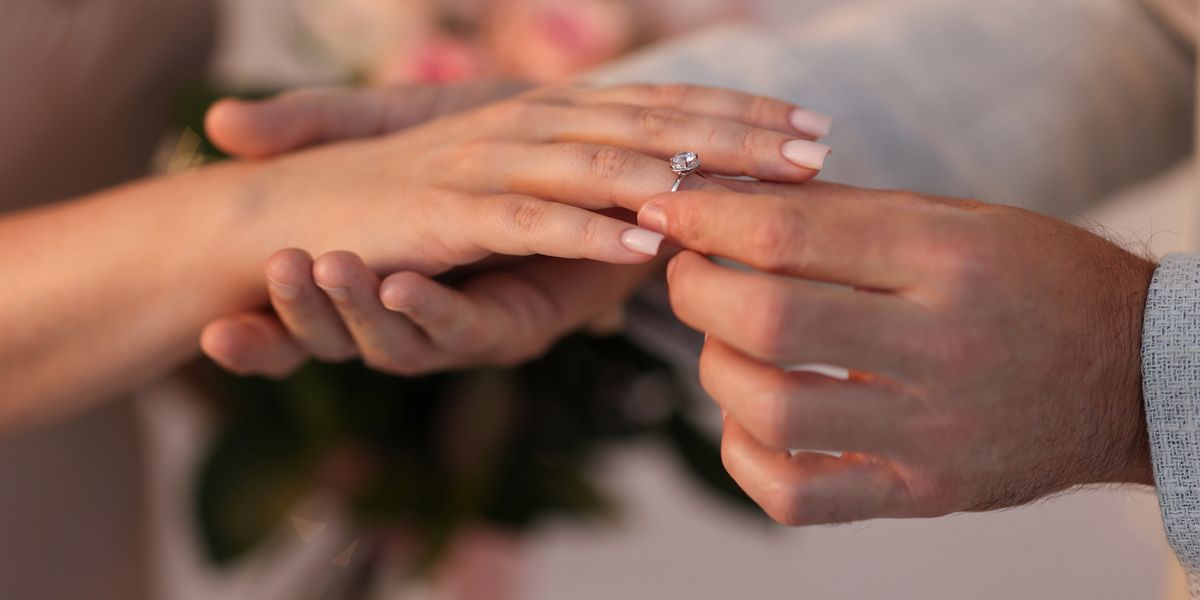
Three weeks later, I married Adam beneath the wide branches of the maple tree behind his farmhouse. Strings of warm lights swayed in the summer breeze. Neighbors brought mismatched wooden chairs, and the children sprinkled wildflowers down the aisle that morning. Noah, the middle one, tucked our rings into the pocket of his tiny suit because he felt a real ring bearer should have a “big job.”
When Adam took my hands, I noticed they shook. “So do mine,” I whispered. He grinned softly. “I thought you’d notice.”
“You look terrified,” I teased.
“I’ve been terrified since the day I realized I love you,” he said, and somehow the minister’s gentle throat-clearing and the smiles all around us made the moment feel light instead of heavy.
As Adam slid the ring on my finger, I saw that his left hand looked different. The gold band from his first marriage was gone. Months earlier, I’d told him he never had to take it off for me. He’d answered with simple honesty—he loved Lily, he would always love her, and yet he wanted a life with me. Back then he had only kissed my forehead, saying nothing more. Seeing his bare hand that day, I finally understood. He hadn’t taken the ring off to forget Lily; he’d taken it off to make space for me.
After we said our vows, the children tugged us straight into a first dance, laughing as they tried to lead. Sophie lost her shoes within minutes. Olivia, the oldest, rested her head against my shoulder for a while, quiet and thoughtful.
“You okay?” I asked gently.
She nodded. “I was just thinking… I think Mom would’ve liked you.”
Her words reached a place in me I hadn’t prepared for. “I hope so,” I whispered.
“She would like that you make Dad laugh,” she added, then slipped away to dance with her brother and sister, leaving me with tears I hadn’t expected and a deeper sense of belonging than any gift could have offered.
Our wedding would never be in a magazine. It was simple and honest and full of people who cared more about each other than appearances. I couldn’t imagine a richer beginning.
The Door He Kept Locked
When the last guest drove off and the farm settled into a peaceful hush, Adam found me in the kitchen stacking plates. “My wife,” he said, trying out the words with a smile that made him look boyish and relieved all at once.
“Took you long enough to notice,” I joked.
He wrapped his arms around me. “There’s somewhere I want to take you. Tonight.” His smile dipped, just a little, and I heard something serious in his voice that hadn’t been there all day. “It’s important.”
Ten minutes later, we stood before a small, windowless building hidden behind a stand of old oak trees. I’d only seen it from afar before. Up close, the weathered wood looked carefully tended. A heavy steel door was secured with a spotless padlock.
Adam stared at it, then at me. “There’s one more truth I’ve been afraid to show you,” he said quietly. “I wasn’t scared of losing the farm. Or the savings. After Lily died, I wasn’t even afraid of losing myself.” He held the key and took a breath. “The only thing I began to fear was losing you.”
He unlocked the door and set the padlock aside with careful hands. “I made a promise,” he said, his voice barely a whisper.
“To whom?”
“Lily,” he answered, and her name sounded like both a wound and a blessing. “I promised I would only open this door if I found someone who loved our children enough to understand why this room exists. I think she would have loved you.”
He pulled the door open. A soft scent rose up to meet us—not dust and neglect, but paper, old wood, and the faintest trace of dried lavender. Inside, a single lamp cast warm light across a room that felt gently kept, not frozen in grief.
The Life She Planned, The Life We Found
Adam had turned the lamp on the day before, wanting the room to feel welcoming. That small kindness alone nearly undid me. He wasn’t ready after all these years—he simply wanted my first moment there to be kind.
Every wall was alive. There were photographs, newspaper clippings, children’s drawings, holiday cards, volunteer badges strung on labeled hooks, maps with notes along their edges, and big corkboards crowded with ideas. Shelves held journals bound together with faded ribbons. The space didn’t look like storage; it looked like someone had pinned a lifetime of hope to the walls.
Then I saw something that stopped me cold. A photo of a little girl in a bright red winter coat, front teeth missing, laughing over a paper cup of hot chocolate. I knew that coat. My grandmother had sewn those buttons on three different times. It was me.
My heart lurched. “Were you watching me?” I asked, the question slipping out before I could stop it.
Adam’s face went pale. “No,” he said quickly, and pointed to a date written beneath a much older photo. Nearly twenty years earlier. He would have been fifteen then. He reached for a stack of journals, but a smaller photo lying facedown caught my eye. On the back, in neat, careful handwriting, it said, “The little girl who smiled after she stopped crying.”
“Who wrote this?” I whispered.
“Lily,” he said.
I untied a ribbon and opened the first journal with trembling hands. The leather was worn from years of use. A volunteer badge slipped out—“Lily. Holiday Hope Children’s Foundation.” The date was nearly two decades old.
I began to read. “Some people think generosity begins with money,” Lily had written. “I think it begins with noticing.” Page after page followed—not a diary about herself, but plans, sketches, and ideas about helping children. Toy drives. Book corners. Warm coats. Blankets. Afterschool spaces with art and music and snacks. Everywhere, the same steady voice and the same intention: notice, and then do something.
Sprinkled through those pages were clippings from local events. In one, my parents stood at the center of a fundraiser they had supported. Near their feet was a girl hugging a stuffed bear—me—but no circle around my face, no arrow, no comment. Just one thoughtful note from Lily: “Every child smiles the same way when they feel safe.”
The panic pressing at my ribs eased. These weren’t photos of me, not really. They were photos of moments Lily cared about, and I had simply been one of many children in the room. I looked around again and finally saw what I’d missed at first. There were hundreds of faces on those walls—every age and background, all mixed together in the same generous vision. This wasn’t my story on display; it was hers. And by some strange grace, our lives had crossed paths again and again without either of us knowing.
The Dream She Didn’t Finish
At the back of the room, a large corkboard held drawings of a simple brick building with wide windows, a library nook, an art room, and a kitchen. Across the top Lily had written, “One Place Where Every Child Belongs.”
I traced the edge of one sketch. “She wanted to build this.”
Adam’s smile faded. “Cancer,” he said softly. One word said everything. The unfinished plans on the wall seemed to carry their own quiet ache—so much heart, not enough time.
On a plain shelf, apart from the others, sat a small cedar box with a brass clasp. “Open it,” Adam said.
Inside were envelopes—dozens of them—each one addressed to a moment Lily knew she wouldn’t live to see. Birthdays. First recitals. Middle school. High school. I touched one gently. “Did the children read them?”
Adam shook his head. “I couldn’t,” he said, and I understood. This room wasn’t locked because he refused to move on. It was locked because opening the door meant losing her all over again.
Beneath the letters was an old photograph. A younger me sat on a folding chair in a red raincoat, tears on my cheeks, a blanket wrapped around my shoulders. In the background, volunteers hurried through a holiday event. The memory rushed back so fast I had to sit down. I’d been eight. The crowd had been huge. I’d been separated from my parents, and for twenty-some minutes, I was sure no one would find me. But someone did. A volunteer brought hot chocolate and sat with me until I was in my mother’s arms again.
I turned the photo over. There was a date. And beneath it, in Lily’s same careful handwriting: “The little girl who reminded me every child deserves someone searching for them.”
I looked at Adam with tears in my eyes. “I didn’t know her,” I said.
“No,” he agreed gently.
“She didn’t know me.”
“No.”
“But that day mattered to her.”
“It changed everything,” he said, handing me a thin notebook bound with green thread. On the next page Lily had written: “Today I met a little girl who thought no one was coming back for her. Her parents found her twenty-three minutes later. Twenty-three minutes isn’t very long—unless you’re eight. If I ever build a place for children, I want every frightened child to know someone is already looking for them.”
The Letter Meant for Me
Adam rested his hand on the cedar box. “A week after Lily died, I came here planning to burn everything. I didn’t think I could keep living with this much love and this much loss in the same room.” He paused. “Then I found one last letter.”
It was different. No holiday. No milestone. Just a gentle, careful line across the front: “To the woman who becomes my children’s second mother.”
He pressed the envelope into my hands. “I never opened it,” he admitted. “It wasn’t written for me.”
I slipped my finger under the seal and unfolded the paper. The first line took my breath away. “If you’re reading this, then something beautiful happened.”
She thanked me for loving three children who already had a mother. She asked that I not live in her shadow. She wrote that children don’t need replacements; they need more love, more arms to hold them, more memories to carry beside the old ones. She asked me to laugh with Olivia, to stop and help Noah when he asks, and to hold Sophie’s small hand as long as she’d let me. “You will never erase me,” she wrote. “I hope you never try. Tell Adam that loving you isn’t a betrayal. Love doesn’t divide. It grows. And if this room still exists, don’t let it become a museum. Finish the dream.”
I could hardly see the page by the end. When I looked up, Adam watched me with the same fear I’d seen earlier—not fear of the room, but fear of my answer. I crossed to him and wrapped my arms around his shoulders. “You’re not asking me to carry this alone,” I said. “We’ll carry it together.”
Turning Memory Into Hope
Six months later, the once-quiet building was filled with children’s voices. We’d preserved Lily’s journals along one wall, but the rest of the space belonged to laughter, homework help, art projects, music, and snack time. Volunteers stocked shelves with school supplies. Local families dropped off coats before winter. The door that had once guarded a private grief now opened each afternoon into a place where children felt seen and safe.
That day, a familiar black limousine eased down the gravel road. Daniel stepped out first. My parents followed, taking in the old oaks, the handmade sign above the door, the movement and joy all around us.
The sign read, “The Lily Foundation.”
“It was her dream,” I said.
“And now it’s yours?” Daniel asked.
I shook my head. “It’s all of ours.”
My mother watched the activity with a long, thoughtful silence. “This is what you’ve been doing?” she asked at last.
“Yes,” I said simply.
She nodded slowly. “I thought you were choosing a smaller life.”
I smiled. “So did I.”
Just then Adam stepped onto the porch with Sophie riding high on his shoulders, both of them laughing. She’d made him a paper crown during craft time and convinced him to wear it. He looked a little ridiculous, and completely happy. The children saw my parents and ran to greet them. Without hesitation, Sophie slid her hand into mine.
“Mom,” she said, tugging at my arm, “come see what we made.”
The word still surprised me sometimes—not because it replaced anyone, but because it had grown beside another love, exactly the way Lily said it could.
What Richness Really Means
I glanced once at Daniel—his beautiful watch, the shined shoes, the perfect suit. Years ago, I might have believed he was the richest man I’d ever meet.
Then I looked down at the small hand wrapped around mine. I looked over at Adam standing on the porch, crown askew, grinning at the sight of his children running across the grass. I listened to the sound of laughter floating out of a room that used to be locked because it hurt too much to open it.
That was the moment I understood I hadn’t traded wealth for less. I had traded glitter for gold.
On busy mornings, I still slip a worn brass key into my pocket before unlocking the foundation doors. It reminds me of what it opened the night Adam first shared that room with me—a promise, a dream, and a family held together by love that didn’t run out when it was shared. And every time I hear children laughing beyond that once-locked door, I know we kept the promise that mattered most.



