Waking up in the middle of the night with a dry, sticky mouth can be surprising and uncomfortable. You may notice a rough tongue, an irritated throat, or a stale taste that makes you reach for a glass of water right away. While it is common to have a little dryness now and then, frequent dry mouth at night can be a sign that something in your daily routine, your sleep habits, or your health needs attention.
As we get older, our bodies naturally produce a bit less saliva, and many of the medications people take in midlife and beyond can also reduce moisture in the mouth. That does not mean you have to accept it as normal. Understanding what is causing your nightly dryness gives you practical ways to feel better, sleep more soundly, and protect your teeth and gums.
This friendly guide explains what dry mouth at night is, the eight most common reasons it happens, and simple steps you can try at home. If you regularly wake up thirsty or with a parched throat, you will find straightforward ideas here that can help you rest easier.
What dry mouth at night really means
Dry mouth, also called xerostomia, happens when your salivary glands are not making enough saliva to keep your mouth comfortably moist. Saliva is much more than water. It helps wash away food particles, neutralize acids, protect tooth enamel, support healthy gums, and make swallowing and speaking easier. When saliva production slows down—something that naturally occurs a bit during sleep—your mouth can feel dry and sticky, and your breath may smell less fresh by morning.
If the dryness is occasional, it may simply reflect a warm room, not drinking enough fluids during the day, or a night when you breathed more through your mouth. If it is happening most nights, it is worth exploring the reasons below and making a few gentle changes.
Reason 1: Sleeping with your mouth open
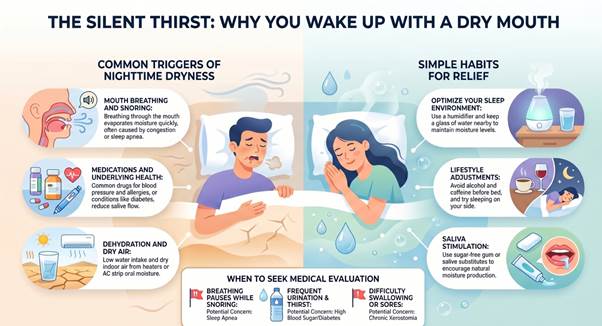
Breathing through the mouth while sleeping is one of the biggest triggers for nighttime dry mouth. When air passes over your tongue and palate for hours, moisture evaporates more quickly than your salivary glands can replace it. You might wake with a sore or scratchy throat, thick saliva, or a dry, coated tongue. Some people also notice bad breath upon waking that improves after they sip water or brush.
Mouth breathing during sleep often happens because the nose is partially blocked by seasonal allergies, a cold, sinus issues, or a deviated septum. It can also occur from sleeping on your back with your jaw relaxing open. If you snore, your tongue and soft tissues may fall backward, encouraging mouth breathing.
Gentle changes can help. Supporting nasal breathing is key, so consider treating nasal congestion with a saline rinse in the evening and elevating your head slightly with a comfortable pillow. Sleeping on your side may reduce mouth opening. Some people find that adhesive nasal strips make it easier to breathe through the nose. Staying well hydrated during the day also supports better saliva flow overnight.
Reason 2: Not drinking enough water
Dehydration is a very common cause of dry mouth at night. Your body needs enough fluid to make saliva, and if you are not drinking regularly throughout the day, you may feel the effects in the middle of the night. You might notice darker urine, dizziness when standing, dry skin, or a feeling of thirst that does not go away easily.
The solution is simple and gentle. Sip water consistently during the day rather than waiting until evening to catch up. Many people find that a glass of water with each meal and one between meals works well. In the evening, drink enough to be comfortable without overdoing it right before bed, which could lead to bathroom trips. If you take medications known to cause dryness, steady hydration can be especially helpful.
Reason 3: Snoring and sleep apnea
Loud snoring and obstructive sleep apnea are closely linked with dry mouth during the night. With sleep apnea, breathing can pause repeatedly due to a blocked or narrowed airway. When that happens, many people switch to mouth breathing without realizing it, and the airflow dries out the mouth and throat.
Clues that point to sleep apnea include heavy snoring most nights, gasping or choking sounds during sleep, morning headaches, needing frequent naps, or feeling tired even after a full night in bed. High blood pressure and a thicker neck can also raise risk. If these signs are familiar, it is wise to talk with a healthcare professional about a sleep evaluation.
The good news is that treating sleep apnea often improves dry mouth along with sleep quality, energy, and heart health. Depending on your situation, your healthcare team may recommend weight management, side-sleeping, a custom oral appliance from a dentist, or continuous positive airway pressure (CPAP). When the airway is supported and mouth breathing lessens, many people notice their mouth feels less parched by morning.
Reason 4: Medications that dry the mouth
Many commonly prescribed and over-the-counter medications can reduce saliva production. This includes drugs for blood pressure, depression and anxiety, allergies and colds, pain, bladder control, and even some heartburn and dizziness medications. For adults in their fifties and sixties, it is especially common to take more than one medication, and their drying effects can add up.
If you suspect your medicine is contributing, do not stop taking it on your own. Instead, mention your symptoms to your doctor, pharmacist, or dentist. They may be able to adjust the timing, change the dose, or suggest an alternative with fewer dryness side effects. Simple supports such as sipping water more often, using an alcohol-free mouth rinse designed for dry mouth, or trying saliva substitutes and moisturizing gels at night can also make a noticeable difference.
Reason 5: Dry indoor air
When the air in your bedroom is dry, it pulls moisture from your mouth and nose as you sleep. This is common during winter when heaters run for hours, in summer in heavily air-conditioned rooms, or in climates where humidity is naturally low. You may notice a dry nose, itchy eyes, or static electricity along with nighttime dry mouth.
Adding gentle moisture to the air can help your mouth and throat feel more comfortable. A clean, well-maintained humidifier used in the bedroom overnight is a simple solution. Many people feel best when indoor humidity stays around a moderate level rather than too high or too low. Regularly rinsing and drying the water tank helps keep the unit fresh. If a humidifier is not available, even placing a bowl of water in the room can add a bit of moisture to the air.
Reason 6: Smoking and tobacco use
Cigarettes, cigars, pipes, and smokeless tobacco all irritate the delicate tissues of the mouth and can slow saliva production. That irritation, along with heat and chemicals in smoke, contributes to a dry, sore feeling in the morning. Many tobacco users also notice a coated tongue, stronger morning breath, and a greater tendency toward gum problems or mouth infections.
Cutting back or quitting is one of the most powerful steps for oral comfort and overall health. Even small reductions can lead to improvements in saliva flow over time. If you decide to quit, support from a healthcare professional can make the process easier, and options such as nicotine replacement may help reduce cravings while your mouth and throat heal.
Reason 7: Diabetes and high blood sugar
Dry mouth can be a sign that blood sugar levels are running high. When glucose is elevated, the body loses more fluid through urination, which can leave you dehydrated and your mouth uncomfortably dry. People with diabetes may also experience increased thirst, more frequent nighttime bathroom trips, blurry vision, or cuts that seem slow to heal. Oral yeast infections and a burning tongue are more likely when the mouth is dry as well.
If you have diabetes or prediabetes, noticing more nighttime dryness is a good reason to check in with your healthcare provider to review your management plan. If you have not been diagnosed but these symptoms are new, asking about a simple blood test may be wise. Keeping blood sugar in a healthy range, staying hydrated, and practicing gentle oral care can all help restore comfort.
Reason 8: Stress and anxiety
The body’s stress response can slow saliva production temporarily, which is why many people notice a dry mouth during a tense conversation or when they are worried. At night, stress can show up as jaw clenching, teeth grinding, faster breathing, or snoring, all of which can worsen mouth dryness. You may wake with a sore jaw, a headache near the temples, or a dry, tight feeling in your throat.
Calming your nervous system before bed can be surprisingly effective. A quiet wind-down routine—such as dimming the lights, reading something light, gentle stretching, or slow breathing—helps the body shift into rest mode. If you grind your teeth, a dentist can advise whether a night guard might help protect your teeth and ease tension. When the mind and jaw relax, saliva flow often improves.
When to take dry mouth more seriously
Occasional dryness is normal, but it is important to pay attention if your mouth feels dry most nights for several weeks. Persistent dryness can raise the risk of cavities, gum disease, mouth sores, and trouble chewing or swallowing dry foods. It can also disturb your sleep and leave you tired the next day.
Consider contacting a healthcare professional if your dry mouth is ongoing, if you find it hard to swallow or speak, if you develop a burning or painful sensation in your mouth, or if you notice white patches, cracks at the corners of your lips, or frequent mouth sores. Loud snoring with daytime sleepiness, morning headaches, or witnessed pauses in breathing are additional reasons to seek an evaluation for sleep apnea. If you take several medications and dryness is bothering you, a medication review can be very helpful.
Comfort-focused steps you can try at home
Small changes add up. Drinking water steadily throughout the day supports healthy saliva production at night. Keeping a glass or bottle at your bedside makes it easy to take a small sip if you wake. Many people find that using a clean, cool-mist humidifier in the bedroom helps both the mouth and nose feel better by morning, especially during dry seasons.
Limiting alcohol and caffeine later in the day can also help since both can be dehydrating. If your nose is stuffy, a warm shower or a gentle saline rinse before bed can open nasal passages and encourage nose breathing. If you enjoy something to freshen your mouth in the evening, choose sugar-free mints or gum, preferably with xylitol, which can stimulate saliva without feeding cavity-causing bacteria.
Good oral care matters even more when your mouth is dry. Brushing with a fluoride toothpaste twice a day, cleaning between your teeth, and using an alcohol-free mouth rinse made for dry mouth can reduce irritation. Thick, moisturizing gels or sprays designed for nighttime dryness can provide soothing relief while you sleep. If you wear dentures, keeping them very clean and following your dentist’s guidance about overnight use can prevent irritation.
Temperature and posture can make a difference too. A slightly cooler bedroom and a supportive pillow that discourages mouth opening may reduce dryness. If you tend to sleep on your back, experimenting with side sleeping could help keep your mouth closed more comfortably. For some people, setting a gentle, consistent bedtime routine also naturally reduces stress and breathing irregularities that dry the mouth.
A simple bedtime routine to protect against dry mouth
About an hour before bed, dim the lights and slow down screen time. Sip water to top up hydration without overfilling your bladder. If your nose feels blocked, try a brief saline rinse or a warm shower to clear it. After brushing and cleaning between your teeth, swish with an alcohol-free rinse made for dry mouth. If your mouth still feels parched, apply a small amount of a moisturizing gel or spray. Set your humidifier to run through the night if your air is dry. Settle into a comfortable position, ideally on your side with your head slightly elevated, and take a few slow, deep breaths through your nose to cue your body for rest.
Frequently asked questions
Why does my mouth feel dry when I sleep at night?
Nighttime dryness usually comes from mouth breathing, dehydration, snoring, sleep apnea, dry indoor air, certain medications, or simply sleeping with your mouth open. Saliva production naturally decreases during sleep, so anything that further reduces saliva or increases airflow through the mouth can tip you into that dry, sticky feeling by morning. Addressing nasal congestion, steady hydration, and bedroom humidity often makes a noticeable difference.
Is dry mouth while sleeping a sign of a health problem?
Sometimes it is. While occasional dry mouth is common and often harmless, frequent dryness can be connected to conditions such as sleep apnea, diabetes, allergies, acid reflux, or salivary gland issues. Medicines are another very common cause. If dryness lasts for weeks, interferes with your sleep, or comes with other symptoms such as loud snoring, frequent urination, unusual thirst, or trouble swallowing, it is wise to speak with a healthcare professional.
How can I stop dry mouth at night naturally?
You can reduce dryness with simple, gentle habits. Drink water regularly during the day, use a clean humidifier if your air is dry, and avoid alcohol and caffeine close to bedtime. Clear your nasal passages so nose breathing is easier, and consider sleeping on your side with your head slightly raised. Sugar-free gum or lozenges with xylitol can stimulate saliva in the evening, and alcohol-free mouth rinses or moisturizing gels can soothe tissues overnight.
Can sleeping with my mouth open cause dry mouth?
Yes. Sleeping with your mouth open is one of the most common reasons for nighttime dryness. Air moving over your tongue and palate all night speeds up evaporation, which leaves the mouth and throat parched, and can lead to morning breath and a sore throat. Improving nasal breathing, adjusting sleep position, and gently supporting the jaw to stay closed can all help.
When should I see a doctor for dry mouth at night?
Seek medical advice if your dry mouth is persistent for several weeks, makes swallowing difficult, causes burning or pain, or comes with other symptoms such as loud snoring with daytime fatigue, frequent urination and thirst, white patches in the mouth, or recurrent mouth sores. A healthcare professional can check for underlying causes, review your medications, and suggest treatments that help you sleep and feel better.
Final thoughts
Dry mouth during sleep is more than a small annoyance. It can disturb your rest and affect your oral health, but in most cases, the cause is understandable and very manageable. By identifying which of the eight common reasons fits your situation—mouth breathing, dehydration, snoring or sleep apnea, medications, dry indoor air, smoking, diabetes, or stress—you can take simple steps that bring relief. If the problem continues, do not ignore it. A brief conversation with your healthcare provider or dentist can uncover solutions that help you sleep comfortably and wake up refreshed.