At a Miami summit, a fatherly boast turns into a broader controversy
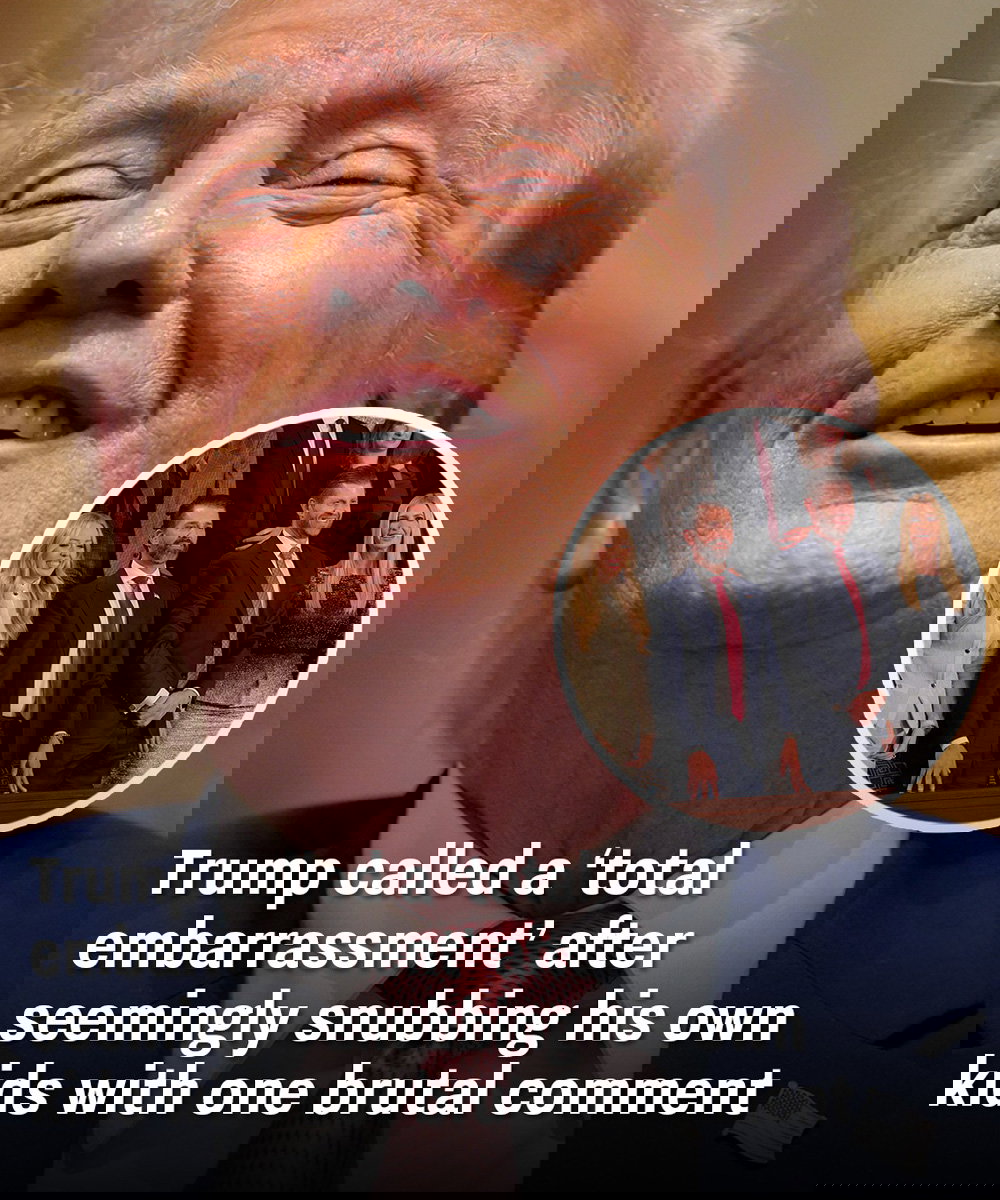
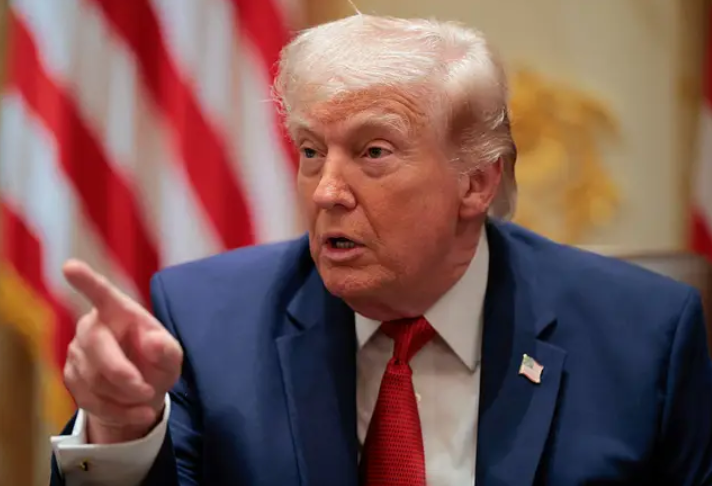
During a keynote appearance at the Future Investment Initiative Institute summit in Miami, Donald Trump singled out his eldest son, Donald Trump Jr., for unusually glowing praise. What might have sounded like a proud parent moment quickly stirred debate online and on cable news, with many listeners focusing less on the compliment itself and more on who was not mentioned. The reaction was swift, and it centered on the sense that the former president appeared to elevate one child above the rest.
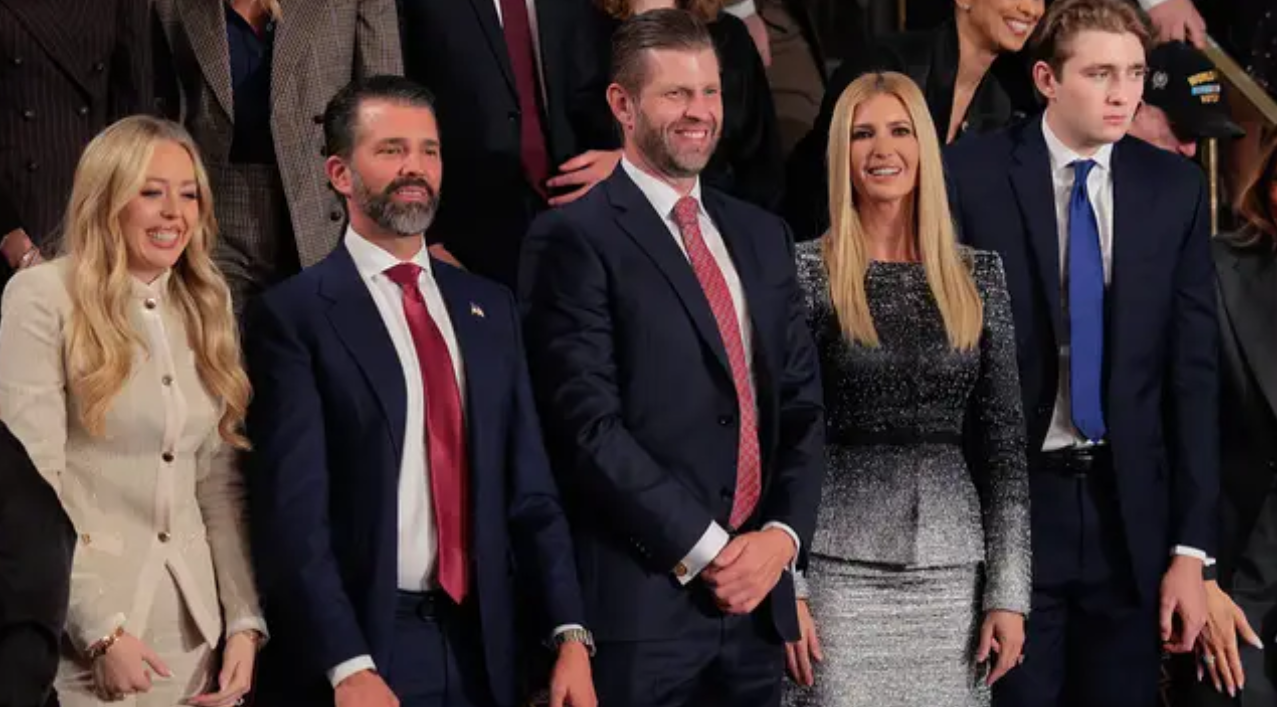
Trump is a father of five. Donald Trump Jr., Ivanka Trump, and Eric Trump are his children with his late first wife, Ivana. Tiffany Trump is his daughter with his second wife, Marla Maples. Barron Trump is his youngest, whom he shares with his wife, Melania Trump. Over many years in the public eye, each has stepped in and out of the spotlight at different times, sometimes standing with their father at major events and, at other moments, staying out of view.
In Miami, however, the tone felt different to many observers. While speaking warmly about his eldest child, Trump emphasized what he called the power of heredity, offering a remark that drew raised eyebrows across the political spectrum. He said, “Now we have our great son. He’s got the best genes I think of any human being I’ve ever known. He’s my son, Don Trump. Don, he’s a great guy. And his fiancée, Bettina. Good, Bettina, good. Now my son’s got the greatest genes in history. I’m a big believer in genes.”
The words themselves were not entirely out of character for a public figure known to mix humor, bravado, and family references. Yet, in the hours that followed, the focus shifted to what listeners heard between the lines.
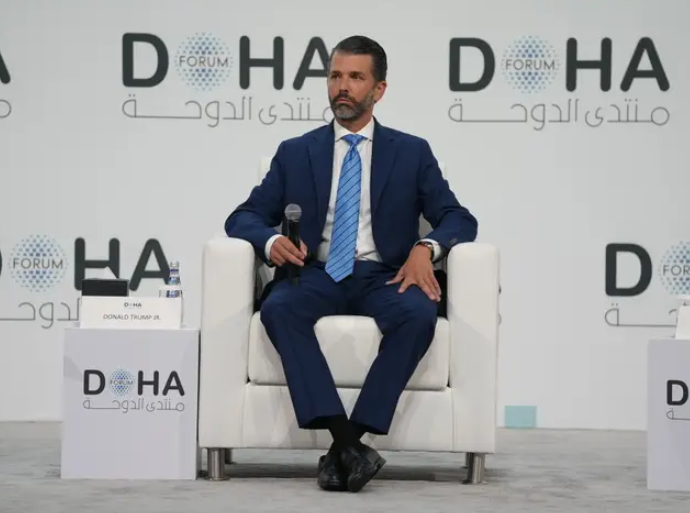
Why many heard a slight to his other children
What frustrated some viewers was not the praise, but the absence of any mention of his other children. Ivanka, Eric, Tiffany, and Barron were not referenced in the same breath, and the contrast led people to wonder whether the former president was putting one child on a higher pedestal than the rest. For families watching at home, the moment resonated because it tapped into a universal worry: that praise for one child can, at times, make others feel unseen.
There is a familiar expression in family life that middle children can get lost in the shuffle, especially in families with many kids and busy parents. It can be a sore subject around dinner tables and holiday gatherings everywhere. In this case, the concern felt amplified by the setting and the stage. It was not a quiet aside at home or a private toast; it was a high-profile moment, delivered to a global audience, and replayed endlessly online. That added visibility is why so many commentators seized on it.
To many older parents and grandparents who have navigated delicate family dynamics themselves, the response may feel understandable. Public compliments can carry extra weight, and when one child is repeatedly singled out—whether for talent, temperament, or, in this case, “great genes”—others can be left to interpret what was not said. Even perfectly loving, involved parents know it takes care to make sure all children feel recognized, especially when the stakes are personal and the spotlight is bright.
What people said online
On social platforms, the reaction was immediate and often sharp. Some users criticized the way the remarks landed, saying the message suggested a hierarchy among Trump’s children. One person on X described the moment bluntly as a “total embarrassment,” a phrase that was shared and discussed widely in the hours after the speech.
Another observer honed in on the implications for the former first lady and their youngest son, Barron. “Melania is going to be so pleased to hear that her son doesn’t rate,” the person remarked, distilling the concern many felt: if one child is heralded for supposedly having “the best genes,” where does that leave the others? These kinds of comments, while pithy, point to a broader tension that has followed Trump for years—his preference for superlatives and his tendency to frame success as something inherent rather than simply earned.
This debate unfolded alongside longstanding perceptions of Trump’s public style. He has often talked in terms of winners and losers, of top-tier performance and gold-standard everything. For some, that personality trait makes moments like these feel unsurprising. For others, it leaves room for misunderstanding, especially when applied to family. Either way, the clip traveled fast, and the interpretation that he had, intentionally or not, slighted his other children became the story.
A separate slip about the Strait of Hormuz
Later in the same appearance, Trump also made waves with an off-the-cuff remark about one of the most strategically important waterways in the world. While discussing tensions and negotiations involving Iran and the flow of global energy, he appeared to misspeak when he referred to the Strait of Hormuz as the “Strait of Trump,” before quickly correcting himself. “We’re negotiating now, and it’d be great if we could do something, but they have to open it up. They have to open up the Strait of Trump — I mean, Hormuz. Excuse me, I’m so sorry, such a terrible mistake.”
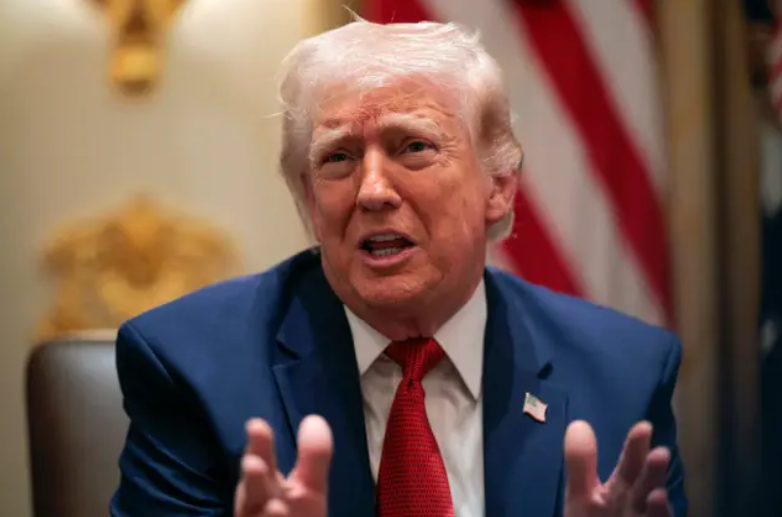
He then anticipated the media response, adding, “The fake news will say he accidentally said — there’s no accidents with me, not too many. If there were, we’d have a major story.” The moment combined a small verbal flub with a familiar jab at the press, which in turn gave pundits and political observers a second clip to analyze and debate.
For viewers who may not follow geopolitics closely, the sensitivity around the Strait of Hormuz is real. It is a narrow passage connecting the Persian Gulf to the open seas, and a substantial share of the world’s oil passes through it. Any sign of tension in that region can affect energy markets, diplomatic relations, and global stability. That is why even a brief misstatement there, especially paired with humor, tends to draw attention.
A habit of putting his name on things, and a notable renaming
Another piece of context that fueled reaction to the “Strait of Trump” slip is Trump’s long-running attachment to branding. He has, for decades, put his name on buildings, golf courses, and high-profile ventures. During the Miami appearance, critics quickly linked the brief mix-up to this broader theme, suggesting it reflected a desire to see his name in bold letters on nearly anything prominent.
That broader thread reemerged in conversation about the Kennedy Center in Washington, D.C. According to public statements referenced in recent months, the center’s board voted unanimously last year to rename the venue the Trump-Kennedy Center. On social media, White House Press Secretary Karoline Leavitt framed the decision as recognition for “the unbelievable work President Trump has done over the last year in saving the building.”
To supporters, linking Trump’s name to storied institutions is a way of marking what they see as consequential actions and achievements. To critics, it is another example of overreach or self-promotion. Either way, when you combine a prominent slip of the tongue about a vital waterway with prior high-profile name associations, the narrative practically writes itself—and it did, across headlines and talk shows, throughout the day.
Why the ‘genes’ remark struck such a nerve
Family pride is a universal feeling. Parents naturally like to boast about their children, especially when they believe those children have grown into their talents and responsibilities. In Trump’s case, his eldest children—Donald Jr., Ivanka, and Eric—have all had visible roles around him for years, from the private sector to campaign events and beyond. That public visibility has always made his words about them carry more weight than a casual aside at a family reunion.
What heightened the sensitivity in Miami was the combination of absolute terms and the exclusive spotlight. Speaking in superlatives—“the best genes of any human being I’ve ever known”—leaves little room for nuance. It invites an obvious follow-up question: If Don Jr. has the best, where do the others stand? When remarks like these are made on a national stage, the contrast is hard to ignore. For those who feel the burden of living up to a celebrated sibling, or for parents who work to balance praise among their children, it is easy to see why this moment touched a nerve.
There is also a long history of public figures, including presidents, referencing family lineage and legacy. For some audiences, it sounds like a simple nod to tradition. For others, it can feel like a claim that success is preordained. In an era when many people value hard work and equal opportunity over pedigree, talk of “great genes” can land awkwardly—even if the intent is merely affectionate.
The event setting, and why it matters
The Future Investment Initiative Institute summit draws global business leaders, policymakers, and investors. It is a high-profile stage where messages are crafted not only for domestic audiences, but for international ones as well. That context matters because words delivered in such venues carry both symbolic and practical consequences. Markets listen. Allies and adversaries listen. And so does the general public, which makes familiarity and steadiness in language especially valuable.
That is why the combination of a high-wattage compliment to Don Jr., the conspicuous absence of references to the rest of the family, and the later “Strait of Trump” slip set off such a broad conversation. Each piece, on its own, might have been dismissed as a passing flourish. Together, they painted a picture that critics found concerning and supporters defended as harmless and even entertaining.
How older viewers may see the moment
For many people in their forties, fifties, and sixties, the scene might have triggered familiar memories. Perhaps you recall times when a teacher praised one sibling and the other bristled, or when a parent bragged about a child’s accomplishment and accidentally left someone else out. Family ties are resilient, but they can be tender around recognition and fairness. Public comments raise the stakes because there is no easy way to take them back, and because they can echo in ways that private reassurances do not always mend.
Parents and grandparents know that even offhand remarks can be remembered for years. That is not unique to politics; it is part of family life. The lesson many draw is simple: praise abundantly, but spread it around. In the public arena, where every word is recorded and repeated, that lesson becomes doubly important.
Supporters’ and critics’ two very different reads
Supporters of Trump saw the Miami speech as another example of his straightforward, unscripted style. To them, the praise for Don Jr. was the kind of proud, spontaneous remark any parent might make, and the quick correction about the Strait of Hormuz was a minor slip, not a sign of anything larger. They argue that the media pounced on small moments and tried to turn them into a narrative of chaos or favoritism.
Critics, in contrast, heard a pattern. They see a tendency to speak in extremes and to amplify personal branding at every turn, whether in family matters or national ones. They also point to how fast the comments traveled—and how many people, without prompting, reacted to the perceived slight of Trump’s other children. In their view, these are not isolated moments but part of a longer story about image and priorities.
Where the conversation goes next
In the end, the Miami appearance offered two clips that will likely be replayed for days: one about “great genes,” and one about the “Strait of Trump.” Each provides ammunition for partisans and fodder for late-night monologues. But beyond the noise, the episode reminds us how words land, especially when they involve family and national interests in the same breath. A boast that might be shrugged off at a private gathering becomes headline material on a public stage.
For families watching at home, the takeaway is perhaps more personal than political. Moments like these reopen age-old questions about fairness, recognition, and the balance parents try to strike among their children. Even in households far from the spotlight, it is a delicate dance—and in public life, the dance is performed under bright lights.
The bottom line from Miami
Trump’s warm words for his eldest son set off a wave of criticism, not because pride in a child is unusual, but because the praise felt so absolute and so exclusive. The omission of Ivanka, Eric, Tiffany, and Barron did not go unnoticed, and it helped fuel a story line that spread quickly online. The later slip about the Strait of Hormuz—corrected on the spot—added another headline-friendly moment to the mix, complete with a jab at the press.
Whether you see these moments as harmless quirks or revealing signals may depend on how you already view Trump. What is clear is that they resonated with millions of people who understand, from their own lives, how easily family praise can become family friction. In politics as in parenthood, words matter. In Miami, they mattered a great deal.