
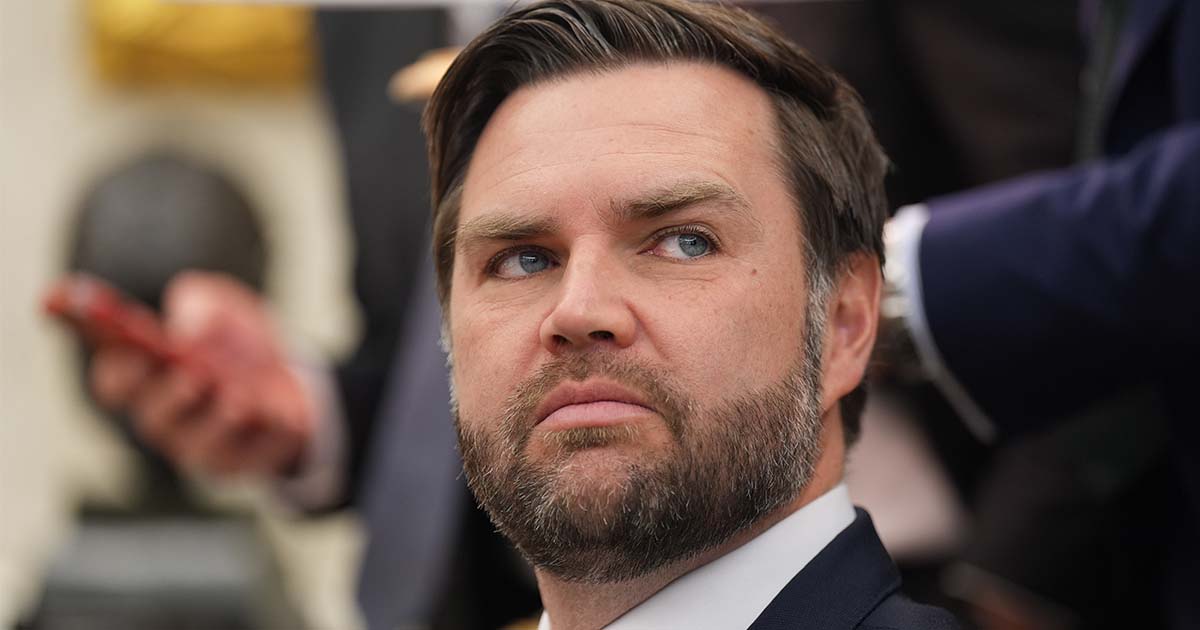
JD Vance’s path to the vice presidency is one of those modern American stories that feels both unlikely and, in hindsight, almost inevitable. Many first met him through his 2016 memoir, Hillbilly Elegy: A Memoir of a Family and Culture in Crisis, which resonated with readers across the country. In just a few years, he moved from the Marine Corps to the Ivy League, from the world of venture capital to serving as a United States Senator, and now to the White House as Vice President. Yet even as he stepped onto the national stage, life reminded him that everyone faces personal hurdles: just days before the inauguration, he quietly underwent a long-planned minor surgery and returned to work almost immediately.
A beginning shaped by hardship and hope
Vance grew up in Middletown, Ohio, alongside his half-sister, Lindsay. In his memoir and in interviews over the years, he has spoken candidly about a turbulent home life and a mother struggling with addiction. Those early years were marked by instability and moments that would have rattled even the most resilient child.
One memory he has shared is particularly chilling. As a boy, he recalled in an NPR interview, he found himself in a car with his mother during a frightening outburst. He described scrambling into the back seat and eventually running to escape the moment. It was one of several incidents that led to a painful legal break from his mother and, ultimately, a new beginning in the care of his grandparents. Life did not suddenly become easy, but it became steadier, and he and Lindsay leaned on each other in the years that followed.
When his sister later moved out to start her own family, Vance had to find his own footing. In his book, he reflects on what that time felt like, and Lindsay has said that reading those passages brought her to tears. He has consistently made clear, however, that he never blamed her. In his telling, her path forward helped illuminate the possibility of his own.
Teen years, tough choices, and a grandmother’s tough love
Like many teenagers testing their boundaries, Vance fell in with a crowd that was leading him nowhere good. He has shared that he experimented with drugs and drifted in the wrong direction—until his grandmother stepped in. He remembers her with a mix of affection and awe. In his account, she delivered a blunt warning that made him sit up straight. It was, in essence, a line in the sand. He credits that moment—and her unwavering presence—with steering him toward a more disciplined future.
That future began to take clearer shape after he finished Middletown High School in 2003. Unsure of what path to take, he chose the Marine Corps, a decision that would become one of the most defining chapters of his life.
Finding structure and purpose in the Marine Corps
Vance enlisted and served four years, including a 2005 deployment to Iraq. His role was as a combat correspondent—writing, photographing, and documenting the work of Marines for public affairs. During that period he went by James Hamel, a name he had used after being renamed James David Hamel in childhood. He has often said the Marines gave him more than a job; they gave him the tools to grow into adulthood. He has written about arriving as a young man who did not yet grasp everyday responsibilities and leaving with discipline, perspective, and a new sense of possibility.
In Iraq, he was fortunate to avoid direct combat, but the experience of being in a war zone left its mark. He saw communities up close, took part in outreach alongside civil affairs units, and recognized how fragile and precious ordinary life can be. The lessons were practical—how to work long hours when needed, how to communicate clearly under pressure—but also personal. He learned that failure is not the end of a story if you keep showing up and trying again.
Learning to handle the spotlight
After his deployment, Vance returned to Marine Corps Air Station Cherry Point in North Carolina. There, he was assigned to media relations—a demanding position typically held by more senior Marines. It was a crash course in dealing with reporters, television cameras, and high-stakes moments. He would later write that the experience taught him he could manage twenty-hour days, speak clearly with cameras in his face, and hold his own in rooms filled with officers.
Those who served with him took notice. His former officer in charge, retired Maj. Shawn Haney, has said that even then it was obvious he would pursue public life. Another Marine recalled watching Vance respond on the spot to a journalist’s question with a polished, memorable answer—an early glimpse of the confident communicator he would become.
Back to school, and a voice that reached millions
When his service ended, Vance used the GI Bill to attend Ohio State University, where he earned a degree in political science and philosophy. He then continued on to Yale Law School, graduating in 2013. Those academic years were not a change of course so much as the next step in the same journey—turning the discipline he found in the Marines into a foundation for a professional life.
Writing, however, remained central. In 2016, he published Hillbilly Elegy, describing in unflinching detail the family history and cultural forces that shaped his childhood. The book struck a chord with readers across the political spectrum, becoming a bestseller and, in time, a Netflix film adaptation directed by Ron Howard and starring Amy Adams and Glenn Close. Years later, when he joined the presidential ticket, interest in the book surged yet again, with hundreds of thousands of additional copies sold in a matter of weeks.
From investing in the heartland to launching his own firm
The attention from his book introduced Vance to leaders in business and philanthropy. He joined Revolution, the firm co-founded by AOL’s Steve Case, helping channel investment into startups in the American Midwest. The work matched his long-standing belief that talent and innovation are not confined to the coasts. After a time, he founded his own venture capital firm, Narya Ventures, based in Cincinnati. The name itself suggested a mission: to give energy and resources to builders in places that too often get overlooked.
Even as he worked in business, politics hovered in the background. In 2018, his name was floated as a U.S. Senate candidate in Ohio, but he decided not to enter the race, citing family reasons. When Senator Rob Portman announced in 2021 that he would not seek reelection, the question returned with new urgency. This time, Vance stepped forward.
Stepping into the political arena
Vance won the Republican primary in 2022 and then the general election against Tim Ryan, taking office as a U.S. Senator from Ohio in January 2023. It was a rapid ascent, but not a wholly surprising one for those who had watched him build a public profile through writing, speaking, and business. The campaign also underscored his relationship with Donald Trump, who endorsed him during the Senate bid.
That support was notable because Vance had not always been an ally. Early in Trump’s presidency, he voiced sharp skepticism. Messages he sent in 2017, later verified by news outlets, included his description of Trump as a “moral disaster.” In a 2016 conversation with a Kentucky radio host, he agreed with the host’s harsh assessment, arguing that Trump had tapped into a real sense of frustration among people who felt ignored, even if Vance questioned whether Trump genuinely cared about them. Those comments underscored the complexity of his political evolution.
Over time, though, Vance and Trump found common ground. As the 2024 campaign cycle unfolded, Trump selected Vance as his running mate. Trump later praised him as strongly family-oriented, a quality the former president said he valued. With that selection, Vance moved onto the national ticket and, in due course, into the vice presidency.
A bumpy first stretch in Washington
Public life rarely moves in a straight line. Not long after the election, Vance drew criticism from some international leaders following remarks he made about Ukrainian President Volodymyr Zelenskyy. The episode was an early reminder that the vice presidency requires a delicate balance on the world stage, and that words spoken in or near the White House are heard everywhere. For Vance, it marked the beginning of a period in which every statement could carry global weight.
The small but timely surgery that came first
Even before the inauguration, Vance faced an interruption most of us can relate to: a health appointment that could not be put off forever. On January 3—just over two weeks before the swearing-in—his office announced that he had undergone a long-planned, minor sinus surgery at a Washington hospital. His spokesperson, William Martin, explained that it was routine and that Vance would be back at work the next day.
For anyone who has dealt with sinus issues, the story rings true. These procedures are common, often scheduled when life allows and completed on an outpatient basis. The goal is typically to relieve persistent congestion, pressure, or recurring infections that make daily life miserable. In Vance’s case, the quick return to his duties suggested everything went smoothly, allowing him to focus fully on the tasks ahead.
By inauguration day, the health matter was behind him. When he took the oath of office, he did so as the youngest vice president since Richard Nixon, a historical footnote that underscores how quickly his career has moved. It also highlights the generational shift that many voters have witnessed in real time—new faces stepping into roles long occupied by familiar names.
What his story may mean to those watching
For many Americans in midlife and beyond, there is something recognizable in Vance’s journey. It is not the titles or the spotlight that stand out, but the steadier truths along the way. A grandparent who changes everything by showing up. A young person drifting until a stern talk snaps life back into focus. The transformative power of the military for those who need structure and purpose. The strength it takes to speak honestly about family challenges and still carry love forward.
There is also the reality that people grow and change. Positions harden, soften, and sometimes reverse as circumstances shift. Vance’s early criticisms of Trump and later partnership with him are not easily summarized. For supporters and critics alike, they are part of a larger picture of a politician finding his footing, making judgments, and recalibrating as he moves through a fast-changing landscape.
Then there are the quieter aspects of his life that many will recognize: an ordinary medical procedure squeezed into an extraordinary season, the balancing act between family, health, and demanding work, and the reminder that even high office does not shield anyone from the basic maintenance of being human.
From here to what comes next
As Vice President, Vance now carries responsibilities that touch every corner of American life. He brings the perspective of someone who has seen addiction and recovery up close, who has served in uniform, who has studied and taught and invested in places far from Washington’s marble halls. Whether one agrees with his positions or not, it is hard to deny that his story has been shaped by resilience, by risk, and by a willingness to try new paths when the old ones ran out.
The questions ahead are the ones every administration faces. How to keep the country safe amid international uncertainty. How to strengthen an economy that works for families in towns like the one he grew up in. How to speak in ways that unite more often than they divide. And, as his pre-inauguration surgery quietly illustrated, how to keep the person healthy enough to do the job we ask him to do.
Vance’s life so far suggests he will continue to meet those questions with the combination of discipline he learned in the Marines, the candor that made his memoir a national conversation, and the ambition that has carried him from Middletown to the nation’s capital. The path has not been straight, and it likely will not be from this point forward. But for a man who once wondered what adulthood might hold, the journey has already exceeded the imagination of his younger self.
And for those watching, especially those who have seen a few decades come and go, there is a simple takeaway worth keeping: difficult beginnings do not decide the end of the story. With steadiness, a few second chances, and the right people at the right time, even the most unexpected chapters can lead to a new start—sometimes all the way to the steps of the White House, even if it means making a quick stop at the hospital first.



