
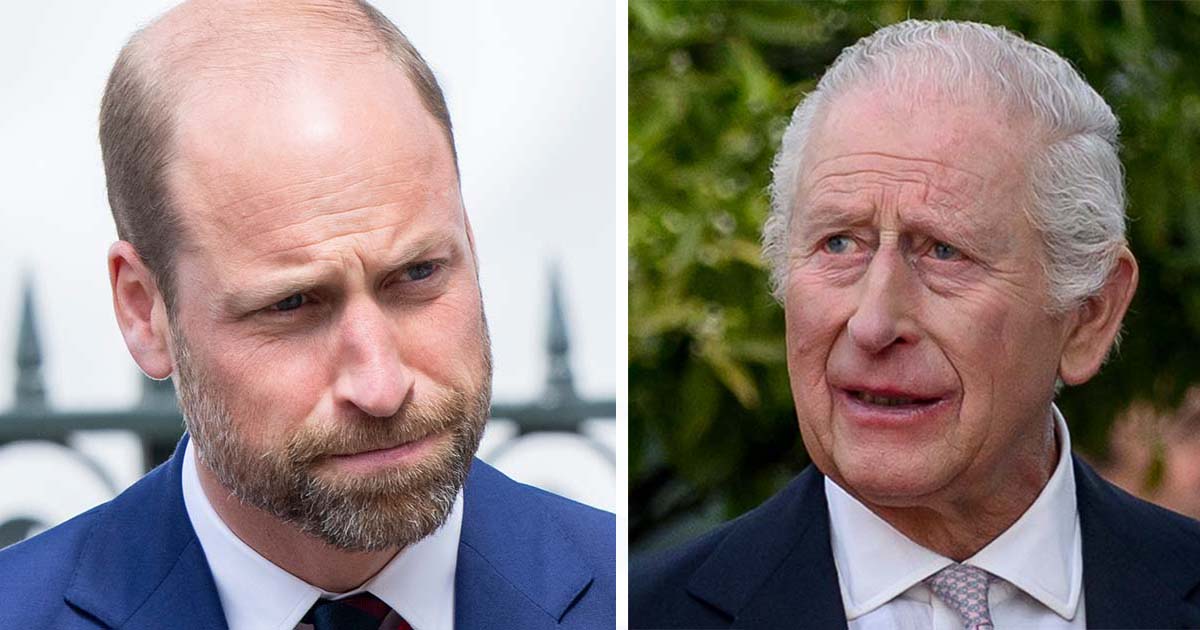
From the outside, King Charles and Prince William often appear perfectly in step. The father leads with decades of experience, and the son, as Prince of Wales, stands ready to support him. Yet those who have worked in royal households say that the reality, like most family stories, is more complicated. Reports suggest that, at times, their raised voices have carried farther than anyone might expect in a palace built with thick stone walls.
Sources close to the royal household have described occasions when strong words were exchanged between the King and his heir. One prominent royal watcher recently wrote that “angry rows” have at times been audible to staff. It is a striking image, and it reminds us that the monarchy, for all its ceremony and tradition, is also a family with everyday strains and disagreements.
It helps to remember the context. King Charles has two sons and two very different relationships with them. The situation with Prince Harry has been challenging for several years and has placed added pressure on the family as a whole. Against that backdrop, Prince William has often been seen as a source of stability. He has stepped forward when duty called, particularly during the King’s cancer treatment, representing his father and taking on additional engagements so the rhythm of royal life could continue.
Even so, “supportive” does not always mean “silent.” Those who observe the royals closely say that Charles and William have clashed on both personal and professional matters. This is not entirely surprising. They are two strong-minded men at different stages of life, each with firm ideas shaped by years of experience. The King has spent a lifetime preparing for this role and nurturing causes dear to him. The Prince has grown into a leader who must think about what the Crown should look like for the next fifty years.
One reported disagreement centers on how to handle ivory items held within historic collections. People familiar with the matter say William has advocated for a very tough stance, including the idea of destroying or removing ivory objects to make a clear moral statement against the ivory trade. Charles, according to the same accounts, is said to favor preserving such items, arguing they are part of the nation’s history and should be understood in context rather than erased. It is the kind of dispute that blends ethics, heritage, and public image—complicated territory for any public institution, and especially for the monarchy.
There have also been suggestions that father and son do not always communicate in a casual, everyday way. One aide has been quoted saying that William tends not to call the King directly, instead scheduling conversations through the King’s private office. To many of us, that might sound stiff. In the royal world, however, it can simply reflect the demands of two crowded diaries, measured protocol, and the need for order when every call may touch on sensitive national or family concerns.
Importantly, those who know the pair also believe these arguments have not intensified in recent years. If anything, the serious nature of the King’s health challenges appears to have encouraged a calmer, more focused partnership. When circumstances grew difficult, William stepped in with visible steadiness. By all accounts he has handled public duties, navigated the ongoing strains with his brother, and remained a devoted father to his own children.
Royal commentators have noted that the throne feels closer to William today than at any time before. Illnesses and the passage of time have a way of sharpening perspective. For a son who has been preparing for a lifetime, it is a reminder that the responsibilities of kingship may arrive sooner than expected. It does not mean the moment is imminent, but it does mean planning and readiness are essential.
Observers frequently point to William’s developing diplomatic touch. He has represented the Crown on solemn occasions, met leaders at home and abroad, and visited places where care and sensitivity were required. Those who work with him say he understands the value of measured words and quiet gestures. The challenge for any royal, and particularly for a future king, is to show concern and leadership without drifting into politics. William’s supporters feel he has found that balance, and they see it as a sign he is prepared for greater responsibilities.
Alongside him is Catherine, the Princess of Wales, whose return to public life after her cancer treatment has been welcomed with warmth and relief. Her presence by William’s side is more than symbolic. It allows them to share the load, to represent the Crown as a team, and to give the public a reassuring picture of continuity. Together, they have become central to how many people imagine the future of the monarchy—dutiful, modern in outlook, yet respectful of tradition.
Royal experts often speak of the couple’s “soft power,” which simply means their ability to influence through trust, example, and steady engagement rather than through formal authority. Whether they are spotlighting mental health, early childhood development, conservation, or support for veterans, William and Catherine have built their public roles around causes that feel practical and human. That kind of work does not grab headlines every day, but it builds connection over time.
Still, none of this erases the fact that the King and his heir will sometimes disagree, and at times quite strongly. This is not a sign of a broken relationship. In many families, especially where a parent and an adult child share the same line of work, there is bound to be friction. Add to that the weight of national expectation, decades of public attention, and the pressure to protect an institution that stretches back centuries, and it becomes clear why tempers might occasionally fray.
It is also worth remembering that the royal household is a workplace. Big decisions are not simply about personal preference; they involve tradition, public perception, the law, and the advice of officials. A difference of opinion about a museum display, an event’s tone, or a statement’s wording can quickly become a spirited debate. When onlookers hear about “rows echoing through palace walls,” they are hearing one vivid slice of a larger and more complex picture.
Supporters of the King note that Charles has always been a man of conviction. Long before environmental concerns were mainstream, he was speaking up for nature, architecture, and sustainable farming. That lifelong experience brings a depth of perspective to the role. Admirers of William say that he, too, has shown real purpose, whether through initiatives to protect wildlife or through awards designed to encourage practical solutions to global challenges. Father and son may differ in style, but at heart they share an interest in stewardship—taking care of people, places, and traditions that matter to the country.
During the King’s treatment, William’s readiness to assume additional duties has been on display. He has presented honors, led major engagements, and stood in at moments when the monarchy’s presence was expected. Those who follow these events closely say that he carries these responsibilities with calm focus. The image is not of a man restlessly waiting for his turn, but of a son doing what needs to be done so his father can continue as monarch while prioritizing health.
Behind the scenes, such periods demand careful planning. Schedules must be adjusted and diaries synchronized. Palace teams work to ensure the King’s commitments are honored and that the Prince is properly briefed to represent the Crown. If calls are arranged through private offices rather than made casually, that is often because every conversation may involve a web of commitments, briefings, and decisions. In that sense, a “tricky” relationship can sometimes simply mean a complicated job shared by two people at the very top.
For many people, especially those who have watched the Royal Family for decades, the most reassuring part of this story is the sense of continuity. The monarchy has weathered changes, losses, and public storms before. It adapts, often more quietly than its critics or its champions would like. In this moment, with the King continuing his duties and the Prince of Wales taking on more, the institution looks to be doing what it has long done: adjusting without losing its thread.
Catherine’s gradual return to engagements strengthens that impression of stability. The public has responded with warmth, not only because her own health journey has been handled with dignity, but because seeing William and Catherine together at events sends a simple, steadying message. They are continuing, they are supporting one another, and they are mindful of the future they are preparing to inherit.
As for the reports of arguments, they may be striking to read, but they are not necessarily alarming. Families argue. Colleagues argue. Leaders argue. What matters is whether those disagreements give way to purpose and cooperation. The evidence of recent months suggests that, despite differences in approach and tone, the King and the Prince share the same goal: to serve the country as best they can, each in his own way, and to ensure the Crown is handed on with care.
People who have met William often remark on his measured manner and his ability to put others at ease. Those who have known Charles over the years describe a man with a sense of duty that never sleeps. It is easy to imagine how such personalities might clash on occasion. It is just as easy to see how, when the moment demands it, they would pull together. The raised voices soften, the plans are agreed, and the work continues.
In the coming years, the Prince of Wales will almost certainly take on more of the public face of the monarchy. That does not diminish the King’s role, nor does it suggest a hurried handover. It simply reflects the natural course of time and the reality that a monarch prepares a successor not just by teaching, but by trusting. Every shared stage, every delegated duty, and every careful decision is part of that process.
For those of us watching from afar, perhaps the most helpful way to read these reports is with a sense of proportion. The drama of “echoing rows” catches the ear. The deeper story is quieter and sturdier: a father and son navigating a rare and demanding partnership, sometimes disagreeing forcefully, and yet, by all appearances, keeping faith with the same calling. The Crown endures not because its members never argue, but because, after the arguing is done, they keep showing up to do the work.
In the end, the picture that emerges is both human and hopeful. There is strain and there is warmth. There are challenging conversations and shared commitments. There are two leaders who care deeply about what they pass on to the next generation, not only to their own children, but to the country. If the walls have heard raised voices, they have also heard the steady hum of duty being carried out, day after day, by a King and a Prince who understand the weight of what they hold.



