
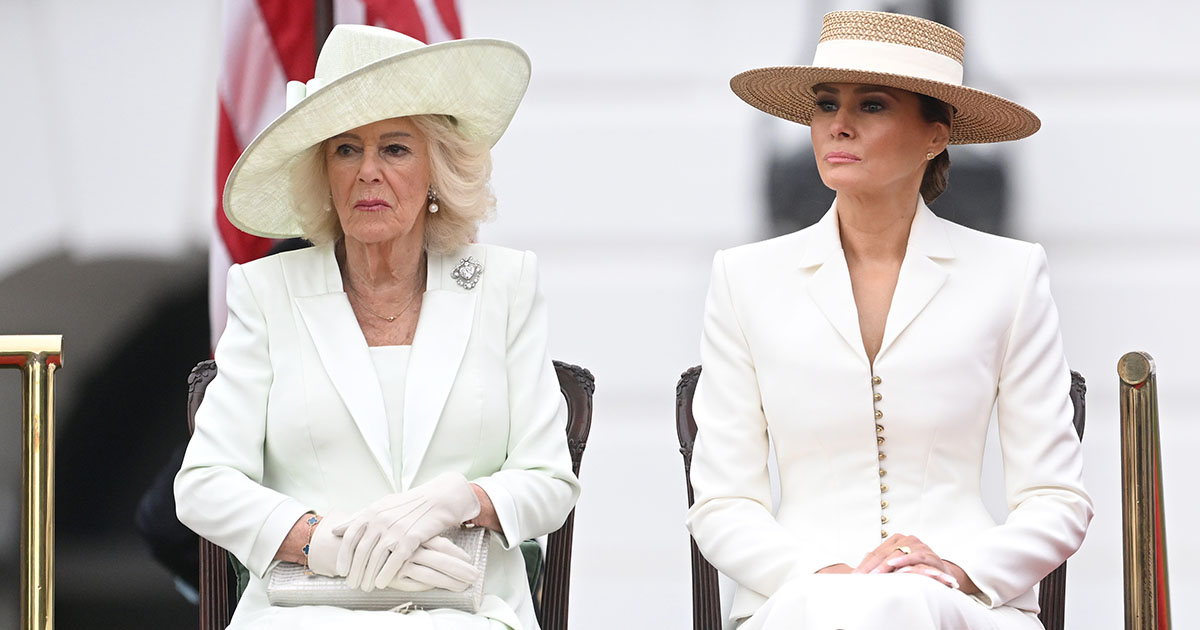
The pomp and pageantry of a state visit always draw the eye, and this week’s gathering in Washington was no exception. While President Donald Trump and King Charles naturally occupied center stage, an unexpected, lighthearted moment between Queen Camilla and First Lady Melania Trump quietly stole a share of attention. Caught by cameras and later interpreted by a professional lip reader, a brief exchange during a rainy ceremony on the White House’s South Lawn offered a charming glimpse of British humor and a warm, human connection behind the formalities.
The ceremonial military review, held outdoors despite the weather, is among the highest honors the United States extends to a visiting head of state. Tuesday’s program proceeded with dignity and precision, even as the skies opened and rain pattered against the canopy and seats. It was, in its way, a very British scene, and perhaps that is what inspired the queen’s wry turn of phrase that would soon make headlines.
A quiet partnership on a busy state visit
Though the cameras often focus on the principal officeholders, the roles of a queen consort and a first lady carry their own careful responsibilities. Over the course of the visit, Queen Camilla and Melania Trump spent thoughtful time together, balancing protocol with a cordial, steady presence. They were not there to overshadow their husbands, but to add grace and continuity to a week of ceremonies, meetings, and moments of quiet diplomacy.
This trip marked an especially notable milestone for Queen Camilla. It was her first time back inside the White House since King Charles’s accession in 2022, a reminder of the new chapter she has embraced as queen. For the First Lady, the schedule offered a chance to highlight treasured corners of the presidential residence and its grounds, to share a little of the setting she stewards with visiting dignitaries.
The two women have crossed paths before. During a previous visit to the United Kingdom, they toured enduring favorites such as Queen Mary’s Dolls’ House and the Royal Library, venues that speak to history, craftsmanship, and the continuity of tradition. Those stops, like their interactions this week, struck a balance between public duty and a chance to get to know one another in a relaxed way.
As part of this visit, while President Trump and King Charles met privately, the First Lady welcomed Queen Camilla to the White House’s tennis pavilion to view historical items. It was a quieter interval in a day filled with ceremony. Even these small tours can be meaningful, because they place two people in conversation across different traditions, sharing stories and small details that can foster understanding and rapport.
Observers of the royal family note that both women appeared to approach the week with attentiveness and discretion. One royal commentator, speaking on CNN, pointed out that they were not seeking the spotlight and that their supportive roles allowed the leaders to remain the clear focus. In the world of state visits, that sort of graciousness is not only considerate; it is part of the job.
All of this unfolded against a backdrop of complex international issues. The bond between the United States and the United Kingdom has always been strong, yet, as with any longstanding friendship, it can be tested by world events. In recent months, tensions tied to conflict in Iran and wider regional concerns have demanded careful words and thoughtful gestures from both sides, making the tone and sensitivity of a state visit all the more important.
The rainy moment everyone is talking about
Tuesday’s ceremony on the South Lawn placed President Trump and King Charles side by side on a small stage, with Queen Camilla and Melania Trump seated together nearby. The rain was steady, the air cool, and umbrellas and coverings did their best to keep the weather at bay. It was then that a small, very British quip slipped into the day’s official proceedings.
According to lip-reading expert Nicola Hickling, who spoke to the Daily Mail, Queen Camilla’s quick comment came as the two women prepared to sit. The queen, noting the damp surroundings, appeared to say, “Oh, it’s rather wet.” The First Lady seemed to agree, responding that it “certainly is,” and the two shared a brief laugh that cut through the formality of the scene.
Then came the line that sparked so much conversation. As relayed by the lip reader, Queen Camilla followed with, “We shall have soggy bottoms,” a playful nod to the dampness of the seat cushions. The phrase is everyday British humor, and it landed with a mix of surprise and curiosity in this very American setting.
Melania Trump, by the lip reader’s account, looked momentarily taken aback. She seemed to ask, “What did I just hear?” before repeating, “Soggy bottoms?” Her face showed the kind of puzzled amusement that often accompanies a culture-specific phrase heard for the first time, and the exchange quickly became the day’s most talked-about aside.
It was all over in a moment, no more than a brief exchange before the attention returned to the ceremony. Yet these are the moments that linger, because they show the people behind the titles—gracious, good-humored, and able to find common ground in a shared chuckle about an inconveniently wet day.
What “soggy bottoms” means in Britain
For many viewers in the United Kingdom, the phrase “soggy bottom” requires no explanation. It became famous on The Great British Bake Off, the much-loved television program where home bakers compete to produce picture-perfect pastries and cakes. On the show, a “soggy bottom” describes a pastry crust that is underbaked and damp, a gentle culinary misstep that judges point out with knowing smiles.
Over time, the phrase leapt from pastry underpinnings into everyday conversation, and it is often used jokingly to describe anything that has gotten a bit damp and unfortunate. Queen Camilla is known to be a fan of the series, which helps explain how naturally the expression rolled off her tongue. Part of its charm is that it is both precise and lighthearted, a quick way to laugh at minor discomfort without making a fuss.
To American ears, the phrase can sound cheeky, even a touch mischievous, but that is exactly the sort of humor many Britons relish—gentle, playful, and not to be taken too seriously. In the context of a rain-splashed ceremony, it was perfectly suited to the moment. It broke the ice, acknowledged the obvious, and allowed two very public figures to share a private smile.
Why this small exchange matters
In the grand sweep of a state visit, a remark about damp seats is a small thing. Yet small things often carry meaning, especially when they reveal ease, warmth, and humanity in people who live much of their lives under a spotlight. Public duties are demanding, and even a brief laugh can show good spirits and a willingness to meet inconveniences with grace.
There is also a quiet diplomatic value in a shared joke. Soft diplomacy flourishes in the spaces between formal speeches and official photographs. When two people connect over a simple, good-natured moment, it creates a reservoir of goodwill that can make the rest of the visit feel friendlier and more relaxed.
For older viewers who have seen many state occasions, this is a familiar truth. The rituals and salutes matter, and so do the smiles and aside remarks that reassure audiences at home that their representatives are approachable and steady under pressure. The United States and the United Kingdom have long traded friendly jabs about the weather, and this week the weather obliged with a scene tailor-made for British wit.
A look back at earlier meetings
The rapport between Queen Camilla and Melania Trump did not spring up overnight. During their previous time together in the United Kingdom, they toured Queen Mary’s Dolls’ House and the Royal Library, two iconic parts of royal heritage that delight visitors of all ages. Those visits invite conversation about craftsmanship, design, and the sweep of history contained in miniature rooms and bound volumes.
Such stops also provide quiet ways for hosts and guests to discover common interests. A shared appreciation for history, an anecdote about a favorite object, or a memory sparked by a display can be as meaningful as any formal exchange of toasts. Taken together, these moments form the threads that tie separate meetings into an ongoing acquaintance.
This week’s White House schedule echoed that pattern. With the presidents and monarch in private conversation, the First Lady and the Queen took a short excursion to the tennis pavilion to view selected historical items. The setting may be more casual than a state dining room, but the effect is similar: time and space set aside for people to talk, observe, and connect without the press of a podium or a schedule bristling with speeches.
Inside the White House visit
The White House grounds are a working home as well as a historic site, and the tennis pavilion stands as a reminder that presidential families carve out practical and personal spaces within the compound. Walking through such areas together offers a glimpse of daily life, even on a day heavy with official duties. It would have been a change of pace from the motorcades, flags, and fanfare, and very likely a welcome one.
These small windows into domestic settings can be surprisingly powerful. They put people at ease and invite the sort of easy conversation that leads to little discoveries. In the end, it is often the combination of grand ceremonies and relaxed visits that leaves the most balanced impression of a state occasion.
About lip reading and etiquette
It is worth noting, as many careful observers do, that lip reading from a distance is an interpretive skill rather than an exact science. Nicola Hickling’s account has been widely shared, and it matches the spirit of the moment caught on camera. Still, unless microphones capture every word, there is always a measure of best judgment involved in reconstructing a quiet exchange across a rainy lawn.
Regardless, the sentiment fits the setting. The royals are old hands at small talk, particularly about the weather, which occupies a proud place in British conversational tradition. A playful remark like the one attributed to Queen Camilla aligns with the understated humor and courtesy often on display at public engagements.
Etiquette in such situations does not preclude laughter; it encourages a kind of genial patience with the minor hurdles of the day. Wet seats, wind-blown hair, and temperamental umbrellas are all part of outdoor events. Meeting them with good humor is not just polite; it is practical.
The mood on the South Lawn
Anyone who watched Tuesday’s ceremony could see how the weather shaped the mood. The band played, the honor guard stood at attention, and the formalities proceeded without a hitch, yet the persistent rain became a character in its own right. It tapped against canopies, darkened the grass, and lent a slightly theatrical air to the proceedings.
Monday had reportedly offered brighter skies, but Tuesday belonged to the rain. In that sense, it might have felt like a scene transported from London to Washington for the day. Moments like this bring out the best in seasoned public figures, who know how to maintain grace while sharing a knowing look that says, “Yes, we feel it too.”
The bigger picture of U.S.–U.K. friendship
For generations, the United States and the United Kingdom have weathered global storms together. Differences arise, and current issues—among them worries linked to conflict in Iran and shifting regional dynamics—demand careful navigation. Yet state visits are designed to remind both countries of the deeper ties that endure: shared democratic values, cultural kinship, and a long history of standing shoulder to shoulder.
That is why the tone of a visit matters. Ceremonies convey respect; private meetings wrestle with hard topics; and the presence of consorts and first ladies adds warmth and cultural touch. When those elements work in tandem, they send a reassuring signal that the relationship is strong enough to handle both the grand questions and the small inconveniences of a rainy day.
A friendly footnote for Bake Off fans
For those familiar with The Great British Bake Off, the queen’s quip needs no translation. The term “soggy bottom,” used so often for pastry concerns, has become a household expression across the United Kingdom. Its popularity owes much to the show’s gentle tone, where even criticism is often wrapped in encouragement and good humor.
That cultural shorthand can be a delightful bridge. A phrase that originated in a tented baking competition has now popped up on the South Lawn of the White House, prompting a puzzled smile and, by all accounts, a laugh. Perhaps the moment will even prompt new viewers to sample the program and understand why that light, affectionate language resonates so widely.
A final thought
In the end, the small exchange between Queen Camilla and Melania Trump offered something many of us cherish in public life: a human moment. The ceremony honored tradition and alliance, and the rain made everyone just a little more aware of their surroundings. Out of that came a quick, good-natured joke, the sort of thing friends might share while settling into damp chairs at a garden party.
If the goal of a state visit is to strengthen ties and remind people of what they share, then this little burst of British humor did its part. It was kind, it was gentle, and it left people smiling. Sometimes, the details we remember are the ones that make us feel that the people on the platform are, at heart, not so different from the rest of us.
What about you? Did that rainy-day quip make you smile, too? Whether you are a fan of baking shows or simply appreciate a well-timed bit of humor, there is something comforting about a remark that turns a soggy seat into a shared laugh.



