As tensions between the United States and Iran continue to rise after the Operation Epic Fury strikes, a scholar has made a bold prediction about how the conflict may unfold.
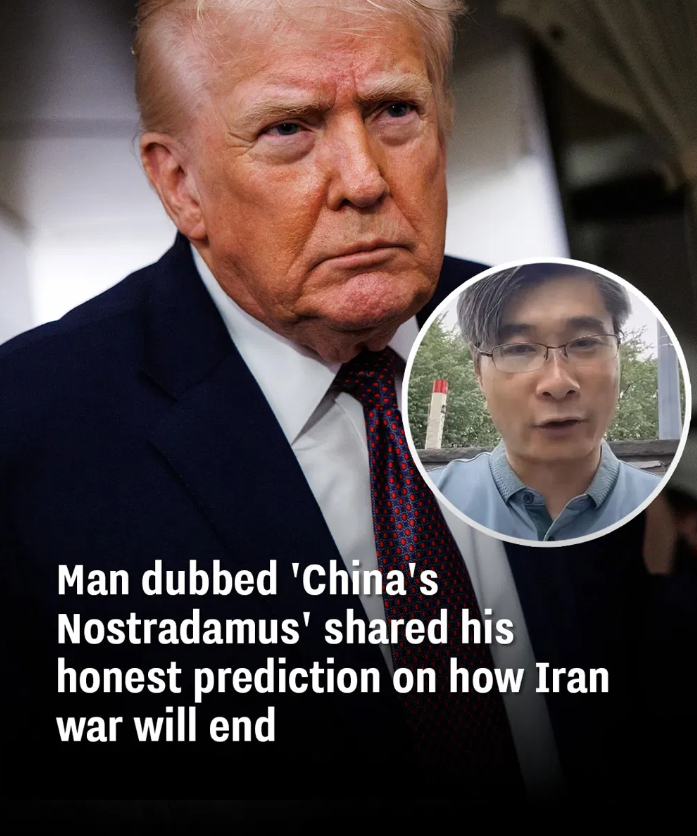
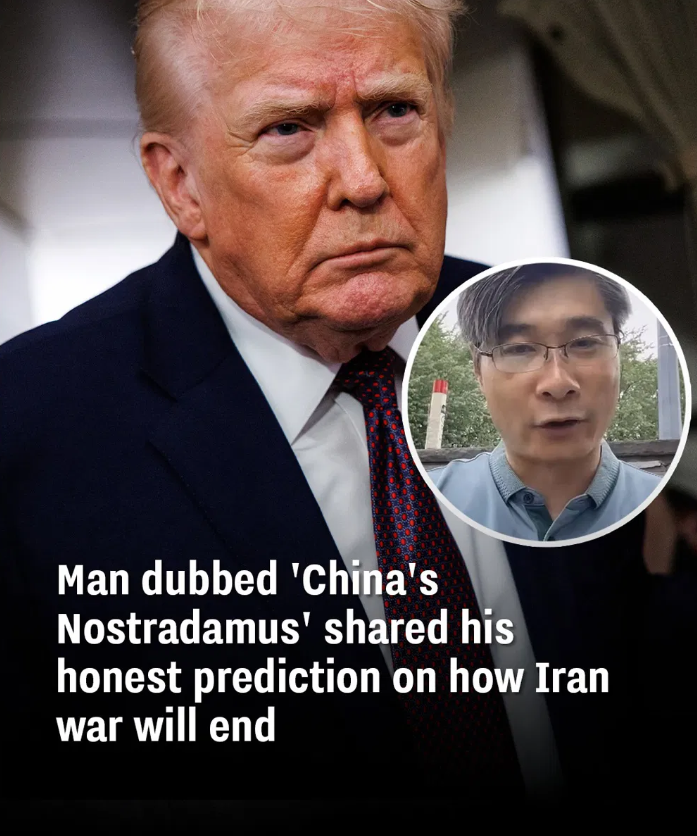
A figure frequently referred to as “China’s Nostradamus” has shared his outlook on the ongoing confrontation between the US and Iran.
On February 28, Israeli strikes supported by the United States targeted military and government sites across Iran, reportedly killing Ali Khamenei along with several other senior officials.
Those attacks prompted Iran to launch retaliatory missiles and are widely viewed by analysts as the starting point of what is now being called the 2026 Iran war.
The conflict has already pushed global oil prices higher. President Donald Trump commented that the increase is “a small price to pay” for achieving “safety and peace.”
However, as the air campaign over Iran continues without a clear outcome—and as Iran carries out counterstrikes on oil facilities and targets across neighboring Gulf states—a troubling prediction about the US-Iran conflict has resurfaced.
Chinese-Canadian professor and commentator Xueqin Jiang, who has gained significant attention online, outlined three major predictions back in 2024 on his YouTube channel, Predictive History.
What did Professor Xueqin Jiang predict?
Two of his predictions have already appeared to come true. One was his claim that Trump would win another presidential election, a forecast that earned Jiang the nickname “Chinese Nostradamus,” a reference to the famed French astrologer known for cryptic prophecies.
His second prediction suggested that if Trump returned to office, the likelihood of a US war with Iran would rise sharply.
Jiang also argued that Israel’s strategic interests could be a key factor behind any potential US-Iran confrontation. Operation Epic Fury—the name given to the joint US-Israeli military campaign launched on February 28, 2026—reportedly targeted Iran’s missile capabilities, nuclear facilities, and other military infrastructure.
The Yale-educated commentator’s third prediction was even more striking: he suggested that such a conflict would ultimately end in defeat for the United States.
Discussing possible war scenarios, Jiang stated: “The third major prediction is that the United States will lose the war, and that outcome would permanently reshape the global order.”
He added that if a full-scale US-Iran war were to occur, he believes the United States would have no realistic path to victory.
According to Jiang, Iran’s geography and large population would make it extremely difficult for any foreign power to maintain long-term control or occupation.
His analysis is based on a concept he refers to as “psycho-history,” a framework he says is designed to help humanity interpret the past, anticipate the future, and better understand the forces shaping the present.
What has Professor Xueqin Jiang said in 2026?
Jiang had previously argued that the Islamic Revolutionary Guard Corps would likely welcome a conflict with the United States, claiming they remain deeply angered by what they see as long-standing American interference in Iran.
He also suggested that a war with Iran could become a major focus during a second Trump administration, stating: “Essentially, the United States is searching for a reason, and Iran is willing to give them one. That’s why I believe a conflict between the United States and Iran is very likely within the next two to four years.”
More recently, Jiang appeared on the news program Breaking Points, hosted by Krystal Ball and Saagar Enjeti, where he discussed how such a confrontation might develop.
In a clip uploaded to YouTube on March 2, he said that based on his analysis of the situation, Iran may hold several strategic advantages. According to Jiang, the conflict is shaping up to be a war of attrition between the United States and Iran, and he believes Iran has spent the past two decades preparing for this possibility.
He added that Iran has effectively conducted multiple “practice runs” in regional conflicts over the years.
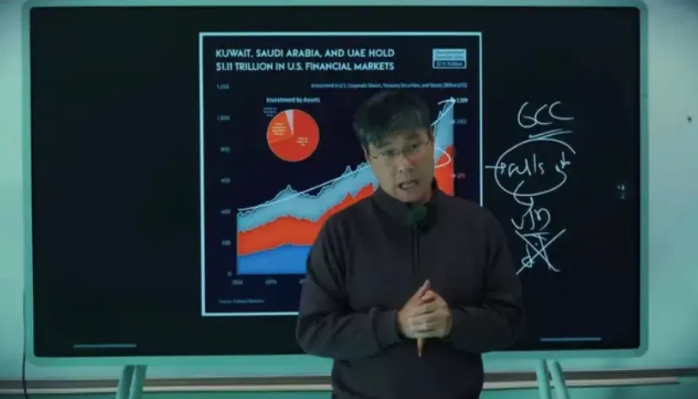
Jiang further argued that Iran’s strategy involves applying pressure to the global economy. As part of this, he pointed to Iran’s blockade of the Strait of Hormuz, which he claims is critical for regional supply routes and plays a major role in providing food and essential imports to Gulf Cooperation Council (GCC) countries.