A mother’s long-standing worry about life in politics
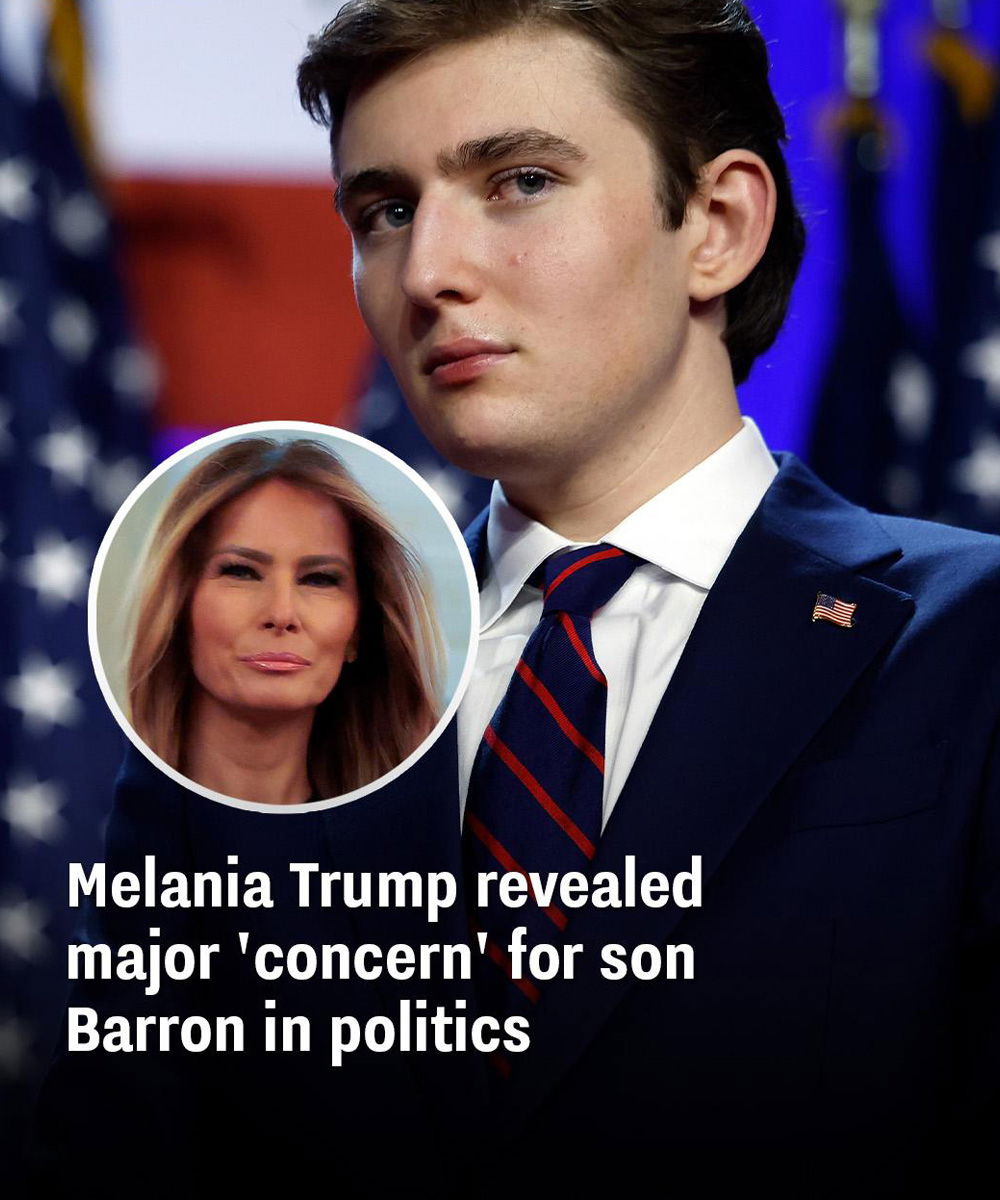
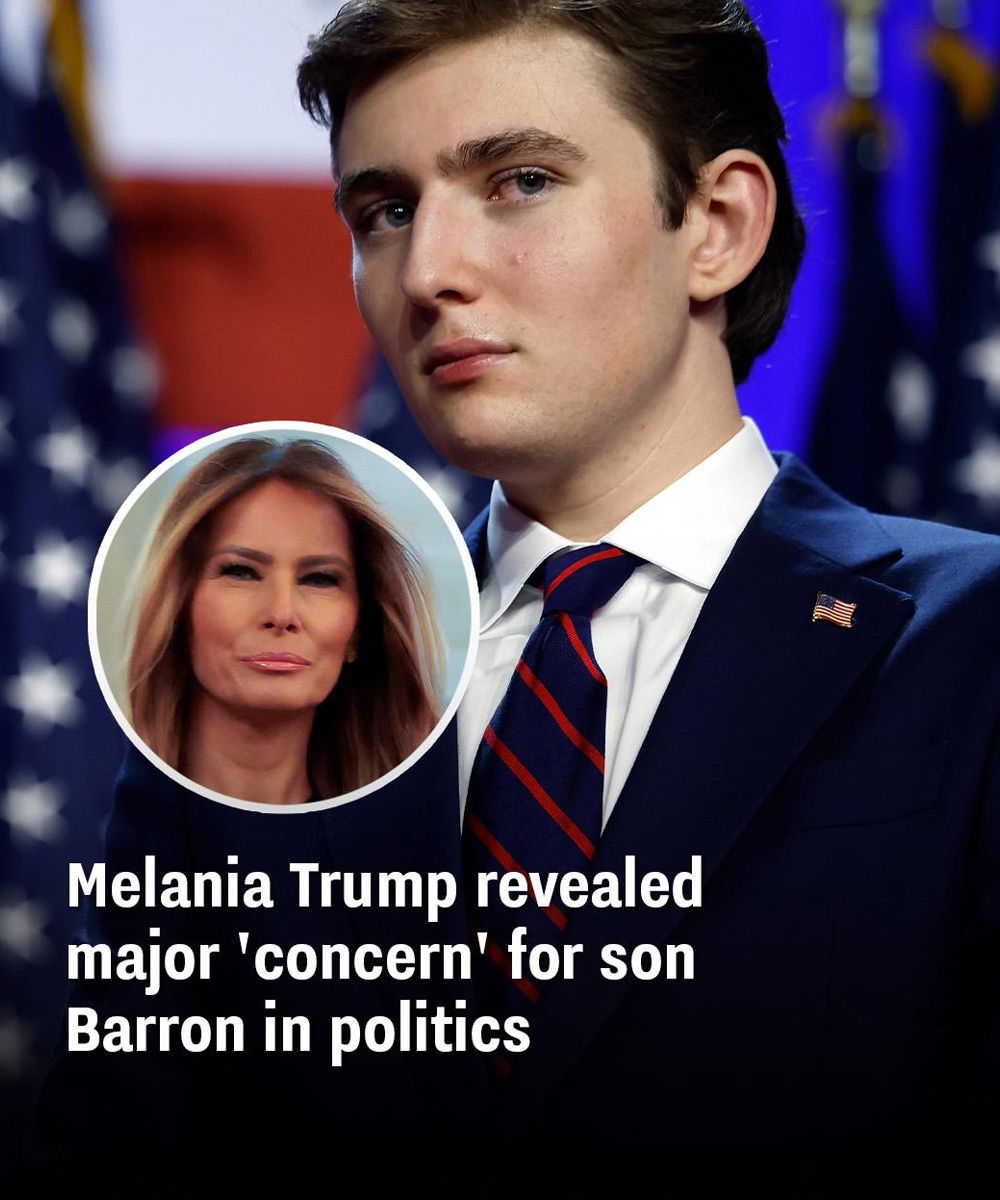
Melania Trump has spoken for years about one subject that sits closest to her heart: how public life might affect her son, Barron. As someone who has lived under a national spotlight and felt the constant pressure that comes with it, she has been consistently mindful of what that kind of attention could mean for a young person still finding his way.
For anyone who watched the Trump family step onto the world stage in 2016, the transformation was striking. Overnight, their private moments seemed to become public conversation. Melania Trump, accustomed to being recognized in her own right, learned in a new way how every gesture, word, and photograph could be magnified. That experience shaped how she looked at her son’s future, especially when conversations turned to whether he might someday take part in politics.
Being the spouse of a U.S. president carries weight and scrutiny that can be difficult to grasp until you live through it. Melania Trump has made it clear that she understands those demands very well, and that knowledge has informed her approach to raising Barron. She has spoken of the need to protect him from the harsher edges of fame, even as interest in his life has steadily grown.
Barron Trump is now 20 years old. Many people remember him as a child during his father’s first presidential run and subsequent time in the White House. Those years passed quickly in public view, and with that passage of time came a shift: the curiosity that surrounded a presidential family’s youngest member has evolved into wider interest in Barron as a young adult.
While Barron has not actively courted the spotlight or pursued elected office, the attention around him has increased, especially online. Social media can turn a single photo, comment, or appearance into days of conversation. That digital chatter can be admiring, speculative, or unkind—often all at once. Melania Trump has been alert to those waves and has consistently voiced her wish to keep her son’s life as steady and private as possible.
With talk sometimes swirling about whether children of public figures will follow their parents into politics, Melania Trump has acknowledged that she weighs those possibilities carefully. Her guiding instinct, she has suggested, is the same one many parents share: to give her child room to grow without the glare of constant judgment.
Reflections from her memoir on protecting a young son
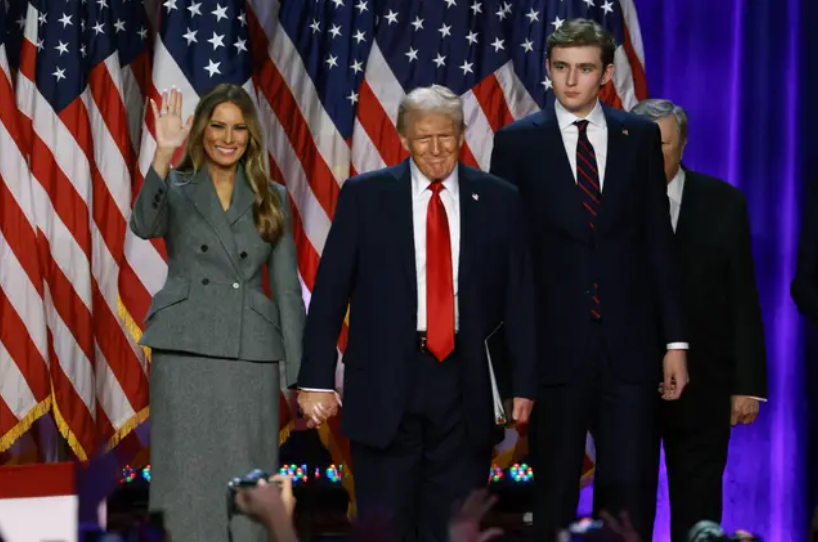
In a memoir published in 2024, Melania Trump looked back on those early days of national attention with a protective eye. She described how, when politics first became part of her family’s daily reality, Barron was still very young—just about ten years old. That tender age made the public gaze feel even more intense, and it reinforced her determination to place his well-being above everything else.
She wrote candidly about the push and pull of public life: the expectations on a first lady to be visible and the parallel desire to shelter a child who did not choose that role. Those reflections painted a picture of a mother who was learning in real time how to navigate the tension between service and privacy, tradition and individual needs.
Melania Trump emphasized that the first year around politics was especially instructive. It confirmed what her instincts already told her: that a child’s development is best supported by as much normalcy as possible. She resolved to limit unnecessary exposure and to keep family routines intact wherever she could, even when the world outside felt unusually loud.
As Barron grew older, there were occasional reports suggesting that he offered his father thoughts on how younger men perceive politics and media. Observers noted that such conversations are not unusual within families, particularly when campaigns hope to understand changing tastes and communication styles across generations. Whether casual or more considered, those exchanges stayed within the family setting, while public curiosity about Barron continued to ebb and flow.
Melania Trump’s concerns were never about discouraging her son’s curiosity or ambition. Rather, they centered on timing, maturity, and the right to make big life decisions away from the rush of public commentary. Her perspective echoed a common sentiment among parents who have seen a child become the subject of speculation: the belief that dignity and space can help a young adult find his own voice.
Social media attention and the realities of public curiosity
In recent years, as more people have taken notice of Barron’s age and presence, social platforms have kept him in regular conversation. That attention can intensify suddenly, often without any direct action on his part. A photograph from a family event, a brief public appearance, or even a rumor can spark days of debate and humor, sometimes kind and sometimes cutting.
Melania Trump has remained watchful through these cycles. She has expressed concern about how quickly online discussion can turn from lighthearted commentary to invasive speculation. In her view, protecting a young person from the worst of that culture is not only about shielding feelings; it is about giving him room to learn, to make mistakes privately, and to choose his own path.
It is not unusual for families in public service to confront these same questions. Over many decades, the children of national leaders have found themselves featured in headlines or memes, their outfits, expressions, or hobbies dissected by strangers. Some have later chosen public roles; others have pursued private careers far from politics. The thread that connects many of their stories is a desire for balance: a way to be loyal and supportive without becoming a permanent fixture of the political stage.
War abroad, questions at home, and a satirical spotlight
As international tensions have risen in the Middle East, including conflict involving Israel, Iran, and the United States, domestic conversations have, at times, turned to the subject of military service and the possibility of a draft. In the aftermath of widely reported strikes and retaliation—events that also prompted concern for American service members—some social media users leaned into satire to make their points.
One such online push centered on a hashtag that drew particular attention: a call to send Barron Trump into military service, presented in a clearly tongue-in-cheek tone. The phrase gained traction as a kind of digital shorthand, not for serious policy, but for provocative humor and criticism. As with many viral trends, it mixed jest with jab, and it did not take long for it to generate headlines of its own.
A former writer known for work on an edgy animated show created a website to underscore the joke, dubbing it DraftBarronTrump.com. The site adopted a voice meant to mimic boastful political language, suggesting that strong leaders beget strong sons and that service flows naturally from stature. It even closed with a deliberately absurd sign-off meant to highlight its satirical intent. The entire presentation was a send-up, designed to draw attention through exaggeration and irony.
That kind of satire is not new in American life. Over the years, celebrities and political families have been frequent targets of comedic critique, especially when world events dominate the news. The point of such satire is rarely literal. Instead, it functions as cultural commentary—sometimes clever, sometimes cruel—on leadership, privilege, and the burdens of public duty.
For Melania Trump, however, the effect of these jokes likely lands in a more personal place. A mother’s outlook does not weigh satire and social commentary the same way spectators do. Her focus, as she has explained, is on how such attention colors a young person’s experience and whether it narrows or expands his choices. In that light, what some see as a fleeting online trend can feel, to a parent, like an unnecessary magnifying glass.
Understanding what a draft conversation actually means
The word “draft” carries heavy historical meaning for many Americans, particularly those who lived through the Vietnam era or who have family members who served. Today, there is no active draft in the United States. Men of certain ages are still required to register with the Selective Service System, a holdover mechanism that allows the government to identify potential service members if Congress and the President ever authorized a draft in a national emergency. But the process itself would require major legal and political steps that are not taken lightly.
When people raise the idea of a draft online in moments of global tension, they are often responding to fear, frustration, or anger about the costs of war. Satire enters that mix as a way to poke at perceived hypocrisy or to dramatize a point. Understanding this helps explain why figures like Barron Trump, who is well known but not a policymaker, become lightning rods in these discussions. The aim is less about the individual and more about the symbol he represents in a given debate.
That said, symbols are still people, and families still feel the sting when a joke spreads widely. Melania Trump’s writings and public comments suggest she is acutely aware of how such waves of attention can shape a young adult’s sense of self. She has consistently favored a quieter path for her son, one where he can develop his interests without being drafted, so to speak, into a role he did not choose.
Looking back to look ahead
The span from childhood to age twenty brings remarkable change for anyone, and doubly so when those years unfold in public. Barron Trump’s journey has been watched by millions, yet much of who he is remains, as it should, a private matter. He has not announced political ambitions, and the speculation that swirls around him often says more about the culture’s appetite for stories than about any concrete plans he might have.
Melania Trump’s approach has been to keep family life steady, to prioritize education and personal development, and to limit unnecessary exposure when possible. This is a familiar blueprint for many parents, regardless of fame: create stability, model resilience, and give a young person the freedom to choose a path with a clear head and a strong sense of self.
Her reflections also touch on the larger truth that public service, while honorable, carries a cost. The people at the center of national life are asked to represent not just their policies, but their families, their personal history, and their imperfections. That expectation can be especially heavy for children who did not campaign for the spotlight but must still learn to live within it. Melania Trump’s concerns, then, are not only about the here and now; they are about protecting the open horizon that every young adult deserves.
The power and limits of public curiosity
None of this is to say that curiosity about public figures is wrong. In a democracy, voters and citizens pay attention to the families of leaders because those relationships offer clues about values, character, and priorities. But even healthy curiosity has its limits. The most responsible kind leaves room for growth and grace, recognizing that a snapshot is not a full portrait and that a headline is not a life story.
Melania Trump has, in her way, asked for that space on behalf of her son. Whether Barron chooses a career in business, the arts, public service, or something entirely different, the hope she conveys is simple and timeless: that he be allowed to make that choice without being boxed in by speculation or swept up by the latest viral joke.
People can disagree about politics and still agree on the importance of giving young adults room to define their own lives. That shared understanding makes communities stronger and debates healthier. It allows families, even very public ones, to navigate change with dignity.
What remains constant
From her earliest comments to her later reflections, Melania Trump’s message has been consistent. She respects the demands of public life, understands the pace and pressure of national attention, and remains devoted to shielding her son from its harshest effects. As Barron steps further into adulthood, that devotion does not waver; it adapts. It becomes less about guarding a child and more about supporting a young man as he decides who he wants to be.
In the end, the discussion about whether Barron Trump will enter politics is still just that—a discussion. What stands out more clearly is a mother’s steady hope that, whatever path he takes, it will be chosen on his terms, in his time, and with as much privacy and respect as the public will allow.
For readers who have raised children of their own, much of this will feel familiar. The details may differ, but the heart of it is the same: helping a child grow into an adult without being defined by other people’s expectations. Melania Trump’s concerns reflect that universal experience, set against a far larger stage. And as the news cycle keeps turning and online chatter rises and falls, that quiet, protective instinct remains the constant thread, guiding a family through the glare of public life with the simple, enduring priorities of home.