Michelle Obama Discusses How Her Appearance Was Unfairly Critiqued
Michelle Obama, the renowned former First Lady, has spoken out about how the media and critics often latched onto a particular aspect of her appearance as a means of targeting her.
Although she was widely loved during her husband’s presidency from 2009 to 2017, Michelle faced a barrage of harsh comments, online trolling, and baseless theories during her White House years.
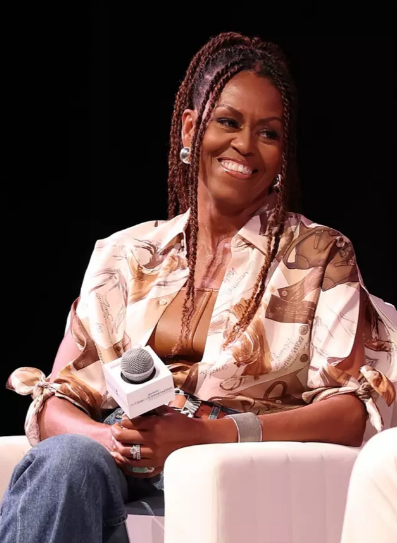
Now at 61, Michelle delves into this subject in her newly released fashion photo book, “The Look,” where she discusses how her personal style was more than just clothing choices. Her fashion was a platform for highlighting key issues such as education, military families, and children’s health.
In an open and candid section of the book, she talks about how responses to some of her outfit choices, particularly those that revealed her arms, affected her.
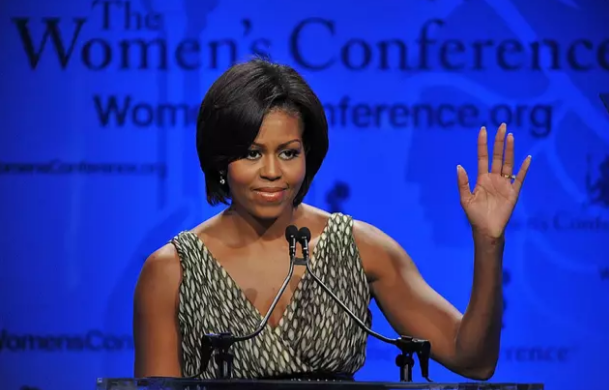
There was one instance at Barack’s first address to a joint session that stood out, where her sleeveless dress drew criticism for being ‘too informal’ and ‘inappropriate.’
Media outlets ran with headlines like “Up In Arms” and “Sleevegate,” focusing heavily on her bare arms, which stood in stark contrast to previous First Ladies like Jacqueline Kennedy, who wore similar styles without the uproar.
Michelle noted that this fascination with her appearance was a tool for ‘otherizing’ her, adding a racial dynamic to the critique that felt genuinely different from the scrutiny faced by predecessors like Hillary Clinton or Nancy Reagan.
“Barack and I were seen as Black people who were not fully embraced into the elite spaces we occupied,” she reflected.
Michelle recalled many such occasions when her attire was deemed ‘un-first-lady-like.’ On a trip to the Grand Canyon in 2009, she wore shorts and a tank top — practical for the hot, rugged environment.
Despite this being an appropriate choice for the setting, media critiques were harsh, with a Washington Post fashion reporter labeling the look as “common,” a term Michelle found hurtful, especially coming from a fellow Black woman.
“I expected critique from political opponents, but this felt especially painful,” she shared, emphasizing her new role as the first Black First Lady trying to navigate her path.
Moreover, Michelle explained how she had to carefully manage her facial expressions in public to avoid being labeled unfairly.
“I was advised to be cautious with my expressions to avoid them being used against me,” she explained, noting how often she was characterized as an ‘angry Black woman’ in the media.
She understood intellectually how stereotypes could be weaponized against her, but she stressed that, in many situations, she was simply expressing her genuine emotions and opinions.