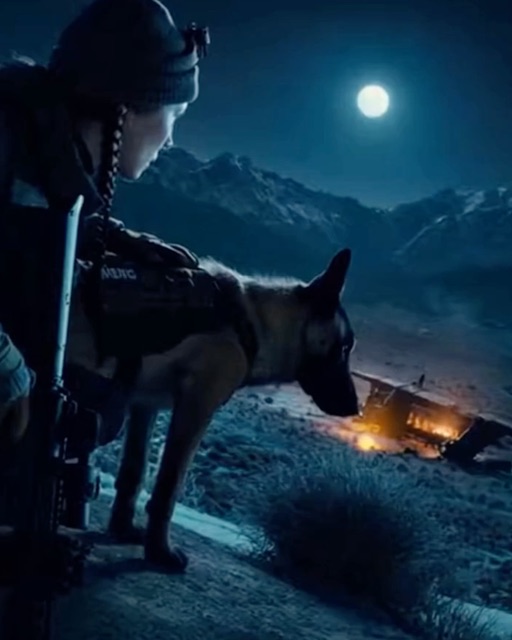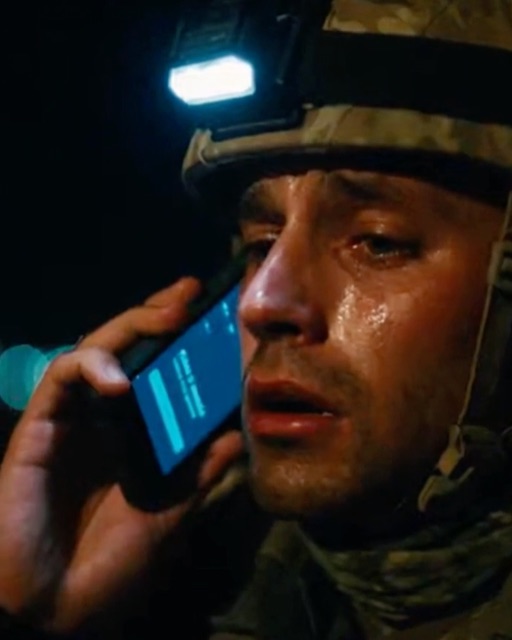
“Stay, Rex!” I barked into the radio static, my voice cracking over the wind-whipped dunes. We’d been chasing whispers of a bomb-making cell for hours, my pulse pounding like a war drum. Rex, my German Shepherd, was my shadow – loyal through sandstorms and ambushes, sniffing out death before it sniffed us.
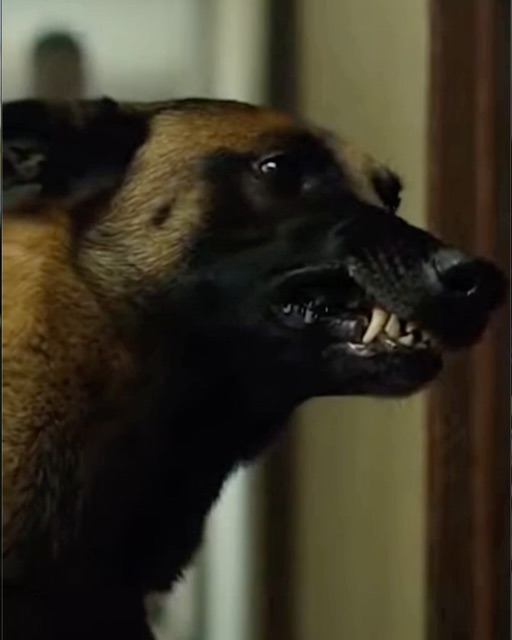
But he froze at the entrance to the crumbling warehouse, ears pinned back, a low rumble building in his throat. I yanked his leash, frustration boiling over. “What the hell, boy? Heel!”
He didn’t. With a snarl that chilled my spine, Rex wrenched free and bolted inside, vanishing into the shadows. Gunfire erupted – sharp cracks echoing like thunder. My team piled in after him, shouting, but I hung back, cursing under my breath. Rex had never pulled this before. Was he hit? Losing it?
The shots stopped as suddenly as they started. I rushed through the door, flashlight slicing the dust. Bodies of insurgents slumped against crates, but Rex… he was in the center, chest heaving, blood matting his fur. He’d taken three rounds, drawing their fire while we flanked.
I dropped to my knees, cradling his massive head. “You stupid, brave bastard,” I whispered, tears stinging as his eyes dimmed. The medic arrived, checking vitals, but it was too late. Rex went still in my arms.
Then, as they rolled him onto the stretcher, something clattered to the floor from beneath his paws. A detonator, armed and blinking. Rex hadn’t charged blindly—he’d smelled the tripwire rigged under the insurgents’ feet, the one that would have vaporized us all if we’d breached together.
If he’d obeyed my command and stayed by my side, the warehouse wouldn’t have been our tomb. It would have been my grave, and the graves of my entire team.
The ride back to base was a blur of silence and shock. The detonator sat in an evidence bag, a cold reminder of how close we’d come.
My last words to him had been a curse. An angry, frustrated command he was smart enough to ignore.
That thought ate at me, a corrosive acid in my gut.
Back in the States, everything was muted, like the volume on the world had been turned down. This was supposed to be our homecoming.
I had filled out the paperwork months ago to adopt him. Our retirement together.
We were going to have a small house with a big yard, far away from the sand and the noise. I’d even bought him a ridiculously plush dog bed that was waiting in my empty living room.
Now, the silence in my apartment was a physical weight. I’d catch myself listening for the click of his nails on the hardwood floor.
I’d wake up in the middle of the night, my hand reaching out to the empty space beside my bed where he used to sleep.
The military gave me a medal. They said I showed courage.
I put it in a drawer. It felt like a lie.
The real hero was ashes in a box on my mantelpiece.
I tried to get him a posthumous commendation, something official to recognize his sacrifice. I filled out forms, made calls, and explained the story of the detonator a dozen times.
The answer was always the same polite, bureaucratic shuffle. He was “equipment.” Valuable equipment, they’d concede, but equipment nonetheless.
The word made my blood run cold. He was my partner. He was my family.
My girlfriend, Clara, tried to help. She’d cook my favorite meals and suggest we go for a walk.
But she didn’t understand why I’d stare into space for hours, or why I couldn’t stand the sound of a car backfiring.
“It’s okay to grieve, Sam,” she’d say, her voice soft. “He was a good dog.”
A good dog. It was like calling a hurricane a light breeze. He was more than that. He was smarter and braver than most people I knew.
I pushed her away, not because I wanted to, but because the chasm of my grief felt too wide for anyone else to cross.
The nightmares were relentless. I’d see the warehouse, the muzzle flashes, the look in Rex’s eyes.
But sometimes, the dream would change. I’d see him freezing at the door, but this time, I’d see what he saw.
It was never clear, just a flash of wrongness, a scent on the wind that my human nose could never detect.
Six weeks after I got back, a package arrived. It was a standard-issue footlocker containing Rex’s service items.
His leash. His collar. The worn-out rubber ball he’d nudge into my hand a hundred times a day.
My hands shook as I lifted each item. Each one was a ghost.
At the bottom of the locker, under his folded service vest, was a small, sealed bag. Inside was a scrap of fabric, dark and crusted with sand.
A note was attached. “Found this clutched in the stretcher sheet. Thought you might want it. – Doc.”
It wasn’t the coarse material of the insurgents’ clothing. It was something else. A piece of ripstop nylon, military-grade.
I stared at it, a strange feeling prickling the back of my neck. Why would he have a piece of our gear?
I pulled out the official after-action report for the hundredth time, my eyes scanning the dry, technical language.
Everything was by the book. Five insurgents neutralized. One improvised explosive device disarmed. One K-9 killed in action.
Sergeant Miller, my team’s point man, had written a glowing addendum about Rex’s bravery. Miller was the one who was supposed to be first through the door.
He was the one I’d almost followed to my death.
Something about his report felt too clean, too polished. He’d always been a loud, boisterous guy, but since that mission, he’d been quiet. Distant.
I’d chalked it up to the close call, but now, holding this piece of fabric, a different idea began to form.
It was a crazy thought, a whisper of doubt that I tried to ignore.
But it wouldn’t go away.
I started digging, quietly at first. I looked up the standard-issue gear for our unit.
The fabric was a match for the reinforced knee patches on our tactical pants. A specific model we’d been issued just before that last tour.
It could have been a random tear from anyone on the team during the chaos.
But Rex wasn’t near any of us when he went down. He was in the center of the room, surrounded by the enemy.
I called up a few of the guys from the team, keeping it casual. “Hey, man, you remember that last mission? Wild, huh?”
I talked to Peterson, our tech specialist. He remembered Miller being jumpy all day, checking his watch constantly.
I talked to Garcia, our medic. He said Miller had refused a sedative back at base, saying he needed to keep a clear head to write the report.
It was all small stuff, things you’d dismiss on their own. But together, they painted a picture I didn’t want to see.
The final piece came from a friend I had in military finance. I called in a favor I never wanted to call.
“I need you to look into someone’s finances,” I said, my voice low. “Sergeant Frank Miller.”
He was hesitant, but he owed me. He called back two days later.
“Sam, this guy’s in deep,” he said. “Massive credit card debt, a couple of high-interest personal loans. Looks like a serious gambling problem.”
The bottom dropped out of my stomach.
Debt makes a man do desperate things.
The insurgents weren’t just bomb-makers. Our intel had suggested they were also involved in high-stakes trafficking.
What if the bomb wasn’t the primary trap? What if it was just the backup plan?
What if the real target was one of us?
Peterson was a genius with our new drone surveillance tech. He was worth a fortune to any enemy intelligence service.
A plan started to form in my mind, ugly and terrifying. A plan where Miller, drowning in debt, agrees to lead his team into an ambush.
He doesn’t have to fire a shot. He just has to get Peterson through that door, where the insurgents are waiting to grab him.
But my dog, my loyal, brilliant partner, stopped at the threshold.
He didn’t just smell the bomb. He smelled the lie. He smelled the fear rolling off Miller.
Maybe he even smelled the scent of the enemy on Miller himself, from a secret meeting in the desert.
Rex’s snarl wasn’t just for the men inside the warehouse. It was for the man standing behind me.
His “betrayal” was a warning. His charge wasn’t a reckless attack; it was him breaking a formation he knew was compromised.
He chose to face the guns in front of him to save us from the traitor behind us.
I felt a cold, hard rage settle in my chest. I needed to look Miller in the eye.
I found him at a VFW hall on the outskirts of town, nursing a cheap beer. He looked older, worn down.
I sat down across from him and dropped the small evidence bag with the fabric scrap on the table between us.
He flinched, his eyes darting from the fabric to my face.
“Rex says hello,” I said, my voice dangerously quiet.
The color drained from his face. He tried to play it off, forcing a laugh. “What are you talking about, Carter?”
“The bomb wasn’t the only thing he smelled that day, was it, Frank?” I leaned in closer. “He smelled you.”
Miller’s composure cracked. His hands started to tremble.
“I didn’t want anyone to get hurt,” he whispered, his voice hoarse. “They were just supposed to grab Peterson. They promised no one would get shot.”
He confessed everything. The debts, the threats against his family back home, the secret meetings.
He had torn his pants on a piece of razor wire during his final meeting with the insurgents, just hours before our mission. A tiny, insignificant detail that his buyer hadn’t noticed.
But Rex had.
Miller said when Rex charged in, everything went sideways. The insurgents panicked and opened fire. He claimed he fired into the air, just adding to the noise.
But I knew better. In that chaos, he had a perfect opportunity to silence the one witness who could ever betray him.
The authorities took him away. Justice would be served, military style.
But there was no triumph in it. No satisfaction. It just felt… empty.
The truth didn’t bring Rex back. It just made his sacrifice heavier.
For weeks, I was adrift. I’d done what I had to do for Rex, but my own life was still a wreck.
One day, Clara found me staring at the box on the mantel. She didn’t say anything, just put her hand on my shoulder.
“Tell me,” she said softly. “Tell me everything. Not as a good dog. As your partner.”
And so I did. I told her about the bomb, the fabric, the betrayal. I told her how my last words to him were angry ones.
I cried for the first time since that day in the desert. It wasn’t pretty, but it was honest.
Clara just held me, letting me finally break.
The next day, she said, “You can’t let his story end there, Sam. His life meant something. His death has to, as well.”
She was right.
I started writing. I wrote letters to congressmen. I wrote articles for military journals. I gave interviews to anyone who would listen.
I told them about Rex. I told them about his intelligence, his bravery, and his loyalty that went beyond any training.
I argued that these K-9s were not equipment. They were soldiers.
Slowly, things started to change. A new bill was proposed, “Rex’s Law,” to grant official military status and recognition to working dogs.
I started a non-profit in his name, The Rex Foundation, to help handlers adopt their retired partners and to provide support for K-9s suffering from their own version of PTSD.
It gave me a new mission. A new purpose.
One afternoon, I was visiting a local animal shelter, dropping off a donation from the foundation.
In the last kennel, a lanky, goofy-looking mutt with one floppy ear and mismatched paws sat watching me.
He wasn’t a proud Shepherd. He wasn’t a trained soldier. He was just a dog who needed a home.
He whined softly and thumped his tail against the concrete.
I knelt down, and he licked my hand through the chain-link fence.
An hour later, I was driving home with him in the passenger seat. I named him Buster.
That night, Buster clumsily tried to hop onto the couch and ended up tumbling onto the floor with a comical yelp. I laughed. A real, genuine laugh.
It felt like breaking the surface after being underwater for too long.
He wasn’t a replacement for Rex. No one could ever replace Rex.
But he was a new chapter. He was a reminder that a broken heart can still find room to love again.
Rex taught me about sacrifice and a loyalty that defies logic. His final act wasn’t one of disobedience, but of a deeper understanding that I, his own partner, couldn’t see.
He taught me that true loyalty isn’t about following orders. It’s about protecting your own, no matter the cost.
And in honoring his memory, in building a legacy for him, I finally found my own way back home. I finally understood the lesson he laid down his life to teach me.