A new snapshot of public opinion puts Barron Trump in the national conversation
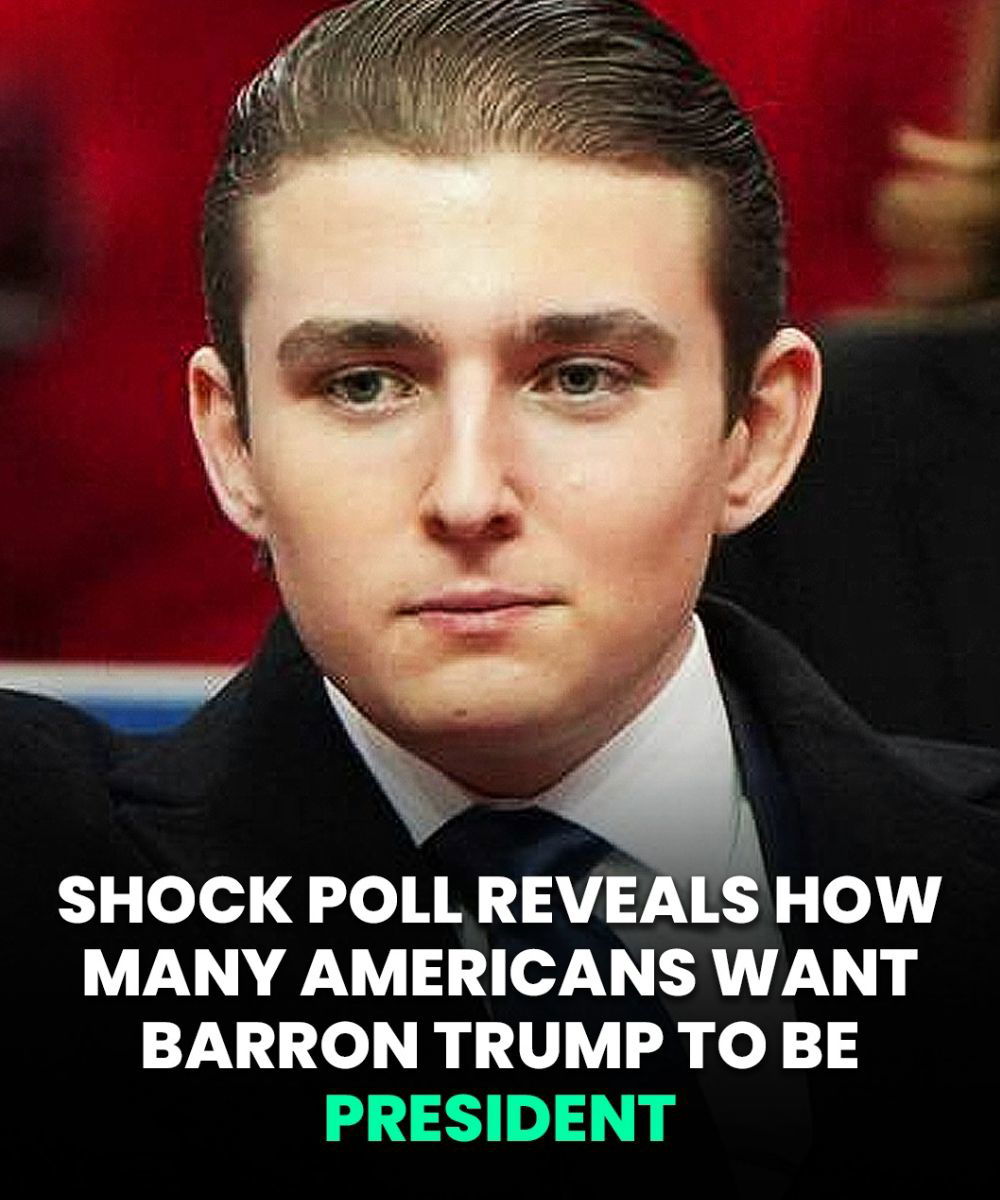
A new national poll has put a number on a question that has increasingly come up in political conversations: how many Americans could see Barron Trump as a future president. While the idea of a 20-year-old one day seeking the nation’s highest office is more curiosity than campaign plan, the results offer a revealing look at how voters—especially Republicans—view the former president’s youngest son and his growing public profile.
The poll’s top-line finding is simple but telling. Among Republicans, a significant share say they are open to the idea of Barron Trump ultimately moving into a leadership role, even to the point of supporting a change to the Constitution’s minimum age requirement for the presidency. Among the general public, however, support is notably lower, reflecting the difference between enthusiasm within a party’s base and broader national sentiment.
How Barron Trump entered the political spotlight
Barron Trump, now 20, has gradually stepped from childhood privacy into a more public role around his father’s 2024 campaign. Rather than holding rallies or giving long speeches, his influence has been described as behind the scenes. One of the most widely discussed aspects of his involvement is his role in connecting his father to popular long-form shows and online personalities, a shift that helped the former president speak to younger audiences in a more conversational way.
These introductions reportedly steered Donald Trump to sit-downs on widely watched programs such as The Joe Rogan Experience, Flagrant, Impaulsive, and This Past Weekend with Theo Von. Each of those shows caters to large and often younger audiences, particularly men in their 20s and 30s, who spend more time streaming podcasts and watching online clips than tuning into traditional television interviews. For many Americans who prefer cable news or radio, it can be surprising how much influence these digital programs have come to wield in shaping the political conversation.
The shift mattered because it placed the former president in front of a demographic that had, in some polling and past elections, been less reliably engaged through traditional outlets. In several appearances, the extended format allowed discussion to go beyond the quick hit of a campaign sound bite, creating clips that then traveled widely across social media platforms. That, in turn, expanded his reach among Gen Z and millennial voters—groups often courted through short video clips and influencer commentary.
Barron’s presence has also stirred international curiosity. During a recent visit to the United States, Japanese Prime Minister Sanae Takaichi publicly remarked on him at a White House event, noting his height and poise and offering birthday wishes. While such comments were lighthearted, they underscored the extent to which Barron has become a recognizable figure well beyond the campaign trail.
His role in the 2024 election has been widely discussed
Some coverage has even labeled him a quiet guide for his father’s media strategy, using a nickname that framed him as attuned to the tastes and preferences of younger male audiences. The gist of that portrayal is that he encouraged a fresh approach: fewer scripted appearances and more unfiltered conversations where the candidate could show personality as well as policy.

According to campaign adviser Jason Miller, Barron recommended several of the high-profile podcast appearances that drew millions of views and heavy online sharing. For seasoned political observers, this kind of behind-the-scenes nudge is not unusual. Many modern campaigns now rely on younger staffers or family members to help navigate the fast-changing digital landscape, identify fresh venues for messaging, and translate political ideas into formats that resonate online.
What makes Barron’s case stand out is the combination of family proximity and generational insight. He is part of a cohort that lives on smartphones, watches long interviews at 1.5x speed, and experiences politics through viral moments as much as policy memos. Helping a candidate meet that audience where it spends its time can be consequential. Whether voters ultimately agree or disagree with the message, reaching them in their digital neighborhoods is essential in contemporary campaigns.
Not all the attention has been serious. In the churn of online commentary, a strand of humor emerged around the idea of military service, especially during moments of heightened tension involving Iran. Some jokers suggested that, if conflict intensified, the young Mr. Trump should be drafted—an online jest more reflective of the internet’s taste for provocation than of any real policy proposal.
There was also chatter about his unusual height, often estimated at around 6 feet 9 inches. Ironically, such stature would likely be a practical barrier for certain military roles, given the size limits of equipment and the realities of working in tight quarters. What started as a viral quip turned into a reminder that the internet can turn any detail, from a person’s height to their wardrobe, into a momentary headline.
Satire and the online echo chamber
From that swirl of conversation came a satirical website, DraftBarronTrump.com, which uses tongue-in-cheek language to lampoon political rhetoric about service and patriotism. The site is not an official initiative and presents fictional quotes and exaggerated slogans for comedic effect. It is one more example of how quickly an online joke can morph into a broader talking point, sometimes leaving casual readers unsure where sincerity ends and satire begins.
For many Americans, especially those who prefer their politics straight and simple, this is part of what can make today’s media environment feel dizzying. Serious discussion, humorous asides, and outright parodies sit side by side in the social feeds we scroll. It takes a moment’s pause to sort the heartfelt from the tongue-in-cheek. In Barron’s case, that mixture of earnest interest and online spectacle has kept his name in circulation far more than most 20-year-olds.
What the poll actually says
Amid all the buzz, the poll results provide a clearer picture of how people are thinking. According to a Daily Mail/J.L. Partners survey, about 40 percent of Republican respondents said they would support amending the Constitution to allow Barron to run for president before he turns 35, which is the current minimum age requirement. That is a striking level of support within one party for someone so young and not currently in public office.
To understand that number, it helps to recall the rule at issue. The U.S. Constitution sets the minimum age for the presidency at 35, a threshold intended to ensure a degree of maturity and life experience. Changing this would require a constitutional amendment, a deliberately difficult process that demands supermajority approval in Congress and ratification by three-quarters of the states. In other words, it is not a simple matter of passing a bill or winning a court case. The bar is high by design.

When the poll widened the lens to include all respondents, support for changing the age requirement dropped sharply. Only about 24 percent of the general public backed the idea, while 42 percent opposed it outright. Within the Republican sample, 38 percent were against changing the rule, and 22 percent were undecided. Put simply, something about the prospect resonates with a slice of the GOP base but lands with considerably more skepticism across the full electorate.
There is another, subtler finding here. When people were asked not just about changing the age requirement but about the broader idea of Barron one day becoming president, enthusiasm among Republicans edged higher. Nearly half of GOP respondents indicated they would be open to the idea of him serving in the future—once he meets the age threshold—signaling that his image within the party is gaining definition, even at a very early stage of life.
Why this matters, even though he is only 20
Presidential interest can blossom many years before a person actually runs, and name recognition can shape early impressions long before a first campaign speech. For Barron, the poll does not predict a candidacy so much as it reflects visibility and curiosity. Voters are telling pollsters that they recognize who he is, that they associate him with the modern side of his father’s media outreach, and that some of them—particularly within the Republican Party—could imagine him in a leadership role someday.
For older Americans who have watched many political seasons come and go, this is a familiar pattern. Family members occasionally rise from the wings to become public figures in their own right. Some pursue office; others stay in supportive or private roles. In every case, early polling is more like a weather vane than a train schedule. It shows where the wind is blowing today, not the exact time a train will arrive tomorrow.
It is also worth remembering that opinions captured in a single poll can be highly sensitive to timing. A burst of media attention, a widely shared interview clip, or a social media trend can move numbers in the short term. As the news cycle shifts, so do sentiments. That is why pollsters often encourage people to look not only at a single reading but at patterns over time, margins of error, and how questions are worded. The better the context, the clearer the meaning.
The digital media factor that older voters sometimes overlook
Podcasts and streaming shows now act as modern-day town squares. They frequently feature long, unscripted conversations where a guest can range widely over personal stories, policy opinions, and rapid-fire questions. For a younger audience, that format feels authentic and relatable. When a political figure performs well in that environment, clips cascade across platforms, multiplying their reach overnight. In this era, a single moment on a podcast can rival or exceed the impact of a prime-time television appearance.
Barron’s nudge toward those outlets appears to have been calculated to capture that very effect. It brought his father’s message to people who might otherwise only encounter it secondhand, filtered through commentary or short news summaries. Whether a listener walked away nodding in agreement or shaking their head in disagreement, they were at least hearing the message directly from the source. That helps explain why his behind-the-scenes role has received so much attention and why his personal brand has grown in the process.
Between curiosity, caution, and the Constitution
The part of the poll that mentioned changing the Constitution is the portion that generated the most chatter. The idea divides Republicans and meets considerable resistance among the broader public. That is not surprising. Americans across generations often express respect for longstanding constitutional guardrails, including age limits meant to ensure life experience before assuming immense responsibility. Even in eras of political upheaval, proposals to rewrite basic eligibility rules face a steep, often insurmountable climb.
What is perhaps more notable is the separate finding that many Republicans can imagine Barron one day leading the country, without any change to the rules. That sentiment speaks less to legal debates and more to a nascent public image: a young man seen as tall, poised, and digitally savvy, whose proximity to the campaign gives him a platform most 20-year-olds simply do not have. Whether that evolves into actual public service or remains a footnote to a unique election cycle is a story only time can write.
How to read today’s numbers without overreading them
It can be tempting to treat every poll as a prediction. In reality, a poll is a snapshot of attitudes at a particular moment, taken with a fixed set of questions and a specific group of respondents. On questions as unusual as amending the Constitution for a specific individual, wording and timing matter a great deal. If the question had been framed around lowering the age for anyone, not just Barron, the results might have looked different. That is the art and the limitation of polling.
For viewers and readers, the best approach is simply to treat this poll as an early marker. It tells us there is genuine receptivity within the Republican base, less so in the country at large, and that Barron’s name recognition has climbed high enough for people to offer an opinion. It also tells us that the intersection of family, media strategy, and generational change can put a very young person at the center of national debate, even absent any formal political role.
Where this conversation could go next
As the 2024 election cycle continues and public attention shifts among issues, personalities, and events, Barron’s prominence may ebb and flow. If he remains an informal adviser in the digital realm, his influence could be felt most in where and how his father chooses to communicate, especially with younger men. If he prefers privacy after the campaign, his public footprint could quickly recede. Should he one day pursue a public path of his own, the conversation would take on an entirely different tone, grounded in his words and record rather than in speculation.
For now, the takeaway is straightforward. A well-circulated poll has put numbers to a growing curiosity. It shows notable openness among Republicans to the idea of Barron Trump in the nation’s top job someday, paired with clear skepticism among the broader electorate about changing the constitutional rules to accelerate that possibility. It also reflects the effectiveness of a modern media strategy that carries a message into the online spaces where millions of younger Americans now spend their time.
In an age when a single podcast appearance can become the talk of the week and a satirical website can spin a joke into a headline, it is remarkable but not entirely surprising that a 20-year-old has become part of the country’s political conversation. Whether that conversation is a prelude to a future candidacy or simply a footnote in a unique election season, it has already revealed something important about where politics lives today—and how quickly it can invite new, and sometimes very young, faces into the frame.