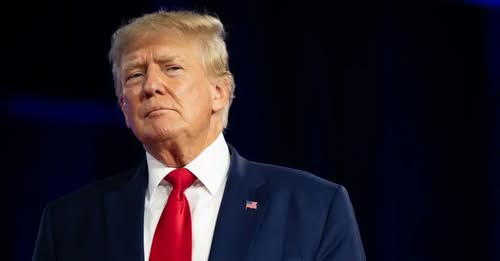
President Donald Trump’s latest proposal is stirring curiosity and questions. He has announced a $2,000 “tariff dividend” intended as compensation for the high tariffs implemented during his tenure. But when can Americans expect to see this cash arrive?
The President has been vocal about his intent to distribute cash payments, seen as rewards after years of tariffs, creating both excitement and confusion across the nation. Trump mentioned that the dividends could be in bank accounts “by the middle of next year, or a little bit later.” However, many details remain unclear.
“We’ve taken in hundreds of billions of dollars from tariffs. We’re issuing dividends,” Trump stated, indicating this would benefit “low, moderate, and middle incomes.”
Who Could Receive the $2,000 Payment?
Despite the promising headlines, there’s no official plan in place yet. No forms have been issued and no rules written. Social Security analyst and YouTuber, Blind to Billionaire, offers one possible eligibility condition: income.
“It hinges on your income—plain and simple. Is your yearly income as an individual under $75,000? If yes, then you’re likely eligible,” he clarified.
He highlighted that similar income thresholds were used in past governmental financial aids: “The usual limit is $75,000 for individuals, $150,000 for married couples.” This criterion might mean that unemployed individuals or those with varying income types could still qualify, giving hope to many. Yet, a word of caution—it’s not finalized yet.
Challenges Ahead: Congress and Budgetary Concerns
While the idea of a $2,000 payout is popular among the public, the proposal faces significant political and financial hurdles.
Treasury Secretary Scott Bessent, in an interview with Fox Business, expressed skepticism regarding the feasibility of the plan, saying, “We’ll see,” and underscoring the need for legislative approval.
This implies that Trump would require Congress to authorize a spending measure potentially worth hundreds of billions of dollars.
What would the cost be?
The Committee for a Responsible Federal Budget estimates the expense could be $600 billion annually, exceeding current government revenue from tariffs.
Even if eligibility is tightened, the cost remains steep. Erica York from the Tax Foundation estimated that limiting it to households earning under $100,000 would still amount to $300 billion.
Moreover, Bessent floated the notion that the payout could be delivered through tax credits or as part of the proposed One Big Beautiful Bill Act, rather than as direct payments.
As of now, these “tariff dividends” remain theoretical, supported by the approximately $195.9 billion gathered in tariffs—far short of what would be required for nationwide payments.
Nevertheless, Trump remains optimistic. While on Air Force One, he reaffirmed, “It will be next year…the tariffs allow us to offer a dividend. We’re going to distribute a dividend and work on reducing debt.”