Donald Trump Jr. recently celebrated his wedding to Palm Beach social figure Bettina Anderson with a small, private gathering in the Bahamas. While the mood on the island was joyful, the limited guest list quickly became a talking point, especially after observers noticed that former President Donald Trump, Melania Trump, and their son Barron Trump were not there. With fewer than 50 people present, every name on the list—and every name missing—stood out.
Their absence has stirred speculation and set off a wave of conversation about what it might mean. In families that live under a public microscope, moments like this often raise more questions than answers. A public relations expert has now weighed in with a perspective on why people are reading into the no-shows, and what that could suggest, if anything, about the state of family relationships.
A quiet island wedding that put every RSVP under a spotlight
By all accounts, the ceremony itself was small and elegant, designed for immediate family and close friends. Donald Trump Jr.’s siblings—Eric, Ivanka, and Tiffany—were among the attendees. The headcount was intentionally tight, which often means some family members simply cannot make the timing, travel, or logistics work. That said, the notable absence of Donald Trump, Melania Trump, and Barron Trump brought added interest because it was a trio of close, immediate relatives missing from the same occasion.
In families that attract media attention, even an intimate celebration can take on oversized meaning. A wedding is as personal as it gets, and when it happens far from home on a tropical island, guests may have to juggle work, health considerations, or security needs. These practical concerns are ordinary, but in a highly covered family, they are often weighed against the optics. The smaller the crowd, the sharper the focus on who came and who did not.
Why Barron’s absence drew special attention
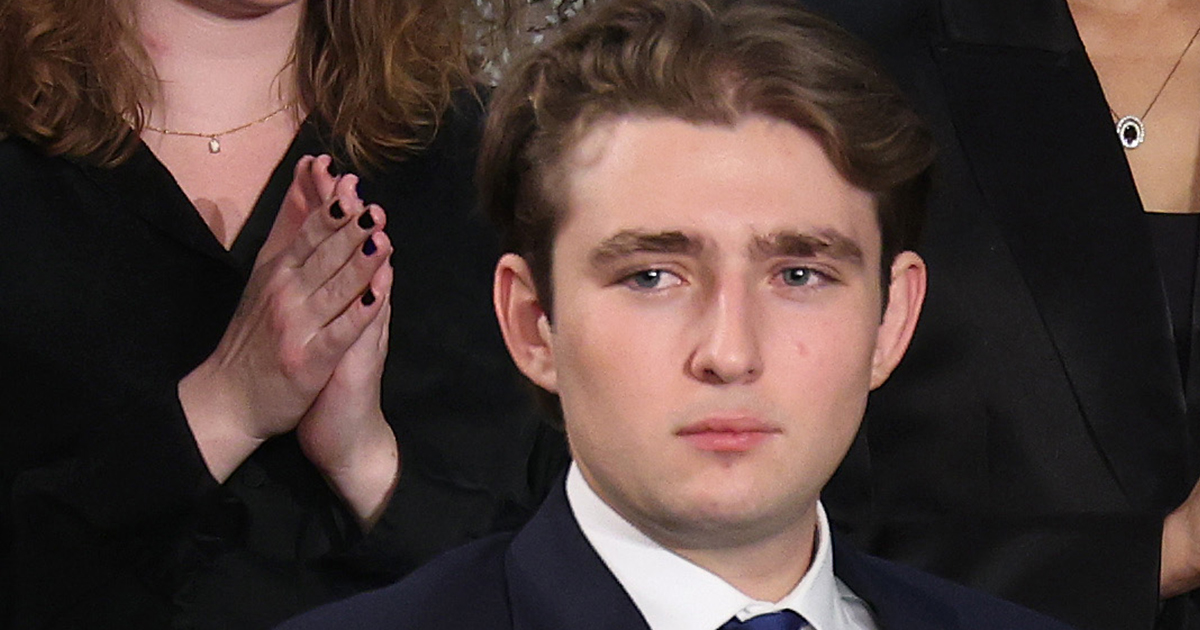
Among the absences, Barron’s stood out to many observers because he represents a different generation within the family. At 20 years old, he is much younger than Donald Trump Jr., who is 48. That gap alone naturally shapes life experience and social circles. People close in age often find it easier to sync schedules and share milestones, while larger age differences can lead to entirely different worlds—schools, friends, interests, and day-to-day routines that do not often intersect.
Some commentators have suggested that Barron’s path has been quite distinct from that of his older siblings and half-siblings, who came of age in earlier phases of the family’s public life. A report from Rob Shuter’s Naughty But Nice newsletter framed it this way: Barron grew up in circumstances different from Don Jr., Eric, Ivanka, and Tiffany, which may create emotional distance simply due to different upbringings and stages of life. That does not necessarily signal any conflict; it can simply reflect the realities of a blended, high-profile family spanning multiple decades.
In the weeks around the wedding, another family moment also drew attention. Don Jr.’s eldest daughter, Kai, celebrated a graduation milestone with a select group of relatives. For some watching from the outside, seeing certain faces at one event and not at another fed a narrative that there could be underlying tension. Whether that interpretation is fair or not, one thing is clear: when families are famous, the public looks for patterns.
What a PR expert says about the meaning behind a no-show
Public relations professional Michael Fahey offered a perspective on how these situations are viewed. Speaking with RadarOnline, he noted that in the Trump family’s world, people tend to look for symbolism in everything. When one person skips an event, it is easy enough to chalk it up to scheduling, travel, or preference. But when multiple close relatives are absent at the same time, he explained, it can take on a larger meaning in the public conversation.
In his view, coordinated absences—whether planned that way or simply coincidental—invite interpretation. They can be seen as sending a quiet message, even if none was intended. As he pointed out, it is the pattern that often captures the media’s imagination. One gap is a footnote; several gaps can become a storyline. That is especially true in an era when headlines move fast and speculation can outrun confirmed facts.
Ordinary explanations are still possible, even when the family is famous
It is worth remembering that there are many everyday reasons people miss a destination wedding. Travel can be complicated and tiring, especially to an island location. Work obligations are not always flexible, and in a family with serious professional responsibilities, commitments may not be easy to reschedule. Health considerations can also influence travel choices, as can the realities of coordinating security and privacy.
Destination weddings, by design, ask a lot of guests. Flights, accommodations, and time away from home all play a role. Sometimes people choose to mark the marriage with a quieter, more private celebration later, perhaps with a dinner or a visit when schedules allow. None of this means there is a falling-out. It often just reflects how complicated modern family life can be, particularly in households spread across cities, states, or countries.
Barron’s generation and a different upbringing
Barron’s life has unfolded in a digital, always-on age, shaped by social media and a constantly connected world. That alone makes his experience different from that of his older siblings, who navigated young adulthood before the phone in everyone’s pocket became a stage. It is natural for him to move in different circles, follow distinct interests, and maintain a separate routine. Those differences are not a sign of distance in a negative sense; they are simply the reality of a large family with children born over many years.
While he is much younger than his older brothers and sisters, Barron is closer in age to some of the grandchildren of the family. Observers have noted that his generational ties may make it more likely for him to spend time with relatives nearer to his age, such as Don Jr.’s daughter Kai. That is a common pattern in many families, where cousins or younger aunts and uncles share more day-to-day life because their ages, schools, or interests align.
When the public looks for patterns, stories take shape
The idea that people search for meaning in who attends what event is not unique to the Trumps. Whenever public figures are involved, every seating arrangement, photo, and RSVP can become part of a larger story. Wedding photos turn into clues; guest lists are treated like tea leaves. A constellation of small details can become a theory about power, closeness, or rivalry—even if the underlying reason is as simple as a calendar conflict or a personal preference for privacy.
This is the double-edged sword of visibility. The more familiar a family is to the public, the more the public wants to connect the dots. Even if there is no intended message, the absence of a few familiar faces can fuel headlines and conversations. It is a reminder that private family choices can be interpreted through a very public lens.
Family milestones in a blended, high-profile household
Blended families often juggle different calendars, different households, and different traditions. Weddings and graduations are milestones that everyone wants to honor, but in practice, not every milestone lines up neatly with everyone’s schedule. In a large family with multiple branches, even events held close to home can be tough to coordinate. Add a destination to the mix, and it becomes even trickier.
It is also common for families to divide big celebrations into separate moments—a small ceremony followed by a larger reception weeks later, or a destination wedding followed by a local gathering for those who could not travel. Without full visibility into a family’s private plans, it is hard to say what might come next. What looks like an absence today may be followed by a quieter, more personal celebration down the line.
Media narratives versus personal realities
There is a natural tension between the stories that swirl around a public family and the day-to-day realities inside that family. Reports like the one from Rob Shuter’s Naughty But Nice newsletter point to possible emotional distance tied to age and upbringing. That perspective resonates for many people who have seen similar patterns in their own extended families. At the same time, the leap from distance to discord is not automatic. People can be fond of each other, supportive, and unified, even if their schedules do not always overlap or their paths take them in different directions.
Michael Fahey’s comments highlight how quickly a series of small choices can be interpreted as a single, loud signal. It is a useful reminder that when we are looking in from the outside, we rarely have the whole picture. A pattern may be emerging—or we may simply be seeing a coincidence that stands out because it happened at an especially personal moment, like a wedding.
What we know for sure—and what remains uncertain
Here is what is clear: Donald Trump Jr. and Bettina Anderson celebrated their marriage with a small group of loved ones on a Bahamian island. Eric, Ivanka, and Tiffany Trump were among those who attended. Former President Donald Trump, Melania Trump, and Barron Trump were not present. Around the same period, Don Jr.’s daughter Kai marked her graduation with a gathering of select relatives. Beyond those facts, much of what is being said about motivation and meaning is interpretive.
We do not have a confirmed explanation from the people involved about why certain family members did not attend the wedding. That leaves room for both everyday reasons and larger theories to take root. It is entirely possible that practical issues like travel, timing, or personal preferences played the decisive role. It is also possible that, as some suggest, differing life stages and family dynamics contribute to who shows up where. Until those directly involved decide to say more, the most honest answer is that we can note the pattern without pretending we know every reason behind it.
A gentle takeaway for readers
For anyone reading along and wondering what to make of it all, a balanced approach often serves best. Family life is complex in every household, not just famous ones. Age gaps can affect how often relatives see one another. Destination weddings can be hard to attend. People express love and support in different ways, sometimes in private rather than in a public photo. And in the media environment we live in, even an ordinary decision can be cast as a signal of something larger.
When a PR expert says that multiple absences invite interpretation, he is pointing out a truth about how stories are built. But an invitation to interpret is not the same thing as a confirmation. It is possible to hold two ideas at once: that people naturally look for meaning in these moments, and that the simplest explanations still apply. Until more is shared by those closest to the event, the kindest reading is often the fairest one.
Looking ahead
As newlyweds often do, Donald Trump Jr. and Bettina Anderson may choose to celebrate again with those who could not be at the island ceremony. Families evolve, schedules open and close, and life continues to bring new occasions to gather. Whether future events include different configurations of family members or unfold quietly out of view, they will be part of the ongoing story of a large, blended family moving through everyday life under an extraordinary spotlight.
For now, the simplest conclusion is also the most sensible: an intimate wedding resulted in a guest list that left some people out, and the absences, taken together, sparked conversation. Observers may see a message in that. Others may see nothing more than the practical realities of distance, timing, and preference. Both perspectives will persist unless and until the family decides to share more. In the meantime, what matters most to the couple is likely what matters most in any family—the commitment they made and the support they receive, whether it happens on an island, at a dinner table, or in a quiet moment away from the cameras.