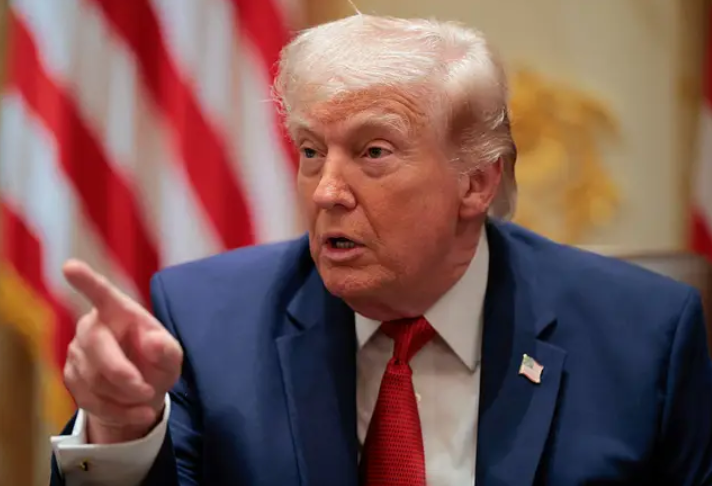
If you have seen one of Donald Trump’s recent online posts, you may have noticed a formal-sounding sign-off that appears again and again
Plenty of people recognize Donald Trump’s style at a glance. His messages are often fast, forceful, and full of emphatic words. Yet in the middle of that energy, there is a closing line he uses so often that it now stands out on its own: “thank you for your attention to this matter.” It is an eight-word sign-off that sounds far more like a note from a government office than a social media post.
That contrast has led many to ask where the phrase comes from and why he chooses to use it. Several psychologists who study communication, persuasion, and political behavior have weighed in. Their view is that the wording is not just a habit. It likely serves a purpose, signaling control and authority while also nudging readers to take what he is saying more seriously than a typical post.
Trump, of course, has always been known for memorable phrases. From television days of “you’re fired,” to rally refrains and sharp labels for opponents, he favors language that is short, punchy, and easy to repeat. His public statements as president and beyond have sometimes sounded improvised, even impulsive, as if he is letting his thoughts flow straight from mind to message. Many supporters find that quality refreshing. They see it as candid and unfiltered. Critics, on the other hand, have argued that the approach can seem undisciplined, even crude or unpresidential. No matter where you stand, it is hard to deny that his words get attention.
That is why this stiff, politely bureaucratic ending line catches the eye. It does not read like the rest of his style. It feels like a rubber stamp on a very different kind of memo. And according to experts, that is exactly why it works.
What makes this phrase different from his usual language
Claire Robertson, a psychologist who studies political polarization and extremism at Colby College in Maine, describes Trump’s common approach as moral-emotional. She notes that his typical posts are studded with words such as “hoax” and “corrupt.” Those are terms that carry heat. They stir up a sense of right and wrong, victim and villain. When language lights up moral emotions, people respond quickly. They share the message, talk about it with friends, and in the process it spreads farther and faster.
By contrast, “thank you for your attention to this matter” is cool and buttoned-up. It is not angry or accusatory. It is not even obviously political. Robertson says that is what makes it interesting. It does not fit the pattern, which makes readers pause and pay attention. In the middle of bold claims and charged words, the formal closing acts like the straight face at the end of a punchline. It signals that, this time, the speaker is putting on the suit and tie.
That change of tone can be powerful. It draws a line under everything that came before it, much like a judge’s gavel at the end of a hearing. Even if the post itself felt like a rapid-fire stream of thoughts, the sign-off compresses it into a neat package. It sends the message that the matter is settled and deserves notice.
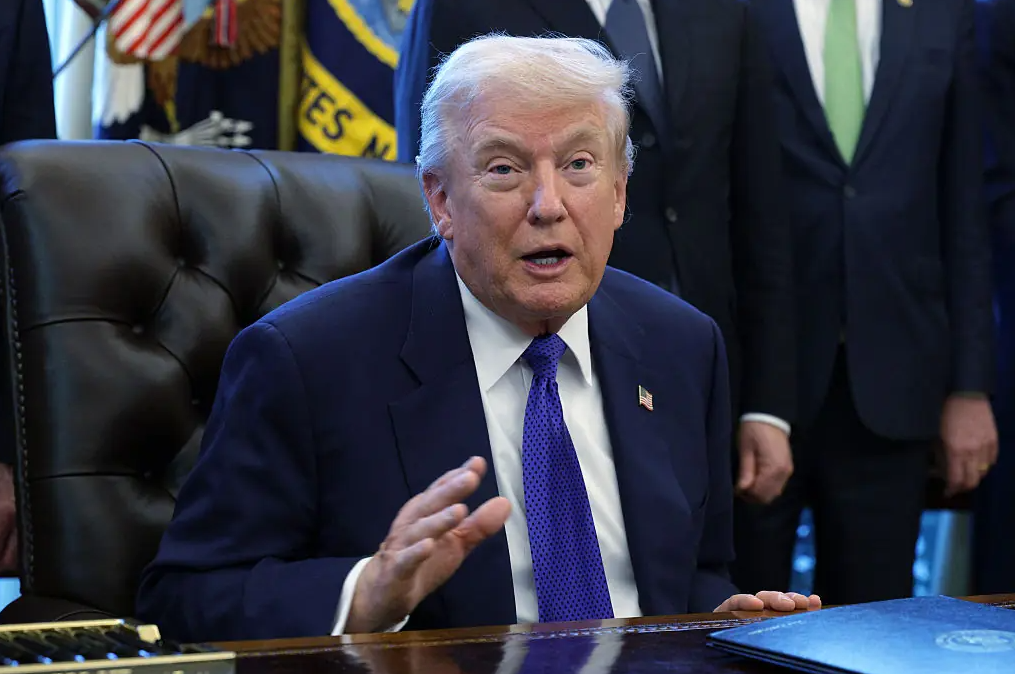
Experts say the phrase projects control, authority, and a call to comply
Holistic psychotherapist Shennika Moore-Clarke has a clinical take on the phrase. In her view, the words come across as more than polite formality. They carry undertones of command. The sentence thanks you for your attention, but it also presumes that you have given it. In doing so, it places the writer in the position of a person who expects to be heard and obeyed. That expectation alone signals hierarchy.
Robertson adds that Trump appears very conscious of maintaining control. People have noticed that even in small moments—how he greets, how he stands, the way he closes a conversation—he favors gestures that set the terms of the interaction. A formal closing aligns with that pattern. It suggests that he is not just commenting on events but directing them.
Moore-Clarke goes a step further, suggesting that the phrase operates like a soft command. While it includes the polite “thank you,” the core instruction is baked into the wording: pay attention to this matter. It is not a request for a casual glance. It is, in effect, an order to focus. That can be compelling for supporters who already view him as a decisive leader. It reassures them that someone is in charge, that the situation is being managed, and that their role is to follow along.
There is a second, quieter effect at work. A formal close can make a message feel official. Many of us have received letters from a bank, a lawyer, or a city office that end with similar wording. When we see that language, it puts us into a different frame of mind. We associate it with procedure, authority, and important deadlines. Copying the feel of that language can transfer some of its gravity to a social media post. The content may be fiery, but the close hints at paperwork and process, and that can make a claim seem more weighty than it otherwise would.
How repetition and rhythm help the message stick
Catchphrases work because they are easy to remember. If you have watched politics, television, or advertising for any length of time, you have seen the strategy. Repeat a short line often enough and it becomes part of the brand. The brain likes patterns. Familiar endings are like musical refrains that cue the listener. As soon as the first few words appear, you know what is coming and your mind leans in.
That rhythm matters. In communication science there is a concept called processing fluency—the sense that something is easy to take in. When words are familiar and predictable, they feel true, even if we have not checked them. A steady sign-off can create that effect. It acts as a reliable flourish, a stamp that tells the audience, “this is the important part.” Over time, the closing may take on a halo of authority simply because it is repeated in moments the speaker wants remembered.
For a figure like Trump, who often thrives on surprise and shock, the reliable ending creates a useful contrast. The body of the message may be full of capital letters, exclamation points, and sharp turns. The final line is calm, slow, and steady. That mix of heat and cool is memorable. It also keeps the audience engaged from start to finish, waiting for the signature close.
Why this formal line stands out against his usual tone
Trump’s everyday posting style is often described as scattershot—long blocks of text, sudden jumps, emphatic capitals, and rapid-fire claims. That is exactly why a line that sounds like it came from a legal letter gets noticed. It breaks the pattern. The mind naturally pays attention to switches in tone. If someone is joking and then goes serious, we listen. If someone is loud and then drops to a whisper, we lean closer. The phrase works like that whisper. It does not shout. It looks you in the eye and says, in effect, “this matters.”
It also allows him to have it both ways. He can speak off-the-cuff and rally supporters with charged language—and then shift into a posture that suggests order and deliberation. When a message ends with “thank you for your attention to this matter,” it can feel as though the passionate speech has been filed into the official record. Even when the content is disputed or controversial, the structure suggests it should be treated as settled business.
The social effect: creating a shared code within a community
Language is full of small signals that mean more to insiders than outsiders. Think about the names you use in your family for places or routines, or the nicknames your friends use that would baffle a stranger. Over time, these habits form micro-cultures—tiny shared worlds with their own cues and expectations. In politics, the same thing happens. Repeated phrases become badges of belonging. They tell insiders, “you are in the group.”
Robertson and other researchers suggest that a steady sign-off can act as one of those badges. For Trump’s audience, the closing line may say, “this is a special kind of post—pay attention and pass it on.” Readers do not need an explicit instruction to share or respond; the code does the work. The phrase becomes a flag that marks the content as urgent and central to the movement’s story about itself.
Whether he chooses the words consciously for that effect or does it by habit is hard to know. Most of us pick up these patterns without thinking. Yet the outcome can still be strategic. The closing draws eyes to the message, grants it a sense of order, and asks the audience to act, all while sounding polite.
Authority by assumption: “I thank you for what you have already done”
One subtle trick in the phrase is worth noting. It thanks the reader for attention that has not yet been given. That is a classic way to prime behavior. If you tell someone, “thanks for sending that form,” they are more likely to send the form because the expectation is set. In the same way, ending a post with gratitude for your attention creates a small social nudge. It suggests that a reasonable person would already be paying attention—so you feel inclined to do it.
That kind of assumption is common in official letters. It is also common in leadership communication, where a confident tone helps move people to action. Paired with Trump’s identity as a decisive actor, the line reinforces the image of a man who takes charge, renders judgment, and expects compliance. For many supporters, that is reassuring. They value leaders who seem certain, even when the situation is complex or fast-moving.
Why the phrase can boost trust among supporters
Moore-Clarke points out another effect. When a leader consistently frames messages as matters that demand attention, followers are more likely to treat those messages as priorities. Over time, that can build trust in the leader’s judgment. If the sign-off tends to appear on posts that feel like warnings or calls to action, it trains the audience to see the leader as an alert system—someone who points to threats and organizes a response.
There is a caution here too. A formal, authoritative close can cast a glow of seriousness on claims that have not been verified, or that harm groups of people. The tone does not prove truth. It simply sounds like it does. That is one reason communication researchers urge readers to look beyond style and check the substance, no matter who is speaking. Still, in the heat of a news cycle, tone can carry a message a very long way, and this particular tone sounds like a gavel strike.
Familiarity from everyday life makes the wording feel “official”
If the phrase rings a bell for you, it may be because you have seen similar wording in many places: insurance notices, attorney letters, policy updates from a company, and even school communications. Those messages often close with a courteous line that signals the matter is formal and time-sensitive. That is why, when the same formality shows up in a social post, it borrows the gravity of the office memo. The move is simple, but the effect is strong.
For readers in midlife or older, this may feel especially familiar. Many have spent decades reading official letters and navigating rules, deadlines, and documentation. The sign-off taps that experience. It feels like a cue you already know how to follow: read closely, consider the action requested, and move it to the top of your stack.
How the sign-off reshapes the post you just read
Think about the way you read a message that ends abruptly versus one that ends with a formal close. An abrupt end can feel like a rant. A formal end feels like a decision. The eight-word phrase tidies up the loose ends. It changes the mood from heated to handled. Even readers who disagree with the post may sense that the statement is meant to be treated as a notice rather than a provocation.
For Trump, who often courts attention with bold, sometimes confrontational language, this neat ending can make his messages more shareable. It reassures supporters that they are passing along something that sounds composed and official, not just emotional. The final line helps the post travel from the world of hot takes into the world of “please review,” and that shift can widen its reach.
Is it deliberate strategy, unconscious habit, or both
Scholars are careful about claiming to know a public figure’s inner motives. What they can do is observe patterns and explain likely effects. With this phrase, the pattern is clear. It appears frequently. It signals a change in tone. It presumes compliance. It aligns with a broader image of control. Those features are exactly the kind that communication pros use on purpose. So while it may have begun as a simple courtesy, it has matured into a tool. Whether he thinks of it that way every time or not, it functions strategically in practice.
Importantly, none of this requires complicated psychology to work. It is everyday human behavior. We all take our cues from tone and timing. We all respond to language that sounds official. And we all find comfort in familiar endings that tell us how to feel about what we have just read.
Donald Trump’s eight-word sign-off—“thank you for your attention to this matter”—does several jobs at once. It cools a hot message with a formal tone. It projects control and authority. It thanks you for attention you have not yet given, nudging you to give it. It marks the post as important within his community, encouraging readers to treat it as a priority and to share it. And it borrows the weight of official correspondence to make claims feel more serious.
Supporters hear in it the voice of a leader who decides and directs. Critics hear in it the voice of a boss closing a memo after making questionable assertions. Both sides are reacting to the same set of signals embedded in the words. In the end, that is why the phrase is so effective. It is short, familiar, and packed with cues our minds are used to following.
Whether you agree with the message or not, noticing how the sign-off shapes your response can help you read any public statement with clearer eyes. Look for the shift in tone. Ask yourself what the ending asks you to do. And remember that in communication, the last line often does the heaviest lifting.
Thank you for your attention to this matter.