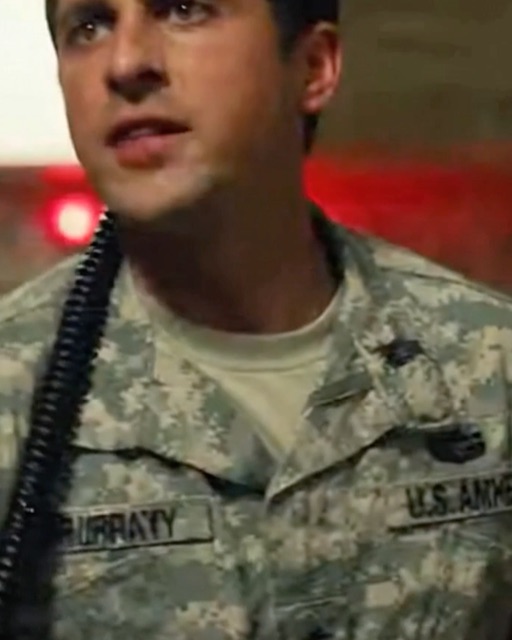
The alarm horns were still screaming when I saw him move.
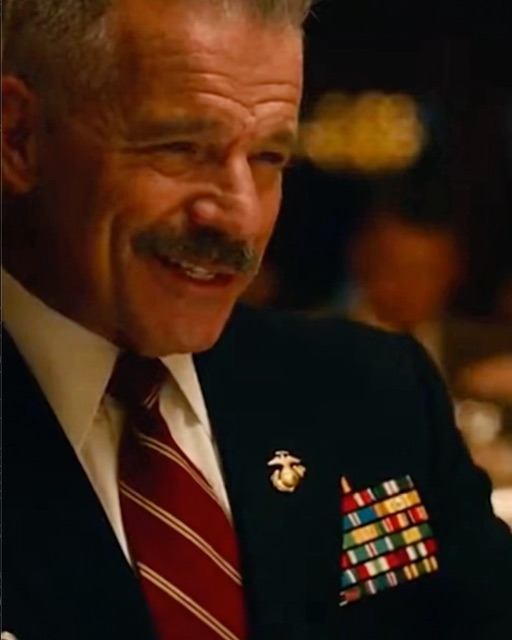
An old guy. Seventies, maybe. Visiting the demolition site with some other veterans. One minute he’s standing by the safety line holding a paper coffee cup. The next minute he’s throwing off his overcoat and running straight toward the jammed blast door.
Three soldiers were trapped inside. The hydraulic system had failed. The locking wheel was seized under pressure. Every second mattered.
I tried to stop him. “Sir, this area is restricted – ”
He didn’t even look at me. “So is losing soldiers.”
That shut me up.
He dropped to one knee at the manual override housing like he’d done it a thousand times. Barked orders at my team. Two specialists on the lower pry point. Pressure bleed. Cut external power. His hands grabbed the override bar and pulled until the veins in his neck looked ready to burst.
The wheel moved. Just barely.
We heard fists pounding from inside.
“Again!” he roared.
We pulled together. The door cracked open. Stale air hissed through. A boot appeared in the gap. Then a hand. Then all three soldiers stumbled out, coughing and blinking.
Everyone exhaled.
But the old sergeant major wasn’t celebrating.
He was staring into the door mechanism. At something wedged in the emergency latch cavity.
A narrow olive-drab tube. Old. Dusty. With a unit code printed on the side.
He reached in. Pulled it free. And his whole body went still.
“What is that?” I asked.
He didn’t answer. Just unscrewed the cap with shaking hands.
Inside was a folded flag patch. A hand-drawn map of the corridor. And a note, yellowed with age.
I read the first line over his shoulder: We sealed the wrong men inside because command changed the roster after movement.
“Who wrote that?” I asked.
The sergeant major turned the paper over.
Then he made a sound I’ll never forget. Somewhere between a laugh and a sob.
I looked at the signature at the bottom.
It was the name of a captain from his old unit. A captain whose memorial service he had attended. A captain the Army had officially declared dead in 1973.
The date on the note was three weeks after the funeral.
The world seemed to shrink down to that single piece of yellowed paper in his trembling hand. The sounds of the rescued soldiers being checked by medics, the whine of the generators powering down, it all faded into a distant hum.
The sergeant major’s name was Arthur Bennett. He finally told me that, his voice raspy, as we sat in the temporary site office an hour later.
The note was spread on the metal desk between us, looking impossibly fragile under the harsh fluorescent light.
“Captain David Grant,” Arthur whispered, more to himself than to me. “He was a good man. The best.”
I slid a cup of water toward him. “Sir, what does this mean?”
He picked up the note, his thumb tracing the faded ink of the signature. “It means I’ve spent fifty years believing a lie.”
He looked up at me, his eyes clouded with a storm of memories. “The official story was a fire. A training exercise gone wrong in the West Wing bunker.”
“They said Captain Grant and two privates, Michael and Samuel, were trapped when the containment protocols kicked in automatically. Sealed the doors to stop the fire from reaching the munitions depot.”
“We held a service. Folded three flags. Sent them home to three families.”
He tapped the date on the note. “Three weeks after we buried an empty casket for him, he was alive. In there.”
He pointed vaguely in the direction of the blast door. “And he was trying to tell us something.”
The weight of it settled in the small room. A ghost had just reached out across half a century.
I was just a corporal, a site foreman for this demolition. This was way above my pay grade. But looking at Arthur, I knew I couldn’t just clock out and forget it.
“What does it say? The rest of the note?” I asked gently.
Arthur unfolded it again. His voice was flat, hollowed out.
“‘The wrong men are inside,’” he read. “‘PFCs Wallace and Peterson should have been on this detail. They had the training.’”
He paused, squinting at the faded pencil. “‘Major Crowley ordered the switch. Said it was a priority reassignment. I argued. He wouldn’t listen.’”
Arthur’s breath hitched. “I remember that. I remember the argument.”
He looked at me, and it was like he was seeing straight through me, back to 1973. “I was on gate duty that morning. A young sergeant. Eager to please.”
“I saw Captain Grant arguing with Major Crowley near the command tent. It was heated. Captain Grant was shaking his head. Crowley just jabbed a finger at a piece of paper and walked away.”
“A few minutes later,” Arthur continued, his voice dropping lower, “the Major came to me himself. Handed me the amended duty roster. Told me to make sure the men heading into the bunker were the new names. Michael and Samuel.”
“I did it,” he said, the words like stones in his mouth. “I followed the order. I stopped Wallace and Peterson at the checkpoint and sent them to the motor pool. I waved Michael and Samuel through.”
He let out a long, shuddering breath. “I sealed their fate. And I never knew why.”
The note held the answer. Captain Grant had been sealed in with them.
We looked at the hand-drawn map. It showed the corridor behind the blast door, but it also had a small, secondary tunnel sketched in, labeled “Coolant Access.” An X was marked at the far end of it.
“This access tunnel wasn’t on the official base schematics,” I said, leaning closer. “It must have been a classified addition.”
“Everything about that bunker was classified,” Arthur mumbled. “We were told it was just a communications hub. We all knew that was a lie.”
The need to know more was a physical thing, an ache in the room. This wasn’t just about a dead captain anymore. It was about two young privates who were sent to their deaths for a reason no one understood.
And it was about the old man sitting in front of me, who had carried a piece of that puzzle for fifty years without realizing it.
“The base archives are scheduled for demolition on Friday,” I said, an idea forming in my mind. “All the old paper records are in there.”
Arthur looked up, a flicker of the fire I’d seen at the blast door returning to his eyes. “We need to find that roster. The original and the amended one.”
Getting access wasn’t easy. It took me calling in a favor with my own CO, explaining that a veteran had found something historically significant related to a training accident. I left out the part about a note from a dead man.
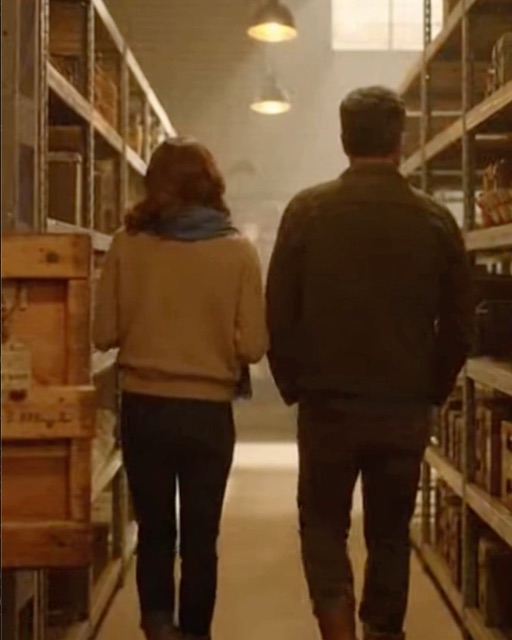
The next morning, we stood in a cavernous, dusty warehouse. Racks of cardboard boxes stretched up into the gloom, each one a tomb of forgotten paperwork. The air smelled of decay and stale ink.
“We’re looking for records from the 3rd Battalion, 7th Infantry, for October 1973,” Arthur said, his voice echoing slightly.
We started searching. It was a slow, painstaking process. We pulled down heavy boxes, our hands getting coated in a fine gray dust. We paged through morning reports, supply requisitions, and duty rosters, the paper so brittle it threatened to crumble at a touch.
Hours went by. The sun moved across the high, grimy windows of the warehouse.
“Here,” Arthur said, his voice tight.
He was holding a single sheet of paper. It was a duty roster. He laid it flat on top of a box. At the bottom of the list for Bunker Detail, West Wing, were two names: PFC Wallace, R. and PFC Peterson, J.
My heart started pounding. “That’s the original.”
We kept digging. Box after box. We found reports on the “fire,” all heavily redacted. We found the official casualty reports for Captain Grant, Private Michael, and Private Samuel. It was all there, the neat, tidy, official lie.
Then, in a box mislabeled “Vehicle Maintenance Logs ’74,” I found it. Another roster. Dated the same day as the first one. At the top, in red ink, was the word “AMENDED.”
And there they were. The names Michael and Samuel. At the bottom was a signature. Major T. Crowley.
Next to it was another signature, much smaller. Acknowledged by Sgt. A. Bennett.
Arthur stared at his own name, written in a confident hand by a man he no longer was. He didn’t say a word. He just gently folded the two rosters and the note from Captain Grant and put them in his inside jacket pocket.
We walked out of the archives into the late afternoon sun, blinking like we’d been underground for years.
“Crowley,” Arthur said as we drove toward the base exit. “Thomas Crowley. He made general. Retired about fifteen years ago. Lives a couple of states over. I see his name in the veteran’s newsletter sometimes.”
The way he said the name was chilling. It wasn’t angry. It was something heavier. Something colder.
“What are you going to do?” I asked.
He was quiet for a long time, watching the old, forgotten buildings of the base slide by.
“When you’re young,” he said finally, “you think of justice as a lightning bolt. Loud and fast. When you get old, you realize it’s more like water. Slow. Patient. But it always finds the cracks.”
The next week was a blur. Arthur made calls. He spoke to people I’d never heard of, in offices at the Pentagon that dealt with cold cases and historical records. He was no longer just a visiting vet; he was a man on a mission, armed with a ghost’s last words.
I helped where I could, scanning the documents, writing a formal statement of how we found the message tube. I felt like a page boy in someone else’s epic.
Then came the twist I never saw coming. It wasn’t from a phone call or a declassified document. It came from a man who walked into the base demolition office asking for me.
He was older, maybe late sixties, with a kind face and tired eyes.
“You’re Corporal Miller?” he asked. “The one who was with Arthur Bennett?”
“Yes, sir.”
“My name is Robert Wallace,” he said, and my blood ran cold.
It was one of the names from the original roster. The man who should have gone into that bunker.
He had read about the demolition in a local paper and had come to see the old base one last time. Someone on site mentioned the incident with the stuck blast door and the old sergeant major, and he had put two and two together.
We sat in the same office where I had talked with Arthur.
“I never knew why they pulled me and Peterson off that detail,” Robert said, his voice thick with emotion. “It was our job. We were chemical specialists. The West Wing bunker wasn’t a comms hub. It was a storage site for an experimental nerve agent.”
The word hung in the air. Nerve agent.
“There was a leak,” he explained. “Not a fire. A fire you can fight. A pinhole leak in one of those containers… you can’t even see it. We had the training, the equipment. We could have contained it.”
He shook his head slowly. “Michael and Samuel… they were good infantry kids. They wouldn’t have known what was happening until it was too late.”
So that was the reason for the roster change. It wasn’t a simple reassignment. It was a deliberate choice. Major Crowley had a leak in his highly classified, probably illegal, chemical storage. He couldn’t let specialists go in, because they would know exactly what they were looking at and file a report.
So he sent in two regular soldiers who wouldn’t understand the danger. He sacrificed them to protect his secret and his career. And Captain Grant, a man of honor, was sacrificed with them because he was there and he knew.
But one question remained. If they all died from the leak, how did Captain Grant write that note three weeks after he was supposedly dead?
Robert Wallace had the final piece.
“The story about them being sealed in was a lie, too,” he said quietly. “At least, not in the way they told it.”
He explained that the chemical leak had triggered a silent alarm, not the fire suppression system. The doors sealed automatically, as they were designed to. Captain Grant and the two privates were trapped inside with the leaking agent.
“But Captain Grant was resourceful,” Robert said, a sad smile touching his lips. “He knew that bunker better than anyone. He knew about the old coolant access tunnel. It’s on the map he drew you.”
“He must have gotten them out through there,” I realized. “They didn’t die in the bunker.”
“No,” Robert confirmed. “They died in that tunnel. The exposure was too much. They probably found their bodies a day or two later. But Crowley couldn’t let the truth come out. A secret chemical dump, three dead soldiers… it would have been the end of his career.”
“So he created the fire story. He backdated the incident reports. And he left the bunker sealed, a perfect tomb to hide his crime.”
And Captain Grant, in his last moments, must have made his way back to the main blast door from inside the tunnel system. He wedged that note in the mechanism, a message in a bottle, a final, desperate attempt to make the truth known. Then he went back to die with his men.
The date on the note, three weeks after the funeral, was his final, brilliant masterstroke. It was an impossible fact, a detail so wrong that anyone who found it would be forced to question everything. He wasn’t just telling them what happened; he was screaming across time that the official story was a lie.
Two weeks later, I stood with Arthur on a small, manicured lawn at the Army’s national cemetery. It was a gray, overcast day, the kind that feels respectful.
There were no press, no generals. Just a handful of us. Me, Arthur, Robert Wallace, and a few family members of the two privates, old now themselves.
An honor guard stood by three new headstones. The names of Captain David Grant, PFC Michael, and PFC Samuel were finally etched in clean, white marble. The dates of death were corrected. The cause of death was listed simply as “Died in the line of duty.”
But underneath, on each stone, was a new inscription: “For Valor and Integrity.”
The Army, presented with the undeniable evidence of the note and the two rosters, had quietly corrected the record. General Crowley, now a frail old man, was not publicly shamed. There was no trial.
But his official military record was amended with a letter of censure, a quiet, permanent stain on his legacy. The truth, as Arthur had said, had found its crack. That was justice enough.
After the ceremony, Arthur walked over to me. He looked older, but lighter. The storm in his eyes was gone, replaced by a quiet calm.
He placed a hand on my shoulder. “You see, Corporal,” he said, his voice steady. “Following an order is easy. Living with it is the hard part.”
He looked at the three new headstones. “For fifty years, I thought my mistake was just a clerical error, a bit of bad luck. But it was worse. I was a cog in a machine of deceit. I just didn’t know it.”
“Finding that note,” he continued, “it wasn’t about righting a wrong for them. It was about finding my own way back. About making sure the truth, no matter how late, gets its day in the sun.”
I understood then. The story wasn’t about revenge or punishment. It was about restoration. It was about clearing the names of good men and freeing the soul of another.
A secret can be a tomb, sealing away the truth and burying the living under the weight of its silence. But honor, integrity, and the courage to do the right thing – these are the keys. They can open any door, no matter how long it’s been sealed, and let the light back in.