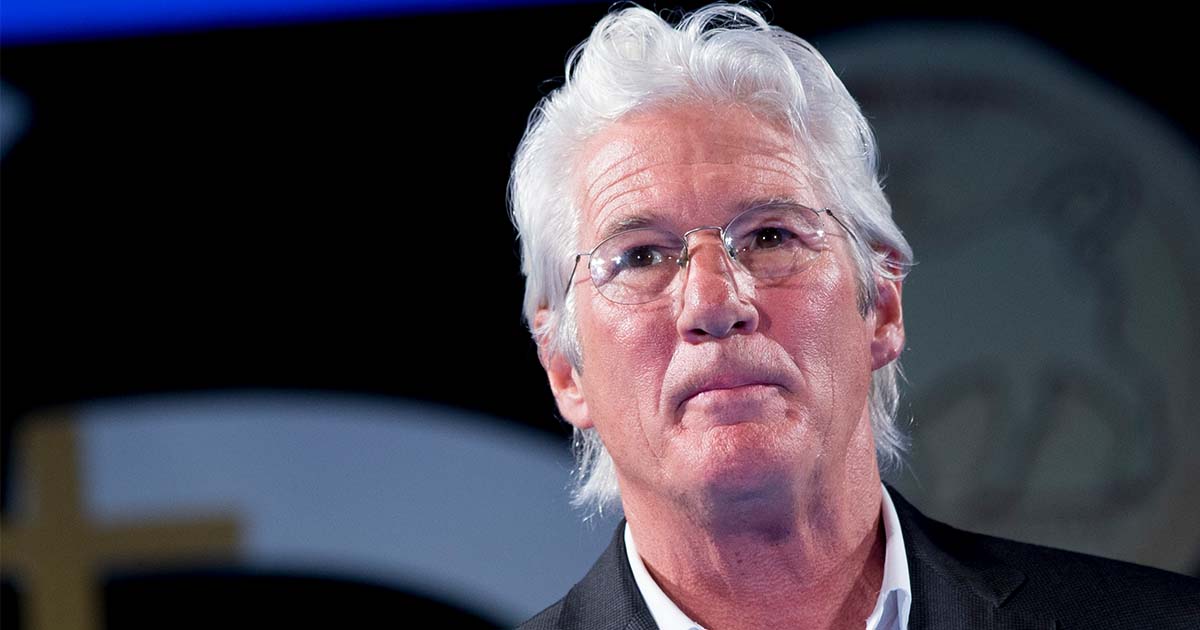
Richard Gere is a name that has graced the annals of Hollywood history. Known for his iconic role in Pretty Woman, Gere, now 76, has captured the hearts of fans worldwide for decades. Yet, his journey through Hollywood’s shimmering lights hasn’t always been smooth. Once, Gere found himself shunned from blockbuster movies, choosing instead to pour his talents into independent films. Reflecting on his remarkable career, Gere has shared how things could have taken a dramatically different turn.
From a young age, Richard Gere wasn’t your typical showman. His love for the cinematic and theatrical worlds blossomed much later. Born on August 31, 1949, in Philadelphia and raised on a farm near Syracuse, New York, Gere’s early life was a portrait of an ‘all-American’ upbringing. Sports and music played crucial roles in his early years, with gymnastics standing out as a favorite pastime. Even today, it’s a joy shared with his family.
Gere’s musical talents were notable from his high school days, where he mastered four instruments and even composed musical shows. Yet, despite this early exposure to the stage, it wasn’t until much later that he embraced acting.
The Early Years of Richard Gere
It all began when Gere pursued philosophy at the University of Massachusetts, supported by a gymnastics scholarship. After a year, he pivoted towards his true calling, diving head-first into the world of acting. A few early setbacks didn’t deter him as he moved to London, England, where he landed a role in the musical Grease.
Returning to the US with a thirst for the Broadway spotlight, Gere shone brightly in the 1970s. Earning critical acclaim for his portrayal of a convicted murderer in Killer’s Head, he soon transitioned to film. Several noteworthy performances followed, from his breakthrough role in Looking for Mr. Goodbar to the starring roles in Days of Heaven and American Gigolo. Gere’s star was clearly ascendant.
He reached Hollywood heartthrob status with hits like An Officer and a Gentleman and the unforgettable Pretty Woman alongside Julia Roberts. But the path to Pretty Woman was not straightforward.
The Journey to ‘Pretty Woman’
Though now considered one of the all-time great romantic comedies, Gere nearly passed on the role in Pretty Woman. It was Julia Roberts who ultimately persuaded him to join the cast. Reflecting on it, he shared a poignant moment with her during auditions, where she passed him a note saying, “Please say yes.”
Despite eventual massive success with romantic comedies, Gere once believed his acting career was in jeopardy before Pretty Woman. In a candid interview in 1993, Gere expressed how some roles, like those in Pretty Woman and An Officer and a Gentleman, were not scripts he initially favored.
Turning Points in Richard Gere’s Career
Richard Gere confessed to initially resisting the charm of the scripts that came to define his career. Before his famous roles, he felt he had already derailed his trajectory. “I wasn’t interested in these scripts at all,” he admitted. Yet, driven by connections and a desire to keep exploring, he found himself taking part in films that reshaped his image.
Discussing Pretty Woman, he once described it as a mercantile – rather than deeply felt – decision. Yet, stepping into that role opened new avenues of freedom and expression for him as an actor.
The Legacy of Pretty Woman
Over time, Gere’s perspective on Pretty Woman shifted. Though the film catapulted him to new heights, he later deemed it a “silly” movie. He voiced concerns over how his character Edward Lewis may have glamorized Wall Street, contributing to perceptions fueling financial crises. Yet, Gere’s enduring popularity is a testament to his artistry in romantic roles.
Achievements aside, Gere remains indifferent to awards, like the elusive Academy Award nomination. For him, the joy lies in the work, not just the accolades. While many in Hollywood chase after big franchises, Gere’s career reflects his penchant for authentic, character-driven stories.
Challenges with China
Gere’s career took a defining turn due to his outspoken activism. A devoted Buddhist, he forged a bond with the Dalai Lama, using his platform for causes like Tibet’s autonomy. This stance against China’s policies led to his lifetime ban from the country and subsequent career impacts.
Gere’s 1993 Oscar protest against China’s treatment of Tibet drew ire from Academy producers and blacklisting threats. His principled stand extended to a 2008 Beijing Olympics boycott call, aligning with his humanitarian foundation efforts.
Richard Gere’s Path Today
As Hollywood’s ties with China’s burgeoning market grew, Gere faced challenges in securing roles with major studios. Despite this, he hasn’t regretted turning to smaller films. His heart gravitates to stories rich in narrative and character exploration.
Even without the backing of big studios, Gere continues to enjoy a fulfilling career, free to pursue the roles he loves without compromise. His wealth of experience allows him this freedom, choosing meaningful projects over commercial notoriety.
Share if you agree that Gere’s commitment to his values, artistry, and independence makes him a remarkable actor!