Melania Trump, the former First Lady, has once again become a topic of conversation due to her ‘Einstein visa’. This special type of visa is designated for individuals with ‘extraordinary ability’ who have achieved significant national and international acclaim.
Recently, an investigation by the Washington Post shed light on the origins of Melania Trump’s American citizenship. It revealed that her citizenship was obtained via this prestigious visa, traditionally reserved for individuals who have demonstrated exceptional skills or accomplishments.
Typically, individuals receiving this visa are those who have won Pulitzer Prizes, received Oscars, or achieved Olympic fame—people who have excelled at the very top of their fields.
The online community has been actively debating Melania’s qualifications for such a remarkable classification, especially given that her husband, former President Donald Trump, is known for his strict stance on immigration policies.
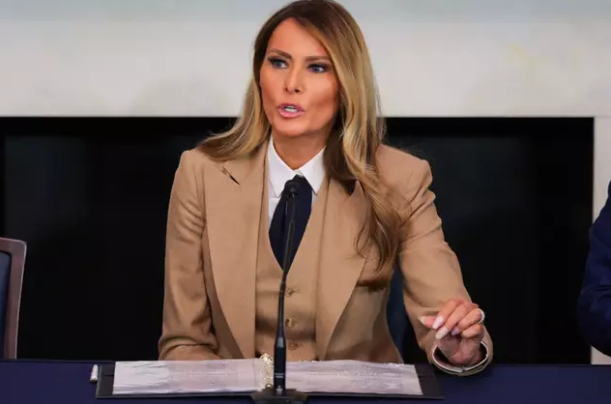
One social media user drew attention to this contrast, noting how immigrants face visa struggles while Melania holds a visa meant for highly celebrated individuals. “Melania Trump received a visa reserved for extraordinary talents, meanwhile, Trump’s policies challenge student visas,” they pointed out.
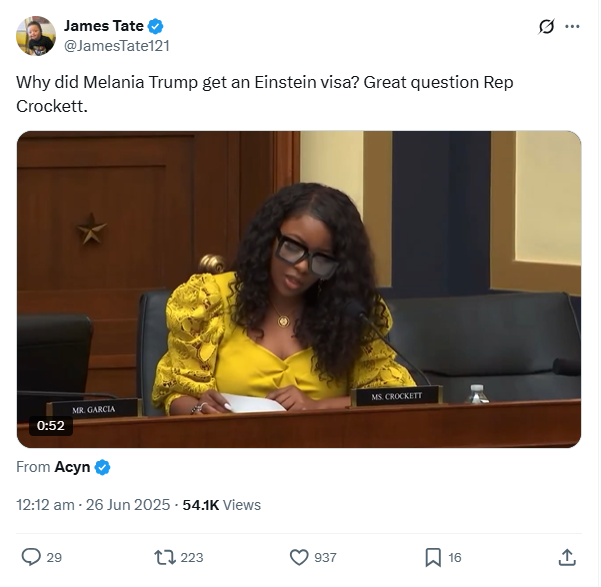
Adding to the conversation, Jasmine Crockett, a Democratic representative from Texas, questioned Melania’s credentials during a recent hearing. Crockett’s inquiries focused on why Melania, primarily recognized as a model, was granted such a high-level visa typically not associated with her profession.
Crockett commented, “When you compare to renowned models like Tyra Banks, Melania’s modeling career doesn’t appear to match the ‘Einstein’ criteria.” Her remarks have been widely circulated for addressing this inconsistency.
Many are curious about how someone in Melania’s position manages to secure such a visa. This is where attorneys like Susan McFadden enter the picture. Susan, a seasoned visa lawyer from London, explains that while Nobel Laureates might seem like the obvious choice, there is flexibility within these requirements.
According to McFadden, securing a visa like the EB-1 often depends on how compellingly an applicant’s case is presented. Their unique accomplishments and contributions can indeed be compellingly positioned with expert legal help.
Melania’s background as a Slovenian model before moving to the U.S. and becoming Mrs. Trump is a story rich with opportunities, perhaps making her an attractive candidate for the visa.
Additionally, after becoming an American citizen in 2006, Melania was able to sponsor her parents, Viktor and Amalija Knavs, allowing them to embark on a new journey in America.
To qualify for an EB-1 visa, an applicant must either possess a major award or satisfy at least three of the ten outlined criteria demonstrating excellence, such as significant media recognition or having their work featured prominently.
Nita Upadhye, another immigration law specialist, suggests that influential endorsements can play a crucial role in such applications. Upadhye states, “Support from respected figures like filmmakers or industry leaders can greatly enhance an applicant’s case.”
She adds, “If a well-known personality advocates for the candidate’s talent and achievements, it can have a considerable impact.” This might have been key for Melania, given her connections and closeness to powerful circles.
The ongoing discourse around Melania Trump and her visa reflects broader personal stories within the realm of immigration. It underscores how beneath every headline lies a complicated tapestry of legal maneuvering and personal narrative.