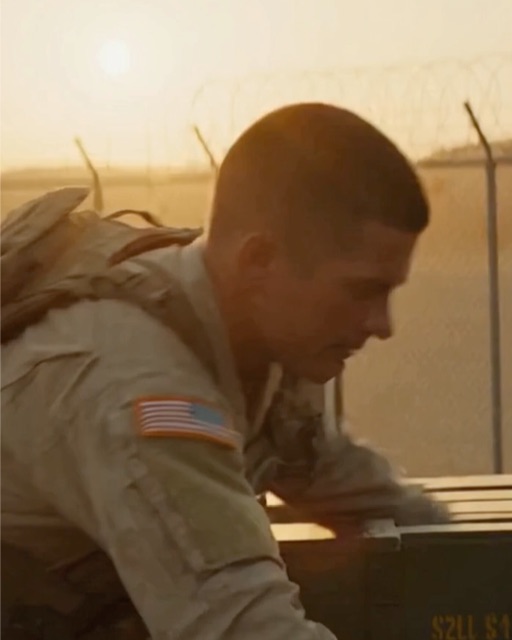
The briefing room at Quantico smelled like burnt coffee and expensive floor wax.
Major Hartford stood at the front, his uniform pressed perfectly. He tapped a laser pointer against a satellite image of a mountain compound.
“Low-level domestic militia,” Hartford said with a smug smile. “Standard survivalists. No training. This is a milk run, gentlemen.”
I looked at the high-resolution imagery and my blood ran cold.
Those weren’t survivalists. I saw professionally dug fighting positions. I saw interlocking fields of fire that screamed Spetsnaz-level training. It was a kill box.
“Sir,” I said, my voice cutting through the quiet room. “Respectfully, those aren’t amateurs. If we send a twelve-man SEAL team in there, we’re sending them into a woodchipper.”
Hartford didn’t even blink. He gave me a patronizing smile.
“Master Sergeant Kincaid. Your job is to sit on a ridge, look through your glass, and report. You will observe. You will not engage. Am I clear?”
“Crystal, sir,” I lied.
Because as I left the room, I saw the edge of a classified red folder under his notebook. He knew exactly what was waiting in those woods. He was willing to sacrifice twelve men just to get a silver star on his collar.
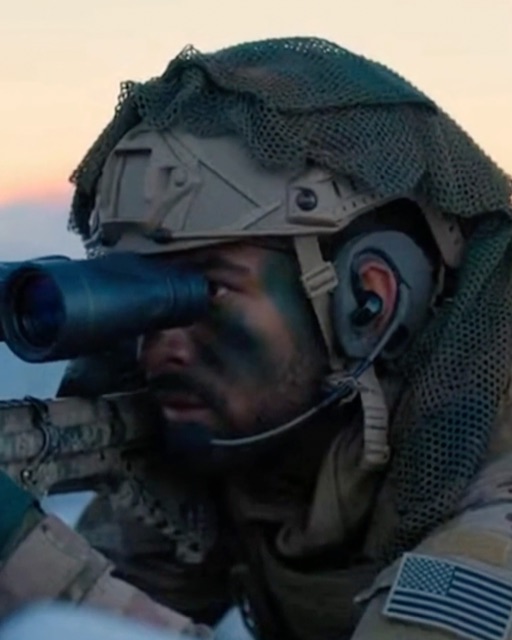
Forty-eight hours later, I was belly-down in the freezing mud on a ridge overlooking the compound.
Through my thermal scope, I watched the twelve SEALs breach the tree line.
Instantly, the woods came alive. It wasn’t twenty survivalists. It was fifty heavily armed mercenaries, and they were already closing the net around our guys.
“Command, we have contact, heavy contact!” the SEAL team leader yelled over the radio.
Back in the safety of his command center, Hartford keyed his mic. “Copy that. Kincaid, maintain strict observation. Do not engage. I repeat, do not engage.”
He was leaving them to die.
I felt the weight of my grandfather’s leather journal in my pocket – a man who had survived the frozen hell of Korea. Kincaids don’t just watch their brothers fall.
I reached down to my comms unit. But I didn’t reply to Hartford.
Instead, I switched my radio off the encrypted channel and onto the unsecure, open frequency that every single general at the Pentagon monitors, and I said the one thing Hartford was terrified to hear.
“This is Master Sergeant Kincaid, callsign Watchman. Major Hartford has knowingly sent SEAL Team Bravo into a prepared ambush.”
The airwaves went silent for a heartbeat.
“The opposition is not domestic militia. I count fifty-plus professional mercenaries with Russian-bloc weaponry and Spetsnaz-level tactics.”
I took a steadying breath, the cold air burning my lungs.
“Major Hartford has given me a direct order not to engage. He is ordering me to observe while Bravo team is annihilated. This is a treasonous order. I am breaking protocol to save American lives.”
The radio exploded.
“Kincaid, you shut your mouth right now! That is a direct order!” Hartford’s voice was a panicked shriek. He knew his career had just evaporated.
But another voice cut through the static, calm and cold as a glacier. It was a voice that carried the weight of four stars.
“Major Hartford, you will be silent. Watchman, this is General Morrison at the Pentagon. Report.”
While Hartford was probably choking on his ambition, I was already working.
“General, Bravo is pinned down in a gully. They’re being bracketed by three heavy machine gun positions. They have maybe five minutes.”
“Understood, son. What do you need?”
The question was so simple, so direct. It was what a real leader asks.
“Permission to engage, sir. And get a Spectre gunship up here yesterday.”
“Permission granted, Master Sergeant. Light ’em up.”
Hartford screamed something about court-martials and insubordination, but his mic was cut off mid-rant.
I didn’t need any more encouragement.
I settled the crosshairs of my M110 sniper rifle on the first machine gun nest. It was dug in deep, almost impossible to see.
But thermal imaging doesn’t lie. I saw the heat signature of the gunner and his assistant feeder.
I exhaled, my finger tightening on the trigger. The world narrowed to that single point of light.
The rifle bucked against my shoulder. Through the scope, I saw the first heat signature disappear in a pink mist.
I worked the bolt, chambered another round, and shifted my aim.
The second man in the nest looked up in confusion, and then his light went out too.
One down. Two to go.
The mercenaries were smart. They knew where the shot came from.
Tracers started stitching the air above my head, zipping past with angry cracks. They were trying to suppress me.
Too late. I was already moving, crab-crawling twenty yards to my secondary position.
From my new vantage point, I saw the second heavy gun. It was tearing up the trees right above the SEALs’ heads.
I dialed in my scope, accounting for wind and distance. It was a trickier shot, through a gap in the trees.
I waited. I breathed.
A branch swayed, and I had my window.
The shot was perfect. I saw the gunner slump over his weapon.
The pressure on Bravo team eased up instantly. I heard their leader on the comms, his voice filled with renewed grit.
“Watchman, you’re a damn angel! We’re starting to push back!”
“Just keep their heads down, Bravo,” I replied, my voice steady. “Help is on the way.”
But the enemy commander was no fool.
He realized his fixed positions were vulnerable. I saw him through my scope, a big man with a red beard, yelling orders and pointing.
He was sending a flanking team up the hill. Straight for me.
There were six of them, moving with terrifying speed and discipline through the undergrowth.
I took out the man in the lead, but the others didn’t even slow down. They spread out, using the terrain for cover.
They were coming for the sniper who was ruining their perfect trap.
My rifle was for long-range work. At this distance, against a moving assault team, I was at a disadvantage.
I slung the M110 onto my back and pulled out my M4 carbine.
The SEALs were still heavily engaged below. I was on my own.
I could hear the mercenaries crashing through the brush now, getting closer.
My heart was pounding a steady rhythm against my ribs. Fear is a tool. It keeps you sharp.
A figure burst from the trees not fifty feet away.
I brought my carbine up and fired a controlled two-round burst. He dropped without a sound.
Another one appeared to my left. I pivoted and fired again.
But they were closing in. A bullet ripped through the pack on my back, and another one tore a chunk of bark from the tree next to my head.
I was being suppressed. Pinned.
Just as they planned to do to the SEALs. The irony wasn’t lost on me.
I dropped behind a fallen log, reloading my magazine with practiced speed.
I was down to my last two mags. This was not going to be a long fight.
Then, I heard a new sound. It wasn’t the chattering of small arms or the roar of the heavy guns.
It was a low, guttural hum that grew into a world-shattering roar.
Over the ridge, a shadow blotted out the moon.
The AC-130 Spectre gunship had arrived.
The radio crackled in my ear. “Watchman, this is Ghost Rider. We’re on station. You wanna make some rain?”
I almost laughed.
“Ghost Rider, I’m painting targets for you now. Friendly position is marked with IR strobe. Everything else is hostile.”
I switched on my infrared laser, aiming it at the area where the last machine gun was hammering away.
“Target acquired,” the gunship pilot said calmly. “Stand by.”
A moment later, the night exploded.
A stream of 40mm cannon shells, like a red waterfall, poured from the sky. The ground shook as the nest was vaporized.
The flankers who were hunting me stopped dead in their tracks, looking up at the sky in horror.
“Ghost Rider, I have a squad of hostiles advancing on my position,” I said, painting them with my laser.
“Roger that, Watchman. Deleting.”
The Spectre’s 105mm howitzer fired. It wasn’t a roar; it was a deep, resonant thump that you felt in your bones.
The shell landed in the middle of the enemy squad. The woods flashed white, and then there was only silence from that direction.
The tide had turned into a tsunami.
The remaining mercenaries broke. They were professionals, not fanatics. They weren’t paid to die.
They abandoned their positions and fled into the dark woods. The Spectre gunship hunted them from above.
The battle was over.
I lay in the mud, my body aching, the smell of cordite thick in the air.
Below me, the SEALs were securing the compound, their green chem-lights moving in disciplined patterns.
“All Bravo elements, sound off,” the team leader called out.
The check-ins came, one by one.
They had casualties. Two dead, three wounded. It was a heavy price.
But without the broadcast, it would have been twelve. Twelve eulogies to write. Twelve flags to fold.
An hour later, a Black Hawk helicopter landed on the ridge to pick me up.
As I climbed aboard, the crew chief gave me a thumbs-up. “Nice work, Master Sergeant. The whole world heard you.”
The flight back was quiet. I thought about the two men who didn’t make it. Their faces, which I’d only seen in briefing photos, were burned into my mind.
When we landed back at the forward operating base, the place was buzzing.
Major Hartford was being led away in handcuffs by two military policemen. He wouldn’t even look at me. His face was pale, his perfect uniform now rumpled. He looked small.
General Morrison was waiting for me by the tarmac. He was an older man with kind eyes but a jawline that looked like it was carved from granite.
He walked right up to me and extended his hand.
“Master Sergeant Kincaid. I’m General Wallace Morrison.”
I shook his hand. It was a firm, honest grip.
“Sir, I…”
He cut me off. “You did the right thing, son. You put your men before your career. That’s the only choice that matters.”
He paused, looking at me intently.
“That name, Kincaid. It’s not a common one. Did you have family serve in Korea?”
My blood ran cold for the second time in three days.
“My grandfather, sir. Sergeant First Class Robert Kincaid. He was with the 1st Marine Division at Chosin.”
A slow smile spread across the General’s face. It was a genuine, heartfelt smile.
“I knew it,” he said, his voice thick with emotion. “I was a scared Second Lieutenant back then. Your grandfather pulled me out of a firefight when my platoon was overrun. He saved my life.”
He reached into his pocket and pulled out an old, faded photograph. It showed a group of haggard, frostbitten Marines. One of them, a young man with my eyes, had his arm around a terrified-looking young officer.
My grandfather. And a young Wallace Morrison.
“He was the finest soldier I ever knew,” the General said quietly. “He taught me that rank doesn’t make a leader. Character does. When I heard your name on that open channel, and I heard the conviction in your voice… I knew which man to trust.”
He clapped me on the shoulder.
“It seems saving people runs in your family.”
That’s when he told me the full story. The first twist.
Hartford wasn’t just after a promotion. He was in deep with a private defense contractor.
The “militia” compound was a live-fire training exercise for their new mercenary force. They wanted to test their men against the best: a Navy SEAL team.
Hartford was paid to deliver the SEALs. The mission was a setup from the start. He was supposed to report that the team was tragically lost fighting a surprisingly capable enemy, and the contractor would get a glowing, battle-proven review for their new product.
He had sold twelve American lives for a future payday and a bit of polished metal on his uniform.
The weight of his betrayal was staggering. It was worse than I could have ever imagined.
General Morrison assured me that Hartford and the executives of that defense firm would spend the rest of their lives in a place where promotions don’t matter.
We stood there for a moment in silence, the desert wind whipping around us.
“Your grandfather kept a journal,” Morrison said, more a statement than a question.
I nodded, patting the lump in my breast pocket.
“He wrote about you in it, sir. He called you ‘the kid with more guts than sense’.”
The General let out a deep, rumbling laugh. “He wasn’t wrong. Robert Kincaid taught me how to temper that guts with sense.”
He looked me in the eye again, his expression turning serious.
“Master Sergeant, what you did was technically an act of career suicide. But in my army, it’s the definition of leadership. I’m creating a new oversight role at SOCOM, an ethics and field readiness advisor. It needs a man who can’t be bought and who isn’t afraid to speak truth to power. It needs a Kincaid.”
I was speechless.
He was offering me a way to protect more soldiers, to prevent another Hartford from ever happening again.
It was more than a promotion. It was a purpose.
A few weeks later, I stood before the ten surviving members of SEAL Team Bravo. The three wounded were in wheelchairs, but their eyes were clear and strong.
I didn’t have a speech prepared. I just spoke from the heart.
“What you did out there… what you endured… I won’t forget it. And I’m sorry I couldn’t save them all.”
The team leader, a tough Lieutenant Commander named Riggs, stood up. He walked over and wrapped me in a bone-crushing hug.
“You saved ten of us, Master Sergeant,” he said, his voice raw. “You’re a brother to this team. Forever.”
The others gathered around, each man shaking my hand, clapping my shoulder, their gratitude a tangible thing in the air.
That was my reward. It was better than any medal.
My grandfather wrote on the last page of his journal, “In the end, all you have is your name and the deeds you attach to it.”
I finally understood what he meant. Your name is your legacy. It’s the story people will tell about you when you’re gone.
Hartford had traded his name for a star. I had risked my career for mine.
And in doing so, I had honored the man who gave me that name in the first place.
Leadership isn’t about giving orders from a safe place. It’s about being willing to stand in the mud with your people, to risk everything for what’s right, and to make sure everyone comes home.
That’s the only lesson that truly matters.