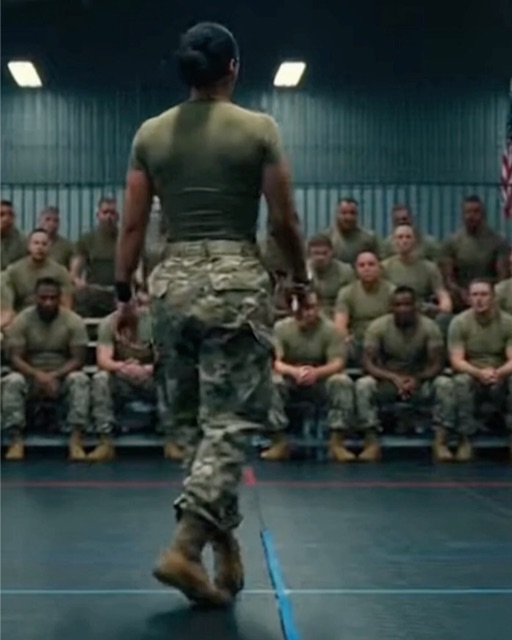
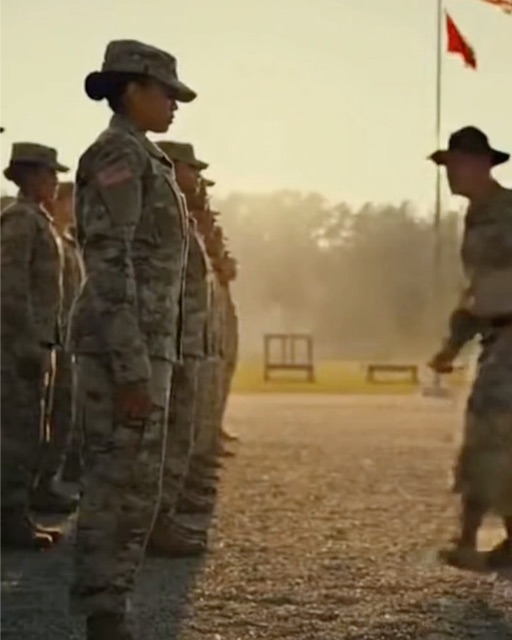
We were halfway through the worst field exercise of my career. Active-duty Army, rain pounding down like it had a grudge, turning the 200-meter stretch into a muddy hellscape. Ruts everywhere, boots sucking into the muck, packs weighing us down like anchors.
Our squad leader, Sgt. Harlan – tough as nails, voice like gravel – barked the order: “Buddy rush by pairs! Keep intervals! Don’t outrun your support!”
It started smooth. First pair surges forward, drops into cover. Second pair covers, then moves. Rhythm like clockwork, even as the lane timer ticked mercilessly.
Then Pvt. Ellis hits a rut wrong. Goes down hard, breath knocked out, face in the slop. His buddy, without a word, hauls him up by one arm, drags him to the next dip. They slot right back in, no hesitation.
We make the berm, every man gasping, caked in mud. Harlan counts heads, eyes weapons, then locks on Ellis. The kid’s humiliated, wiping filth from his eyes.
“You still in it?” Harlan asks, low and steady.
Ellis nods, barely.
Harlan gives one sharp nod. “Then you’re exactly where you belong. Move.”
We pushed on, thinking it was just another grind. But that night in the barracks, Ellis pulled me aside, voice shaking. “You don’t get it. I wasn’t supposed to be here at all. Because if they’d known about…”
He trailed off, his gaze darting around the crowded bay, as if the walls themselves were listening. I guided him to the quiet of the laundry room, the rhythmic hum of the dryers a strange comfort.
“If they knew about what, man?” I asked, keeping my voice down. “What are you talking about?”
Ellis leaned against a washing machine, looking smaller than his 170 pounds. “My heart,” he whispered, the word barely audible over the machines. “I have a congenital defect. Something called a bicuspid aortic valve.”
I just stared at him, the military acronyms and field jargon in my head screeching to a halt. All I heard was “heart defect.”
“They told me when I was sixteen,” he continued, not looking at me. “Said no contact sports, no overexertion. Said the military was completely out of the question.”
I felt a cold knot form in my stomach. “So you lied? On your forms at MEPS?”
He finally met my eyes, and what I saw there wasn’t guilt, but a fierce, desperate conviction. “My grandfather was in the 101st on D-Day. My dad did two tours in the Gulf. It’s all I’ve ever wanted. It’s who we are.”
He took a shaky breath. “I wasn’t going to let some doctor who saw me for fifteen minutes tell me who I was. I’ve managed it my whole life. I know my limits.”
The fall in the mud suddenly made a terrifying amount of sense. It wasn’t just clumsiness; his body was hitting a wall.
“Ellis, this isn’t just about getting kicked out,” I said, the reality crashing down on me. “You could die out there. Today could have been it.”
“But it wasn’t,” he shot back, a flicker of defiance in his voice. “Because I know how to push and when to ease off. You have to believe me. Don’t say anything. Please.”
I was caught. If I told Harlan, I’d be saving Ellis’s life but destroying his dream. If I kept quiet, I’d be complicit in whatever happened next.
I looked at this kid, who was willing to risk everything just to wear the same uniform as me, and I made a choice. I nodded, a single, heavy gesture.
The next few weeks were tense. I watched Ellis like a hawk. I saw things I’d missed before. The way he’d subtly lean against a wall after a hard run, trying to hide his ragged breaths. The times he’d press his fingers against his wrist, not checking the time, but checking his pulse.
He was a ghost, haunting the edges of our squad’s performance. Yet, he never quit. He passed every physical training test, his times always just a few seconds over the average, never good enough to be noticed but never bad enough to be flagged. He was an expert at surviving just below the radar.
Our platoon had a guy, Cpl. Riggs, who seemed to have been born with a chip on his shoulder. He was all spit-shine and regulations, and he saw Ellis as a weak link.
“Pick it up, Ellis!” Riggs would bellow during a ruck march. “My grandma carries her groceries faster than you move!”
Ellis would just clench his jaw, set his eyes on the boots in front of him, and keep moving. He never complained. He never gave Riggs the satisfaction.
The more Riggs laid into him, the more the rest of the squad quietly rallied around Ellis. If his pack seemed too heavy, someone would discreetly shift a piece of gear to their own. If he was falling behind on a run, one of us would drop back, crack a dumb joke, and pace him to the finish.
We didn’t know his secret. I was the only one. But they knew he was one of us, and that was enough. Sgt. Harlan saw it, too. He never said a word, but I’d catch him watching Ellis, his expression unreadable. He wasn’t evaluating a soldier; he was measuring a man.
Then came the announcement of Operation Iron Forge, the final field problem of our training cycle. It was the stuff of legend. Seventy-two hours of non-stop simulated combat missions, land navigation across twenty miles of brutal terrain, and minimal sleep. It was designed to break you.
My blood ran cold. This wasn’t a two-hundred-meter mud crawl. This was a meat grinder.
The night before we stepped off, I cornered Ellis while he was cleaning his rifle. “You can’t do this,” I pleaded in a whisper. “Go to the medics. Tap out. Say you twisted your knee. Anything.”
He methodically ran a patch through the barrel, not looking at me. “If I can’t do this, then I don’t belong here,” he said, his voice flat. “It’s that simple.”
“It’s not simple!” I hissed. “You’re playing Russian roulette with a damn rifle pointed at your own chest!”
He finally stopped, setting the cleaning rod down. “And what’s your plan? You gonna tell Harlan? You gonna be the one to end it for me?”
The question hung in the air between us. He knew he had me. I couldn’t do it.
The first day of Iron Forge was miserable. A forced march under a relentless sun, the heat shimmering off the asphalt. Ellis looked pale, sweat soaking through his uniform, but he kept pace. He was drinking water religiously, managing his energy with a precision that amazed me.
The second day was worse. We were tired, hungry, and on edge from a series of simulated ambushes. That evening, our mission was to secure a hilltop comms station. It was a steep, punishing climb through dense woods in the dark.
We moved in formation, the only sounds being our own ragged breathing and the crunch of leaves under our boots. Halfway up, Cpl. Riggs, who was on point, held up a fist. The signal for ‘freeze.’
We all dropped to a knee, listening. Silence. Then, a single, heavy thud from up ahead. Not a gunshot. A body hitting the ground.
Whispers crackled over the radio. It wasn’t Riggs. It was Sgt. Harlan.
He had collapsed. Just folded in the middle of the trail.
We scrambled up the hill to find him. Riggs was standing over him, frozen in shock. “Sarge? Sarge!” he was yelling, shaking his shoulder.
Harlan was unresponsive. His face was slack, and his breathing was a terrifying, shallow gasp.
This wasn’t part of the exercise. This was real. The evaluators who were shadowing us were miles back, and our platoon medic was with another squad on the far side of the ridge. We were alone.
Panic set in. Guys were yelling, someone was fumbling with a radio, and Riggs was just staring, completely overwhelmed. All our training, all our drills, just evaporated in the face of genuine crisis.
Then, a voice cut through the chaos. “Everybody, shut up!”
It was Ellis. He had dropped his pack and was kneeling beside Harlan, his hands already at the sergeant’s throat, feeling for a pulse. He was a different person. The quiet, struggling private was gone. In his place was someone with an impossible calm, an unnerving focus.
“He has a pulse, but it’s thready,” Ellis announced, his voice clear and commanding. “We need to get his gear off him. Now!”
He started unbuckling Harlan’s body armor with practiced efficiency. “You!” he pointed at me. “Get on the radio. Don’t call our platoon frequency, call the main exercise channel. Declare a real-world medevac. Give them our coordinates. Tell them we suspect a massive cardiac event.”
I just stared for a second, stunned by his authority. “Go!” he yelled.
I scrambled to the radio. Someone else started helping Ellis with the gear.
“Riggs!” Ellis snapped, and the corporal flinched like he’d been struck. “Check his airway. Make sure it’s clear. Then I need you to elevate his legs. Use your pack.”
Riggs, for the first time since I’d known him, followed an order from a private without a single sarcastic word. He did exactly as he was told.
Ellis had Harlan’s chest plate off. He ripped open the sergeant’s uniform shirt. He placed his hands on Harlan’s sternum. “His breathing’s stopped,” he said, his voice tight but controlled. “I’m starting compressions.”
And he began. Perfect, rhythmic compressions. He counted aloud, his voice steady. “One and two and three and four…” It wasn’t the clumsy, awkward CPR we’d learned in a stuffy classroom. This was skilled. This was professional.
Between cycles of compressions, he’d give instructions. “Someone get his canteen. Don’t give him water, just wet a cloth and put it on his forehead. Keep him cool.”
He was running the scene like a seasoned paramedic, turning our panicked squad into a functioning trauma team. He was saving our sergeant’s life, and he was doing it with a confidence that left us all in awe.
I got through to Range Control, my voice shaking as I relayed the situation and our position. They confirmed a helicopter was spinning up. “ETA fifteen minutes,” the voice on the other end said.
Fifteen minutes felt like a lifetime. Ellis kept working, his face a mask of concentration. Sweat poured down his face, his own body straining under the effort. I could see the fatigue setting in, the muscles in his arms trembling. He was pushing himself far beyond the limits he had so carefully guarded.
“Ellis, let someone take over,” I said, moving toward him.
“No,” he grunted between compressions. “Rhythm is too important. I can’t stop.”
He was pushing past his own breaking point to save the man who had shown him a moment of grace in the mud. He was giving everything he had.
The thumping sound of rotor blades finally cut through the night. The helicopter crew rappelled down through the trees, their gear clanking. A flight medic ran to the scene, took one look, and his eyes widened.
“Who’s in charge here?” the medic asked.
Before any of us could answer, he looked at Ellis. “You. Report.”
Ellis didn’t miss a beat. While still performing compressions, he delivered a perfect medical report. “Forty-two-year-old male, collapsed during exertion. Unconscious, lost pulse and respiration approximately ten minutes ago. We initiated CPR immediately. No response.”
The medic took over, hooking Harlan up to a defibrillator and monitors. As they loaded our sergeant onto a litter to be hoisted up, the medic looked at Ellis, who was now leaning against a tree, gasping for air, looking pale as a sheet.
“You’re not a medic?” he asked.
Ellis just shook his head, too exhausted to speak.
“Well, you are today,” the medic said, a look of profound respect on his face. “You just saved his life. No question.”
The aftermath was a blur of official inquiries. We were pulled from the exercise, and the investigation began. Ellis had to come clean. He sat before our Company Commander and told him everything. The heart condition. The lie.
He laid it all out, expecting to be kicked out of the Army he had fought so hard to join.
But then, something incredible happened. Our squad was called in to give statements, and every single one of us, to a man, told them what we saw. We didn’t just talk about what Ellis did for Harlan. We talked about how he never complained, how he always pulled his weight, how he had more heart, literally and figuratively, than anyone we knew.
Cpl. Riggs was the last to speak. He stood before the Captain, humbled and direct. “Sir, I was wrong about him. I misjudged him completely. That man has more courage and integrity than I do. He belongs here more than I do.”
The final piece came from Sgt. Harlan himself. From his hospital bed, he sent a message to the battalion commander. It was simple. “A man who lies to get out of the Army is a coward. A man who lies to get in, and then saves his sergeant’s life, is a hero. Don’t you dare kick him out.”
The command was in a tough spot. A fraudulent enlistment couldn’t be ignored. But the circumstances were unheard of.
A week later, Ellis was called into the Commander’s office. I sat on my bunk, my stomach in knots, waiting for him to come back and tell us he was being sent home.
He walked back into the barracks an hour later. He wasn’t carrying discharge papers. He was holding a different file.
He looked at me, a slow smile spreading across his face. “They found out why my CPR was so good,” he said. “I told them I was halfway through paramedic school before I dropped out to enlist.”
He opened the file. It was a course reservation. “They’re giving me a waiver for my condition,” he said, his voice thick with emotion. “I have to be on a permanent medical profile, no more twenty-mile ruck marches. And… they’re sending me to AIT to become a combat medic.”
We all just stared at him, dumbfounded.
“The Command Sergeant Major said the Army doesn’t have enough men with a warrior’s spirit and a healer’s hands,” Ellis explained. “He said my place wasn’t on the front line with a rifle. It was right behind it, with a medic bag.”
It was a perfect, karmic justice. The very secret he thought was his greatest weakness had revealed his greatest strength. He wasn’t a broken soldier trying to fit in; he was a natural-born medic who had just been in the wrong job.
Our squad never looked at him as the weak link again. He was our hero. He was the man who refused to break, and in doing so, he showed us all what true strength really looks like.
It’s not always about how much you can carry on your back or how fast you can run. Sometimes, it’s about the hidden courage inside you, the skills you don’t know you have until they’re needed most, and the fierce, unyielding desire to be a part of something bigger than yourself. Strength, we learned, is measured by the size of your heart.