President Trump Outlines Future Payouts
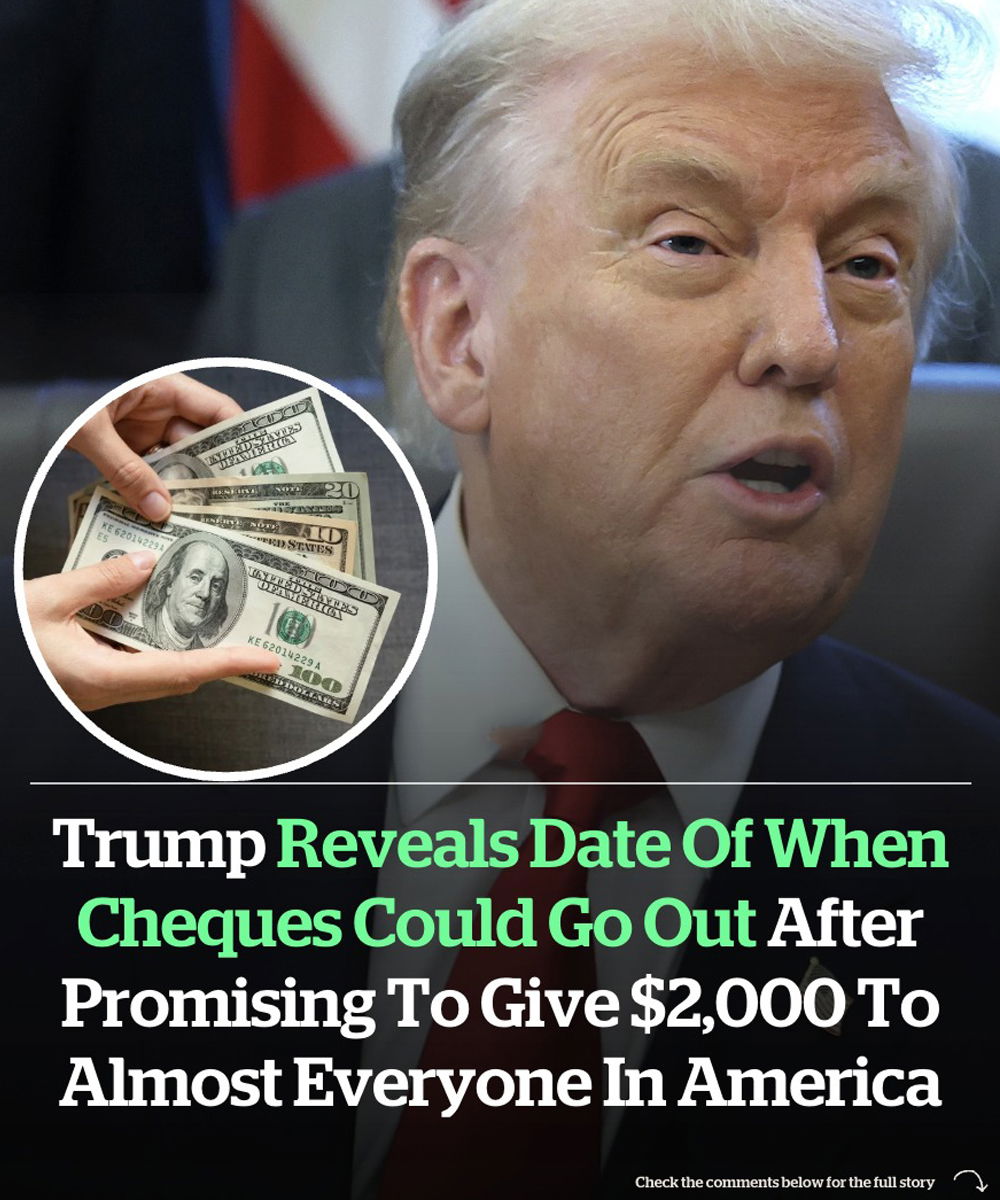
Recently, President Donald Trump shared some exciting news on his Truth Social platform, stating that nearly every American will receive a “dividend of at least $2,000.” This promise comes as a result of the tariffs his administration introduced, which he believes have bolstered the nation’s wealth.
The President explained that the success of these tariffs has solidified the United States as the “richest, most respected country in the world.” He expressed strong opinions on tariffs, stating, “People that are against Tariffs are FOOLS!” emphasizing how they’ve contributed to low inflation, record high stock market values, and unprecedented 401k levels. Additionally, Trump mentioned that the country is now collecting trillions of dollars, which could help reduce the significant national debt of $37 trillion. Furthermore, there’s been a surge in investments, with new plants and factories emerging nationwide.
Projected Timeline for Payout Distribution
President Trump clarified that these anticipated tariff dividend payments are expected to commence in 2026. He explained on Air Force One that both the dividends and a debt reduction plan are in the pipeline, contingent on the success of his tariff strategy.
The intended beneficiaries of these checks are to be families earning under a particular income cap, financed through Trump’s robust tariff policy. However, this plan still faces a number of legal and logistical challenges.
In a recent Fox Business interview, Treasury Secretary Scott Bessent highlighted the requirement for legislative backing to turn this plan into a reality, further stating, “We need legislation for that.”
Challenges in the Path Ahead
Trump’s $2,000 payout initiative is proposed as a “dividend” from tariff income. Yet, it requires Congress to give it a green light, a step that isn’t assured. Although Trump’s aim is for the rebates to primarily support working families, more details are awaited.
Even the format of these payments is not finalized. Treasury Secretary Bessent hinted that they “could come in lots of forms,” such as tax credits or benefits potentially associated with the President’s proposed One Big Beautiful Bill Act.
On the funding side, a concern arises with Trump’s use of the International Emergency Economic Powers Act (IEEPA) to enforce tariffs. Since these tariffs were first imposed, around $90 billion has been collected through September 23, according to US Customs and Border Protection reports. Through the fiscal year end August 31, 2025, the total tariff revenue amounts to $195.9 billion.
Nevertheless, the revenue is not enough to cover the estimated expenses, as Erica York from the Tax Foundation projected. Limiting payments to those earning less than $100,000 would require approximately $300 billion.
Legal Challenges Cloud the Plan’s Future
The constitutionality of Trump’s approach to fund these dividends is under scrutiny by the Supreme Court, particularly his application of IEEPA. Some lower courts have already deemed this use unlawful, casting doubt on a key revenue source for the proposed payouts.
Should the tariffs be blocked by the Supreme Court, this could substantially disrupt the financial plan, possibly leading to the government issuing refunds for previously collected tariff monies.
With such uncertainties, Trump has maintained that if the use of tariffs is invalidated, he’ll need to pursue alternative measures. On top of that, about $50 billion from the tariff revenue Trump plans to tap into is still under examination by the Supreme Court, adding to the existing doubts surrounding the payout’s feasibility.
Regardless of these legal and financial hurdles, President Trump remains steadfast in his commitment, reiterating that “high-income people” will not be eligible. However, the clear definition of “high-income” has yet to be established.